
How can businesses boost profitability through better product workflows? This blog explains how product management app development improves ROI by improving planning, collaboration, analytics, and faster decision-making across teams.
How does product management app development improve ROI?
It helps teams organize work, listen to users, and make smarter decisions about features and priorities. When companies track ideas, feedback, and progress in one place, they avoid wasted effort and focus on work that brings value.
Research shows that companies using structured product processes perform better financially.
For example, Atlassian notes that organizations using structured product workflows and centralized tools can align teams and prioritize work more effectively, which improves outcomes for products and business goals.
So when businesses build or adopt dedicated systems for product management, they create a workflow that supports smarter decisions, clearer planning, and stronger returns.
Why ROI Matters in Product Management?
ROI is simple. Companies invest time, talent, and money into building digital products. They expect results in the form of revenue, growth, and strong customer success.
This is where product managers step in. They guide the product development process, align teams, and ensure work translates into business results.
Without the right management software, teams struggle with scattered information, missed ideas, and unclear direction. Many companies rely on product management tools and project management tools to keep work organized.
These management tool systems help product teams collect customer feedback, track progress, and define a clear product roadmap. When the workflow improves, the ROI usually follows.
The Role of Product Management Apps in Business Growth
A strong product management platform acts as a central hub. It connects product teams, engineers, and stakeholders.
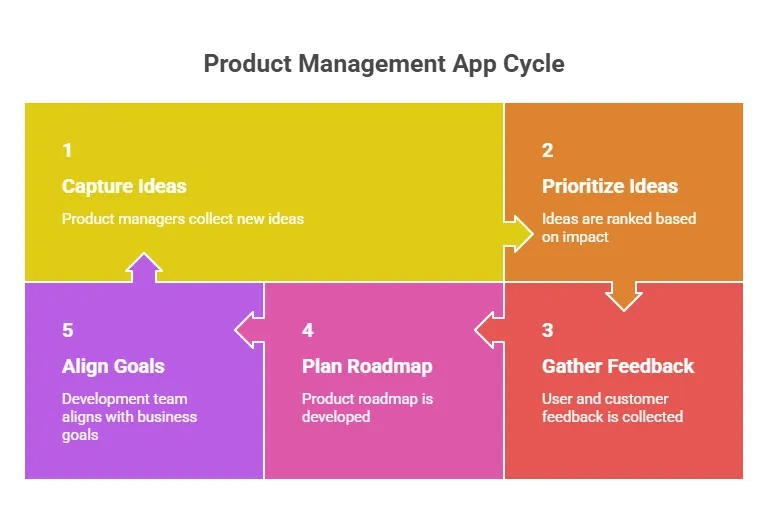
These tools also support data-driven decision-making. Teams rely on product analytics, user insights, and customer insights to understand what people really want.
The result is clear. Less guesswork and more results.
Key Areas Where Product Management Apps Improve ROI
Before diving in, it helps to understand where a management tool actually improves results. When product managers use structured product management tools and reliable project management systems, product teams can organize work, listen to customer feedback, and guide team members toward better product decisions.
The following areas show how this approach supports a stronger ROI.
1. Better Planning with Product Roadmaps
A strong product strategy begins with planning.
A product roadmap helps product managers show the product's future direction. It organizes ideas, features, and timelines.
Many product management tools include roadmap features. They help product teams prioritize feature development based on value and user needs.
A roadmap also improves team collaboration. When team members understand the plan, the entire project management workflow runs more smoothly.
2. Strong Feedback Loops with Users
Great products listen to users.
Modern product management software includes systems for feedback management. Teams can collect customer feedback, analyze survey data, and track customer requests.
Methods include:
- Customer surveys
- User interviews
- Tracking customer interactions
This process of gathering customer feedback helps product managers identify problems early. It also helps prevent users from dropping situations where people stop using a product.
3. Smarter Decisions with Product Analytics
ROI improves when decisions rely on data.
Many product management tools include product analytics and user research dashboards. These help teams study user behavior and identify patterns.
For example:
- Which features do people use
- When users drop
- Which ideas drive customer success
These insights create data-driven insights that guide better planning. When product managers base decisions on user behavior, the team avoids wasted development effort.
4. Stronger Collaboration Across Teams
Modern products require teamwork.
Designers, engineers, marketing teams, and stakeholders all contribute to product management.
A good work management platform includes communication and collaboration tools and features. These systems help team members share ideas and discuss updates.
Platforms often integrate with Microsoft Teams, enabling product teams to share updates, send direct messages, and collaborate efficiently.
This improves coordination between internal teams, non-technical teams, and the development team.
5. Efficient Project Tracking
ROI also improves when work stays organized.
Many companies combine product management software with project management tools.
These systems help teams:
- Manage projects
- Track milestones
- Handle task tracking
- Follow project tracking
For complex projects, clear visibility reduces confusion. Teams spend less time searching for information and more time building useful features.
When these systems work together, product managers gain a clear view of ideas, feedback, planning, and delivery.
The result is better product management, stronger coordination among team members, and smarter, data-backed decisions. Over time, this organized approach helps companies turn ideas into successful digital products while improving ROI.
Product Management Tools vs Project Management Tools
Both tool categories help teams organize work. The difference is focus.
| Category | Focus | Example Use |
|---|---|---|
| product management tools | Strategy, ideas, roadmap | Planning features and analyzing feedback |
| project management tools | Execution and scheduling | Assigning tasks and timelines |
| product management software | Full lifecycle support | Managing roadmap, analytics, and feedback |
| project management software | Project delivery | Tracking tasks and milestones |
Many companies combine all the tools into a single product stack to simplify workflows.\
Community Insight
Product leader Nicolas Liatti shared this perspective in a LinkedIn discussion about product teams:
“The product team isn’t just product management; it’s everyone contributing to the end product.”
This idea reflects what many product managers experience daily. Strong product management depends on teamwork across engineering, design, and marketing.
The Best Product Management Tools Businesses Use
Many software companies depend on modern product management tools to handle product workflows.
Examples include platforms that combine:
- Roadmap planning
- Feedback management
- Task management
- Product analytics
- Team collaboration
The best product management tools allow product managers to run the entire lifecycle from idea to delivery. Many of these tools also offer a free plan so teams can experiment before committing.
The right tools can reduce friction in the product development process, especially when teams work on complex projects.
Still, some platforms come with a steep learning curve. That is why many non-technical users prefer simpler tools with visual dashboards.
Challenges Without Proper Product Management Systems
Companies that lack a proper product management system often face issues such as:
- Scattered customer feedback
- Unclear product strategy
- Misaligned team workflows
- Slow feature development
Teams might rely on disconnected dev tools, spreadsheets, and random documents.
When product managers cannot prioritize ideas, the roadmap becomes chaotic. Work moves slowly and ROI suffers.
A centralized management tool solves this problem by bringing everything together.
Rocket.new and the Future of Product Building
Rocket.new is an AI-powered platform designed to help teams build and launch websites quickly. While it focuses on web creation, the idea fits nicely with modern product management workflows.
Teams building digital products often need fast testing and quick experiments. Rocket.new helps product teams create prototypes, landing pages, or early product versions without long development cycles.
Top Features
- Prompt to App Creation: Builds apps directly from single prompts
- Figma Import: Converts design files into live, editable layouts
- AI-Powered Backend: Automatically handles logic, data, and workflows
- Custom Domain Support: Publishes projects with a branded domain
- Code Export: Allows developers to extend or customize later
- Live Preview: Shows instant updates while editing
These features help product managers test ideas quickly before committing to full development..
Building a Product Management App with Rocket.new
Creating a simple product management app or landing page can be surprisingly easy with Rocket.new. Instead of starting from scratch, product managers can describe what they want and quickly generate a working interface.
For example, a team can build a small dashboard to track customer feedback, organize a product roadmap, or collect user feedback from early testers. This allows product teams and the development team to test ideas before investing weeks into full development.
This approach works well for non-technical teams or early-stage software companies that want to validate product ideas fast. Even team members without coding experience can create functional interfaces and gather early insights.
Example Product Management Landing Page
Example concept: Roadmap is a hub-and-spoke landing page template built for product management daily digest newsletters.
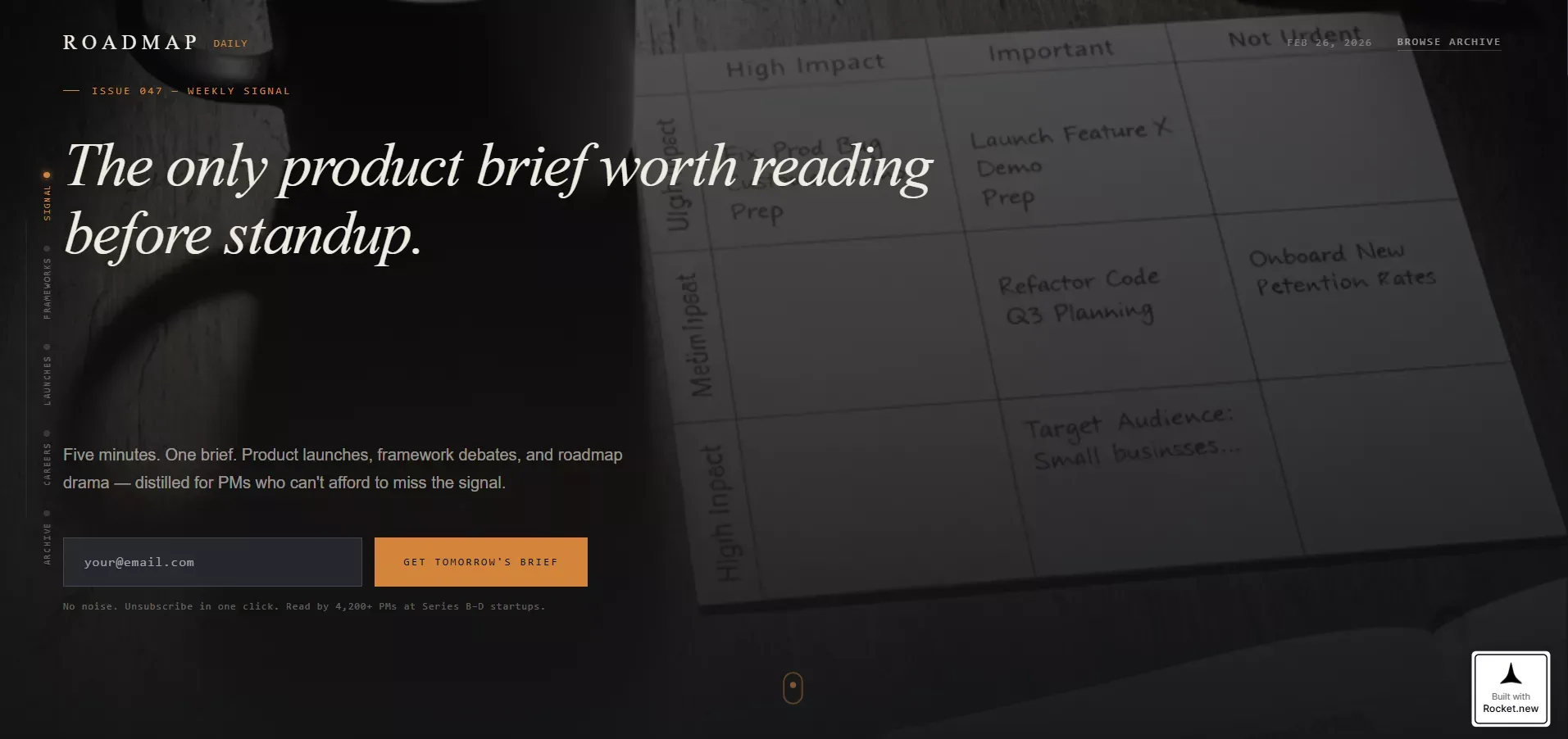
This template suits content creators and editorial teams running a curated product management newsletter. It fits anyone who wants to convert readers into email subscribers through genuine content value rather than vague promises.
Senior independent contributor product managers and heads of product at growth-stage startups Newly promoted product leads who need a polished, trust-building landing page for their digest Newsletter founders in the product management daily digest space seeking a desktop-first editorial layout
Choosing the Right Product Management Tools
Picking tools depends on the team's needs. Here are a few factors companies usually consider:
- Ability to collect feedback
- Roadmap and planning features
- Support for complex workflows
- Built-in product analytics
- Strong team collaboration
The best product management tools support team members across departments. They also include advanced features that help product managers connect strategy with execution.
Many tools also offer free plans, so teams can try them before scaling.
Product Management App Development and ROI
Many companies struggle with scattered ideas, weak planning, and unclear priorities. Without structured product management, teams waste time on features that bring little value.
A dedicated system built through product management app development gives product managers the structure they need. It integrates feedback, analytics, roadmap planning, and collaboration into a single workflow.
When teams rely on the right tools, they make smarter choices. They build features that users actually want and reduce unnecessary work. Over time, this leads to stronger ROI, better products, and happier customers.
Table of contents
- -Why ROI Matters in Product Management?
- -The Role of Product Management Apps in Business Growth
- -Key Areas Where Product Management Apps Improve ROI
- -1. Better Planning with Product Roadmaps
- -2. Strong Feedback Loops with Users
- -3. Smarter Decisions with Product Analytics
- -4. Stronger Collaboration Across Teams
- -5. Efficient Project Tracking
- -Product Management Tools vs Project Management Tools
- -Community Insight
- -The Best Product Management Tools Businesses Use
- -Challenges Without Proper Product Management Systems
- -Rocket.new and the Future of Product Building
- -Top Features
- -Building a Product Management App with Rocket.new
- -Example Product Management Landing Page
- -Choosing the Right Product Management Tools
- -Product Management App Development and ROI