Go from idea to a live Flutter app without coding using Rocket.new’s Intelligence, Solve, and Build features. Validate your idea, generate a full-stack app from one prompt, and refine it visually. Launch faster with built-in integrations, testing workflows, and multiple distribution options.
Can a single person move from an idea to a live Flutter mobile app on both iOS and Android without hiring developers?
Yes. In 2026, vibe solutioning lets non-developers describe what they want in natural language and receive a production-ready result with backend, auth, and payments wired together.
According to Gartner, more than 70% of new applications now use low-code or no-code platforms. Rocket.new, a vibe solutioning platform with Solve, Build, and Intelligence products, sits at the center of that shift for Flutter-based mobile creation.
Validate Your Idea Before Writing Code
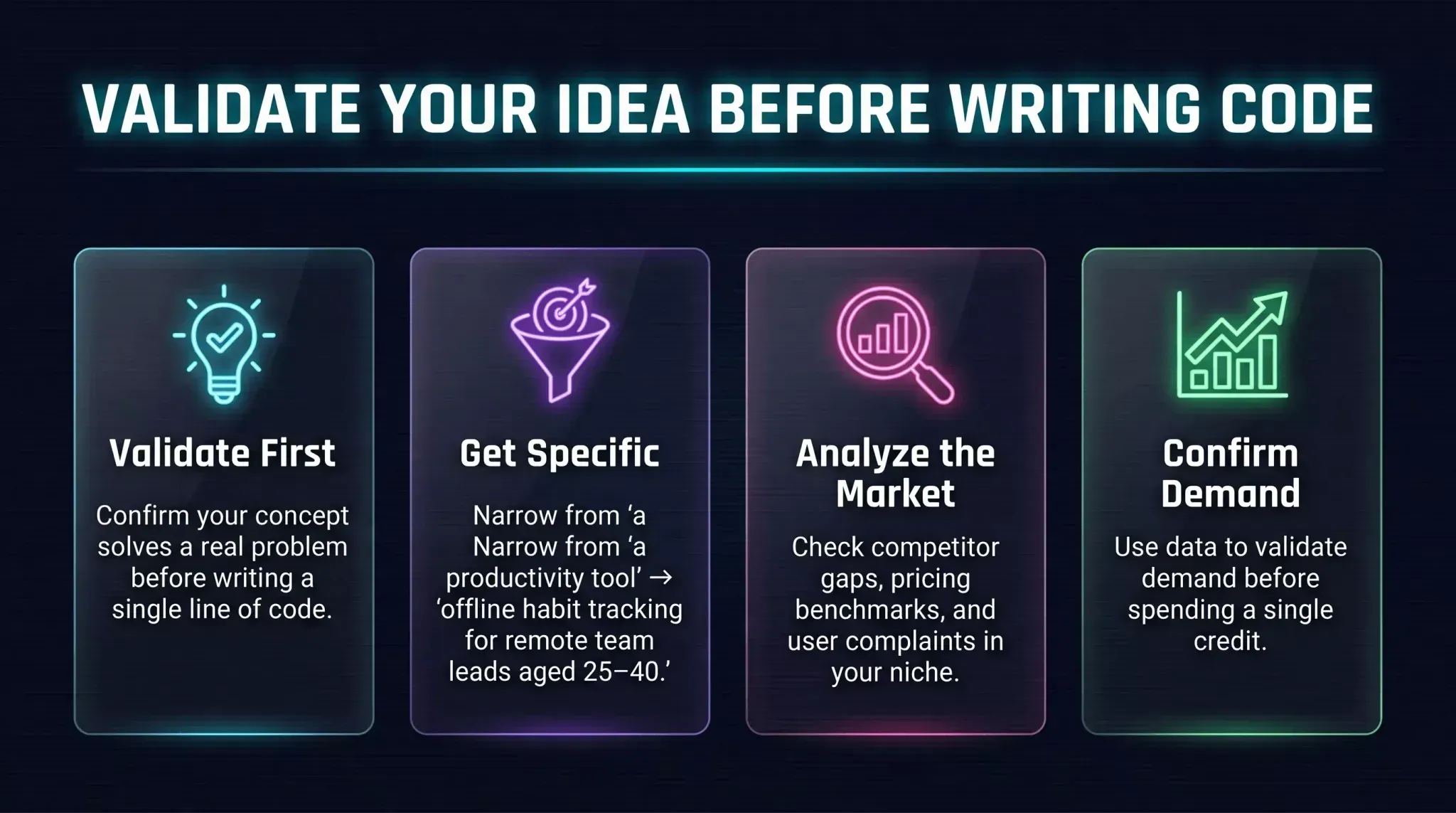
It is recommended to validate your app idea before writing code to ensure it solves a real problem.
-
Narrow down from "a productivity tool" to "offline habit tracking for remote team leads aged 25-40."
-
Check competitor gaps, pricing benchmarks, and user complaints in your niche
-
Use data to confirm demand before spending a single credit
Use Rocket.new Intelligence for Competitive Analysis
Rocket.new allows users to create web apps and mobile apps, including SaaS platforms, dashboards, and e-commerce sites, by simply describing their idea in natural language.
Its Intelligence is an AI-powered research agent that automates competitive analysis. Sign in at Rocket.new, navigate to Intelligence, and run the wizard around your niche.
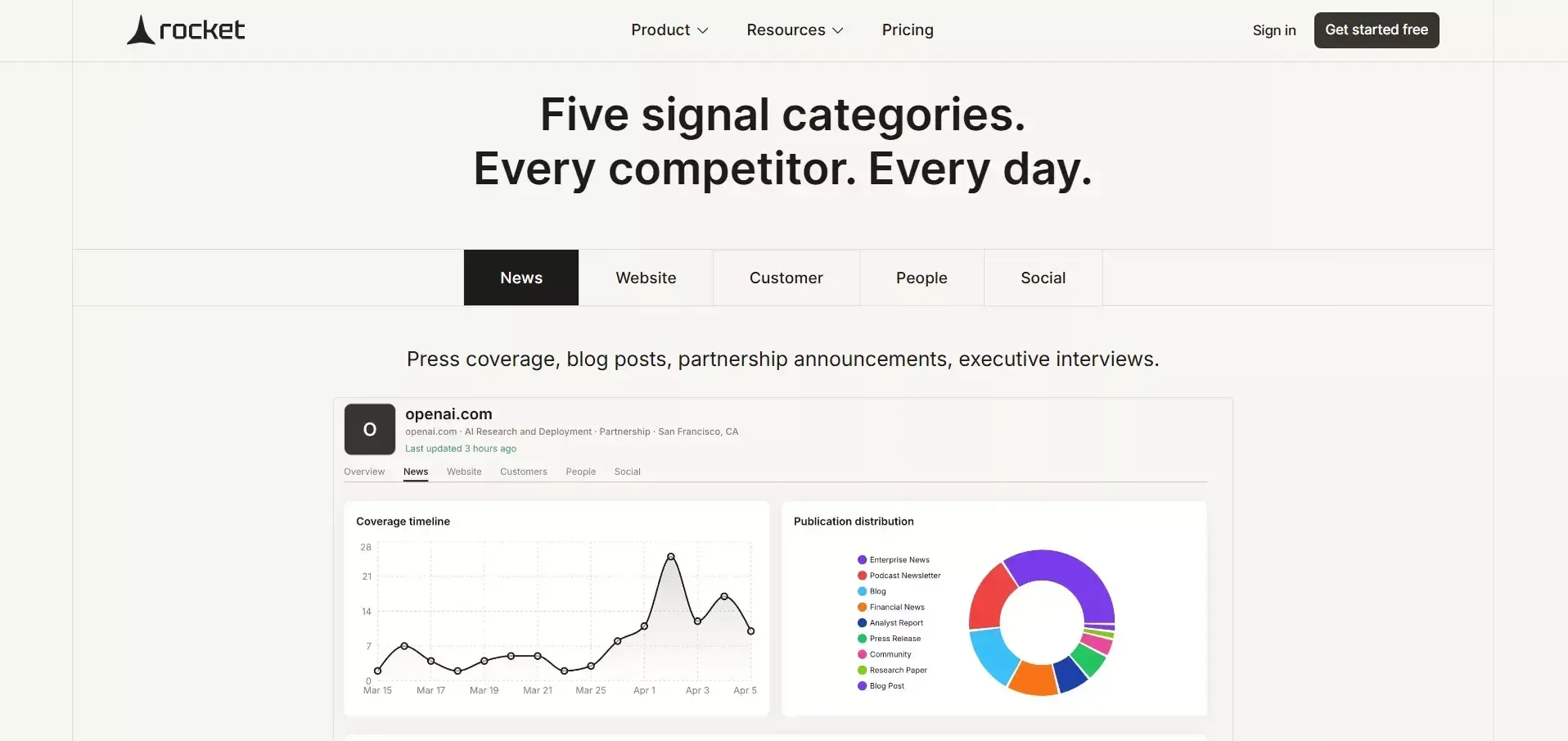 What Intelligence monitors:
-
Competitor landing pages, parsing positioning, and core features
-
Social channels, including Twitter/X sentiment and Reddit discussions
-
Reviews on Google Play and Apple App Store with complaint clustering
-
Pricing pages, extracting tiers and benchmarks
Within 24 hours, you receive a competitive brief with the top 5 competitors, their features, average pricing, and frequent user complaints. This data-driven approach to app development validates your app idea before you build anything.
Turn Data into Differentiating Features
After running your Intelligence brief, extract competitor gaps, common app complaints, and must-have features.
-
Identify 2-3 differentiating features for your Flutter project
-
Narrow your target audience based on unmet needs
-
On paid plans, Intelligence briefs refresh on a schedule, so competitive data stays current
Convert Insights into a Buildable Blueprint
A traditional PRD is not needed. The Solve feature in Rocket.new can generate a structured 90-day plan to guide the process.
-
Extract notes from the Intelligence brief: competitor gaps, complaints, must-have features
-
Convert these into a detailed description specifying what you want
-
The more specific your input, the fewer iterations needed
Prompts That Produce Results
Detailed prompts drive the entire creation. More detail about screens, buttons, and success criteria improves the output. Defining a specific problem rather than a broad idea helps focus the app development on a target audience niche.
Example:
"Create a Flutter project for iOS and Android targeting remote team leads. Core flows: email signup with Supabase auth, 3-step onboarding quiz, dashboard with habit streaks and progress charts, settings for Slack webhook and Stripe for payments at $9.99/month. Offline-first with Hive DB, Material 3 theme in green (#4CAF50), minimal navigation bar."
Key elements to include:
-
Target persona and platform (Flutter mobile)
-
Core user flows with specific screen names
-
Backend, data storage, and monetization requirements
-
Visual preferences (theme colors, font family Trebuchet MS, Verdana, Arial, Sans)
How Full Stack Generation Works from One Prompt
Vibe solutioning interprets your input and generates UI, backend, auth, and integrations in one pass without writing code.
-
The AI cross-references over 1 million histories to select architecture decisions
-
State management (Riverpod), navigation (GoRouter), and persistence (Supabase) are chosen automatically
-
Generation from one prompt handles the frontend and backend together
Rocket.new generates a production-ready result from a single prompt, handling the full software development lifecycle.
Create a Production-Ready Flutter App Without Developers
The AI app builder handles everything from UI components to backend wiring, producing native mobile apps for iOS and Android. Shipping production-ready software without developers means leveraging AI-powered platforms for frontend UI generation, backend logic, and deployment preparation.
-
Sign up at Rocket.new, click "New Project," choose "Flutter Mobile from Idea," paste your description
-
Within 5-15 minutes, the platform compiles a complete build
What Rocket generates:
-
A Flutter front-end with screens for your flows (login, dashboard, settings)
-
Backend logic with user authentication and integrations wired to Supabase
-
Production-ready navigation using GoRouter, Material 3 theming, and responsive layouts
Users can start from Figma URLs, screenshots, or pure text descriptions. Register and describe your idea, import a Figma design, or upload an image. The app idea you validated earlier becomes a working app through this build step.
Refine with Visual Edit and Commands
After the initial build, use Visual Edit to click on UI elements and change text, colors, or layout. This editing makes refinements straightforward.
Simple edits:
-
Rename "Projects" to "Habits" by clicking the text element
-
Move a "+" button to the bottom right corner by dragging
-
Change the primary color from blue to #4CAF50
-
Adjust font family trebuchet ms verdana arial sans
-
Set a background color:rgba(232,232,232,0.8) for section containers
-
Update background color:rgba(232,232,232,0.8) on cards for a softer look
-
Add a decorative background for the call to action section
Iterative refinement in AI app development allows for natural language commands to adjust features directly. Commands like /edit HomeScreen.dart "add LinearProgressIndicator" target specific files. Every change updates the underlying Flutter code automatically, so the final code export stays coherent.
Founders report completing drag and drop edits in 10 minutes. Those same tasks would take developers 1-2 hours manually.
Wire Real Integrations Without Engineers
A production-ready project without backend integrations is just a prototype. Rocket.new makes wiring these no-code while maintaining clean Flutter code, AI-generates behind the scenes.
User Authentication and Storage with Supabase
-
Create or link a Supabase project (free tier available)
-
Auto-generate schema and migrations for your entities
-
Row-level security policies are configured automatically
-
Email/password auth and social logins wire to the Flutter UI without touching Dart
Platforms like Rocket.new use compliance defaults like GDPR and CCPA to handle security requirements commonly needing professional oversight. On paid plans, private projects are excluded from public showcases, which matters for sensitive B2B products.
Payments and API Connections
-
Connect your Stripe account in project settings
-
Choose pricing tiers (e.g., Basic $4.99, Pro $9.99)
-
The platform injects checkout flows and auto-generates webhooks
Import existing REST APIs via Postman or Swagger JSON. Rocket auto-generates HTTP clients with error handling.
Hidden Risks and Common Pitfalls
Real issues founders encounter:
-
Incorrect Supabase redirect URLs
-
Mismatched webhook secrets (verify in your Stripe dashboard)
-
Forgetting to handle empty states (use: "add shimmer loading")
-
Edge functions are timing out on complex queries
-
Edge functions requiring higher execution limits on upgraded tiers
Rocket's /fix command handles 70% of common bugs automatically.
Pre-launch checklist:
-
Test complete signup and logout cycle
-
Process a test purchase with a sandbox card
-
Simulate a failing API call to confirm user-friendly errors
-
Verify offline behavior if specified
Rocket.new vs Traditional Development Workflows
How does an AI app builder compare to hiring developers? Here is a direct comparison.
| Factor | Rocket.new (Vibe Coding) | Traditional Dev Team |
|---|---|---|
| Time to MVP | Days | 3-6 months |
| Upfront cost | Free tier or paid plans | $15k-$80k+ |
| Code ownership | Full source code export | Depends on the contract |
| Backend setup | Automated from one prompt | Manual setup |
| Ongoing changes | Natural language, drag and drop | Developer hours |
| Rapid prototyping | In-platform previews | Requires staging |
| Internal tools | Supported | Often deprioritized |
Vibe coding, a method where people describe what they want in natural language, is becoming standard for rapid prototyping. This market is valued at $4.7 billion in 2026, projected to reach $12.3 billion by 2027. What makes Rocket different is speed and accessibility for non-developers who want production-ready results without managing a team.
Small teams benefit most when they need to validate quickly. When paid plans matter most: B2B products, higher frequency needs, and private code repositories.
Test and Iterate Like Product Teams
Even with AI-generated code, test app flows end-to-end before going live. Use Rocket's Preview Panel to simulate real usage across devices (iPhone 15, Pixel 8 via responsive emulator).
-
Walk through complete flows: signup, data creation, navigation, error paths
-
Have users test on their own devices for real feedback
Early Testing with PWAs
Recruit 5-10 early testers. Share a mobile-optimized link or installable PWA. You can build a web app version shared as a PWA, allowing users to access the app in their browser without going through stores.
-
Iterate based on feedback using chat commands
-
All generated Flutter code belongs to you, with code export for portability
-
Hand the code to engineers later or continue evolving it inside Rocket
Debugging Without Reading Dart
You do not need to understand Dart syntax. Describe the bug to Rocket's chat and let the AI adjust the code.
-
Reproduce the bug in the Preview Panel
-
Describe the behavior ("Crashes when I tap Save without a title")
-
Paste into Rocket with /fix
-
Verify the fix in Preview
Ship Your Flutter Project to Users
Distribution paths in 2026 include Google Play and Apple Store launches, plus sharing APKs or hosted versions first. Non-developers use multiple channels at once, given review times.
-
Three primary ways to share: hosted links, downloadable APKs, and publishing to stores
-
Each channel has trade-offs for time spent and reach
Distribution Channels
Rocket's one-click deployment produces:
-
A hosted version (95% Flutter performance via CanvasKit) that works as a web app
-
Complete Flutter source code downloadable as a '.zip' for code export
-
Mobile previews as installable PWAs while awaiting store reviews
With the downloaded codebase:
-
Generate an APK build for Android and share directly with users
-
Prepare an iOS build via Xcode or a contractor using the exported code
-
Firebase App Distribution is recommended for sharing without going through Google Play
-
Use Codemagic for iOS versions without owning a Mac
Store reviews take 1-3 days for Android, 4-7 days for Apple initially. Founders often share Firebase links or direct APKs for internal tools or beta users in the interim.
Free Rocket plans create public projects. Paid plans allow private exclusions from public showcases and custom domain support.
When to Involve a Developer
For many MVPs, internal tools, and SaaS-style Flutter projects, non-developers can reach production using only Rocket. The platform handles AI-powered code generation for 80% of typical use cases.
Scenarios where a developer helps:
-
Complex real-time features (WebSockets)
-
Heavy offline sync with conflict resolution
-
Deep native integrations (Bluetooth, ARKit)
-
Strict enterprise security audits
Because Rocket exports clean Flutter code (averaging 90% pub score), hiring a developer later does not mean starting the app over. They extend the existing project with full source code access.
Community Take on Shipping Without Developers
Real non-developers are creating and shipping with ai tools. Here is what one founder shared.
"I have always wanted to create a product, but the 'I cannot code' barrier stopped me every time. After experimenting with vibe-coding platforms, I completed the entire project end-to-end. No coding background. No prior experience. Within hours of launching, people started signing up. In the first 24 hours, around 50 users signed up. The biggest takeaway: vibe coding is real." - Source: Mehul Fanawala on LinkedIn
Experiences like this show a pattern. Non-developers who describe your idea clearly and generate a working result can reach production.
How Rocket.new Powers the Full Journey
Rocket.new connects every stage of shipping a Flutter mobile app. From Intelligence brief to store submission, the platform keeps context across research, creation, and monitoring so users never re-explain their idea.
What makes Rocket the recommended platform:
-
Vibe solutioning platform that interprets natural language prompts into deployable results
-
25k+ templates library, free to use, covering mobile, landing pages, SaaS dashboards, and internal tools
-
Saves up to 80% tokens compared to other AI tools and code platforms
-
Supports Flutter (mobile) and Next.js (web), so you can ship full-stack apps for both from one workspace
-
Collaboration features for users working in small teams or sharing progress with stakeholders
-
3 Products, One platform: Solve, Build, and Intelligence covering research, creation, and ongoing competitive monitoring
Use cases:
-
Solo founders validating a mobile idea with Intelligence, then generating and shipping full-stack apps without hiring developers
-
Non-developers creating tools for their teams, going from describe your idea to a working result in days
-
Product teams use Solve to generate a PRD, then create with Build, and track competitors via Intelligence after launch
Go From Idea to a Working Flutter Project Faster
What does it take to ship a production Flutter app from market research on Rocket.new without a dev team?
Validated data, a specific natural language prompt, and a platform that handles full-stack generation, integrations, and deployment in one place.
The time spent going from idea to a working result on Google Play or as a PWA has dropped from months to days. Vibe coding, led by Rocket.new, puts the entire process within reach of anyone willing to test with real users.
Table of contents
- -Validate Your Idea Before Writing Code
- -Use Rocket.new Intelligence for Competitive Analysis
- -Turn Data into Differentiating Features
- -Convert Insights into a Buildable Blueprint
- -Prompts That Produce Results
- -How Full Stack Generation Works from One Prompt
- -Create a Production-Ready Flutter App Without Developers
- -Refine with Visual Edit and Commands
- -Wire Real Integrations Without Engineers
- -User Authentication and Storage with Supabase
- -Payments and API Connections
- -Hidden Risks and Common Pitfalls
- -Rocket.new vs Traditional Development Workflows
- -Test and Iterate Like Product Teams
- -Early Testing with PWAs
- -Debugging Without Reading Dart
- -Ship Your Flutter Project to Users
- -Distribution Channels
- -When to Involve a Developer
- -Community Take on Shipping Without Developers
- -How Rocket.new Powers the Full Journey
- -Go From Idea to a Working Flutter Project Faster