
Most app ideas stall because raw research never turns into a structured build plan. Solve on Rocket.new connects strategy memos and customer data into a unified project memory. It generates a complete PRD with personas, features, and metrics that directly feed into app building.
Why Do Most AI App Ideas Stall Before a Single Page Ships?
What stops an app idea from becoming an app people use? It is not the code. It is the gap between raw research and a clear build plan. 22% of product managers now use AI for spec writing, up from 4% in 2024. Writing a PRD by hand takes time, and the work leads to missed details.
-
Standalone AI tools create text but skip the structured output that connects research to build priorities
-
Without a clear document, app projects lose clarity and stall before code gets written
-
A strategy memo by itself does not tell anyone what to build, which user to build for, or how to understand whether it worked
So the real question is: how does Solve on Rocket.new generate a complete prd from a strategy memo and raw customer research, and why does that make it easier to ship web apps and mobile apps?
Where App Ideas Get Stuck
Most users start with a head full of things they want to build. They talk to customers, write notes, save competitor pages, and share information. Then they open a blank page and try to write an idea into a document. Clarity drops.
-
Context from customer calls gets lost between apps
-
Teams guess which feature matters because nothing connects data to the build stage
-
AI tools that generate paragraphs do not understand the background for the call or the competitive intelligence behind each point
-
Comment threads do not connect to the work that comes next
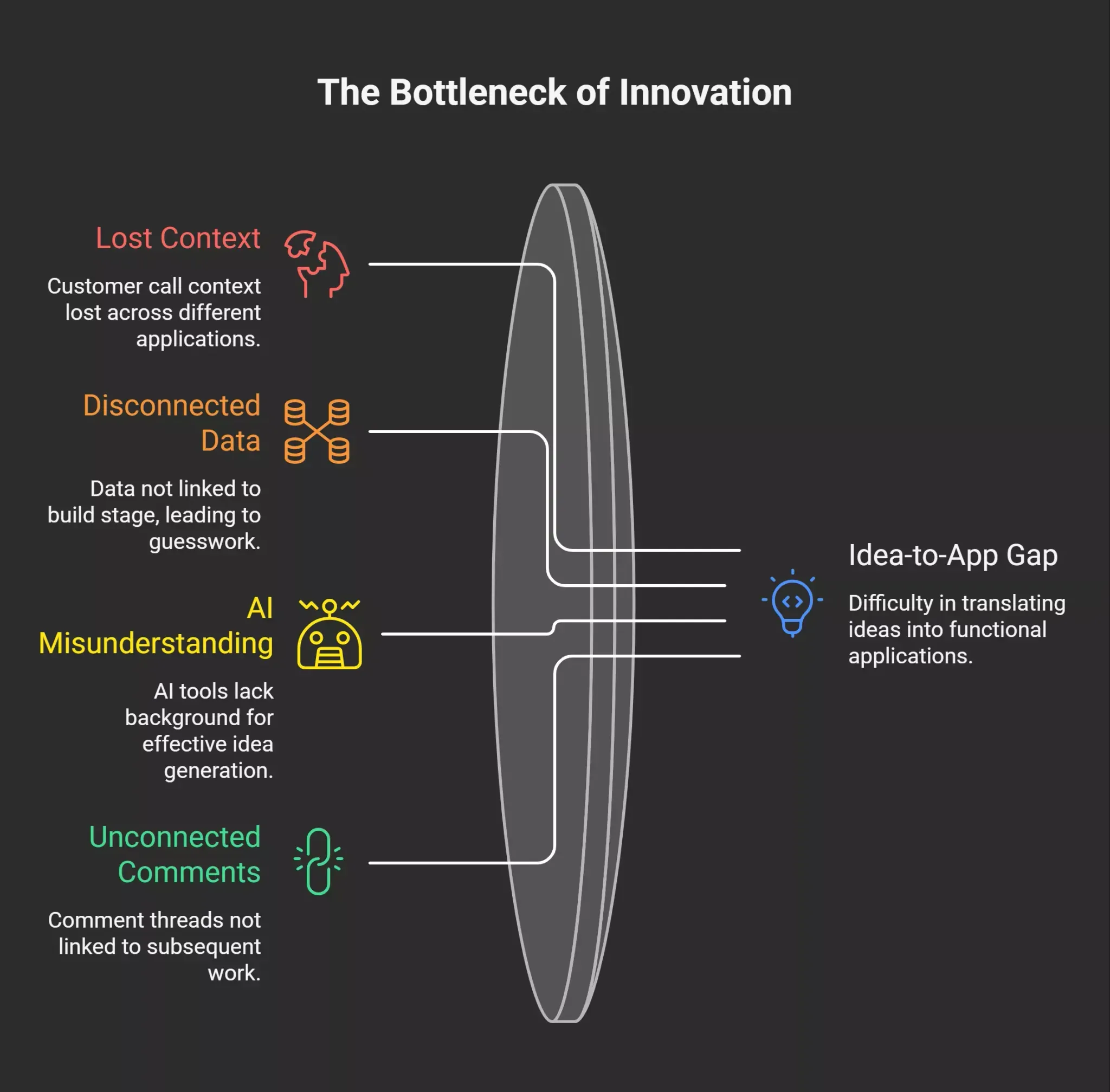 This challenge is hard to ignore. Without a clear structure, turning an idea into real work is slow and expected to fail. Users post about this on Reddit: they write a prompt, get text, and do not understand what to build. The idea-to-app gap is the bottleneck.
How Solve Reads Your Raw Inputs
Solve on Rocket.new works differently from other AI app builders. You upload your strategy memo and raw customer research directly into a project. Solve reads those inputs into a shared project memory. No losing context. No re-explaining things.
-
Upload interview transcripts, survey data, competitor write-ups, and memos
-
Solve identifies patterns, recurring user pain points, and market trends
-
It connects each insight to the strategic goals you defined
-
Every comment and data point stays linked, so Build already has the full context at the next stage
This approach is what sets Rocket apart. Information feeds forward and connects to the next step. Nothing resets. Solve uses vibe solutioning to map market dynamics and user insights into build choices.
What the Structured PRD Includes
The final structured output from Solve is not a wall of text. It is a document that connects research to action. Solve creates a brief that works as a living PRD.
| PRD Section | What Solve Creates |
|---|---|
| Product Vision | Tied to the strategy memo |
| User Personas | Built from actual research, not a guess |
| Pain Points | Pulled from customer interviews |
| Prioritized Features | Ranked by evidence |
| Success Metrics | Data-driven and clear |
| Competitive Intelligence | From your uploaded market research |
-
Solve synthesizes data to find common themes and conflicting requirements
-
You can modify, edit, and update the PRD as new research feeds in
-
Evidence-based work reduces scope creep
-
The format matches what Build expects, so the pass from research to code connects directly
If two user groups want opposite things, Solve adds a comment in the report. If a competitor has already solved the problem, the competitive intelligence section shows it. This approach connects research to action, leads to better decisions, and makes the work easier to share. Writing a PRD this way takes minutes.
How Solve Stays Different from Other AI Tools
Most AI app tools let you write a prompt and get a paragraph. That works for brainstorming, but not for building web apps or mobile apps. Solve is different from other AI because it works inside a connected workflow where every page of research feeds the next step.
-
You do not re-explain your idea
-
Competitive intelligence and research information from Solve carries into Build, where code gets written with full context
-
Inline comments and edits inside a Solve task connect to projects, so your team shares one perspective on the technical details
-
Build reads the PRD and understands the user, the feature set, and the market position
On Reddit, users comment about losing context when switching between AI tools. 68% of engineering re-requests trace back to missing acceptance criteria. Solve this by writing a complete PRD before code gets written. That clarity is supposed to come from a PRD, but most AI app tools skip this stage. Connecting research to the build cuts complexity and saves time.
What the Community Is Saying
"What Rocket 1.0 is tackling goes beyond just vibe coding. It is addressing the classic problem: most tools optimize for execution speed, but the real bottleneck is clarity on WHAT to build and WHY." -LinkedIn comment on Rocket 1.0 launch post
This comment captures why vibe solutioning exists. Building faster does not help if the idea itself lacks clarity. Solve forces you to understand the problem before writing code, which saves time and rework.
How Rocket.new Turns Strategy into a Build-Ready App
Rocket.new connects research, build, and competitive intelligence on one platform. Create a Solve task, upload your memo and customer research, and the AI reads every page, identifies patterns, and writes a PRD you can build from.
Rocket features:
-
Vibe solutioning platform that starts with the question, not with the code
-
25k+ template library, free to use, saving up to 80% tokens during app generation
-
Supports Flutter for mobile apps (iOS and Android) and Next.js for web apps
-
Collaboration built in: inline comments, shared projects, edit controls for teams
-
Three products, one platform: Solve, Build, and Intelligence
Use cases that connect PRD generation to Rocket:
-
A founder uploads a memo and user transcripts. Solve creates a PRD with clear personas. Build reads it and ships a working web app the same week.
-
A product team runs market research on a new idea. Solve produces a report. They create a Build task with full context, making the work easier for people to understand.
-
A consultant creates a Solve task. The output is a document to share and sell the idea internally.
-
An agency uploads a brief with Reddit user feedback. Solve flags conflicting needs, writes a PRD. Build generates mobile apps and web apps from it on one platform.
Rocket.new is free to start. Sign up and test Solve with included credits. Paid plans start at $25/month. For those who need all three products on one platform, plans start at $350/month. Every comment, edit, and update feeds into the next session. The call to action section on Rocket.new lets you start in under a minute.
From Strategy Memo to a Working App
Turning raw research into a working application does not need to be a fun idea that never ships. Rocket.new built Solve to connect your documents to a finished PRD, and Build picks up where Solve left off. Every stage shares context.
The world of app development keeps moving toward AI tools that handle more of the process. Solve turns thinking into structure, and structure into an app you can share with real people. That loop, from idea to build, is what vibe solutioning looks like when the point is shipping.
Try Solve on Rocket.new to turn your research into a build-ready PRD in minutes.
Table of contents
- -Why Do Most AI App Ideas Stall Before a Single Page Ships?
- -Where App Ideas Get Stuck
- -How Solve Reads Your Raw Inputs
- -What the Structured PRD Includes
- -How Solve Stays Different from Other AI Tools
- -What the Community Is Saying
- -How Rocket.new Turns Strategy into a Build-Ready App
- -From Strategy Memo to a Working App