
Most AI builders rely on prompts, which leads to repeated fixes and disconnected output. Rocket.new builds from structured research, stored context, and a connected Solve → Build → Intelligence flow. This makes the first version more production-ready, stable, and faster to improve over time.
Why do some first versions already feel right while others need constant fixing?
When your first app is backed by real research and stored context, you avoid blind guesses. You move with clarity from day one. Instead of relying on trial and error, your decisions come from actual insight. That changes how you build, test, and refine your app.
According to a report by McKinsey & Company, teams that use data-driven decisions can improve development speed by up to 30%.
So, when your AI app starts with evidence instead of assumptions, your process becomes smoother, faster, and more production-ready.
This blog will help you understand how to build smarter from the first version instead of fixing things later.
The Problem With Post-Prompt Builders
Most app builders today follow a simple flow. You type a prompt, get an app, and feel like things are moving fast. It feels smooth in the beginning, but that momentum doesn’t last long. Soon, small issues start stacking up and slow everything down.
The real issue is not speed. It’s the lack of stored research and connected context behind your build.
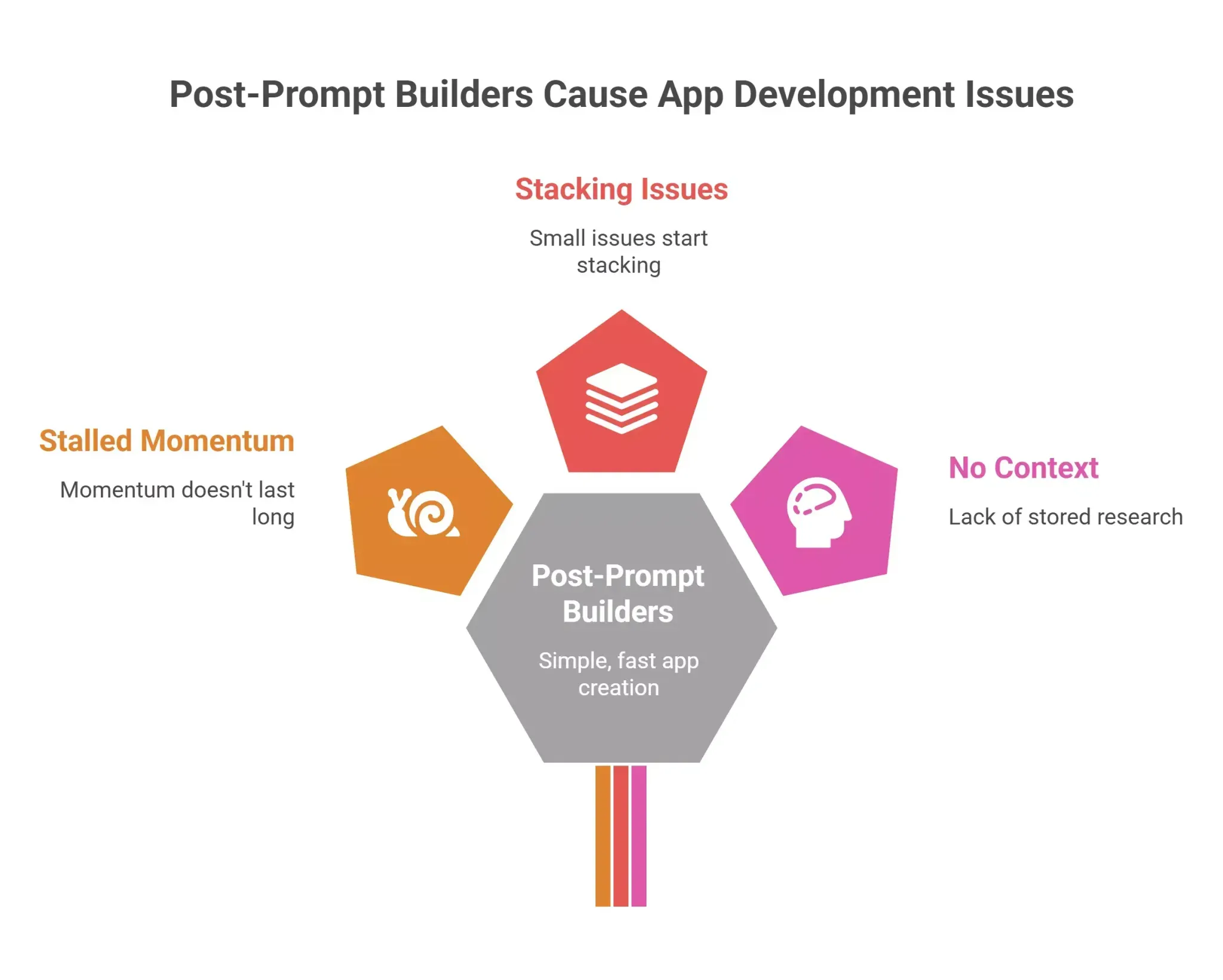
Where Things Start Breaking
-
You rely on a single prompt, but there’s no memory of past decisions
-
Your research is not stored, so every new build starts from zero
-
You keep fixing the same error again and again
-
Repeating similar tasks becomes part of the process
-
You rewrite code for features you already created
-
Your app loses structure as updates don’t connect properly
Even when using tools like Cursor, the workflow still depends heavily on prompts and tokens. There’s no deep connection between what you built before and what you are building now.
So, instead of moving forward, you keep going in circles. That’s exactly where most builders get stuck.
What Makes the First Version Different?
Some first versions feel solid right away, while others need constant fixes. The difference usually comes down to one thing. How the app was built in the beginning.
When your first version is based on structured research, everything changes. You are not just generating random pages or screens. You are building with a clear plan that guides your decisions.
What Changes in This Approach
-
Your app is built with research-backed decisions from Solve, not guesses
-
Each feature connects to your original idea and structure
-
You don't rely only on a single prompt to generate everything
-
Your pages and screens follow a logical flow from the start
Rocket works differently because it is a three-pillar platform. Solve runs structured research before you build market analysis, competitive teardowns, pricing benchmarks, and product direction all from live data. Build turns that validated idea into a production-ready app. Intelligence keeps you informed after launch by continuously monitoring your competitive landscape.
Why Does it Feel More Confident
So instead of asking: "Does this feature make sense?"
You already know it does. Because Solve's research supports every decision you make before a single screen is generated.
That's the key point. Your first version is not random. It's built on clarity, backed by real decisions, and ready to move forward.
Quick Comparison Table
Before we move ahead, let’s simplify things. Here’s a quick side-by-side look at how post-prompt builders compare with Rocket. This will help you clearly see where the difference actually comes from.
| Aspect | Post-Prompt Builders | Rocket Approach |
|---|---|---|
| Starting point | Single prompt | Research-backed idea |
| Context | Lost after each prompt | Stored and reused |
| Build flow | Repetitive | Connected |
| Error fixing | Manual and repeated | Reduced over time |
| Output | Demo-level | Production ready |
So, when you look at it this way, the gap becomes obvious. One approach keeps restarting, while the other keeps building forward. And that’s exactly why the first version feels stronger when it’s backed by research and connected context.
How Rocket Connects With This Idea
So, how does Rocket actually connect with this concept? It comes down to one simple focus. Context.
Rocket is not just another AI app builder. It works as a vibe solutioning platform where your research, your idea, and your build all stay connected across three pillars: Solve, Build, and Intelligence.
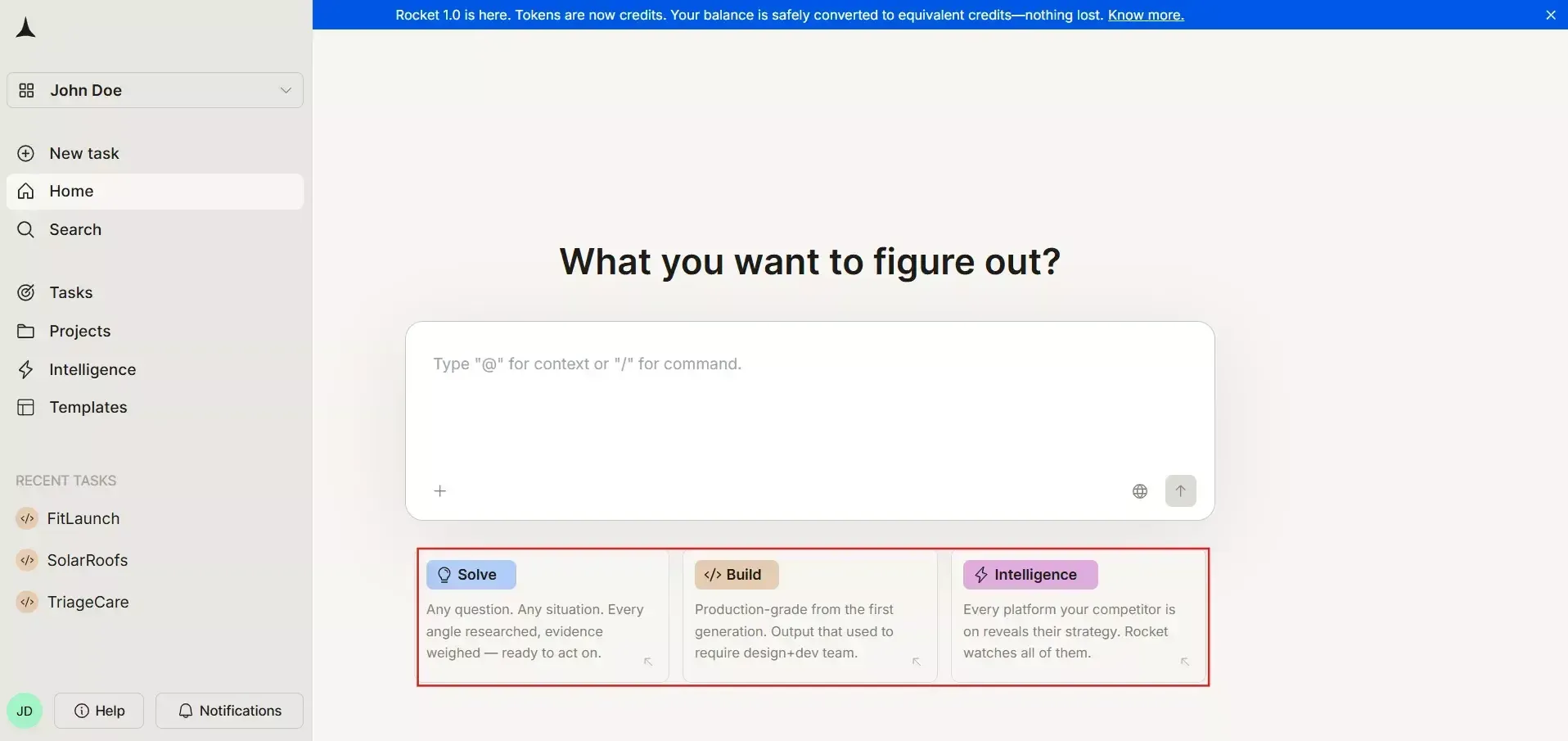 What Makes This Connection Strong
-
Solve stores your research as a structured report inside your project not lost after each prompt
-
Your idea stays connected to every feature and update through Build
-
You build a full app structure with frontend, backend logic, APIs through Connectors, and pages
-
Every change you make is tracked through Build's Versions feature, so nothing feels random
You don't just generate an app and move on. You create something that grows with every step.
Why This Changes Everything
And here's the best part. Solve reports stay in your project so you can reference them as you build. Versions track every change so you can roll back or continue from any prior state. And Intelligence monitors your competitive landscape after launch, so your context never goes stale.
That means your next version is always better informed, not because the system magically remembers everything, but because your research, your build history, and your competitive signals are all available in one place.
How Rocket Works
Let's simplify how everything actually flows. Instead of jumping between tools or writing code step by step, Rocket keeps the entire process connected from start to finish.
1. You Start With Research
Before writing a single line of code, use Solve to ask a business question in plain language. You get back a structured, evidence-backed report with market analysis, competitive teardowns, pricing benchmarks, and product direction, all from live data.
2. You Enter Your Idea
You describe your app using natural language. No need to write code first.
3. Rocket Builds the Structure
Build generates pages, screens, backend logic, and UI. It creates a full app structure instantly and shows a live preview the moment generation finishes.
4. You Refine
You keep improving through chat, Visual edit, or direct code access. You test features, fix errors, and connect APIs through Connectors. The Versions feature tracks every change, so nothing is lost.
5. You Launch
You deploy your app with a custom domain. Rocket handles SSL and DNS automatically. You can download the full project as a .zip file or continue working inside the platform.
So, instead of a scattered workflow, everything happens in one place. Your idea turns into a structured app, your updates stay connected, and your final output is ready to launch without going back and fixing everything again.
Key Features That Make a Difference
Let's focus on what actually impacts your build experience. These are the features that change how your app comes together and how smoothly you move from idea to launch.
What You Get With This Approach
-
Solve-Backed Research: Before you build, Solve runs structured research on your market, competitors, and pricing, producing a report that lives in your project and informs every decision you make.
-
One Platform Workflow: Everything happens in one platform across Solve, Build, and Intelligence. No need to switch between tools or manage scattered files.
-
Versions: Every update is tracked through Build's Versions feature. You can revisit, roll back, or continue from any prior state without losing your structure.
-
Production Ready Output: You don't just get a demo. Build generates production-ready code for web apps, mobile apps, landing pages, and e-commerce stores.
-
Flexible Plans: Rocket operates on a credits-based subscription system. Visit Rocket.new for current plan details.
So, when these features come together, your process feels more stable. You spend less time fixing errors and more time improving your app with confidence.
Why Other Tools Miss This
Most AI tools focus on code generation. They give you output fast. But they don’t manage your process.
So you end up doing things like:
-
Writing the same prompt again
-
Fixing the same error
-
Rebuilding the same feature
-
Losing track of your structure
And honestly, that slows down your app-building journey. Even if your app looks good in the beginning, it doesn’t stay consistent.
Real Flow of Building With Rocket
Let’s walk through how things actually feel when you start building. The flow is simple, but the difference comes from how everything stays connected from start to finish.
-
You sign into your account.
-
You enter your idea.
-
Rocket starts building your web app.
What Happens Next
-
Add new features based on your idea
-
Test functionality to check how things work
-
Fix any errors that show up during the build
-
Connect APIs to expand what your app can do
-
Create landing pages for your users
-
Adjust the UI to match your style
Every step stays connected to your original structure. Nothing feels random or disconnected.
So, instead of jumping between tools or losing track of your work, you keep moving forward in one smooth flow. And yes, you can export your project anytime when you’re ready.
Why This Matters for Mobile Apps and Web Apps
If you are building mobile apps or web apps, this shift changes how your entire process feels. Instead of moving blindly, you start building with clarity from the very beginning.
Instead of This
-
Guessing which features to add
-
Rewriting the same code again and again
-
Managing multiple tools and losing track
You Do This
-
Build with clear research-backed decisions from Solve
-
Connect every part of your app in one flow across Solve, Build, and Intelligence
-
Launch faster without going back to fix everything
Your first version already has direction. It's not just a rough demo or a random build. It's something you can test, improve, and actually move forward with confidence. That's what makes it powerful.
A Small Reality Check
Let’s be honest for a second. The issue most builders face is not effort; it’s the system they rely on.
Where Things Go Wrong
-
Overdependence on prompts without deeper context
-
No stored knowledge for future builds
-
Lack of connection between past and current work
-
Rebuilding the same features and structure again
So, instead of progressing, you keep going in circles. And that’s exactly where things start to break down.
Built on Rocket.new Changes the Starting Point
Most app builders rely on a single prompt. They build fast but without research, which leads to repeated errors, disconnected features, and extra work during later stages. The process feels quick at first, but things start breaking as updates don't connect. That's where time gets wasted fixing what should have been right from the beginning.
Rocket changes this by connecting research, building, and monitoring in one platform across three pillars: Solve, Build, and Intelligence. When your app is built on Rocket.new, your first version is not just a demo.
It is backed by real decisions from Solve, tracked through Versions in Build, and supported by Intelligence monitoring your competitive landscape after launch. This leads to fewer fixes, a faster launch, and more consistent production results.
Table of contents
- -The Problem With Post-Prompt Builders
- -Where Things Start Breaking
- -What Makes the First Version Different?
- -What Changes in This Approach
- -Why Does it Feel More Confident
- -Quick Comparison Table
- -How Rocket Connects With This Idea
- -How Rocket Works
- -1\. You Start With Research
- -2\. You Enter Your Idea
- -3\. Rocket Builds the Structure
- -4\. You Refine
- -5\. You Launch
- -Key Features That Make a Difference
- -Why Other Tools Miss This
- -Real Flow of Building With Rocket
- -What Happens Next
- -Why This Matters for Mobile Apps and Web Apps
- -A Small Reality Check
- -Where Things Go Wrong
- -Built on Rocket.new Changes the Starting Point