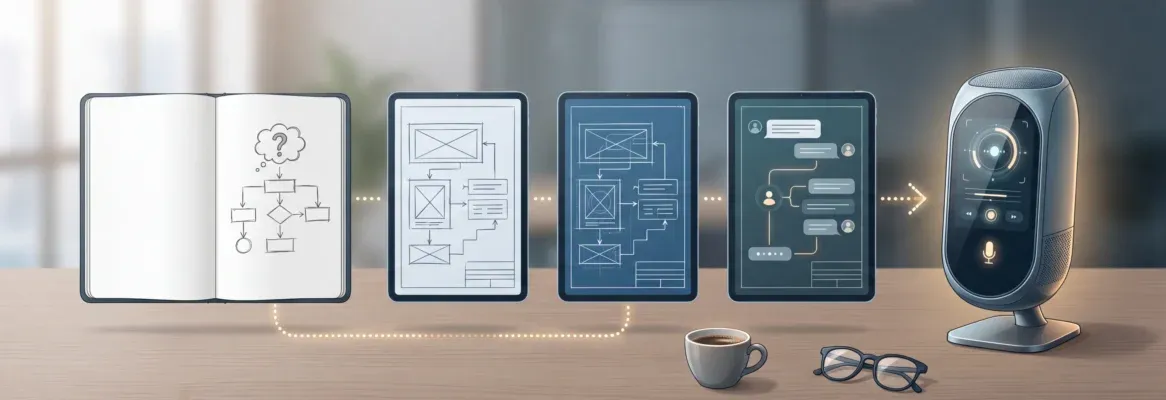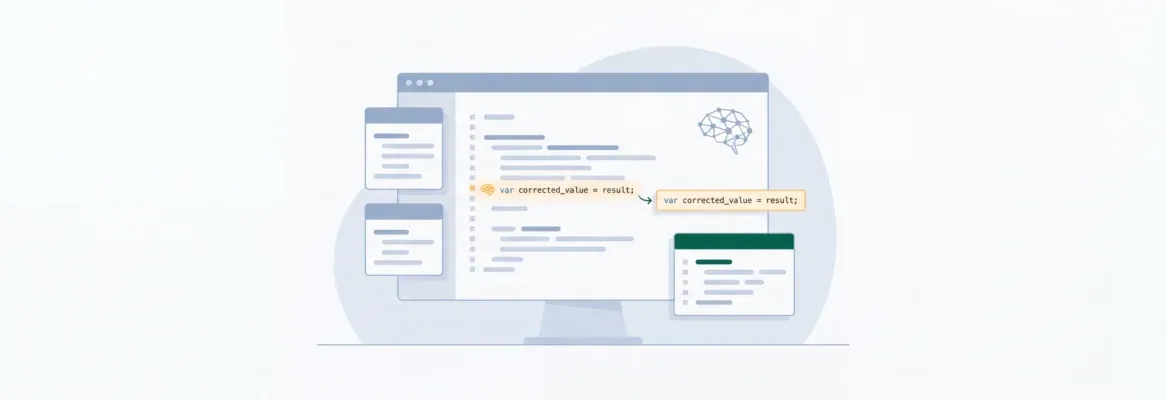
Most teams lose competitive ground not from lack of data, but from lack of a repeatable system. These 15 structured AI prompts to track competitor moves replace slow quarterly reports with weekly, automated intelligence your whole team can act on.
How many competitor pricing changes slipped past your team last quarter?
The competitive intelligence tools market is projected to reach USD 0.87 billion in 2026, growing at a 21.17% CAGR through 2034. Companies that monitor rivals in real time consistently win more deals than those relying on quarterly summaries.
The problem is rarely data scarcity. More often, it is the absence of a repeatable process. Most teams run competitive analysis once a quarter, paste findings into a slide deck, and set it aside until the next board meeting. By then, rivals have shipped new features, adjusted pricing, or pivoted their messaging entirely.
Structured prompt tracking solves this by giving your AI model a defined set of instructions. You specify the competitor, the output format, and the cadence. The model synthesizes patterns across the web and returns concise, actionable summaries that are ready to distribute immediately.
How to Get the Most From These Prompts?
Three principles separate generic AI output from genuinely useful intelligence.
Define role and context first. Open every prompt with "Act as a competitive intelligence analyst" and specify your industry, company size, and target market. This grounds the output in your actual competitive landscape rather than a generic one.
Specify output format explicitly. Ask for tables, bullet points, executive summaries, or battle card formats. Structured output is immediately usable, while unstructured prose typically requires manual reformatting before it reaches anyone.
Add verification instructions. Include "cite sources for all claims" and "flag any information you cannot verify with a confidence rating of Low, Medium, or High." Doing so reduces hallucination risk and builds trust in the output over time.
Apply these three principles consistently and your results will be substantially more reliable.
Prompts for Market Research and Company Overview
Every solid competitive analysis starts with knowing who you compete against and where they stand. The four prompts in this section produce executive-ready reports from publicly available data, giving your team a structured foundation to build on.
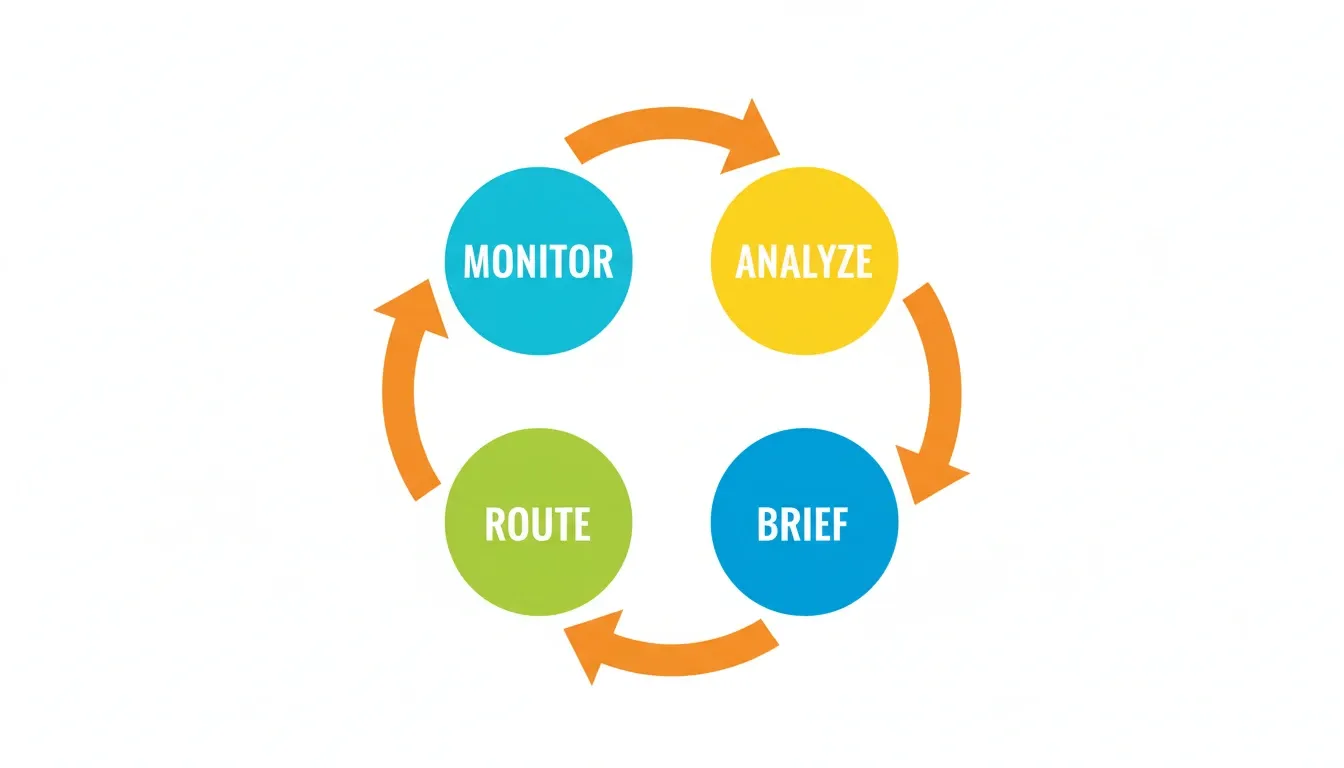
A four-phase competitive intelligence cycle: monitor competitor signals, analyze patterns, generate strategic briefs, and route findings to the right teams.
1. Deep-Dive Company Analysis
"Act as a competitive intelligence analyst. Provide a comprehensive competitive analysis of [Competitor Name] including their core business model, the specific problems they solve, their product lines, estimated company size, funding history, and go-to-market strategy. Format the response with clear headers and bullet points for each section."
Run this quarterly for each of your top three to five direct competitors. Store outputs in a shared document to build a living competitive reference library over time.
This prompt works best with reasoning-capable models like ChatGPT Deep Research or Claude with extended context. It produces a complete company overview covering value proposition, organizational structure, and perceived strengths.
Use case: A B2B SaaS team ran this prompt after a competitor raised a Series B. The output surfaced a shift from SMB to enterprise targeting, giving the team six weeks to adjust their own positioning before the competitor's new messaging went live.
2. SWOT Analysis Generation
"Generate a detailed SWOT analysis for [Competitor Name] based on publicly available information. For strengths, focus on product capabilities and market position. For weaknesses, reference customer feedback from G2 and Capterra. For opportunities, identify emerging trends they could capitalize on. For threats, highlight areas where new competitors or market shifts could disrupt their core business."
Grounding weaknesses in verified review data makes the output credible rather than speculative. When a sales rep cites a specific G2 quote in a competitive conversation, it lands differently than a generic claim.
To get the most out of this prompt, customize the output format to match your internal battle card templates. That way, results slot directly into sales enablement materials without extra reformatting.
3. Market Position Mapping
"Map the competitive positioning of these companies in our category: [list 5-7 competitor names]. For each, identify their primary value proposition, target audience by company size and vertical, pricing model, and unique selling propositions. Present findings in a comparison table with competitors as rows and positioning dimensions as columns."
This prompt reveals where competitors overlap and where genuine gaps exist. The table format makes it easy to share with product marketing teams planning campaigns or messaging updates.
Once you have the table, use it to identify one underserved segment per quarter and build a targeted campaign or feature brief around it.
4. Competitive Pricing Tracker
"Analyze the current pricing structure of [Competitor Name]. Check their pricing pages, product tiers, feature limits per tier, and any recent pricing changes visible in web archives or customer reviews. Compare their pricing model to ours and identify where we have a competitive advantage on value. Output as a structured summary with a pricing comparison table."
Pricing shifts are among the strongest signals of strategic direction change. When a competitor drops prices or adds a free tier, it often signals entry into a new market segment or a response to competitive pressure.
Run this monthly and track changes over time. Doing so helps you anticipate their next move before it affects your pipeline.
5. Feature Comparison Matrix
"Create a feature-by-feature comparison matrix for [Your Product] vs [Competitor A] vs [Competitor B]. Include categories: onboarding experience, core features, integrations, analytics, security and compliance (SOC 2, HIPAA where relevant), customer support options, and API access. Rate each feature as Strong, Moderate, or Weak based on available evidence from product pages, reviews, and case studies."
Run this before every quarterly roadmap planning session. Features rated Weak compared to competitors become immediate prioritization candidates. The structured format also highlights content gaps where rivals claim capabilities your documentation does not yet address.
Want to test these prompts with a platform that already does this automatically? Rocket's Intelligence layer monitors competitor pricing pages, product updates, and messaging shifts continuously, then explains what the changes mean for your next move.
Read more about how Rocket turns pricing signals into strategic decisions, then try it yourself at Rocket.new.
Prompts for Product Roadmap and Feature Monitoring
Knowing what competitors are building next matters just as much as knowing where they stand today. According to the Stanford HAI 2026 AI Index Report, U.S. private AI investment reached \$285.9 billion in 2025, with a significant share flowing into product intelligence tools that automate exactly this kind of monitoring.
6. Product Update and Launch Alerts
"Summarize all product updates, feature launches, and changelog entries for [Competitor Name] from the past 30 days. Check their blog, changelog page, social media announcements, and press releases. For each update, note the feature name, target user persona, and potential business impact on our market position. Flag any updates that directly compete with our product roadmap priorities."
This is your early-warning system. When a competitor ships something on your roadmap, response time determines whether customers stay or start evaluating alternatives. Set this to run bi-weekly so your product team stays informed without any manual effort.
7. Customer Feedback Mining
"Analyze the most recent 50 customer reviews for [Competitor Name] on G2, Capterra, and Reddit forums. Extract: the top 3 praised features, top 3 recurring complaints, common objections raised during purchase decisions, and unmet needs customers mention wanting. Categorize feedback by customer journey stage (awareness, evaluation, onboarding, retention). Provide specific quotes where possible."
Customer feedback from review platforms is one of the most honest data sources available for understanding real buyer behavior. Competitors simply cannot hide their weaknesses from their own customers.
The sentiment you extract here feeds directly into objection handling scripts, competitive positioning documents, and product gap analyses, making it one of the most versatile prompts in this list.
8. Competitor Job Posting Intelligence
"Analyze the current job postings for [Competitor Name] on LinkedIn, Indeed, and their careers page. Identify: which departments are hiring most aggressively, what technical skills and tools appear in engineering roles, what strategic initiatives are implied by new leadership hires, and whether any postings suggest entry into new markets or product categories. Summarize the strategic direction these hiring patterns suggest."
Job postings are one of the most reliable leading indicators of a competitor's next strategic move. A surge in enterprise sales hires points to market expansion. New ML engineer roles signal product investment. This prompt surfaces those signals before any public announcement is made.
Use case: A fintech startup noticed a competitor posting for a "Head of Compliance, EMEA" role. Running this prompt identified a European expansion in progress, giving the team time to accelerate their own EU data residency roadmap by two quarters.
9. Content Gap and Topic Discovery
"Analyze the blog content and resource pages of [Competitor Name]. Identify: their top 10 content topics by estimated search volume, topics they cover that we do not, topics we cover that they ignore, and emerging trends in their recent publishing patterns. Cross-reference their content strategy with keywords relevant to our category and suggest 5 content gaps we should prioritize for SEO and digital marketing."
Content gaps often mirror product gaps, which makes this prompt valuable for both content marketing and product marketing teams. Use the identified gaps to build a 90-day content calendar that targets underserved buyer questions your competitors are not answering.
10. Brand Messaging Shift Detector
"Compare [Competitor Name]'s current homepage, product pages, and about page messaging to their messaging from 6 months ago (use web archive snapshots if available). Identify changes in: their primary value proposition, target persona language, competitive positioning claims, and tone of voice. Highlight which changes suggest a strategic pivot and which are cosmetic. Note any new competitor name mentions or comparison pages they have added."
Messaging shifts typically precede product launches by four to eight weeks, as companies prepare their audience for new capabilities. Catching these shifts early gives you time to counter-position before the competitor's new narrative takes hold.
Run this monthly across your top three to five competitors to surface category-level trends rather than just individual moves.
These prompts surface signals. Rocket connects them into a picture. Its Intelligence layer reads competitor websites, social activity, ad copy, and review platforms simultaneously, then flags when a messaging shift signals a strategic pivot.
See how to detect competitor repositioning before it hits your pipeline, then run your first competitive brief on Rocket.new.
What Sets Prompt Tracking Apart From Manual Research?
The difference between manual competitive analysis and AI-powered prompt tracking goes beyond speed. It comes down to consistency, coverage, and the ability to surface trends that a single analyst would miss when scanning dozens of data sources at once.
| Dimension | Manual Research | AI Prompt Tracking |
|---|---|---|
| Time investment | 8-12 hours per week per analyst | Under 30 minutes setup, runs on schedule |
| Competitor coverage | 3-5 competitors maximum | 20+ competitors across the same category |
| Update frequency | Monthly or quarterly reports | Weekly or bi-weekly automated updates |
| Signal detection | Depends on analyst availability | Catches pricing, feature, and messaging changes continuously |
| Output consistency | Varies by person and context | Structured, repeatable format every time |
| Scalability | Requires hiring more analysts | Add new prompts without additional budget |
| Historical context | Lost when analysts leave | Retained and searchable across all runs |
| Cross-signal correlation | Rarely done manually | Connects job postings, pricing, and messaging shifts automatically |
The real value becomes clear at scale. When you track 15 to 20 competitors across pricing, product, content, and sales dimensions, patterns emerge that no single person could spot by reading individual websites. The AI connects dots between a competitor's new job postings, a recent funding round, and a shift in their homepage messaging, giving you a complete picture of their strategic direction before they announce it publicly.
Prompts for Sales Intelligence and Objection Handling
Sales teams lose deals when they walk into conversations without knowing what competitors are saying. The prompts in this section arm reps with buyer intent signals and competitive context, turning objection handling from guesswork into an evidence-based conversation.
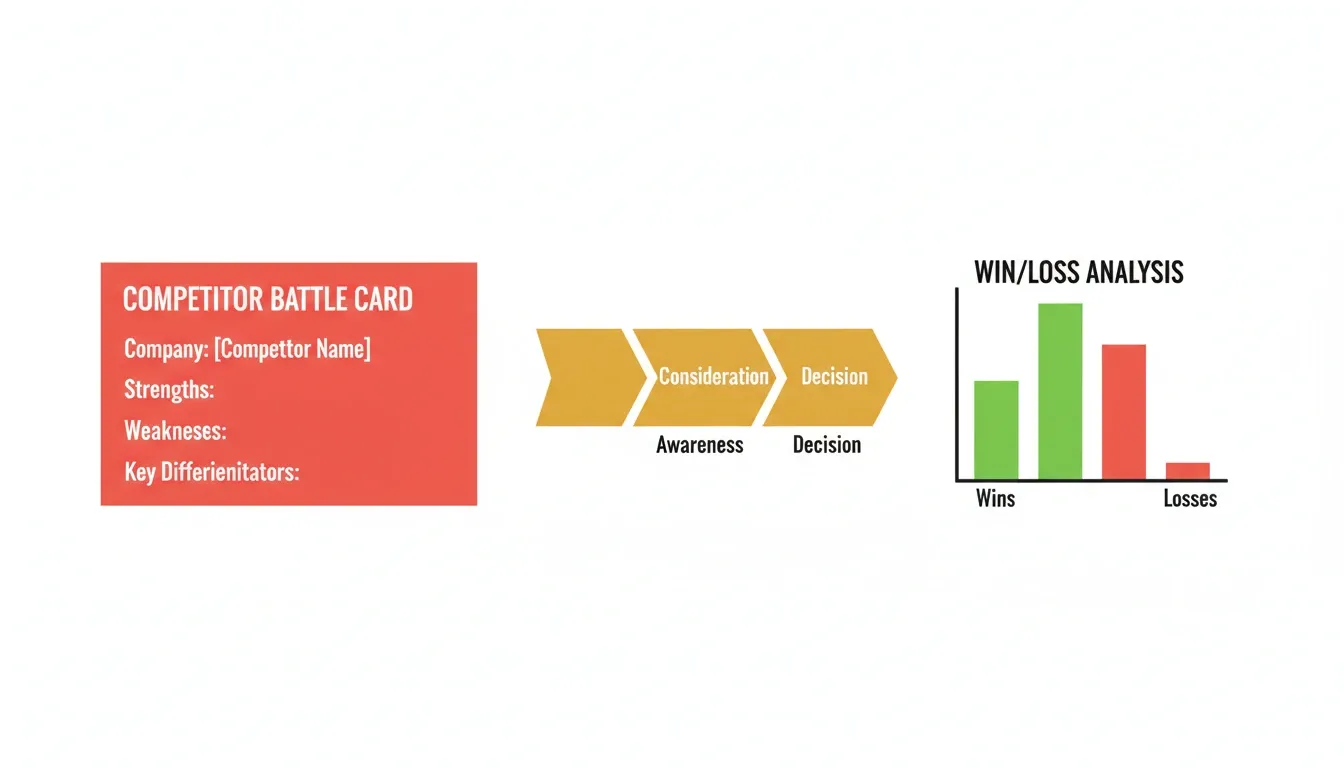
Sales intelligence in action: battle cards, funnel-stage pain points, and win/loss patterns mapped into a single competitive brief.
11. AI Search Visibility Audit
"Ask ChatGPT, Perplexity, and Gemini the following query: '[your primary industry question, e.g., What is the best competitive intelligence platform for B2B SaaS?]' For each AI model's response, document: which brands appear in AI answers, how each brand is described, what features or strengths are attributed to each, and where our brand presence ranks versus competitors. Propose 3 immediate action steps to improve our AI search visibility and brand presence in these responses."
AI visibility is the new SEO battleground. Brands that appear in AI recommendations capture buyer attention at the exact moment of intent, often before traditional search results even load. Run this monthly using five to seven variations of your core category queries to build visibility data and track changes over time.
This category-level tracking reveals which competitors are winning in AI-generated discovery and what content patterns are driving their citations.
12. Competitive Battle Card Builder
"Build a competitive battle card for our sales teams to use against [Competitor Name]. Include: their top 3 strengths (with evidence), their top 3 weaknesses (from verified customer reviews), common objections prospects raise when considering them, recommended talk tracks to address each objection, and 2-3 questions our reps should ask prospects to highlight areas where we win. Use concise language and limit to one page equivalent."
Battle cards built from real customer feedback and verified competitive data consistently outperform those based on assumptions. When a rep cites a specific G2 review weakness, it lands with far more credibility than a generic claim.
Update these monthly using outputs from Prompt 7 as the primary input source.
13. Customer Journey Pain Point Extraction
"Map the customer journey pain points for buyers evaluating solutions in our category. For each funnel stage (awareness, consideration, decision, onboarding), identify: the top 3 pain points buyers experience, which competitors address these pain points well, where gaps exist that no competitor currently solves well, and what success criteria buyers use at each stage. Base findings on review sites, community discussions in Reddit forums, and analyst reports."
Pain points at the decision stage are where competitive positioning matters most, because buyers are actively comparing solutions side by side. Understanding where rivals fall short gives your team a clear angle to differentiate.
Use case: A SaaS team used this prompt to discover that buyers in their category consistently complained about poor onboarding across all competitors. They built a white-glove onboarding program, made it a primary differentiator, and improved close rates by 18%.
14. Win/Loss Pattern Identification
"Analyze our recent win/loss data (paste summary or key patterns here) alongside publicly available information about [Competitor Name]'s strengths. Identify: the top 3 reasons we win against this competitor, the top 3 reasons we lose, patterns in company size or vertical where we consistently win or lose, and actionable recommendations for our sales teams to improve win rates. Structure the output as an executive summary followed by detailed findings with bullet points."
Combining internal data with external competitive research creates a feedback loop that sharpens with each quarter. The AI surfaces patterns in win/loss data that are invisible when reviewing individual deals in isolation.
Share results with both sales leadership and product teams so roadmap decisions reflect real buyer behavior rather than internal assumptions.
15. AI Visibility Competitor Audit
"Conduct a full audit of how [Competitor Name] appears across AI-generated recommendations. Test 10 relevant search queries in ChatGPT, Perplexity, and Gemini. For each query where the competitor appears, document: what context they are cited in, what specific claims the AI makes about them, whether citations link to authoritative sources, and how their brand presence compares to ours. Provide a score from 1-10 for their overall AI visibility versus ours, with reasoning."
This audit reveals which competitors invest in the kind of authoritative, structured content that AI systems prefer to cite. Tracking your scores over time confirms whether your content strategy is closing the gap or falling further behind.
Your reps should walk into every deal knowing exactly what the competitor said last week. Rocket's Intelligence layer surfaces competitor G2 complaints, messaging shifts, and pricing changes before your next call, formatted as a ready-to-use brief.
Read why sales teams using Rocket win more competitive deals, then build your first competitive brief at Rocket.new.
Building a Repeatable Competitive Intelligence System
Running prompts manually still requires someone to paste inputs, copy outputs, organize findings, and distribute them to the right people. That is where most competitive intelligence efforts stall, not from lack of prompts, but from lack of a system that runs them continuously.
Here is how to build a repeatable process around these 15 prompts.
Step 1: Create a competitor registry. Build a shared document listing your top 10 to 15 competitors with their website, pricing page URL, changelog URL, G2 profile, and LinkedIn page. This becomes the input source for every prompt run.
Step 2: Assign prompt categories to teams.
| Prompt Category | Primary Owner | Secondary Recipient |
|---|---|---|
| Market Research (Prompts 1-4) | Product Marketing | Executive Team |
| Product Monitoring (Prompts 5-8) | Product Management | Engineering |
| Content and Messaging (Prompts 9-11) | Content Marketing | Brand |
| Sales Intelligence (Prompts 12-15) | Sales Enablement | Revenue Operations |
Step 3: Set a running schedule. Run product update and job posting prompts weekly. Run pricing and AI visibility prompts bi-weekly. Run company analysis, SWOT, messaging, and battle card prompts monthly. Reserve market position mapping and customer journey prompts for quarterly reviews.
Step 4: Build a signal log. Create a running log where each prompt output is dated and tagged by competitor. After three months, patterns become visible: which competitors are consistently investing in certain areas, which are stagnant, and where your category is heading overall.
Industry-Specific Adaptations
Every prompt in this guide is designed to be customized by replacing bracketed placeholders with your specific competitors, category, and context. Here is how different teams tend to adapt them.
B2B SaaS teams should focus on Prompts 1, 4, 6, and 12. In this category, pricing page changes and changelog updates tend to be the highest-signal data sources.
Ecommerce and DTC brands should prioritize Prompts 9, 10, and 13. Content gaps, messaging shifts, and customer journey pain points drive the most competitive insight. Consider adding a custom variant that monitors competitor ad creative using publicly available ad library data.
Fintech and healthcare teams should add compliance-specific language to Prompt 5. Include regulatory certifications such as SOC 2, HIPAA, and PCI-DSS as comparison dimensions. Prompt 8 is also particularly useful for tracking compliance and legal hires, which often signal upcoming regulatory expansion.
Agency owners managing multiple clients should deploy the full set across client verticals, customizing competitor names and industry context per engagement. Prompt 3 is especially valuable for client strategy presentations.
Early-stage startups should begin with Prompts 1, 4, and 12. Once a baseline is established, adding Prompt 11 helps build brand presence in AI-generated answers from day one.
How Rocket Turns Prompts Into a Running System
You have the prompts. The harder part is making them run without depending on someone remembering to do it each week.
Rocket's Intelligence layer monitors competitors continuously across every platform they operate on, including websites, social media, ad activity, reviews, press coverage, and job postings. Rather than surfacing raw alerts, it interprets signals and connects them to your specific strategic context, telling you not just what changed but what it means for your next move.
Context compounds over time. Each week of monitoring adds to a growing intelligence baseline. When a competitor makes a move today, you can instantly compare it against their positioning from three months ago, because Rocket retains prior findings across every run.
Structured output built for decisions. Rocket formats competitive research into battle cards, product briefs, and strategy memos that teams can use immediately, with no manual reformatting or copy-pasting between tabs.
The Solve feature handles the research and recommendation layer before any build begins. You describe the situation in plain language, and Rocket covers every angle, delivers findings with evidence, and returns a clear recommendation ready to present to any room.
1.5 million people have tried Rocket across 180 countries. Start building your competitive intelligence workflow at Rocket.new.
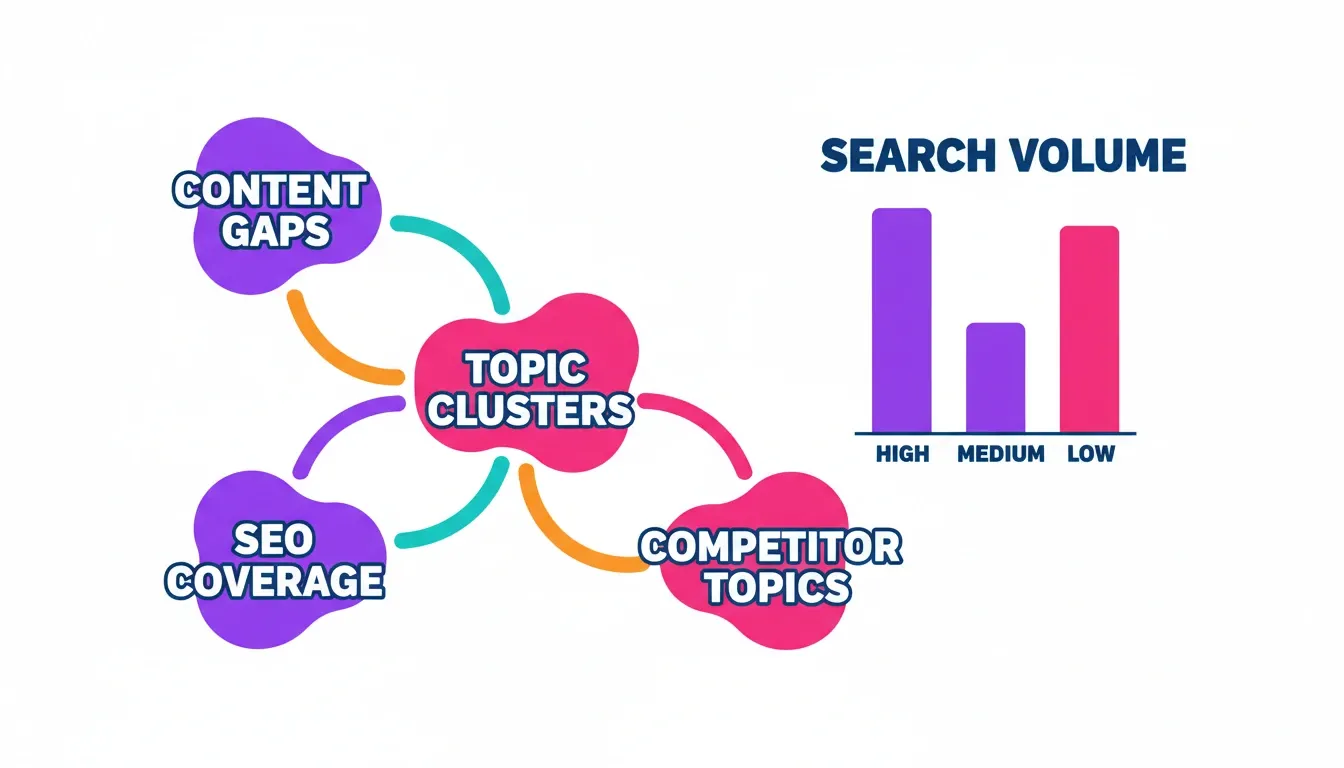
A structured content intelligence view: topic clusters, coverage gaps, and SEO opportunities mapped across your competitive landscape.
The Competitive Edge That Compounds
The teams winning on competitive intelligence today are not the ones with the biggest research budgets. They are the ones with the most consistent systems.
AI prompts to track competitor moves give any team, regardless of size or resources, a structured way to monitor pricing shifts, product launches, messaging pivots, hiring signals, and AI search visibility on a repeatable schedule. The prompts in this guide cover the full competitive landscape, and the system section shows you how to run them without depending on anyone remembering to do it.
Organizations that build these workflows now, while the barrier to entry is still low, will develop a compounding advantage that becomes increasingly difficult to replicate. You describe the situation. Rocket researches it, interprets it, and delivers findings your team can act on immediately.
Start your competitive intelligence workflow at Rocket.new and turn these prompts into a living strategy engine that runs every week, automatically.
Table of contents
- -How to Get the Most From These Prompts?
- -Prompts for Market Research and Company Overview
- -1\. Deep-Dive Company Analysis
- -2\. SWOT Analysis Generation
- -3\. Market Position Mapping
- -4\. Competitive Pricing Tracker
- -5\. Feature Comparison Matrix
- -Prompts for Product Roadmap and Feature Monitoring
- -6\. Product Update and Launch Alerts
- -7\. Customer Feedback Mining
- -8\. Competitor Job Posting Intelligence
- -9\. Content Gap and Topic Discovery
- -10\. Brand Messaging Shift Detector
- -What Sets Prompt Tracking Apart From Manual Research?
- -Prompts for Sales Intelligence and Objection Handling
- -11\. AI Search Visibility Audit
- -12\. Competitive Battle Card Builder
- -13\. Customer Journey Pain Point Extraction
- -14\. Win/Loss Pattern Identification
- -15\. AI Visibility Competitor Audit
- -Building a Repeatable Competitive Intelligence System
- -Industry-Specific Adaptations
- -How Rocket Turns Prompts Into a Running System
- -The Competitive Edge That Compounds