
Build a ride-sharing app with fixed pricing by defining your fare model, mapping core features, and generating a working prototype on Rocket.new. The global ride-sharing market tops $149B, and riders are ready for transparent pricing.
A fixed-fare ride-sharing app locks in the trip price at booking, so the fare never changes regardless of traffic, demand, or time of day, unlike Uber or Lyft's surge pricing. This guide covers the fare engine, core features, regulatory steps, and how to ship a working prototype in days to a few weeks using AI-powered development.
Fixed pricing builds the trust that surge-based apps destroy.
Why Riders Leave Apps That Use Dynamic Pricing
Why do 3 out of 4 riders open a competing app the moment surge hits? According to Precedence Research's 2025 market report, the global ride-sharing market reached $149.88 billion in 2025, growing at a CAGR of 18.06%. That growth creates demand for alternatives to the ride-hailing platforms riders distrust most.
A June 2025 study from Oxford University analyzed 1.5 million Uber trips across 258 UK drivers between 2016 and 2024. The findings are stark: Uber's commission rose from 25% to 29%, and in some cases, the platform took over half the fare value. Drivers' hourly income fell from over £22 to just £19 before operating costs.
Passengers pay more while drivers earn less. That gap is exactly the market opportunity for founders who want to create a ride-sharing service with transparent pricing and fair driver payouts.
As one Reddit user in r/uber put it:
"There would be almost no instances like this and surge pricing would be non existent... they offer fixed price rides, and car types."
Rice University's Kinder Institute for Urban Research explains why consumers hate dynamic pricing from a psychological standpoint: the low normal fare sets a reference point, and any multiplier feels like price gouging even when the economics are sound. Volatility, bad timing during peak hours, and algorithmic opacity all contribute to the trust breakdown.
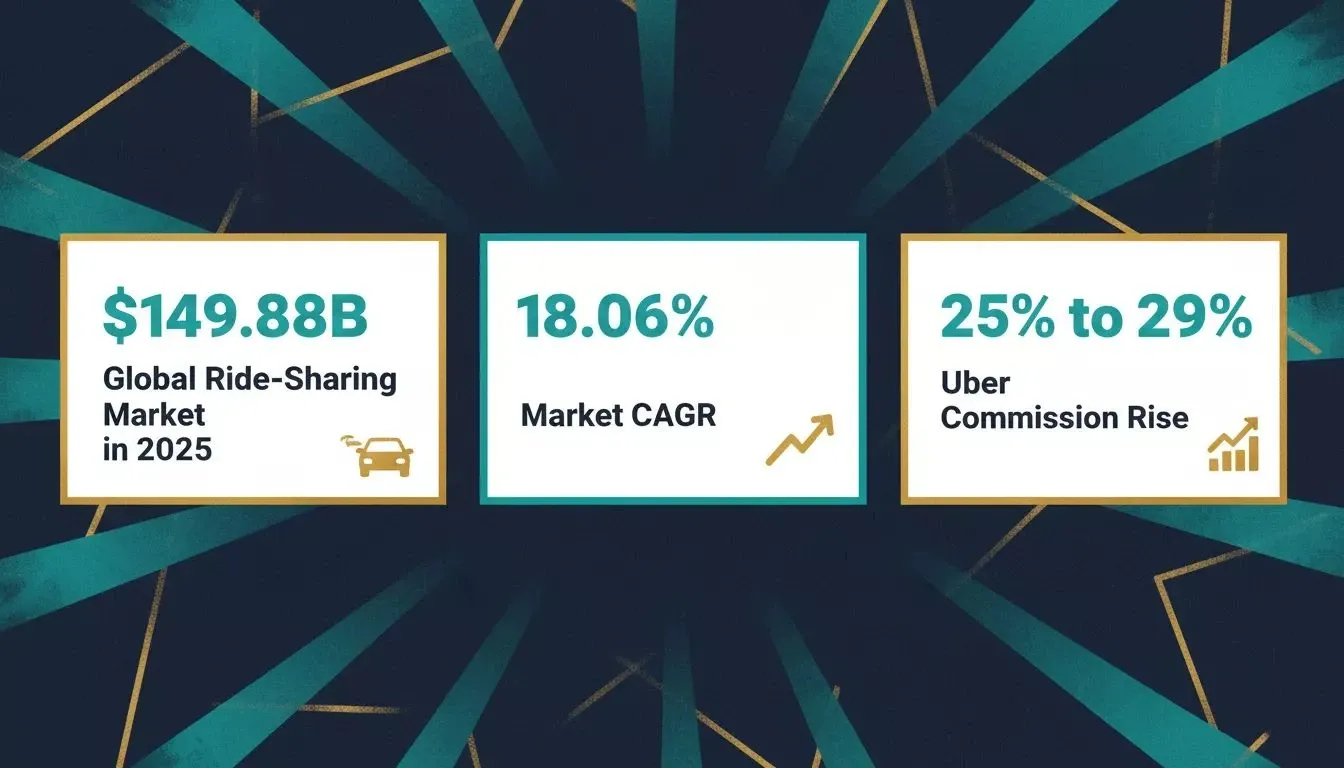
The ride-sharing market is growing fast, but rider trust is lagging.
Who This Guide Is For
This guide is written for three types of builders. Solo founders and indie hackers who want to validate and ship a ride-sharing MVP without hiring a development team. Funded startups entering a specific city or corridor where surge frustration runs highest. Existing fleet operators, such as taxi companies and shuttle services, who want to launch a branded app with transparent fares.
If you are in the first group, Rocket.new's Solve pillar lets you run a structured market research report on ride-sharing demand in your target city before you write a single line of code. That is the kind of research-to-build workflow that separates well-positioned MVPs from ones that guess at market fit.
What Does a Fixed-Fare Model Look Like in Practice
A fixed-fare ride-sharing app locks the trip price at booking time. The rider sees one number before they confirm, and that number does not change regardless of traffic congestion, driver availability, or time of day.
This approach works differently from the traditional taxi app model or the dynamic pricing ride-hailing app approach. Here is how the two business models compare side by side:
| Factor | Surge Pricing Model | Fixed Pricing Model |
|---|---|---|
| Fare visibility | Multiplier shown after request | Flat fare shown before ride booking |
| Peak hours behavior | Price spikes 2x to 5x | Same rate, slightly longer wait times |
| Driver earnings | Variable, the platform takes a higher cut | Predictable payouts per route |
| Rider trust and retention | Low during surges, riders switch apps | High, fare estimate matches final charge |
| Revenue model | Commission-based, volatile | Subscription or flat commission, stable |
The fixed model works because riders and drivers both know what to expect. Riders get fare transparency before they confirm the ride booking, and drivers get consistent earnings without the confusion of algorithmic pay variations.
Retention beats acquisition cost when your riders never experience fare shock. For your ride-sharing business, this means building trust through predictable pricing rather than chasing short-term revenue spikes.
Core Features Your No-Surge Ride App Needs on Day One
Every ride-sharing app development project starts with a feature set that serves both sides of the marketplace. Your dedicated app needs to handle ride requests, driver matching, payment processing, and real-time communication from launch.
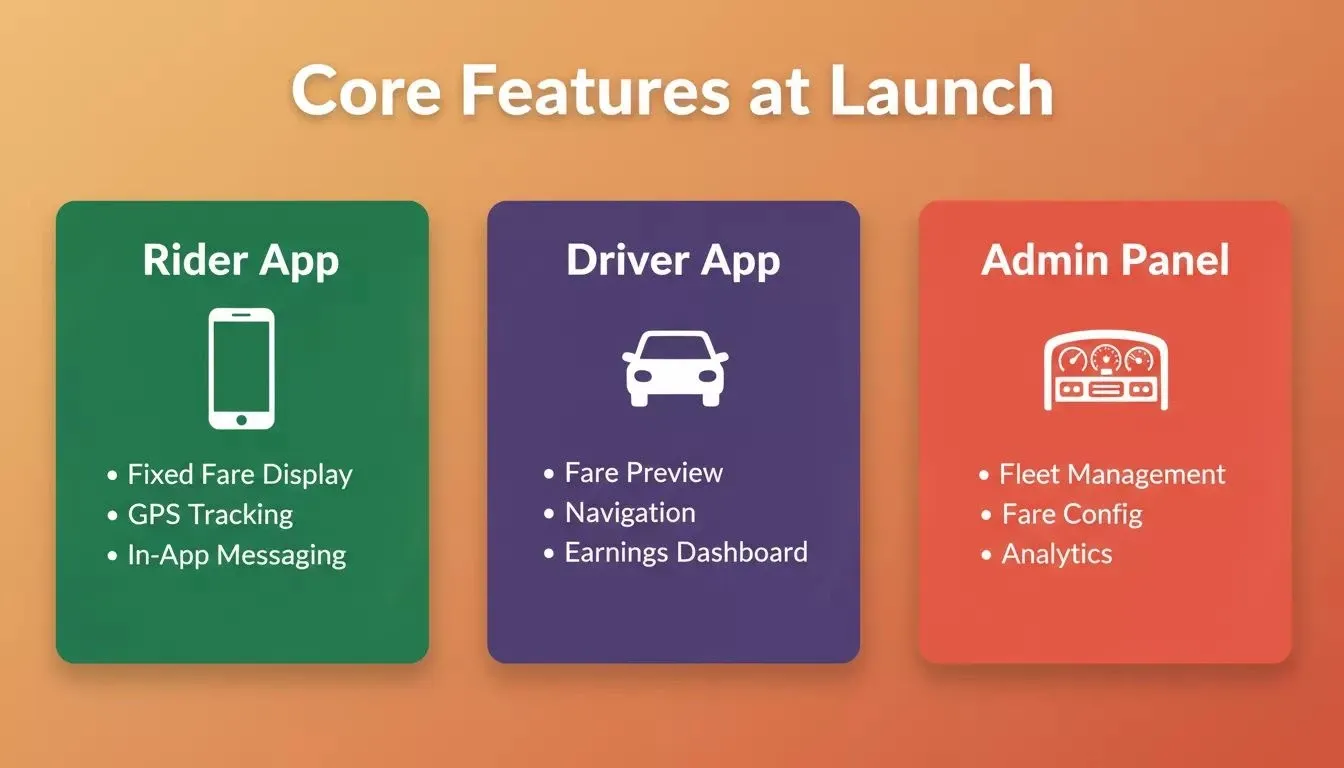
Three interfaces, one shared backend: rider, driver, and admin all connect through a single system.
Here are the must-have features split by user type:
Rider-side features:
-
Fixed fare display at pickup point selection with route preview via Google Maps
-
Real-time GPS tracking showing the driver's current location and ETA
-
In-app messaging and push notifications for ride status updates
-
Multiple payment options, including digital wallet, card, and cash
-
Ride history and trip details with the share trip details functionality
-
Ratings and reviews after each completed ride
Driver app features:
-
Ride request acceptance with fare and route preview
-
Turn-by-turn navigation with Google Maps integration
-
Earnings dashboard showing daily, weekly, and monthly payouts
-
Driver profiles with vehicle information and license number
-
Availability toggle and schedule management
-
Push notifications for new ride requests and rider-driver matching updates
Admin panel features:
-
Fleet management and driver onboarding workflow screens
-
Fare configuration by zone, distance, and vehicle type
-
Analytics and reporting for ride volume, revenue, and driver performance
-
Safety features, including emergency alerts and ride monitoring
-
Refunds and dispute resolution tools
These core features form the foundation of a fully functional app. You can follow a step-by-step mobile app creation guide to understand how AI tools handle this feature complexity without a traditional development team.
Note on background checks and driver verification: Rocket.new scaffolds the screens and backend logic for the onboarding workflow. Background check verification itself typically plugs in via a third-party service such as Checkr or Persona, connected through Rocket.new's API integration layer, not as a built-in one-click feature.
How Does the Fixed Pricing Engine Calculate Fares
The pricing engine is where your ride-sharing app differentiates itself from every ride-hailing app using dynamic pricing. Instead of supply-demand multipliers, your system calculates fares based on fixed inputs that riders can understand and predict.
The fare calculation follows a clear process:
Fixed fare engine: transparent, capped, and rider-confirmed before every trip.
The key difference: even during peak hours, the maximum surcharge is capped at a small, transparent amount. Riders see the exact fare before they confirm. No algorithmic black box, no multiplier anxiety.
Your tech stack for this pricing engine needs Google Maps API for distance calculation, a route optimization service, and a fare rules database that your admin panel can configure by zone, vehicle type, and time-of-day bands.
How Much Does It Cost to Develop From Scratch vs. AI-First
Traditional ride-sharing app development with a custom development team typically runs between $80,000 and $250,000 for a cross-platform mobile app. That estimate covers iOS and Android native apps, backend infrastructure, payment systems, mapping integration, and an admin panel. The development timeline stretches 6 to 12 months with a full team of developers, designers, project managers, and QA.
Here is the development cost breakdown by approach:
| Development Approach | Estimated Cost | Timeline | Team Size |
|---|---|---|---|
| Custom development from scratch | $80,000 - $250,000 | 6-12 months | 8-15 people |
| White-label solution licensing | $20,000 - $60,000 | 2-4 months | 3-5 people |
| AI-powered app builder (Rocket.new) | Plans from free to $250/mo | Days to a few weeks | 1-2 people |
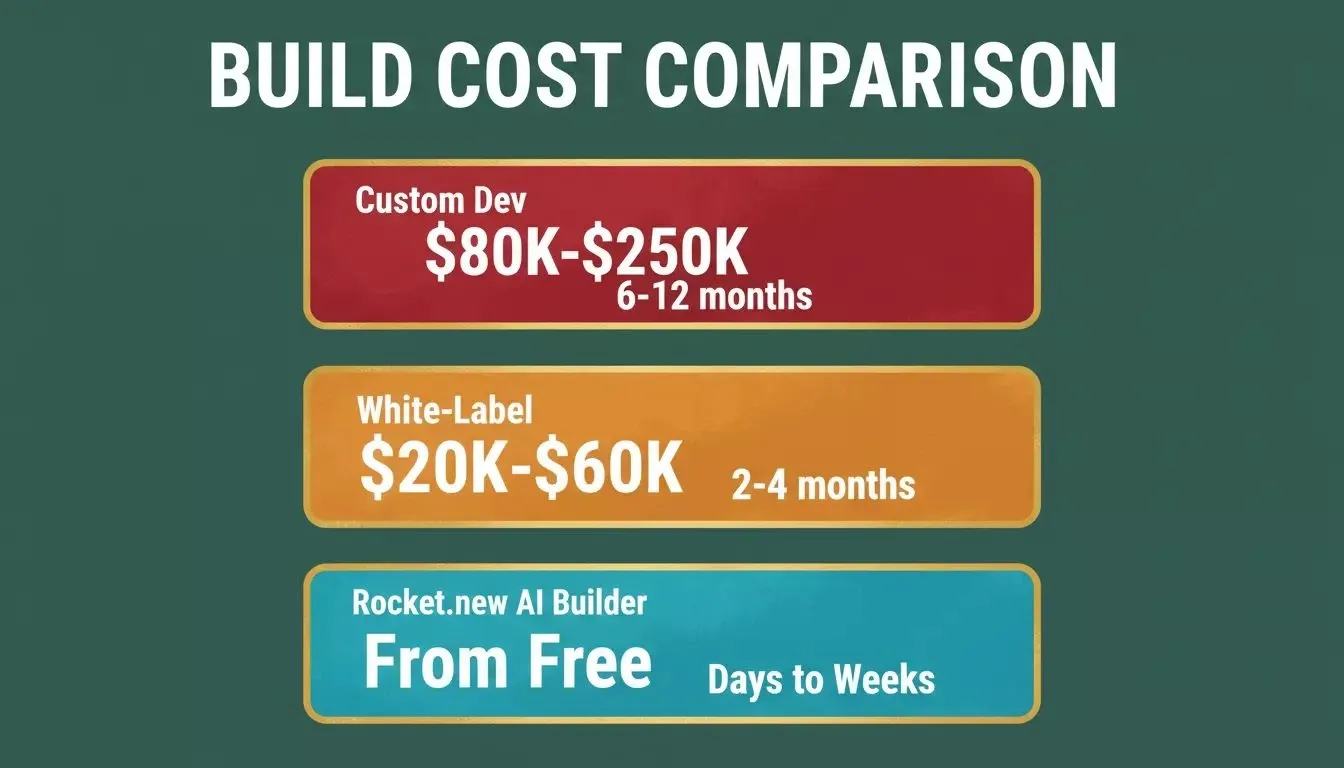
AI-first development compresses both cost and timeline without sacrificing production quality.
Custom development requires hiring backend developers, iOS developers, Android developers, UI designers, and project managers. The operational costs add up: servers, databases, Google Maps API calls, payment gateways, and ongoing maintenance cost tens of thousands of dollars annually.
White-label solutions reduce cost but limit your ability to differentiate. You are restricted to the feature set the provider supports, and custom development on top defeats the purpose.
The AI-first approach lets budding entrepreneurs and solo founders cut development costs significantly by generating production-ready code from natural language descriptions. Rocket.new's pricing starts at free (20 one-time credits, no card required), with paid plans at $25/month (Pro), $50/month (Rocket), and $250/month (Booster). You describe the ride sharing app you want, and the platform handles the tech stack decisions, database schema, and deployment pipeline.
From Prompt to Fixed-Fare Prototype on Rocket.new
So you have the market research, the feature list, and the pricing model mapped out. Now you need to start building. This is where most founders hit the wall: they have the idea but lack the right technology partner to turn it into a fully functional app without spending months in development.
Rocket.new is the complete vibe solutioning platform: validate ideas with Solve, build web and mobile apps with Build, and monitor competitors with Intelligence. For a ride-sharing founder, this means you can run a Solve report to validate demand in your target city, then hand those findings directly to a Build task that generates your app with full market context already in place.
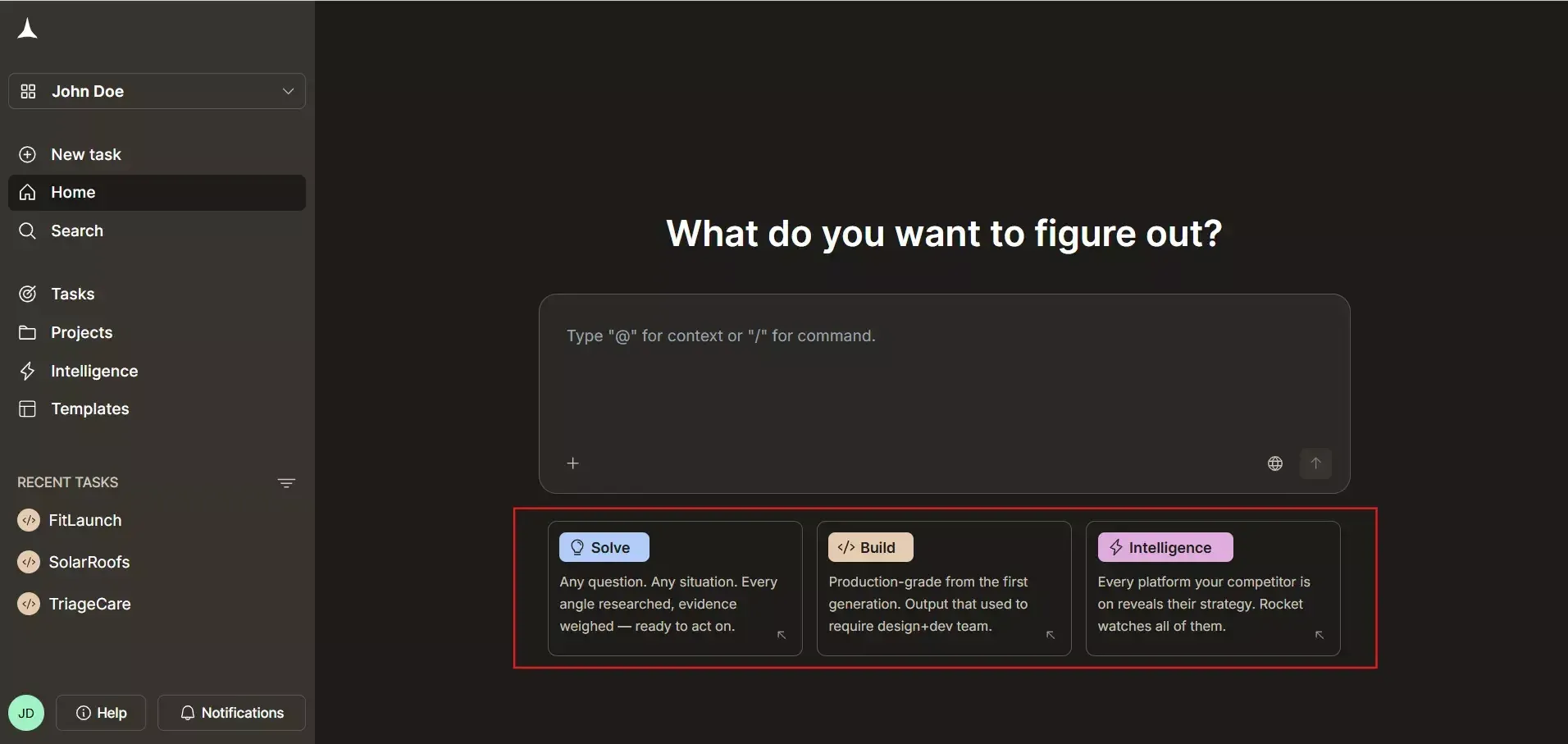
Rocket.new combines research, building, and competitor monitoring in a single platform.
What makes Rocket.new different for ride-sharing app development:
-
Prompt-to-app generation: describe your fixed-fare ride-sharing service and get a working rider interface, driver app, and admin panel
-
Next.js for web, Flutter for iOS and Android: production-grade output ready for Apple App Store and Google Play Store submission (React was deprecated in March 2026; Rocket.new defaults to Next.js for web and Flutter for mobile)
-
Stripe integration for rider payments: handles checkout, subscriptions, and payment flows; driver payout splits are configured via your Stripe account's own payout logic
-
Real-time features: GPS tracking via Google Maps for Flutter, push notifications via Twilio, and in-app messaging work out of the box through Rocket.new's connector library
-
Full code ownership: you own everything generated, can sync to GitHub, and deploy anywhere
Traditional development approaches cost tens of thousands of dollars and take months. Competing platforms like Bubble generate web-only apps that many teams report feel sluggish on mobile and cannot be published to app stores natively. FlutterFlow gives more control but still requires technical knowledge to wire complex features like ride booking flows and driver matching algorithms.
Rocket.new handles the complexity without the time-consuming setup. It generates the backend, database schema, API routes, and frontend screens from your description. You keep complete control over the code and can customize every component after generation.
For a fixed-fare ride-sharing app, you would describe: the rider flow (enter pickup and destination, see fixed fare, confirm and track), the driver flow (accept ride requests, navigate, mark complete), and the admin flow (manage fleet, configure fare zones, view analytics). Rocket.new generates all three interfaces connected to a shared backend, in Next.js for the web admin panel and Flutter for the rider and driver mobile apps.
After launch, Rocket.new's Intelligence pillar lets you track competitor pricing changes from Uber, Lyft, or regional players automatically, so you know the moment a rival shifts strategy in your market.
What Regulatory and Driver Onboarding Steps Should You Plan
Building the app is half the challenge. Operating a ride-sharing service requires regulatory compliance that varies by city, state, and country. Planning for these steps early prevents costly delays after launch.
Regulatory requirements to address:
-
Transportation network company (TNC) licensing in your operating regions
-
Insurance requirements for commercial ride-sharing operations
-
Data privacy compliance (GDPR, CCPA) for rider and driver information
-
Background checks and driver verification via third-party services (Checkr, Persona, or equivalent)
-
Vehicle inspection standards and safety certifications
Driver onboarding workflow:
-
Account creation with phone number verification (Twilio SMS) and email confirmation
-
Document upload: license number, vehicle information, insurance proof, photo
-
Background checks routed through your chosen third-party verification API
-
Training materials on your fixed pricing model and app usage
-
Test ride completion before going live on the platform
Your admin panel should manage this entire onboarding pipeline. Rocket.new scaffolds these workflow screens and backend logic from your description; the background-check API connection plugs in as a custom integration. No-code builders for startups can generate these workflow screens quickly, letting you focus on the regulatory paperwork rather than the software.
Building trust with qualified drivers means paying them fairly and on time. Your fixed pricing model should guarantee drivers a minimum per-trip earning that exceeds what dynamic pricing platforms deliver after their commission cuts.
What Pricing Model Wins Rider Loyalty in a Surge-Fatigued Market
The ride-sharing industry is growing fast, but rider loyalty remains fragile. Founders who choose transparent, fixed-fare pricing position themselves on the right side of a market shift that Oxford researchers, Reddit communities, and early adopters all confirm is real.
Your fixed-fare ride-sharing app does not need to compete with Uber on scale. It needs to win on trust, driver satisfaction, and predictable rider experience in specific markets where surge frustration runs highest. Use Rocket.new's Solve pillar to identify which cities have the highest surge-complaint volume before you decide where to launch first.
Understanding how to monetize your app from day one is equally important. Fixed-fare platforms earn through flat commission per ride (typically 15-20%), subscription plans for frequent riders, corporate partnerships, and small transparent peak-time surcharges capped at a fixed dollar amount rather than an uncapped multiplier.
If you are evaluating whether to build with Rocket.new or another AI platform, the Rocket.new vs. Lovable comparison breaks down the key differences for marketplace-style apps. And if you want to see the full build workflow before committing, the see it in action page walks through a real Build session step by step.
Ready to turn your fixed-fare ride-sharing idea into a working app?
Describe your concept on Rocket.new and get a production-ready prototype with rider, driver, and admin interfaces, built in Next.js and Flutter, generated from your description.
Start building your ride-sharing app today and ship a working prototype before your competitors finish their sprint planning.
Table of contents
- -Why Riders Leave Apps That Use Dynamic Pricing
- -Who This Guide Is For
- -What Does a Fixed-Fare Model Look Like in Practice
- -Core Features Your No-Surge Ride App Needs on Day One
- -How Does the Fixed Pricing Engine Calculate Fares
- -How Much Does It Cost to Develop From Scratch vs. AI-First
- -From Prompt to Fixed-Fare Prototype on Rocket.new
- -What Regulatory and Driver Onboarding Steps Should You Plan
- -What Pricing Model Wins Rider Loyalty in a Surge-Fatigued Market