
Euromonitor and similar research platforms were built for enterprise analyst teams, not early-stage builders. The Rocket.new fast-track method gives solo founders and small teams one system to research the market via Solve, generate full-stack web and mobile apps from natural language prompts, and ship a working product, without a separate research subscription or an engineering hire. If you need a working app this week, this is the method.
Most builders searching for a Euromonitor alternative need real-time competitor signals and a direct path from code insight, not 200-page reports built for five-year planning cycles.
The idea is clear. The target audience is lined up. Maybe a few early users are already waiting. Then someone says "do your market research first," and the next thing on screen costs more than a month of server budget. Platforms like Euromonitor were built for a very different kind of decision-maker.
According to Fortune Business Insights, the global no-code AI platform market was valued at $6.56 billion in 2025 and is projected to reach $75.14 billion by 2034, growing at a CAGR of 31.13%. That growth is coming from builders who move fast, test ideas, and ship working products.
The real question isn't whether you need market intelligence. It's whether the tools you're using were built for you.
What Is a Euromonitor Alternative for Builders?
A Euromonitor alternative for builders is any tool or method that delivers the market signals you need to decide what to build, without enterprise-tier pricing, static PDF output, or reports aimed at multi-year planning cycles.
For builders, that means:
-
Real-time competitor signals, not historical consumer survey data from two years ago
-
Consumer insights that connect directly to shipping a product, not to a slide deck
-
A system that generates working code from that intelligence, not just a report you act on later in a different tool
The Rocket.new fast-track method is one complete answer to this: use Solve to research the market, Build to generate the full-stack app, and Intelligence to monitor competitors after launch, all inside one shared-context workspace.
Real Market Intelligence for Builders: What Actually Matters
When a solo founder or small team says "I need to understand the market," they rarely mean a 200-page PDF with consumer survey data from 15 years ago.
What they actually want:
-
A quick read on whether the idea has real demand right now
-
A sense of what competitors are doing and where the gaps are
-
Enough confidence to commit two weeks of building time to the project
-
Actionable insights that connect directly to shipping, not just reporting
-
Real-time signals: what's ranking in app stores, what users are currently complaining about, and where the gap is between what exists and what people want
Going from market validation to a deployed product used to require separate research subscriptions, design tools, and app builders in different tabs. Research firms like Euromonitor International, Mintel, IBISWorld, and similar companies are excellent for the analysis large enterprises need. For a technical founder in the early experimentation stage, that model doesn't fit the workflow.
The information most builders need isn't buried in industry reports. It lives in real-time signals, and that's the kind of market intelligence that connects directly to building.
Why Euromonitor Falls Short for Builders
Euromonitor International's Passport platform covers over 200 national markets with consumer data, industry reports, and macro trends. That's a serious research asset for the companies that need it.
The structural mismatch becomes clear when you compare what each approach actually delivers:
| Euromonitor Offers | What Builders Need |
|---|---|
| Industry-level reports and macro trends | Real-time competitive signals for this week |
| Historical consumer survey data | Actionable insights that lead to shipping |
| Static PDF or dashboard output | Production-ready code to test with users |
| Subscription cost in the thousands per year | Free to start with paid plans as you grow |
| Analysis produced by consulting firm teams | AI agents that write code from natural language |
| Data across multiple platforms and tools | One system for research, build, and tracking |
Three specific gaps define the mismatch:
-
Market research reports from Euromonitor can cost upwards of $700 for a single country-level product report, before a full Passport subscription
-
The output is static: a report or a dashboard, not a working product you can put in front of users
-
There's no path from code insight. You read the data, then switch tools entirely to start building
The main difference isn't price. It's purpose. Euromonitor informs decisions. Rocket.new makes them and executes on them.
Research and Building Are Merging
For most of recent tech history, market research and product building were sequential steps. You studied the market, wrote the plan, then built. That pattern is breaking down fast.
Key numbers:
-
Gartner projects that by 2025, 70% of new enterprise applications will use low-code or no-code technologies, up from less than 25% in 2020
-
Organizations report up to 90% reduction in development time, compressing months into days or weeks
Shipping a working app fast is itself a form of market research. You find out what users actually want by putting something real in front of them, not by reading about what similar users wanted in a report written eighteen months ago.
Here's how the two paths compare in practice:
How to Choose the Right Approach
Not every builder is at the same stage. This table maps your goal to the right tool.
| Your Goal | Best Option | Why |
|---|---|---|
| Validate an idea this week without writing code | Rocket.new fast-track | Research + full-stack build in one session |
| Understand a market for board-level reporting | Euromonitor or Mintel | Deep historical data, enterprise-grade sourcing |
| Ship a working MVP before committing to a full build | Rocket.new fast-track | Full stack from one prompt, deploy same day |
| Monitor competitors continuously after launch | Rocket.new Intelligence | Daily briefs from every public signal |
| Build a quick frontend prototype for early user testing | Lovable or Bolt | Fast frontend generation for early experimentation |
For builders working toward a first launch, the Rocket.new fast-track covers research, build, and monitoring in one system. For enterprise strategy teams, Euromonitor remains the right tool for macro data and multi-year regulatory analysis.
Inside the Rocket.new Fast-Track Method
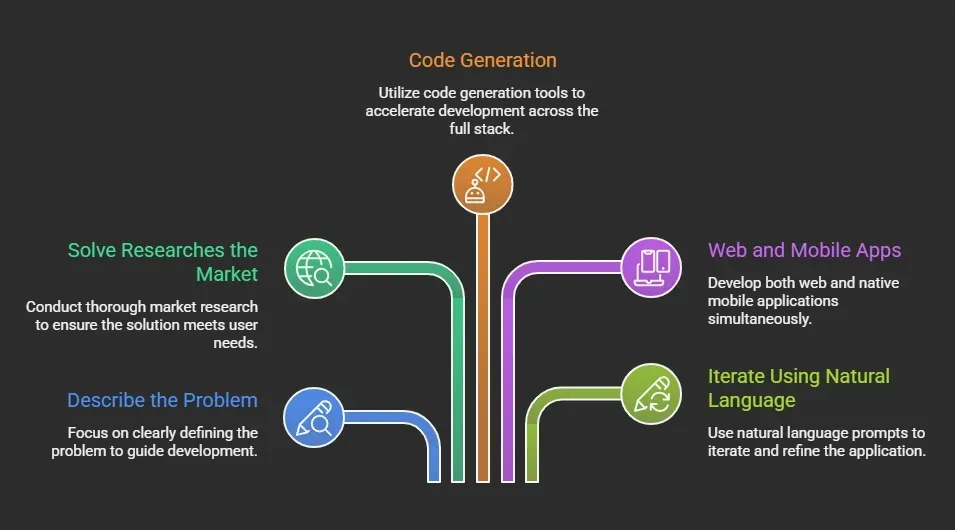
The Rocket.new fast-track method is a five-step process for going from idea to deployed full-stack app, web and native mobile together, using natural language prompts, with market intelligence built in from step one.
-
Describe the Problem, Not the Solution. Start by describing who has the problem, what they're struggling with, and what a better outcome looks like. Rocket.new's AI reads that and begins working immediately. No database design or tech stack decisions required upfront.
-
Solve Researches the Market. Rocket.new's Solve feature runs parallel research across 150+ sources, identifies competitor gaps, and delivers a structured brief with findings and recommendations. You get actionable intelligence without leaving the platform or paying for a separate research subscription.
-
Code Generation Across the Full Stack. From your description and research output, the AI generates production-ready code across the full stack: frontend components, backend logic, database schema, API connections to third-party services, all in one session. Not a prototype. Code that runs.
-
Web Apps and Native Mobile Apps Together. Rocket.new generates native iOS and Android apps in the same session as your web app. Most AI app builders focus on web only. Rocket.new handles web and mobile from one prompt.
-
Iterate Using Natural Language. Once the app is live, keep building with the same natural language prompts. Change the backend logic, add a feature, adjust the database schema. The AI agents handle code editing while you stay focused on product decisions.
Taken together, this method replaces the traditional research-then-build sequence with one continuous workflow. No switching between a research platform and an app builder. No losing context between steps.
Who the Fast-Track Method Works Best For
| User Type | What They Build | How It Helps |
|---|---|---|
| Startup founder | Full-stack MVP validated by Solve market research in the same session | Ship in days, not months, without a dev team |
| Freelancer | Client apps, landing pages, internal tools | Deliver production-grade work without managing a full tech stack |
| Small business owner | Customer portals, booking apps, e-commerce tools | Build digital infrastructure without an agency |
| Coach or consultant | Client portals, intake forms, resource hubs | Replace PDF delivery with live, professional web apps |
| Non-profit or mission org | Volunteer management tools, donation flows, event apps | Ship working tools on a minimal budget |
What the Builder Community Is Actually Saying
Community signal from builders who've used these tools on real projects is more telling than any feature comparison table.
"Hey folks, been exploring a few no-code builders lately and wanted to get your thoughts. I’ve spent some time with Rocket.new, Lovable, and Bolt, and here’s my take so far:." Developer comparing no-code AI builders, r/nocode, August 2025
Three qualities stand out consistently in community feedback:
-
Code quality: the output is maintainable and structured, not throwaway prototype code
-
API support: apps connect to third-party services without workarounds
-
Cross-session context: the AI remembers architecture decisions and builds on them, rather than treating each natural language prompt as a fresh start
Rocket.new: The AI-Powered App Builder Built for Builders
Rocket.new is the world's first Vibe Solutioning platform. 1.5 million people have tried Rocket across 180 countries, from solo founders validating ideas to enterprise teams running strategy and execution on the same platform.
Here's what makes it a genuine Euromonitor alternative for the builder workflow:
-
Built-in market intelligence via Solve. Describe the problem, and Rocket.new's Solve feature researches the market across 150+ sources, identifies competitor gaps, and delivers a structured recommendation. Run it before your first line of code, no separate research subscription needed.
-
Continuous competitor monitoring via Intelligence. After launch, Intelligence tracks every public signal from competitors, including pricing changes, product updates, social activity, and hiring patterns, and delivers a daily brief. (Intelligence is currently in Beta.)
-
AI agents for code generation and editing. The platform uses AI agents to handle full-stack code generation from natural language prompts.
-
Frontend to backend in one prompt. Frontend components, backend logic, database schema, user authentication, API connections, custom domains, and landing pages, all generated together in one session.
-
Native mobile apps alongside web apps. iOS and Android native apps in the same session as your web app. One platform for both web and mobile delivery.
-
GitHub sync and version control. Production-ready code lives in a real codebase you can export and keep portable as the project grows.
Where Lovable and Bolt Fall Short
Lovable and Bolt are widely used options for quick launches and early experimentation. For a fuller look at leading Lovable alternatives in the market, the gaps become more apparent.
The gaps builders run into:
-
Lovable focuses heavily on frontend generation. Backend control is limited, and token usage limits force workarounds that most non-technical builders struggle to manage
-
Lovable requires stitching in separate tools to handle database schema and backend logic, adding setup overhead and breaking the single-system workflow
-
Bolt generates initial code quickly from natural language, but doesn't carry context well across sessions, leading to inconsistent architecture decisions over time
-
Neither tool combines market research intelligence with code generation in one system
Rocket.new carries research context, build history, and architecture decisions across every step. That consistency is what makes it work for teams building toward production, not just running early experiments.
The Right Tool for What You're Actually Building
Builders search for a Euromonitor alternative not because Euromonitor does bad work. The entire research-first model was built for a different kind of decision-maker. The Rocket.new fast-track method closes the gap between knowing and shipping: Solve researches the market, Build generates production-ready code across the full stack, web and mobile apps deploy together, and context carries forward as you iterate, all from natural language in one system.
Table of contents
- -What Is a Euromonitor Alternative for Builders?
- -Real Market Intelligence for Builders: What Actually Matters
- -Why Euromonitor Falls Short for Builders
- -Research and Building Are Merging
- -How to Choose the Right Approach
- -Inside the Rocket.new Fast-Track Method
- -Who the Fast-Track Method Works Best For
- -What the Builder Community Is Actually Saying
- -Rocket.new: The AI-Powered App Builder Built for Builders
- -Where Lovable and Bolt Fall Short
- -The Right Tool for What You're Actually Building