The fastest way to build an MVP is to strip your product idea to its core features, pick the right AI-powered tools, and get a working app in front of real users within a week. AI app builders now compress months of MVP development into days, helping founders validate ideas, attract early adopters, and iterate faster without writing a single line of code.
Building a Minimum Viable Product (MVP) used to take months of planning, coding, testing, and revisions. Today, AI-powered development tools have changed the game, making it possible to turn ideas into working products in just days.
Startups no longer need large engineering teams or long development cycles to validate ideas and gather user feedback. The key is focusing only on essential features, moving quickly, and learning from real users early. With modern AI app builders and streamlined workflows, founders can launch faster, reduce costs, and improve products through rapid iteration.
This blog explores the fastest way to build an MVP and how Rocket.new helps founders ship a functional product in as little as seven days.
Why "Just Build It" Is Still the Hardest Advice to Follow
Every founder knows the feeling. You have a product idea, open a Figma file, list out core features and somehow months pass before anything ships.
The mechanics of traditional development are slow by design. Hiring developers takes time. Scope meetings eat weeks. Writing code, testing it, and debugging it all happen before a single real user ever touches the product.
Traditional MVP timelines run 2 to 6 months. That is 2 to 6 months of burn rate, stacked assumptions, and guesswork, all without any user feedback to confirm you are heading in the right direction.
The first trap is waiting for the perfect idea. Many founders delay starting until their product vision feels airtight. But validation only happens after real users interact with something real.
The second trap is waiting for the finished product. Polishing before launching delays the one thing that matters most: getting the product in front of the people it is built for.
Both traps share the same cost. Every day without real users is a day without real data, and every day without real data is a day making decisions based on assumptions.
Skipping both traps is the difference between a founder who ships and one who plans. The goal is to get your product in front of real users first, then refine based on what they show you.
What a Minimum Viable Product Actually Means
A minimum viable product is not a half-finished product. It is the most basic version that solves the core problem for a small group of real users well enough to learn something meaningful.
Airbnb's MVP was a basic website with apartment photos. No booking system, no reviews, no polished design, just enough to test whether strangers would pay to stay in someone else's space. This is a classic example of the lean startup methodology in action.
Dropbox's MVP was a demo video. No product existed yet. The video proved real demand before a single line of code was committed.
Neither was polished. Both proved the core problem assumption before serious investment was made, which is exactly the point.
The goal is not to impress your target audience right away. The goal is to test your core problem assumption with early users, collect real data, and use that to build a smarter second version.
An MVP that ships in 7 days and earns early feedback is worth more than a polished product that ships in 6 months and lands in silence.
Product market fit is not found in a planning doc. It is found by watching real users interact with a working app and seeing what sticks.
Treat your product vision as a testable hypothesis, not a finished plan. The simplest version is always the right starting point.
The Real Cost of Moving Slowly
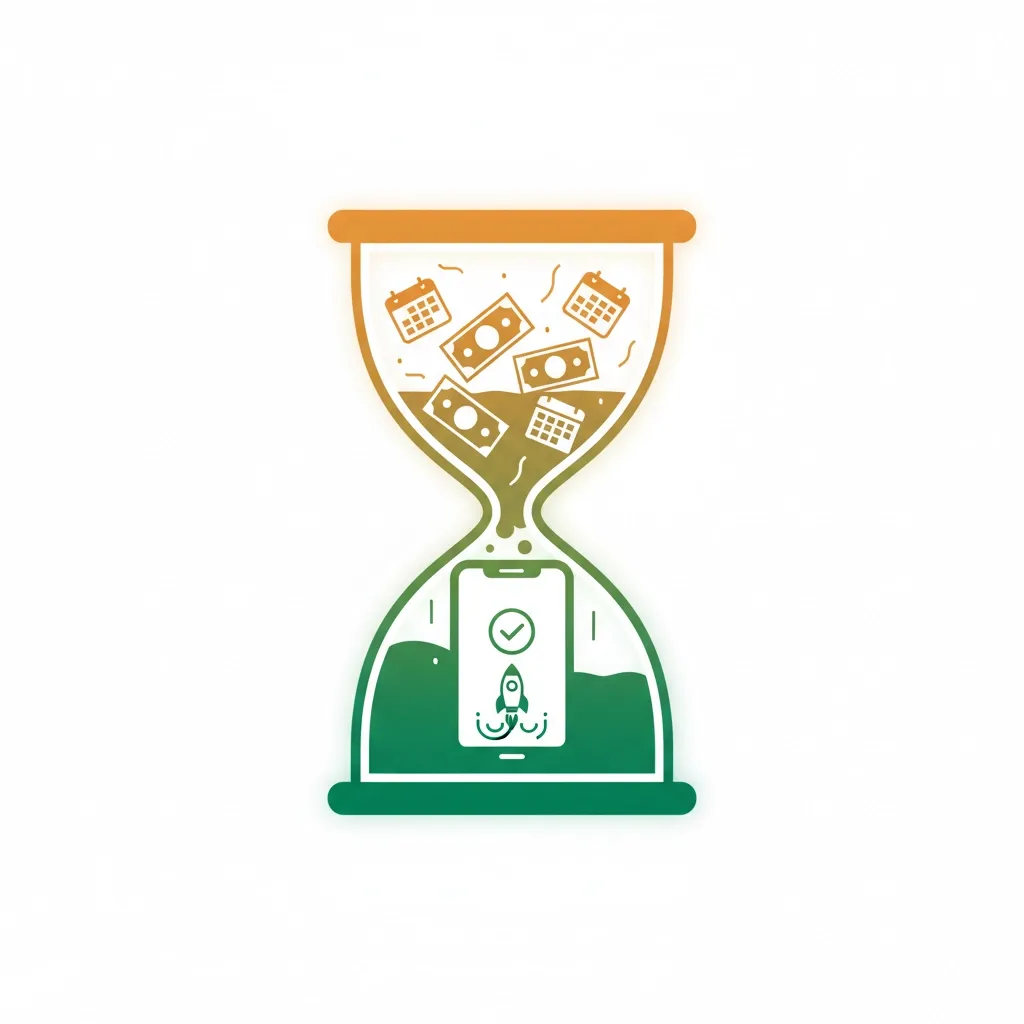 Slow MVP development does not just cost time. It costs learning. Every week you are not in front of real users is a week of assumptions stacking up without anything to confirm or correct them.
| Factor | Traditional MVP (2-6 months) | AI-Powered MVP (7 days) |
|---|---|---|
| Time to first user feedback | 2-6 months | 1 week |
| Development cost | $25,000 - $150,000+ | $0 - $500 (platform cost) |
| Core features validated | After months of building | Within days of launch |
| Pivot speed | Slow, requires rebuilding | Fast, iterate in real time |
| Production ready code | Custom developer work | Auto-generated |
| Early user access | After full build | Day 7 |
Waiting longer does not make the product better. It just delays the feedback loop that tells you what to fix. By the time you get that signal, you have already spent months building in the wrong direction.
How AI Tools Collapsed the MVP Timeline
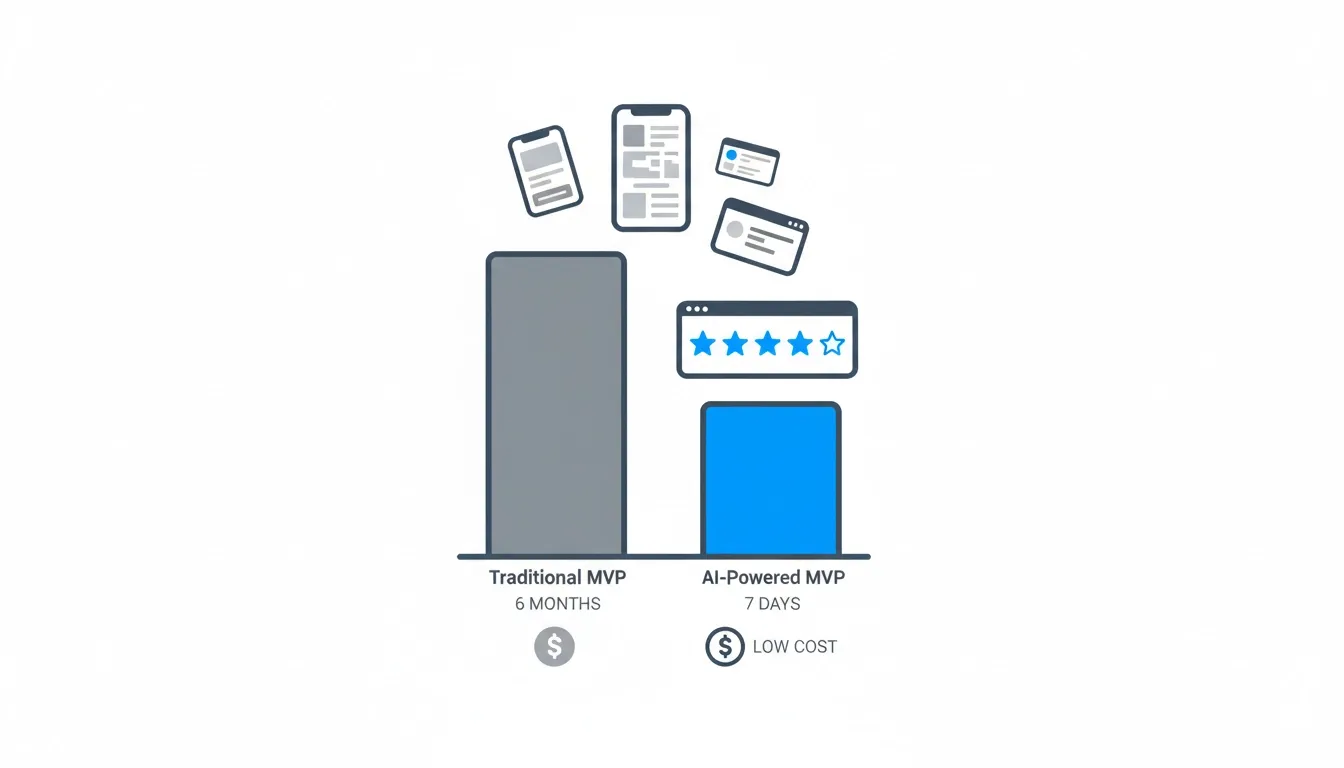 The shift from months to days happened because AI tools got good enough to handle what used to take a full development team: user interface, user flows, business logic, database structure, and connections to external platforms.
-
Organizations report up to 90% reduction in development time using no-code and low-code platforms, compressing months of work into days, according to Integrate.io's no-code adoption analysis.
-
The low-code market reached $37.39 billion in 2025 and is projected to grow to $376.92 billion by 2034 at a 29.10% CAGR, per Fortune Business Insights.
-
No-code AI platforms are growing even faster, from $4.28 billion in 2024 to a projected $44.15 billion by 2033, growing at a 30.2% CAGR.
-
Gartner projected that 70% of new applications developed by organizations would use no-code or low-code technologies by 2025, up from less than 25% in 2020.
The AI app builder category changed who can build. Non-technical founders, designers, product managers, and solo builders can now ship a functional working app without writing a single line of code.
The speed advantage compounds quickly. A founder who ships a working app in 7 days and iterates based on real user feedback is months ahead of one who is still configuring a tech stack.
For founders building MVPs, this is not a trend to track. It is the new baseline.
A 7-Day MVP Roadmap That Actually Works
Here is how to go from product idea to live product with real users in 7 days: a practical day-by-day plan built around real tools and real outcomes, not theory.
Days 1-2: Define Your Core Problem and Core Features
Start with one question: "What is the single thing my product needs to do for my target audience?" Every other decision flows from the answer to that.
-
Strip the scope to the essential features. No extra feature belongs in your MVP unless it directly solves the core problem for your target audience. Everything else is a distraction at this stage.
-
Write out your three to five core features in plain English. If you cannot describe what your product does in two clear sentences, the scope is still too wide.
-
Map your user flows before building anything. Who is the user, what do they do when they first open the app, what action do they take next, and where does the flow end? Writing this out surfaces gaps before the build begins.
-
A clickable prototype at this stage keeps every stakeholder aligned on what is actually being built before any code is generated.
-
Your product vision here is a hypothesis, not a commitment. You are building to test an assumption, not to ship a finished product.
You are not locking in a plan at this stage. You are defining what you need to test first.
Days 3-4: Build the Working App
With clear user flows and core features defined, the build starts. A good AI-powered platform takes over here, and this is where weeks of traditional development compress into hours.
-
Describe your product in plain language. The platform reads the description, plans the architecture, and starts generating production ready code automatically.
-
The output is a working app with real screens, real navigation, and reusable components that behave like a real product, not a mockup, not a static wireframe.
-
Most apps generate in 1 to 3 minutes. That wait is genuinely that short.
-
Iterate through the editor without re-explaining context. Adjust layouts, add missing screens, swap text, update colors. Each change applies on top of what already exists.
-
Business logic and data structure are handled automatically. You are not configuring a database schema or writing API calls by hand.
This is the step that used to take months. With the right AI tools, it takes hours.
Day 5: Connect Your Product to the Outside World
No MVP exists in isolation. Payments, email capture, analytics, and authentication are what turn a demo into a real product with real data flowing through it.
-
Connect payment processing. A product without Stripe connected is a product that cannot earn revenue or prove willingness to pay, two of the most important early signals.
-
Add email capture and sequences. Getting early users onto a list from day one starts the conversation that shapes every future version.
-
Set up analytics from the start. Knowing how early users move through your product from day one is more valuable than any amount of founder intuition about what they want.
-
Platforms with built-in tool connectors cut this step dramatically: one authentication setup, applied across every build, no copy-pasting API keys between tools.
This step should take two to three hours, not two to three weeks.
Day 6: Test with Early Users and Gather Customer Feedback
Put the product in front of a small group of real users from your target audience, not friends or family, but people who actually have the problem your product is trying to solve.
-
Watch where people pause or get confused. The screens that cause hesitation are the ones that need fixing before launch, not after.
-
Note what feels missing. Early users will tell you immediately what they expected to find that was not there.
-
Ask what would make them pay for it. This is the fastest path to understanding whether you have found product market fit, or how far off you still are.
-
Five to ten early users is enough to surface the patterns that matter. You do not need a large sample at this stage.
-
Real data from real people beats every assumption made during the build phase, no matter how confident those assumptions felt.
One day of real user testing delivers more signal than months of internal planning. Take notes on everything.
Day 7: Polish and Go Live
Fix the highest-impact issues from Day 6, then ship. Perfection is not the goal here. A working product in front of real users is.
-
Address the most critical friction points only. Not everything from user testing needs to be fixed before launch, only the issues that block users from completing the core flow.
-
Publish to a live URL so anyone can access the product from any device, anywhere.
-
Share with early adopters in the channels where your target audience actually spends time: communities, forums, direct outreach.
-
Track real usage data from day one. Watch how real users move through the product, where they drop off, and which features they return to.
-
Keep the feedback loop open. Launch day is not the end of the process. It is the start of the iterative loop that separates startups that find product market fit from the ones that run out of runway still guessing.
Day 7 is where the learning starts. Everything before it was preparation.
Why Most AI MVP Builders Still Fall Short
The community conversation around AI tools and MVP development has shifted sharply. The barrier to building is lower than it has ever been. But lower is not the same as solved, and the remaining gaps still frustrate many founders more than the old way did.
Most AI MVP builders are good at the build step specifically. Tools like Bolt, Lovable, and v0 generate fast, functional, previewable apps from a prompt. That part genuinely works.
But they stop at the build. There is no pre-build intelligence layer: no competitive research, no product idea validation, no confirmation that the core problem assumption holds before the first line of code is generated.
Every new project starts from scratch. Context from previous builds does not carry forward. You re-explain your product, your users, and your goals every single time.
The output often looks like AI made it. Generic card layouts, predictable grids, and interfaces that look assembled rather than designed. Most apps built with these tools announce themselves immediately to the early adopters you are trying to impress.
Design quality matters for early adopters. First impressions happen in seconds. An app that looks rough signals that the product and the team behind it are rough too.
The result is speed without clarity. You ship fast, but you ship on guesswork. When the first round of user feedback arrives and the product misses the core problem, rebuilding is slow and expensive.
Good design and a solid pre-build foundation matter more at the MVP stage than many founders expect. The platform that generated the build matters as much as the speed of the generation.
For a deeper look at how no-code tools compare on output quality, design, and speed, the gap between platforms becomes clear fast.
The MVP Approach: Build vs. Traditional Development
Launch on Rocket.new: The Smarter Way to Ship in 7 Days
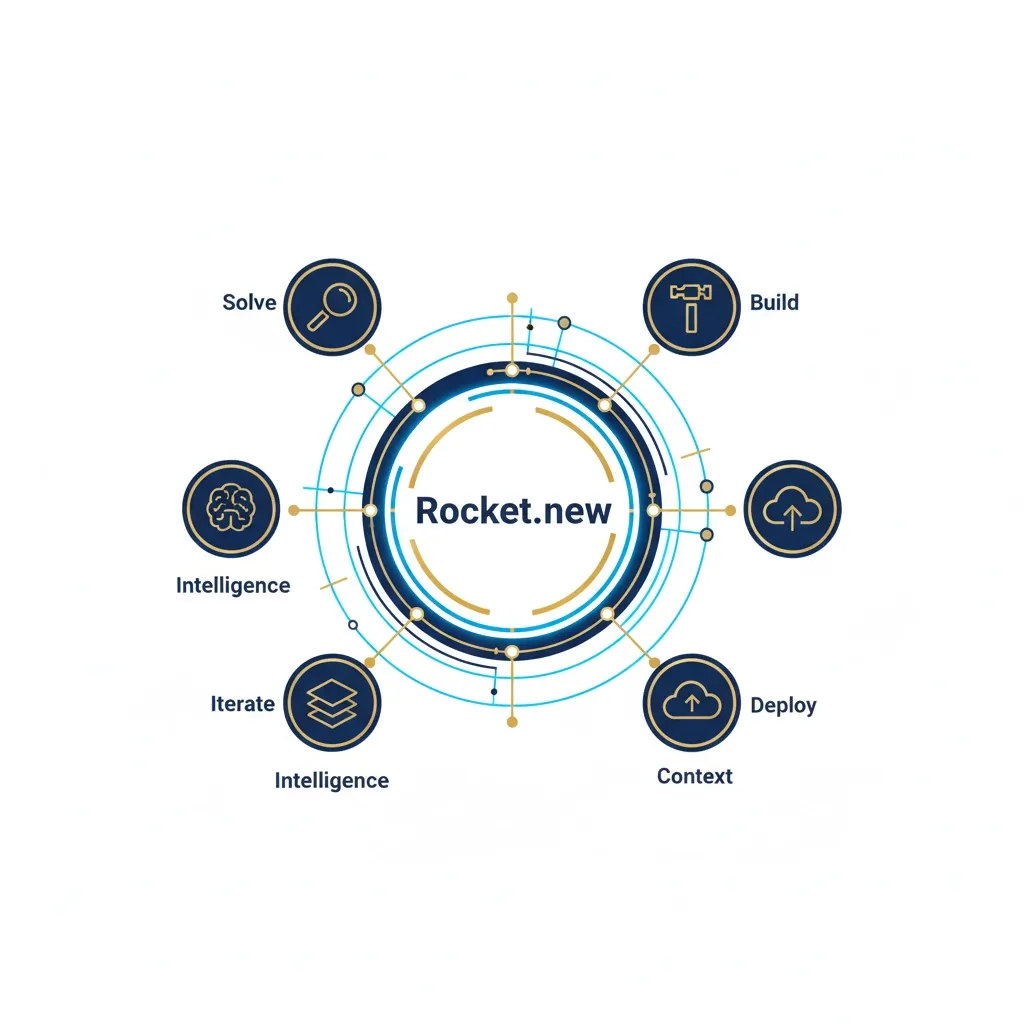 Rocket.new was built around one insight: the most expensive mistake in any business is not bad execution. It is good execution of the wrong thing.
Most AI MVP builders solve the second half of the problem: how to build faster. Rocket.new solves the first half too, what to build and why, and connects that thinking directly to what gets built.
Seven capabilities in one shared-context platform: Solve, Build, Intelligence, Redesign, Context, Collaborate, and Support. Every capability feeds into the next.
Nothing gets re-explained between tasks. Research, decisions, competitive signals, and product context all compound across every build in the same project.
Solve: Your AI Product Strategist
Before a single line of code is written, Rocket.new's Solve feature turns any business question into a full structured analysis with findings, evidence, and clear recommendations.
-
Competitive research and market sizing are done in Solve before the build begins, so the product team knows the context before making decisions, not after.
-
Customer problem validation and feature prioritization happen here too, based on real signals rather than founder intuition.
-
This is the step most AI MVP builders skip entirely. Rocket.new makes it the starting point, not an optional extra.
-
The product team enters the build phase already knowing which core features matter, which assumptions have been validated, and where the biggest gaps in the market sit.
You are not guessing when the build starts. You are building on research.
Build: Production Ready in Minutes
Describe your product in plain language. Rocket.new generates a fully functional product and the output is built to a quality standard that most AI MVP builders do not come close to reaching.
-
Web apps in Next.js, mobile apps in Flutter with real design systems, fluid navigation, staggered animations, and business logic that actually works on the first generation.
-
The output looks like a design team touched it. Typography, visual hierarchy, and layout are intentional, not generated from a template library or assembled from generic components.
-
SEO-ready structure, WCAG accessibility compliance, and Core Web Vitals performance all come built in as defaults. These are the baseline, not options you configure later.
-
Most apps generate in 1 to 3 minutes. Iterate through Chat, Visual Edit, or direct Code access, all in the same workspace, all without re-explaining what exists.
Production ready is the starting point, not the finish line.
Context: Product Vision That Carries Forward
Every piece of research, every product decision, and every previous build lives in a shared project context. This is where Rocket.new's architecture separates itself from every other AI MVP builder.
-
When you start a new task, the platform already knows your product vision, your target audience, your brand guidelines, and the competitive intelligence gathered in previous sessions.
-
Nothing gets re-explained. Every build inherits the context from every build before it.
-
Each iteration builds on the last rather than starting fresh. No copy-pasting briefs between tools, no re-entering context from a previous session.
-
The product gets smarter over time as context compounds, rather than staying flat across a series of disconnected builds.
This is the shared-context architecture that other AI MVP builders cannot replicate.
25+ Connected Tools, One Setup
Rocket.new ships with 25+ tools that authenticate once and work across every build. No repeat setup, no developer required to wire things together.
-
Stripe, Supabase, Mailchimp, Google Analytics, Mixpanel, Linear, Notion, Airtable, Twilio, and Resend are all inside the platform along with more than a dozen others.
-
Authenticate once. Every build that follows has access to the same connected tools automatically. No API key management across separate dashboards.
-
Deployment is one click. Staging and production environments, full version history, and one-click rollback all come standard without additional configuration.
-
Human Help is available inside the platform. When the AI reaches its limit, Rocket.new's Success team steps in directly. No support tickets, no email chains.
Setup work that used to take days now takes minutes. Everything you need to ship a real product is already inside the platform.
Rocket.new vs Other AI MVP Builders: A Side-by-Side Look
The differences between Rocket.new and other AI MVP builders are not cosmetic. They sit at the most critical stages of the MVP process: before the build, during the build, and after the first version ships.
| Feature | Bolt / Lovable / v0 | Rocket.new |
|---|---|---|
| Pre-build product intelligence | No | Yes (Solve) |
| Production-ready design quality | Variable, often AI-generic | Consistent, design-quality output |
| Shared context across builds | No | Yes (Context / Projects) |
| Competitive monitoring | No | Yes (Intelligence) |
| Mobile app support | Limited | Full Flutter (iOS + Android) |
| Built-in tool connections | Some | 25+ (authenticate once) |
| One-click deployment | Partial | Yes (staging + production) |
| Version history + rollback | No | Yes |
| Iterate without re-explaining | No | Yes |
| Human help inside the platform | No | Yes (when AI reaches its limit) |
"They build what you tell them to build. Rocket figures out what's worth building, then builds it."
For founders who want speed without guesswork, that difference is everything.
The Real Goal of Your MVP: Speed to Learning
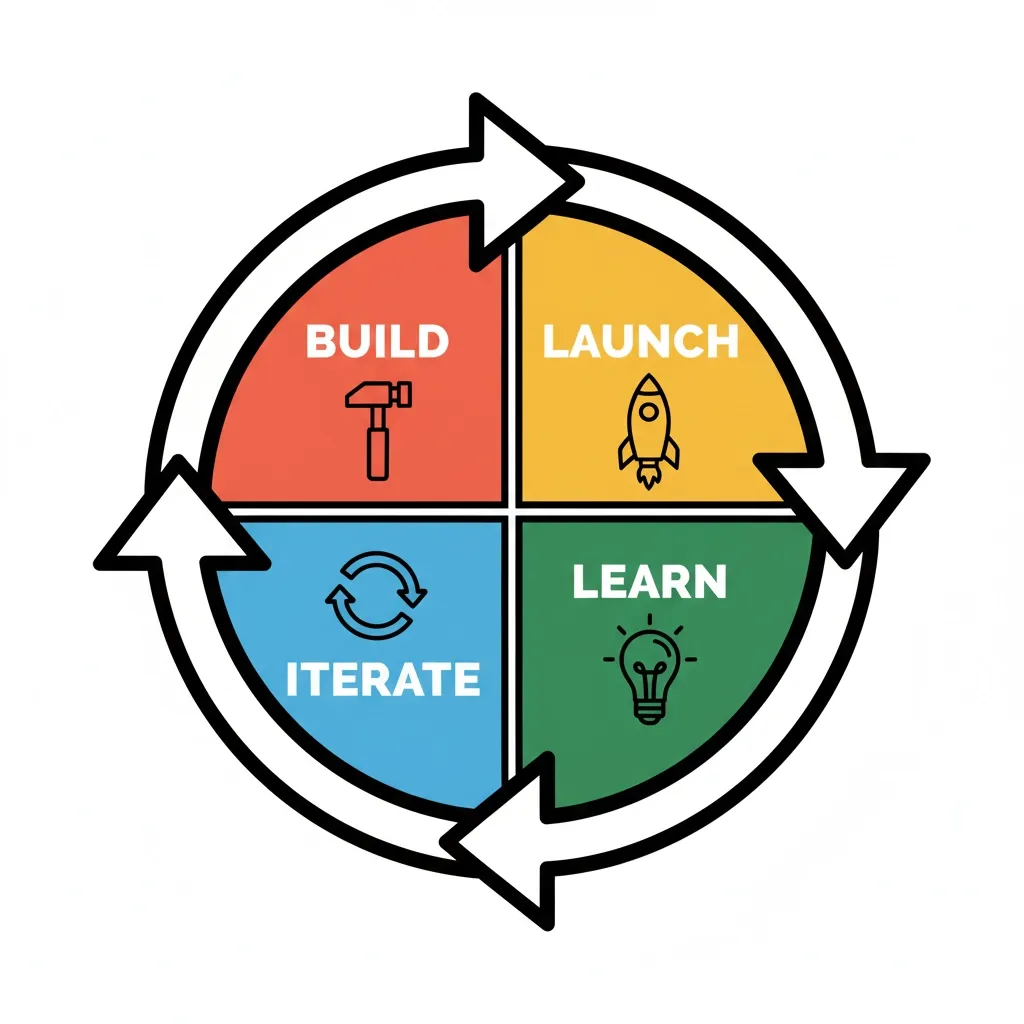 Shipping fast is not the point on its own. Speed to learning is the point.
The fastest way to build an MVP is not about cutting corners on the product. It is about cutting anything that delays the moment when real users are actually using your product. When that happens, you get more usable data in a single day than months of internal planning can produce.
According to Founders Forum's Startup Statistics Guide, 42% of startups fail simply because they build products nobody wants, not because they moved too slow, but because they spent too long building the wrong thing. Skipping early validation is the expensive mistake.
Traditional development made this hard. Slow timelines, high costs, and rigid development cycles worked against the feedback loop that every early-stage product needs to survive. AI-powered platforms changed the equation entirely. And Rocket.new takes it a step further by connecting the decision-making before the build with the execution during the build, so founders are shipping the right product fast, not just any product fast.
The minimum viable product was never meant to be perfect. It was meant to be real, in front of real users, as quickly as possible. Seven days is fast enough to matter. And Rocket.new makes seven days realistic.
For founders who want to understand how vibe coding compares to traditional development before committing to a platform, the contrast is sharper than most expect.
What makes Rocket.new different from other AI app builders?
Most AI MVP builders only handle the build step. Rocket.new also handles the decision-making before the build: competitive research, product validation, and feature analysis through Solve. Add shared context across every build, production-ready design quality, 25+ connected tools, and a mobile app builder, and Rocket.new gives founders a complete platform to go from product idea to shipped MVP without switching tools.
Ready to ship your MVP in 7 days? Start building on Rocket.new and go from product idea to live product faster than you thought possible.
Table of contents
- -Why "Just Build It" Is Still the Hardest Advice to Follow
- -What a Minimum Viable Product Actually Means
- -The Real Cost of Moving Slowly
- -How AI Tools Collapsed the MVP Timeline
- -A 7-Day MVP Roadmap That Actually Works
- -Days 1-2: Define Your Core Problem and Core Features
- -Days 3-4: Build the Working App
- -Day 5: Connect Your Product to the Outside World
- -Day 6: Test with Early Users and Gather Customer Feedback
- -Day 7: Polish and Go Live
- -Why Most AI MVP Builders Still Fall Short
- -The MVP Approach: Build vs. Traditional Development
- -Launch on Rocket.new: The Smarter Way to Ship in 7 Days
- -Solve: Your AI Product Strategist
- -Build: Production Ready in Minutes
- -Context: Product Vision That Carries Forward
- -25+ Connected Tools, One Setup
- -Rocket.new vs Other AI MVP Builders: A Side-by-Side Look
- -The Real Goal of Your MVP: Speed to Learning
- -What makes Rocket.new different from other AI app builders?