
Build a WhatsApp Order Management App using Rocket, the Vibe Solutioning platform, which generates the Supabase backend, Flutter dashboard, and Twilio SMS notifications from a single prompt. No coding needed, orders structured in minutes.
How do small businesses handle orders when most orders arrive as scattered WhatsApp messages? Over 200 million businesses use WhatsApp Business monthly. Messages on WhatsApp see 98% open rates. Yet retailers, manufacturers, and growing teams still manage orders by scrolling chat. Missed orders, forgotten payments, customers left waiting for order confirmations.
A WhatsApp order management system turns that inbox into a revenue channel. Orders flow in via WhatsApp, get logged, confirmed, and routed for delivery automatically instead of disappearing across chat threads.
For small businesses, retailers, manufacturers, solopreneurs, product managers, and front-end developers who want a scalable, production-ready system without coding, this guide walks through how these apps work, the core pieces behind them like the WhatsApp Business API, product catalogs, order automation, and payment integration, and how Rocket generates and deploys the full back office.
Why Are Small Businesses Winning With WhatsApp Orders?
Small businesses and manufacturers that use WhatsApp for orders hold a time-sensitive advantage retailers have not noticed.
WhatsApp's Offers and Updates folder archives messages from large ecommerce brands. Small businesses remain exempt. Your messages land in the main inbox where customers open them. Consumers trust WhatsApp because the buyer journey feels direct, like talking to a friend.
The complete purchase stays in one thread from first message to order confirmations to shipping updates. This builds customer loyalty and customer relationships. Broadcast messaging reaches customers with higher open rates than email or SMS. Retailers and manufacturers see response numbers other channels cannot match.
Conversational commerce is growing rapidly across global markets. WhatsApp dominates this channel in India, where small businesses process orders via WhatsApp daily. Retailers who turn WhatsApp into a structured orders channel now build trust and customer engagement.
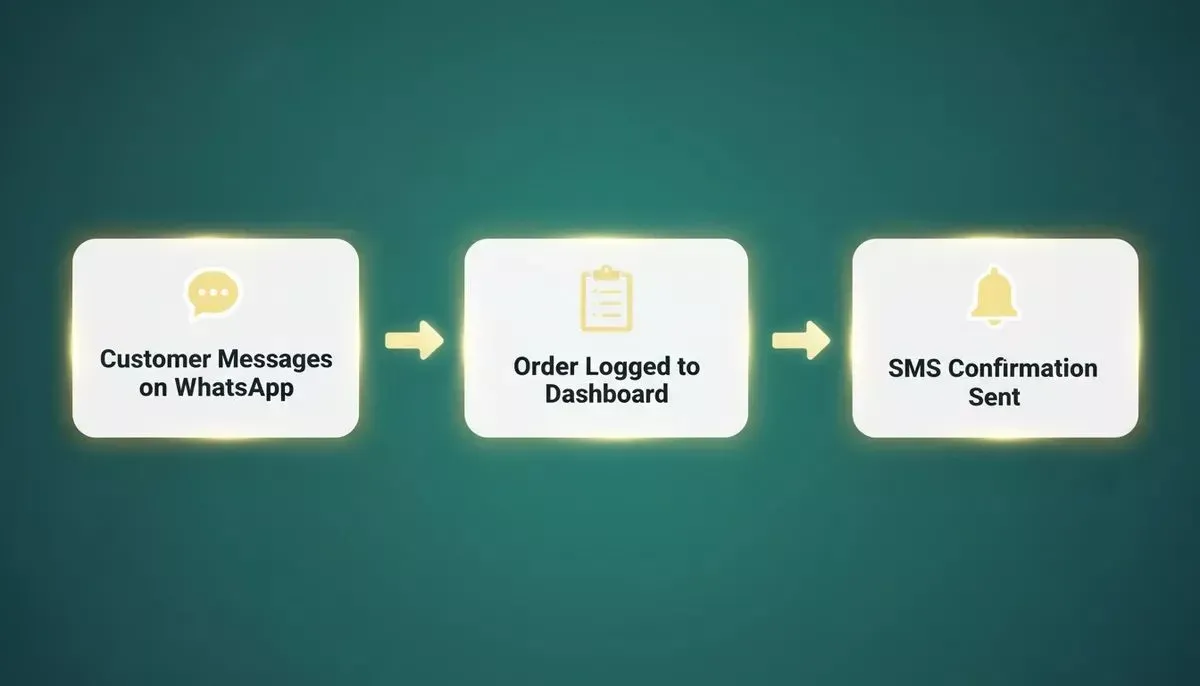
How a WhatsApp order flows: customer message, dashboard capture, SMS confirmation
What Inbox Advantage Gives You a Head Start?
Meta's folder system separates messages into two categories. Conversations from contacts you talk to regularly stay in the primary inbox. Promotional broadcasts from brands go to a separate folder.
Your first message to a customer appears alongside messages from friends. This gives higher conversions on WhatsApp orders. Free-form messaging works. Customers send images, share delivery details, ask about availability, and place orders directly.
This builds trust since customers respond to orders, shipping updates, and payment links without digging through notifications. Interactive experiences like product catalog browsing and catalog-based ordering keep people engaged inside WhatsApp.
WhatsApp orders get opened and responded to within minutes. Speed of response turns conversations into sales. Customers place orders again and again via WhatsApp. Happy customers tell friends who also send orders.
How Does a WhatsApp Order Management System Work?
WhatsApp is where customers place orders. The order management system logs orders, tracks order status, sends automated confirmations, and gives you a dashboard to manage orders from your phone. It replaces spreadsheets and ERP tools that manufacturers and small businesses struggle with.
A product catalog lets customers browse items, check pricing, see quantities, and add items to cart via WhatsApp using catalog-based ordering. Structured orders capture product names, quantities, delivery address, and payment method.
Automated notifications handle order confirmations, order updates, shipping updates, and delivery alerts. A mobile dashboard shows pending orders, completed orders, revenue, and restock alerts.
Payment collection happens through payment links shared directly in conversation. UPI, cards, cash on delivery. Manufacturers handle wholesale orders from retailers. Kirana stores manage daily grocery orders. Home bakers track cake orders and delivery schedules.
How Does the Order Flow Work End to End?
Here is how orders process from first message to delivery. The customer sends a first message via WhatsApp, browses the product catalog, selects items with quantities, and confirms order details.
End-to-end WhatsApp order flow: from customer message to SMS confirmation
Each stage sends automated notifications. Customers never ask about order status because updates arrive via SMS or WhatsApp. Manufacturers, retailers, and services follow this flow for all orders.
What Components Do You Need for Structured WhatsApp Orders?
Here is what each component does for WhatsApp order management:
| Component | Purpose | Service | Replaces |
|---|---|---|---|
| WhatsApp Business | Customer conversation layer | Meta WhatsApp Business app or Meta Cloud API | Manual chat with no structure |
| Database | Store orders, products, status | Supabase | ERP or notebooks |
| Product Catalog | Catalog-based ordering | In-app catalog | Manual images sent in chat |
| Payments | Payment links, cash | Stripe, Razorpay, UPI | Screenshots and manual reconciliation |
| Order Dashboard | Manage orders, revenue | Flutter app built by Rocket | ERP or paper ledger |
| SMS Notifications | Automated order and shipping alerts | Twilio (SMS) | Manual typing in WhatsApp |
| Deployment | Publish dashboard to web | Netlify via Rocket connector | Manual server setup |
WhatsApp handles the inbound conversation layer. Customers send messages, browse catalogs, and confirm orders inside WhatsApp. The WhatsApp Business API from Meta enables automated inbound order parsing at scale. For teams starting out, the WhatsApp Business app handles this manually. Rocket builds the backend and dashboard, the Supabase database, the Flutter order management app, and the Twilio SMS integration for outbound order confirmations and shipping alerts.
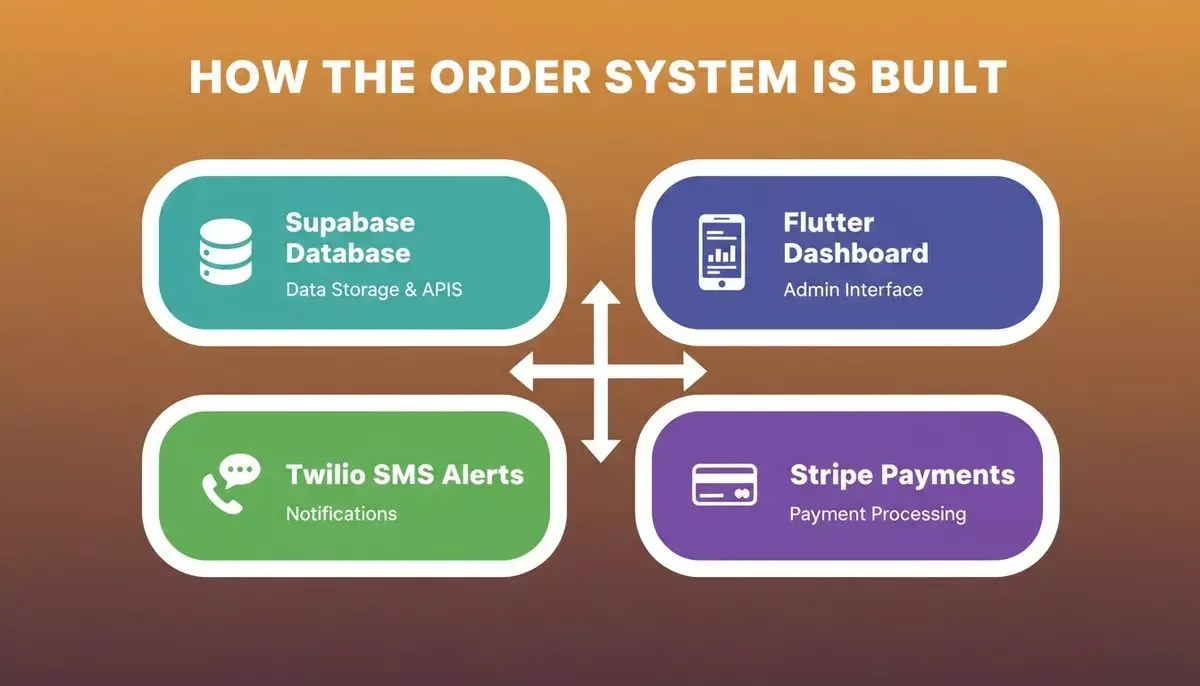
The four core components Rocket builds: Supabase database, Flutter dashboard, Twilio SMS, and Stripe payments
How Do You Set Up a Product Catalog and Checkout?
Your product catalog is your WhatsApp storefront. Catalog-based ordering lets customers browse products, check pricing, and place orders directly without leaving WhatsApp.
List products with names, pricing, and images. Customers browse your catalog like a Shopify store or website. Group items into categories. Manufacturers list materials and products. Bakers list cakes and custom orders.
Customers add items and quantities through messages, and your team logs confirmed orders into the dashboard. For teams using Meta's Cloud API, inbound messages can be parsed automatically into structured order records. Cart summary shows products, quantities, pricing, delivery options, and payment method choices before checkout.
Multiple payment methods, payment links for UPI, cash on delivery, and bank transfer for wholesale orders, connect through payment integrations into checkout. Checkout feels conversational. Customers who place orders directly via WhatsApp complete purchases faster than those navigating website forms.
How Do Automated Order Confirmations and Shipping Updates Work?
Once customers place orders via WhatsApp, respond in seconds. Automated confirmations reduce follow-up messages from customers.
Send order confirmations with order number, items, total, and delivery time. Share payment links directly in chat. Customer taps, pays, dashboard updates the order status. Track payment status: paid, pending, cash, and update orders automatically.
Shipping updates go out when orders ship with tracking details. Delivery confirmation arrives when orders reach customers. Twilio SMS notifications handle outbound order and shipping alerts automatically, saving hours daily. Handle exceptions only, like custom requests or pricing conversations.
For manufacturers shipping orders to retailers across regions, automated SMS updates replace ERP notification modules costing thousands. Notifications flow when you sleep so customers get order confirmations and shipping updates instantly.
How Does Rocket Ship Your WhatsApp Commerce Back Office?
Rocket is the world's first Vibe Solutioning platform, where you research what to build, build it, and monitor what matters, all in one place. For a WhatsApp order management system, Rocket builds the pieces that sit behind the WhatsApp conversation: the order database, the mobile dashboard, and the notification layer.
Tell Rocket how the platform works in plain language: "Build a WhatsApp order management dashboard with a product catalog, Supabase database, Twilio SMS notifications for order confirmations and shipping updates, and a Flutter mobile app to manage orders." Rocket lets you create the app without writing code and handles the basic logic behind the generated workflow. Rocket generates a complete, production-ready app as a deployable back-office order management web app. Most apps generate in one to three minutes.
The Flutter dashboard shows orders, pending deliveries, revenue, and restock alerts updating as new orders are logged. The Supabase integration stores product catalog, customer data, order history, and payments with end-to-end encryption as part of the app’s tech stack, with user accounts and order history living in Supabase. Twilio connects as a task-level integration; authenticate once with your API key, and Rocket wires SMS order confirmations and shipping alerts directly into the app logic, with customization options available after generation.
Deployment is one click via the Netlify connector. Some builders, such as Emergent, deploy apps to a live URL immediately after building, and Rocket likewise publishes the dashboard instantly. Rocket publishes your dashboard to a live URL instantly, with staging and production environments, full version history, and one-click rollback built in. Free to start with 20 one-time credits under a free plan, with no credit card required.
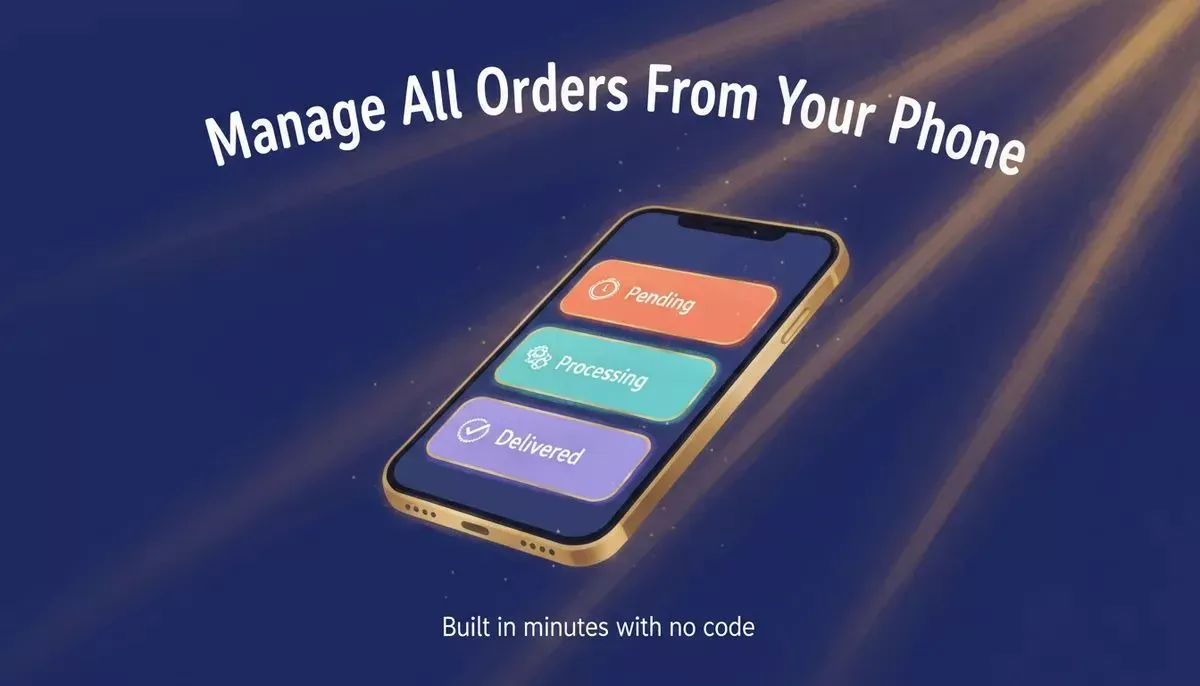
The Flutter order dashboard Rocket generates: real-time order status, revenue tracking, and restock alerts
How Do the Dashboard and Chatbot Flows Work Together?
The dashboard is where you manage orders and control operations for your business. The WhatsApp conversation is where customers interact, and those two layers connect through the order record.
Every order shows status labels in the dashboard. Tap to update, and customers get automated SMS notifications via Twilio. Revenue tracking shows daily, weekly, and monthly numbers without ERP. Restock alerts notify when quantities drop so manufacturers and retailers never run out.
Customer history shows all orders placed, building customer loyalty. A multi-channel view can combine WhatsApp orders with Shopify store orders and website orders in one place to manage. Rocket's Flutter mobile app generation handles the cross-platform dashboard layer, and you can build apps without coding by describing what you need in plain language.
Most customers in India send WhatsApp messages to place orders directly rather than visiting a Shopify store or website. Your dashboard matches how people buy. Rocket generates a customizable app that fits your workflow, and you can add features by connecting with other tools as needs grow.
Automated workflows often rely on services like Zapier, which connects apps to thousands of other tools for automation. Teams that have moved from scattered WhatsApp threads to a structured dashboard typically report handling significantly more daily orders from a single mobile screen.
How Do You Manage Orders and Keep Customers Happy?
Getting orders in is step one. Keeping customers happy turns a business into a brand with repeat buyers who place orders directly every week via WhatsApp.
Respond to every order fast. Automated SMS responses build trust and set customer experience tone. Send proactive order updates so customers never ask about order status or delivery time. Handle exceptions gracefully with alternatives, not silence.
Use order data to improve catalog, pricing, and delivery based on what customers purchase. Track customer engagement — who orders often, who needs abandoned cart recovery messages. Brands winning at conversational commerce make customers feel remembered.
Your WhatsApp order management system provides data at scale, from knowing what to manufacture to sending restock alerts when products return. WhatsApp reaches 2 billion people, and businesses turning conversations into structured orders grow revenue fastest.
How Does Broadcast Messaging Drive Repeat Orders?
Broadcast messaging turns WhatsApp Business into a retention channel, driving repeat orders from customers.
Restock alerts reach customers who ordered specific items before. They respond and place orders in seconds via WhatsApp. Order updates go to everyone with pending or shipped orders automatically without manual send.
New products reach engaged customers first, creating early sales. Seasonal offers land in the main inbox because customers talk to you regularly. Abandoned cart recovery nudges people who started orders but did not complete. Many come back to place orders and pay.
Send to segments based on labels. Group people by purchases, frequency, and buyer journey stage. Retailers and manufacturers turn shoppers into loyal customers who choose to place orders directly via WhatsApp. A well-timed WhatsApp message beats email funnels for this class of business.
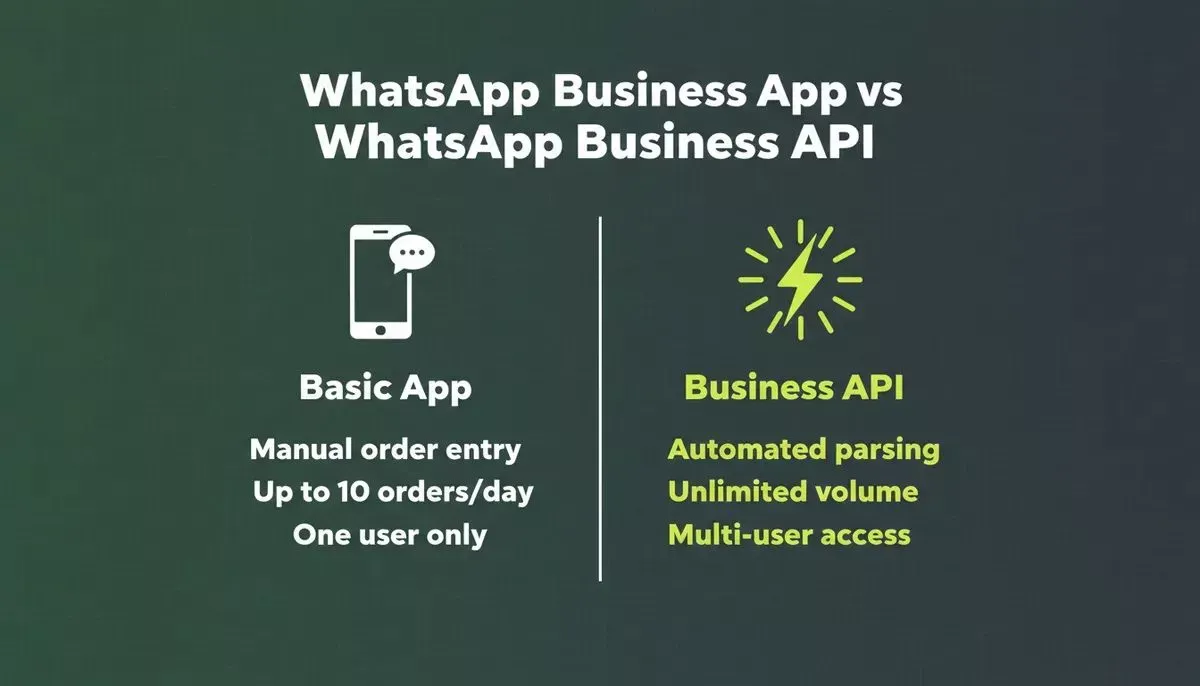
Basic WhatsApp Business app vs the full API: when to upgrade for automated order management
Does Your WhatsApp Store Need a Proper Back Office?
Running orders through raw WhatsApp chat works at five daily orders but fails at fifty. Moving from scattered messages to structured orders changes how fast you scale and how much revenue flows without lost orders or errors.
Tools exist today, and the right choice depends on what you need to build. Glide turns Google Sheets into mobile apps with no coding, and a Glide app is strong for simple internal tools but limited on custom backend logic. Softr is designed for building client portals and lightweight business apps, good for static data views, less suited for real-time order workflows.
Backendless offers advanced control over app data and infrastructure, more flexible, but requires more setup time than most small business owners have. Across no-code platforms, some work best for simple apps or internal tools, while others fit consumer apps or SaaS products better. Zite offers unlimited users and unlimited apps on its free plan and can create a working app in under 15 minutes. Bubble supports one-click publishing to iOS and Android, while FlutterFlow generates cross-platform apps for iOS, Android, and web.
Rocket builds the complete order management back office, database, dashboard, SMS notifications, and deployment, from a single prompt, without any of that setup overhead. It works as a no-code app builder for this use case, helping you build a code-free app without hiring developers or dealing with extra setup. No code, no developers, no waiting. Customers live on WhatsApp already. Give them a way to place orders and yourself a way to manage all those orders properly.
Ready to turn WhatsApp messages into managed orders? Describe your business on Rocket.new and ship a complete system. Product catalog, automated order confirmations, payment collection, mobile dashboard. Deployed free in minutes.
Table of contents
- -Why Are Small Businesses Winning With WhatsApp Orders?
- -What Inbox Advantage Gives You a Head Start?
- -How Does a WhatsApp Order Management System Work?
- -How Does the Order Flow Work End to End?
- -What Components Do You Need for Structured WhatsApp Orders?
- -How Do You Set Up a Product Catalog and Checkout?
- -How Do Automated Order Confirmations and Shipping Updates Work?
- -How Does Rocket Ship Your WhatsApp Commerce Back Office?
- -How Do the Dashboard and Chatbot Flows Work Together?
- -How Do You Manage Orders and Keep Customers Happy?
- -How Does Broadcast Messaging Drive Repeat Orders?
- -Does Your WhatsApp Store Need a Proper Back Office?