
Struggling to scale an AI SaaS product smoothly? Focus on product-market fit, reliable infrastructure, and smart AI use to manage growth, maintain performance, and support rising adoption without losing control or user experience.
How do you actually scale an AI SaaS product without losing control of growth?
Focus on product-market fit, strong infrastructure, and smart use of AI tools from day one. Scaling is not just about getting more users. It’s about handling growth without breaking your system or your experience.
According to a report by McKinsey, AI adoption has grown to over 50% of organizations globally, showing how fast the AI SaaS space is expanding.
So, if you're building in this space, timing is on your side. Now let’s break down how to scale the right way.
Understanding the Foundation of AI SaaS Growth
Before scaling, your AI SaaS product needs a solid base. Many SaaS companies rush into growth without fixing core issues. That’s risky.
Your saas product should solve a real business problem. Sounds basic, but many ai saas products fail here. Start by analyzing your target market, doing proper market analysis, and keeping track of market trends.
Also, keep your tech stack simple in the beginning. You don’t need everything at once. Focus on the right tech stack that supports growth later.
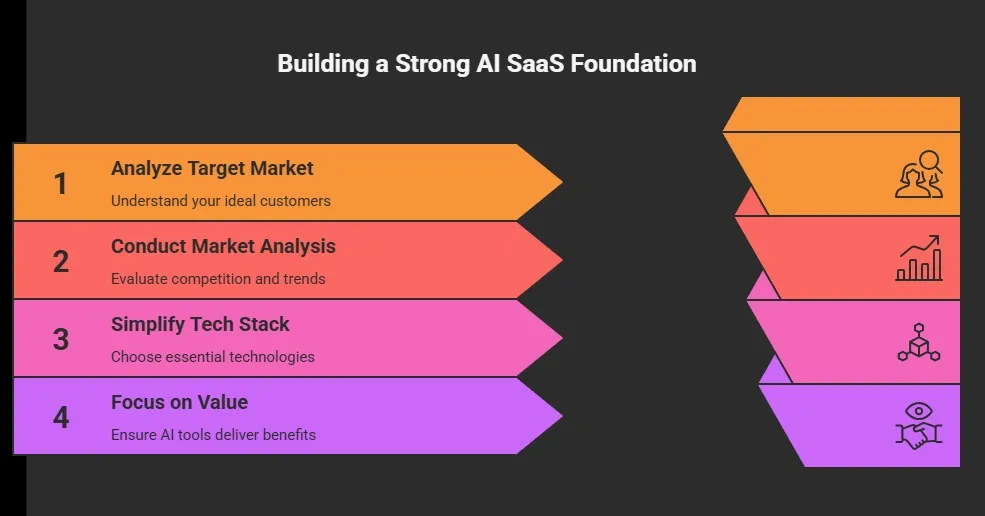
When using AI tools, keep your focus on value. Whether it’s predictive analytics or natural language processing, the goal is simple: help users do something faster or better.
👉Worth a Quick Read: How to Build SaaS Product with Rocket.new for Faster Launch
Building the Right AI Infrastructure
Scaling any ai saas starts with a strong cloud infrastructure. You need systems that can handle more users, more data, and more requests.
Cloud platforms like Google Cloud help you manage cloud services and storage easily. This is where ai models and machine learning algorithms run smoothly.
Here’s a quick breakdown:
| Component | Why It Matters |
|---|---|
| Cloud infrastructure | Handles traffic and scaling |
| Data management | Keeps customer data organized |
| AI models | Power features like predictions |
| APIs | Connect your saas solutions |
Data management plays a big role here. Poor data leads to weak predictions. And weak predictions hurt your ai saas product.
Also, if you're using generative AI or large language models, make sure your systems are stable. You don’t want crashes during rapid growth.
Focus on User Behavior and Feedback
So, what actually drives scaling? Your users. If you pay attention to how people interact with your SaaS product, you’ll know exactly what to improve and what to double down on.
Key Things to Focus On
-
Track user behavior closely: See how users interact with your landing page, features, and pricing models. This shows what’s working and what needs fixing.
-
Use sentiment analysis tools: Understand customer feedback at a deeper level. It helps you spot patterns in user satisfaction and frustration.
-
Let customer feedback guide decisions: Don’t guess what users want. Listen to what they’re saying and build around it.
-
Improve customer onboarding: A smooth onboarding experience helps users get value quickly, which increases customer retention.
-
Monitor performance metrics: Keep an eye on retention rate, churn rate, and engagement time. These numbers give valuable insights and actionable insights for growth.
At the end of the day, scaling is not just about adding more users. It’s about understanding them. When you focus on user behavior and listen to feedback, your product naturally grows in the right direction.
Automating Business Processes with AI
Scaling means doing more with less effort. This is where AI automation helps. Use AI-powered tools to automate repetitive tasks like emails, onboarding flows, and support queries.
For example:
-
Use an AI chatbot for customer support
-
Automate tasks like reporting and alerts
-
Use workflow automation for internal operations
This saves time and reduces manual errors.
AI systems can also help identify bugs faster during your development process. That’s a huge win when your user base grows.
Smart Pricing and Monetization Strategies
Now let’s talk money. Your pricing models need to match your value. Many saas companies struggle here.
You can try:
-
Subscription-based pricing
-
Usage-based pricing
-
Freemium model
Keep testing based on user behavior. Also, think about your sales cycle. If it’s too long, scaling becomes slow.
Sales teams should focus on pipeline generation and maintaining pipeline health. This keeps growth steady.
Leveraging AI Features for Competitive Advantage
Your AI saas products need strong AI features to stand out.
Think about:
-
predictive analytics for smarter decisions
-
natural language processing for chatbots
-
computer vision for image-based tasks
-
voice recognition for better accessibility
These features create a competitive edge in the saas world. Also, using AI for ai generated content can improve engagement and save time.
What Founders Are Saying on LinkedIn
Here’s something interesting from LinkedIn:
“They try to do everything manually… That approach doesn’t scale. So I built infrastructure instead.” Linkedin
This highlights a simple truth. Scaling an AI SaaS product is not about doing more work manually. It’s about building systems, using automation, and focusing on what actually moves the needle.
Rocket.new and Scaling AI SaaS Products
Rocket.new streamlines the journey from idea to execution for AI-powered SaaS products. By handling the frontend, backend, database, and deployment automatically, it eliminates long development cycles, letting startups and teams focus on scaling their product quickly. This speed is crucial when aiming for rapid growth in a competitive SaaS landscape.
Scaling an AI SaaS requires balancing fast iteration with clarity. Rocket.new provides a unified platform to build, test, and launch products without juggling multiple AI tools or fragmented setups. This structured approach keeps teams focused on user needs and scaling strategies, helping products grow efficiently while maintaining quality and reliability.
Top Features
-
Prompt to App Creation: Builds apps directly from single prompts
-
Figma Import: Converts design files into live, editable layouts
-
AI-Powered Backend: Automatically handles logic, data, and workflows
-
Command-based actions: Use / and @ to run actions and quickly scope edits.
-
Custom Domain Support: Publishes projects with a branded domain
-
Code Export: Allows developers to extend or customize later
-
Reusable Components: Speeds up building with ready-to-use elements
-
Live Preview: Shows instant updates while editing
How It Supports Scaling
Faster Development Process: Rocket.new cuts down the time spent building your saas product from scratch. This lets you iterate faster and respond to user behavior without delays.
Better Workflow Automation: It helps automate repetitive tasks in your development process, so your team can focus on improving features and user experience.
Stronger Tech Stack Foundation: You don’t have to worry about choosing the right tech stack from zero. It provides a structured setup that supports scaling as your user base grows.
Improved Customer Experience: With quicker updates and smoother deployments, your users get a better experience. That directly impacts customer retention.
Supports Data-Driven Decisions: By integrating analytics and dashboards, you can track performance metrics and gain actionable insights to guide your next steps.
Rocket.new keeps things simple while helping you build and scale in a smart way, which is exactly what growing AI saas products need.
Marketing and Growth Strategy
Scaling isn’t just about the product. You need visibility. Use Google search to drive organic traffic. Optimize your landing page with the right keywords.
Also:
-
Focus on SEO
-
Build content around ai saas tools
-
Use social media for awareness
Do competitor analysis regularly. See what other saas providers are doing. This helps you adjust your strategy based on market trends.
Scaling Your AI SaaS the Smart Way
Many ai saas products struggle during rapid growth because they overlook basics like infrastructure, user needs, and planning. It’s easy to chase more users, but without a strong foundation, things start breaking. The better approach is simple. Focus on solid cloud infrastructure, use AI tools wisely, and keep learning from customer feedback. Build step by step instead of trying to do everything at once.
Scaling is not just about moving fast. It’s about staying stable while you grow. Keep your systems reliable, understand your users, and keep improving your features. If you get this right, your saas product will grow in the right direction and stand strong in the saas industry.
Table of contents
- -Understanding the Foundation of AI SaaS Growth
- -Building the Right AI Infrastructure
- -Focus on User Behavior and Feedback
- -Automating Business Processes with AI
- -Smart Pricing and Monetization Strategies
- -Leveraging AI Features for Competitive Advantage
- -What Founders Are Saying on LinkedIn
- -Rocket.new and Scaling AI SaaS Products
- -Top Features
- -How It Supports Scaling
- -Marketing and Growth Strategy
- -Scaling Your AI SaaS the Smart Way