
Want your AI-written blog to rank faster? Clear prompts guide AI with task, context, and tone, producing articles. Growing generative AI use makes prompt engineering key for writers improving visibility.
How do you get an AI blog to rank faster on search engines?
Learn how to write AI prompts clearly and strategically. When the AI prompt is well-structured, the AI tool understands the task, context, and tone you want. That leads to stronger output and better SEO-friendly articles.
The demand for generative AI in content creation is rising quickly. According to Statista, the global artificial intelligence market is projected to exceed $1 trillion by 2031, underscoring how rapidly businesses are adopting AI tools for writing, automation, and data analysis.
So, learning prompt engineering is no longer optional for writers. It helps AI models produce useful AI-generated content that ranks and connects with readers.
Let’s walk through the process step by step.
Why Prompts Matter in AI Writing?
Before an AI tool can generate useful content, it needs the right input. The quality of the AI prompt directly shapes the output you receive.
When the instructions are vague, the answer tends to be generic. When the prompt is clear and detailed, the response becomes more focused and useful.
Here is how the quality of prompts affects the result:
- Weak AI prompt → Generic output: A simple request like “Write a blog about SEO” gives the AI models very little context. The output becomes broad and often repetitive.
- Good prompt → Targeted response: A structured AI prompt helps the model understand the task. This leads to better organized articles, stronger ideas, and a clearer tone.
- Clear instructions improve results: When you guide the AI tool with clear instructions, the system can perform the task more accurately.
- Context helps AI understand the topic: Adding context such as audience, word count, or blog style helps the AI generate more relevant output.
You can think of AI prompts like directions in a conversation. The clearer the instructions, the better the response.
Example of a basic prompt
“Write a blog about SEO.”
This AI prompt is very open. The output will likely contain general words and little structure.
Example of a stronger prompt
“Write a 1200 word SEO blog for a marketing persona. Focus on beginner bloggers. Use a friendly tone, short sentence structure, and include practical tips.”
Now the AI tool has the context it needs to generate a stronger response.
In simple terms, good prompts guide the model toward better results. When you provide the right instructions, the AI can produce content that is clearer, more structured, and easier to publish.
Understanding the Basics of Prompt Engineering
Prompt engineering is the practice of designing effective prompts to help the model produce better output. Instead of random prompts, you guide the AI step by step.
There are different types of prompts used in content creation:
| Prompt Type | Purpose | Example |
|---|---|---|
| Instruction prompt | Give direct instructions | “Write a 1500 word blog on SEO.” |
| Role prompt | Assign a persona | “Act as an SEO strategist.” |
| Format prompt | Define the format | “Create a blog with headings and table.” |
| Context prompt | Provide context | “Audience: beginner bloggers.” |
When you combine these ideas, you start writing effective AI prompts.
Steps to Write Better AI Prompts
Now that you understand why prompts matter, the next step is learning how to structure them properly. Writing strong prompts is not complicated. It follows a simple process.
Below are the key steps that help writers create effective prompts and get better output from any AI tool. These steps will help you guide the model, add the right context, and produce more useful articles.
Let’s go through them one by one.
Step 1: Start with Clear Instructions
A good prompt always begins with clear instructions.
The AI tool needs to know:
- What to write
- What the task is
- What kind of output you want
Your first prompt should explain the task simply.
Example:
“Write a blog post explaining SEO basics for small business owners.”
This AI prompt is clear. The AI models can now generate a structured answer. Avoid a mistake many beginners make. They write vague prompts.
Bad AI prompt example:
“Write something about SEO”: The AI will produce random articles without strong focus.
Step 2: Add Context for Better Results
The next step is adding context. When you give the model more context, it can produce more relevant output.
Examples of useful context include:
- Target specific audience
- Desired tone
- Content format
- SEO keywords
- Length of the page
Example AI prompt:
“Act as an SEO writer. Create a 1200 word blog for beginner marketers. Use a friendly tone, short sentence structure, and include examples.”
Now the AI understands the task clearly. This small change leads to better results.
Step 3: Define the Structure
A strong AI prompt also defines the format.
For example:
- Headings
- Table
- Bullet points
- Images
- FAQ section
Example prompt:
“Write an SEO blog. Include introduction, subheadings, one table, and four FAQs.”
This tells the AI tool how to produce the page structure. Structured prompts often create cleaner ai generated articles. It also helps the AI tool generate content that fits search engines better.
Step 4: Use Examples in Prompts
Sometimes the model learns better when you show examples. This is known as few-shot prompting.
Here are a few examples.
- Example prompt 1: “Summarize this story in simple words.”
- Example prompt 2: “Explain SEO to a beginner.”
- Example prompt 3: “Create blog title ideas about content marketing.”
Adding examples gives the AI a clearer direction. It also helps the AI models produce more accurate responses.
Step 5: Ask for Specific Outputs
Many writers forget to specify the final output.
A good prompt should mention:
- Length
- Format
- Style
- Target readers
Example AI prompt:
“Write a 1500 word blog for startup founders. Include SEO tips, real examples, and a friendly tone.”
This helps the AI tool generate content that is easier to publish.
Common Prompt Writing Mistakes
Even experienced writers make a small mistake when creating prompts. When the AI prompt is unclear or overly detailed, the AI tool may produce weak output.
Understanding these common issues helps writers improve their prompts and get better responses from the model.
Here are a few common problems that appear in AI prompts:
- Too little context: When a prompt lacks enough context, the AI tool does not fully understand the task. As a result, the output becomes shallow and generic.
- Too many instructions: A very complex prompt filled with too many steps can confuse the model. This may lead to a mixed response or an incomplete answer.
- No structure: When prompts skip formatting instructions, the AI may generate messy articles with no clear headings or organized sections.
The good news is that these problems are easy to fix. Writers simply need to create effective prompts that balance context, clear instructions, and the right format. When these elements work together, the AI tool can produce cleaner and more useful output.
The Rocket Behind Fast App Creation
Before looking at the features, it helps to understand what Rocket.new actually does.
Rocket.new is a vibe solutioning platform built around prompt-based development. Instead of writing long blocks of code, users simply describe their product idea with a clear AI prompt. The platform reads the input, understands the task, and begins generating the application's basic structure. In simple terms, you explain the idea, and the AI turns it into a working app.
This approach is powered by generative AI and modern AI models that interpret detailed prompts. When the prompt includes clear context, structure, and instructions, the model can produce screens, workflows, and basic backend setup. It turns a simple conversation into something practical.
Top Features
- Prompt-to-app creation from natural language: Users describe their product idea in simple words, and the AI tool begins to generate the app structure.
- Backend generation including database and authentication: The AI helps create backend logic such as database setup and user login systems.
- Figma design import: Designers can connect their images or design files and turn them into working UI components.
- One-click deployment: Once the app structure is ready, the tool lets users deploy the project quickly.
- Live preview editing: Users can view the output instantly and adjust details directly inside the interface.
- Code export and GitHub integration: The generated output can be exported as code and integrated into developer workflows.
How Clear Prompts Can Turn Ideas Into a Working App
The real strength of Rocket.new lies in users writing a good prompt with the right context and details. When the AI prompt clearly describes the task, the AI tool can generate a functional application layout much faster.
For example, a user might write a prompt like this:
“Create a task management app for small teams. Include a dashboard, task list, user login, and simple analytics.”
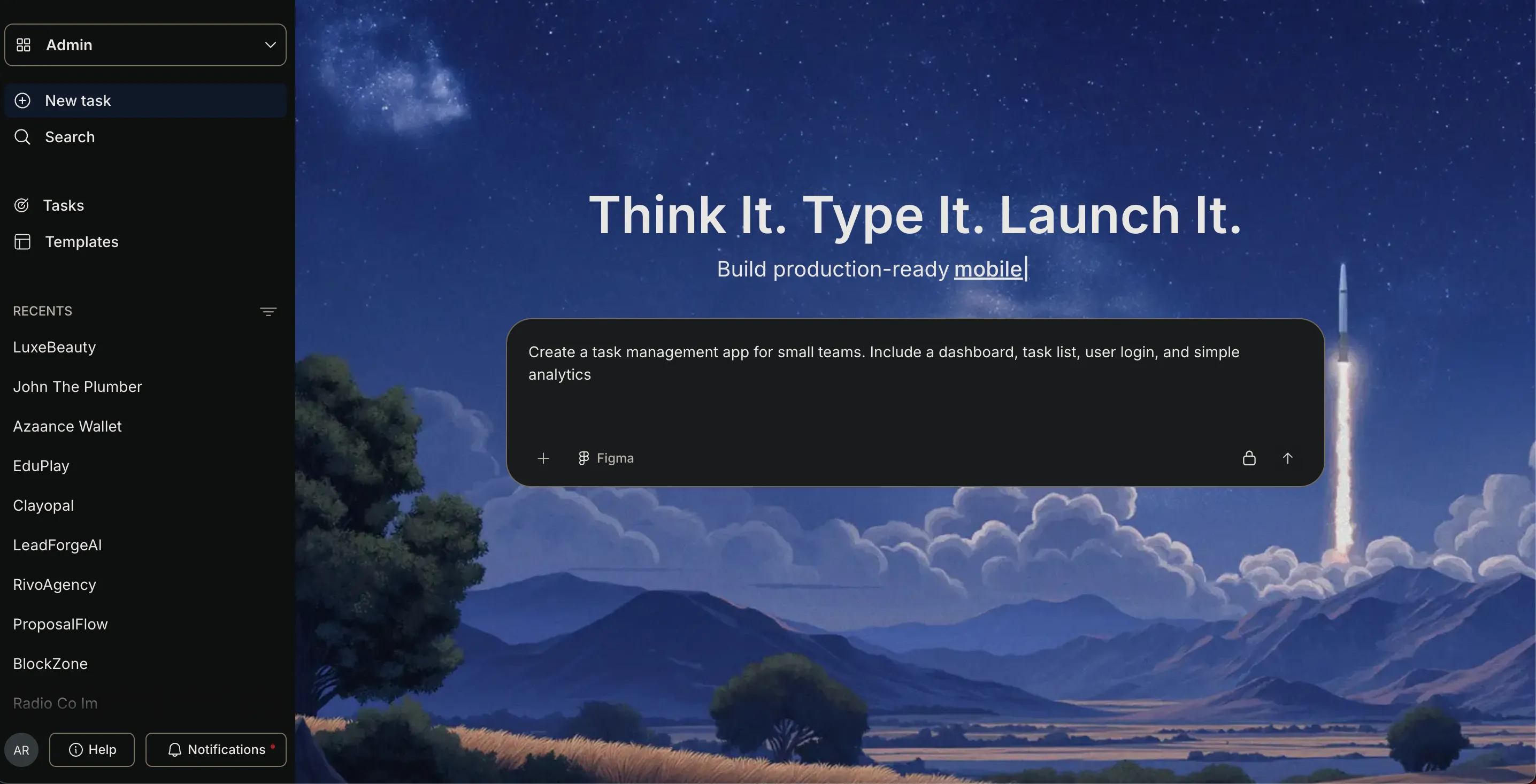
With that single AI prompt, the model understands the task and begins to produce the core parts of the application. The AI tool can generate interface screens, connect to the backend, and produce a working output for users to review.
This shows the difference a good prompt can make. The clearer the prompts, the easier it becomes for AI models to generate practical results. The same principle applies when writers use AI tools to create SEO articles or digital products.
Tips for Writing Better AI Prompts
Writing strong prompts does not have to be complicated. A few simple adjustments in the AI prompt can improve the output you receive from an AI tool.
When the instructions are clear and the context is well explained, the model can generate more accurate and useful responses.
Here are some practical tips that help writers create effective prompts:
- Be direct: Tell the AI exactly what you want it to write. A clear AI prompt helps the model understand the task and produce the right output.
- Add context: Provide useful details about the audience, topic, and goal of the content. The more context the AI tool receives, the easier it becomes to generate relevant articles.
- Specify the format: Mention the blog format, headings, tables, or sections you want. This helps AI models produce structured output rather than random text.
- Ask for revisions: Treat the process like a conversation. If the first response is not perfect, you can adjust the prompt and ask the AI tool to refine the answer.
- Use iteration: Many writers improve their prompts by making small changes over time. Testing different versions often leads to better results.
With regular practice, writers learn how to write effective prompts that guide the AI tool toward clearer output. Over time, this approach helps create useful articles while saving effort during the writing process.
More Resources for Learning Prompt Engineering
If you want to improve your prompt engineering skills, here are helpful resources.
- AI platform documentation
- SEO writing guides
- Communities discussing AI generated content
- Tutorials for generative AI tools
Studying these resources helps writers understand how AI models process input and generate meaningful response.
The more you practice with prompts, the easier it becomes to guide the model.
The Real Power of How to Write AI Prompts
Many writers rely on AI tools, yet weak prompts often lead to generic output and average SEO articles. The issue usually comes from missing context, unclear instructions, or an undefined format. Learning how to write AI prompts helps solve this problem. When a clear AI prompt explains the task, the AI tool can generate stronger AI-generated content with more useful details.
Good prompts guide AI models to produce better responses and stronger blog ideas. With regular practice, writers can save time, improve research, and create content that performs better on search results. Prompt writing is simply a skill. The more prompts you practice, the more consistent and useful the output becomes.
Table of contents
- -Why Prompts Matter in AI Writing?
- -Understanding the Basics of Prompt Engineering
- -Steps to Write Better AI Prompts
- -Step 1: Start with Clear Instructions
- -Step 2: Add Context for Better Results
- -Step 3: Define the Structure
- -Step 4: Use Examples in Prompts
- -Step 5: Ask for Specific Outputs
- -Common Prompt Writing Mistakes
- -The Rocket Behind Fast App Creation
- -Top Features
- -How Clear Prompts Can Turn Ideas Into a Working App
- -Tips for Writing Better AI Prompts
- -More Resources for Learning Prompt Engineering
- -The Real Power of How to Write AI Prompts