
Which Emergent alternatives give you more control over what you build and how fast you ship it? Here are the top options teams use to build full-stack apps, deploy faster, and stop rebuilding context from scratch every session.
What Emergent does and where it falls short?
Emergent is an AI app builder that lets founders and teams spin up full-stack apps from natural language prompts. For quick prototypes, it works.
But teams hit walls. Pricing scales poorly. Customization is limited. Deployment flexibility runs out before the project does. When that happens, you look for alternatives.
The good news: you have real options. Each one handles the build differently. Some give you more code control. Some handle the full arc from research to deployment. Some are better for UI work. Some are built for enterprise workflows.
Here is what each one actually does.
Top Emergent AI Alternatives Worth Trying
These platforms let you build internal tools, enterprise apps, and mobile applications without writing traditional code.
The approaches differ:
- Drag-and-drop visual editors: You design the interface. No code required.
- AI-generated backend logic: You describe the workflow. The platform handles the data, APIs, and logic.
- Database, hosting, and custom domains: Some platforms manage the full stack. Others stop at the frontend.
What you need determines which one fits:
- Rapid prototyping: You want to test an idea fast.
- Production-ready apps: You need something you can actually ship and scale.
- Functional prototypes: You need a working demo for a stakeholder or investor.
Top Emergent Alternatives
| Tool | Best For | Native Mobile Support | Backend Logic | Custom Domains | Version Control | Reviews |
|---|---|---|---|---|---|---|
| Rocket | One-prompt app generation | Yes | Yes | Yes | Yes | 4.8/5 (G2) |
| Lovable | Full-stack apps | Yes | Yes | Yes | No | 4.7/5 (Product Hunt) |
| Meku.dev | Developers + indie hackers | Partial | Yes | Yes | Yes | 4.4/5 (Product Hunt) |
| v0.app | UI-first app building | UI only | Partial | Yes | No | 4.7/5 (Product Hunt) |
| Anything | Full-stack web | Partial | Yes | Yes | Yes | 4.0/5 (Product Hunt) |
| Capacity.so | Enterprise workflows | Partial | Yes | Yes | Yes | 4.7/5 (G2) |
Numbers and checkmarks do not tell the full story. Each platform handles backend development, version control, and AI generation differently. Here is what that looks like in practice.
How to Choose: Decision Flow
Pick the tool that matches what you actually need to ship.
Tools Insights
All six are AI-powered. All six simplify app creation. The differences show up when you push them: on rapid prototyping, on production readiness, on what happens when your project grows past the demo stage.
Here is what each one does in practice.
Rocket.New
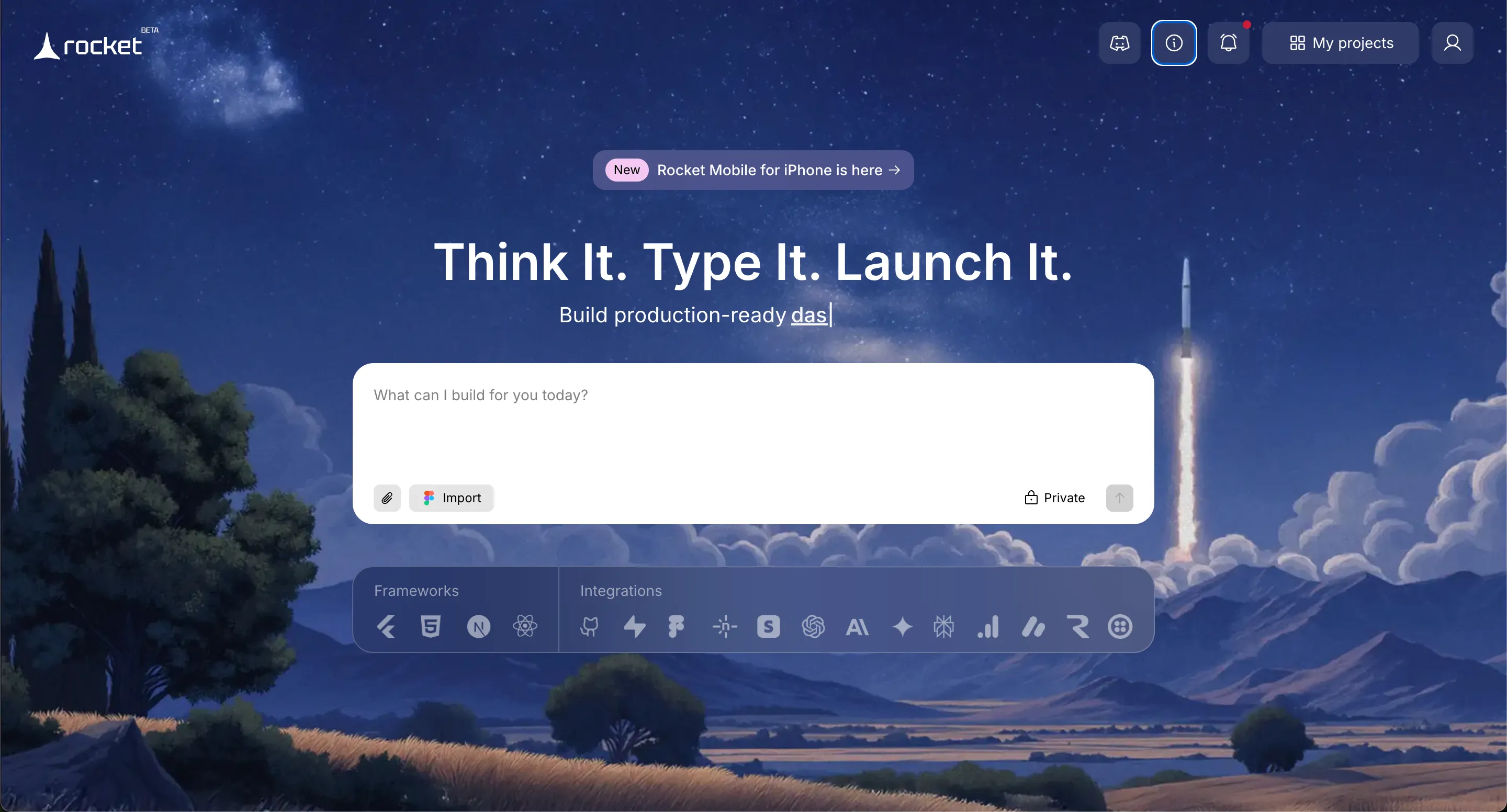
You describe the app. Rocket researches the problem space, generates the backend, builds the frontend, and deploys it. Drop in a Figma file if you have one. The platform handles the rest: database setup, user authentication, API endpoints, custom domains, and GitHub sync.
What you get:
- Automated backend: database creation, authentication, and API endpoints generated from your description.
- Visual editor: design ideas become interactive screens without writing a line of code.
- Web and mobile app support, responsive by default.
- Custom domains, live deployment, no configuration overhead.
- GitHub sync for version control and team collaboration.
- Exportable, clean code you can take anywhere.
- AI suggestions for UX and SEO baked into the build.
Rocket works for non-technical founders who need to ship fast and for developers who want to skip the scaffolding. The combination of AI generation and visual editing is what separates it from tools that only do one or the other.
4.8/5 on G2. The highest-rated emergent alternative among real users.
👉 Build Your App with Rocket 🚀
Lovable
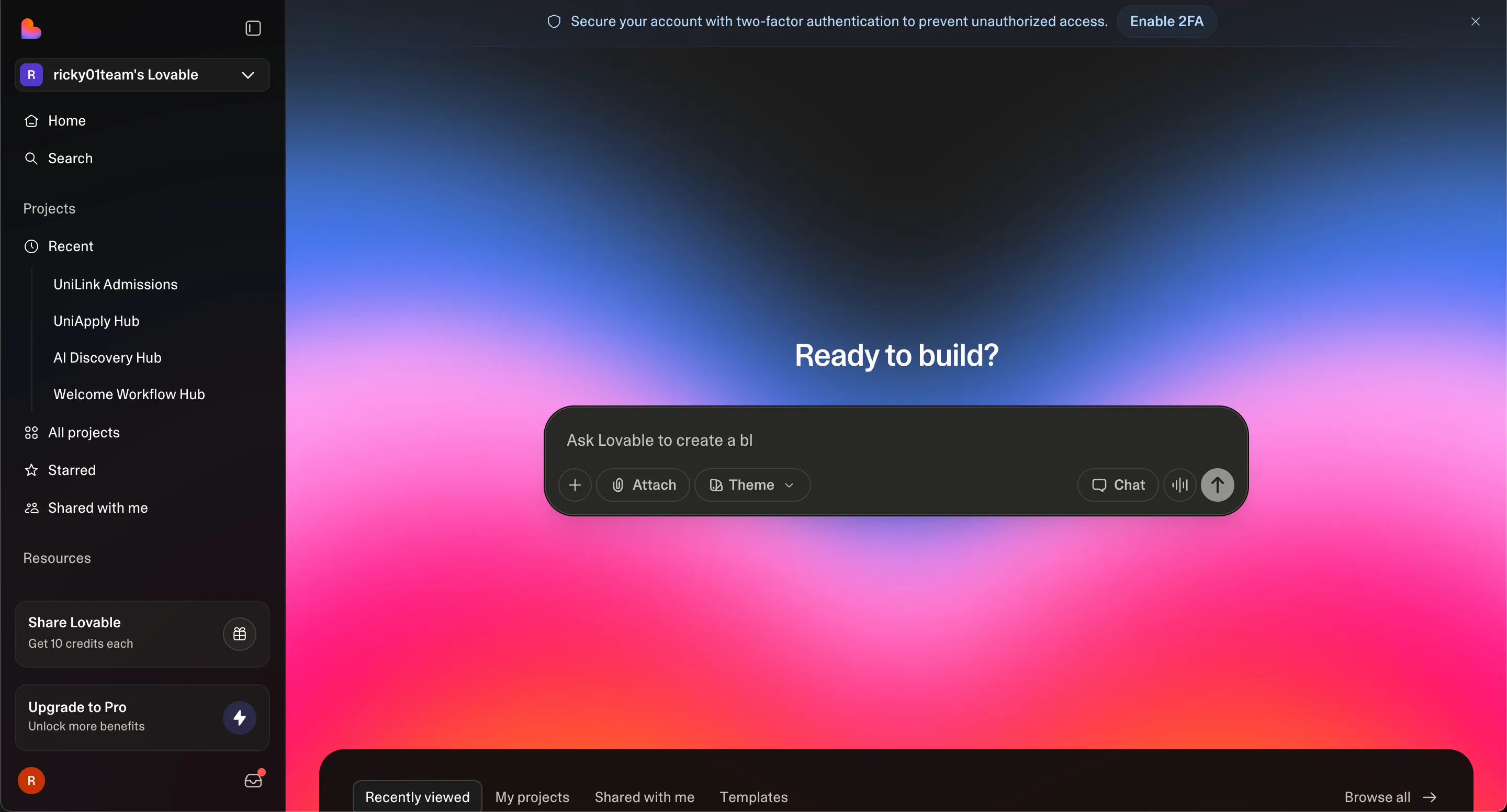
You want a full-stack app. You want AI to handle the repetitive parts. Lovable is built for that.
What you get:
- AI-powered frontend and backend generation, less repetitive work.
- Drag-and-drop visual editor for UI design.
- Custom domain deployment.
- Third-party integrations for extended functionality.
- Web and mobile app support.
Good fit for teams that want production-ready apps with a balance of AI generation and manual control. 4.7/5 on G2.
Meku.dev
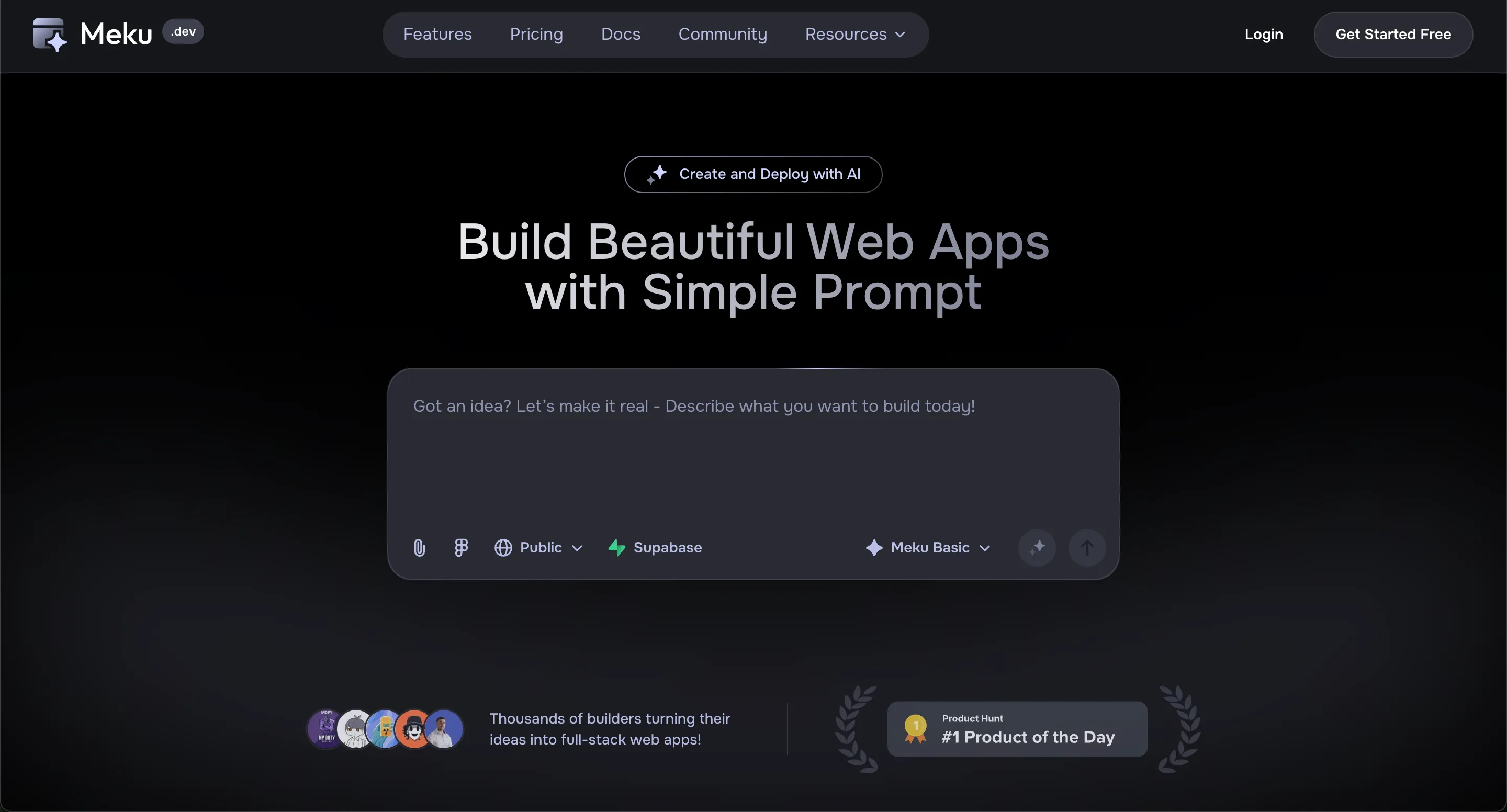
You are comfortable with code. You want AI to accelerate the build without taking control away from you. Meku.dev is built for that.
What you get:
- React and Tailwind frontend code generation.
- Partial mobile support, full web app support.
- Backend logic and database integration.
- GitHub sync for version control.
- Code export for advanced customization.
Right tool for indie hackers and developers who want AI speed without losing control of the output. 4.4/5 on Product Hunt.
v0.app
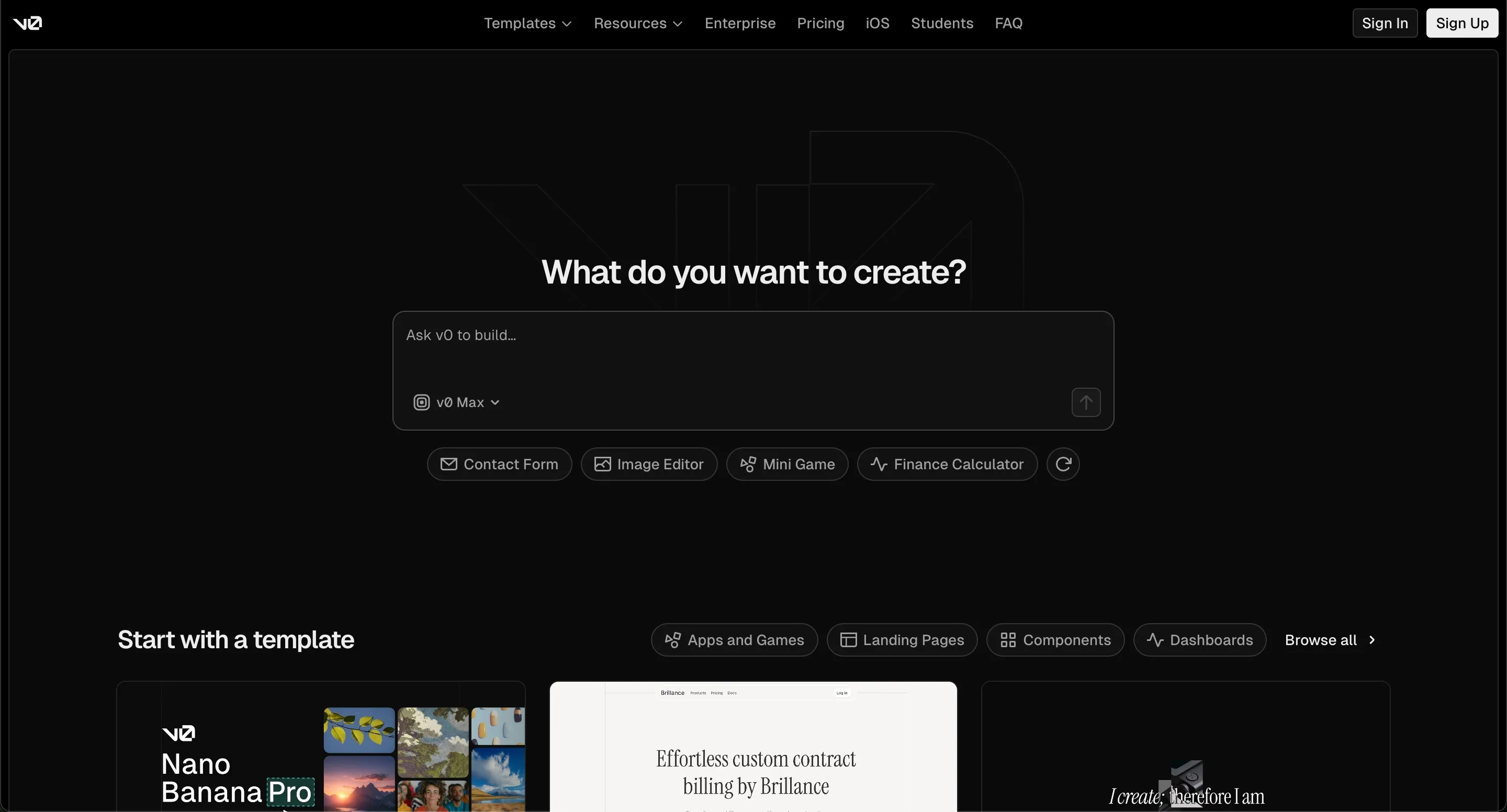
You want to see the UI fast. You are iterating on design, not building a backend. v0.app is built for that.
What you get:
- UI component generation for fast iterative design.
- Web-first, partial mobile support.
- Basic backend logic.
- Custom domain setup.
- Exportable generated code.
Fast and focused. You see results without touching backend details. Best for prototypes and design validation. 4.7/5 on Product Hunt.
Anything
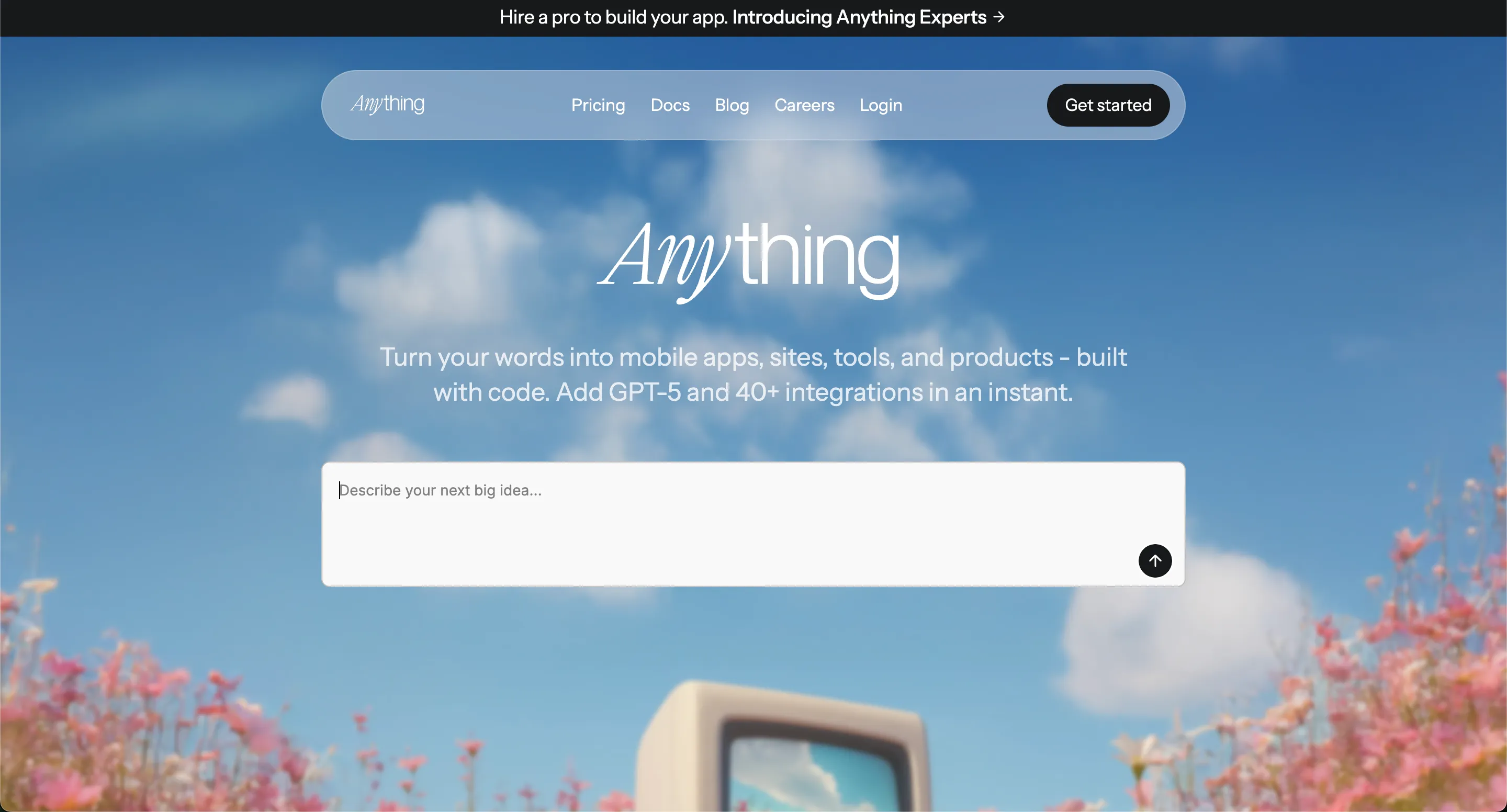
Anything, formerly create.xyz and now rebranded, supports individuals and small teams building full-stack web apps. AI generation meets visual editing.
What you get:
- Automated backend logic for full-stack apps.
- Partial mobile support, full web app support.
- Custom domains for deployment.
- External service integrations.
- Clean code export.
Solid choice for full-stack web apps when you need speed without sacrificing control. 4.0/5 on Product Hunt.
Capacity.so
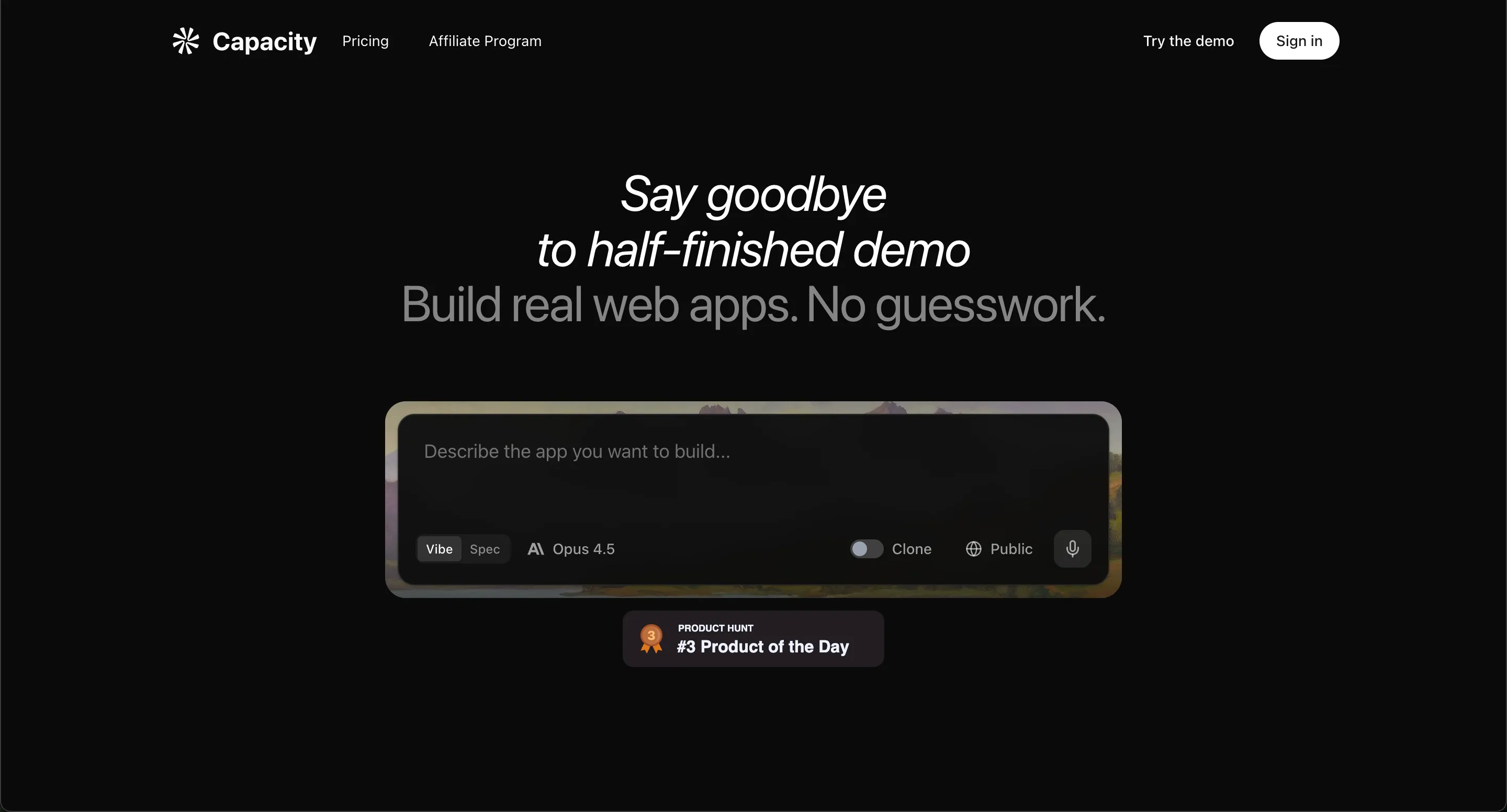
You are building for an enterprise. Internal apps, project management tools, structured workflows. Capacity.so is built for that.
What you get:
- AI-assisted backend and workflow generation.
- Web-first, partial mobile support.
- Custom domain deployment.
- Version control and team collaboration.
Built for business processes and teams that need structured internal solutions. 4.7/5 on G2.
What Real Users Say
On LinkedIn, a developer shared:
"I gave an AI builder just one sentence and it built a complete, working app. It built full UI, backend, and logic straight from a single prompt."
The Real Problem With Building Without Thinking First
Most teams pick a tool and start building. Then they rebuild. Then they switch tools. The problem is not the tool. It is building before you know what to build.
Emergent alternatives solve the execution side. The faster you can ship, the faster you can validate. Whether you need internal tools, production apps, or mobile apps, the right platform removes the friction between idea and deployed product.
These tools are not gimmicks. They are how serious teams ship faster.
You have the idea. You know what you want to build. Rocket.new takes you from that first prompt to a deployed, production-grade app with backend logic, mobile support, GitHub sync, and the highest user ratings among emergent alternatives.
Start building on Rocket and ship what you actually meant to build.