
Early-stage teams benefit from AI-driven solutioning that accelerates product cycles, reduces delays, adapts to evolving ideas, and sustains momentum daily. Vibe solutioning for startups gives founders and developers a shared language to move from idea to production-ready app without heavy process overhead.
Early teams want approaches that help them move faster. Data show that using AI early can significantly accelerate product cycles, especially when ideas change weekly. But what actually helps a team choose the right path?
Startups deal with pressure, limited budgets, and constant competition. They need ways to reduce delays and maintain momentum. This is where vibe solutioning for startups comes in.
Why Vibe Solutioning Helps Early Teams Move Faster
Startups often shape ideas early with limited support. Non-technical founders want clarity without clunky steps. Many developers feel stretched already. Business teams want natural-language prompts that translate into real results without long delays.
Vibe solutioning offers a relaxed structure that aligns with the startup ecosystem. It blends natural language instructions, AI tools, shared understanding, and flexible workflows. This allows teams to handle functional code, rapid prototyping, and production-ready applications at a more manageable pace.
This combination keeps communication simple. Everyone speaks in plain language to achieve clear outcomes. That steady alignment helps teams test ideas, add features, and adjust direction without high cost.
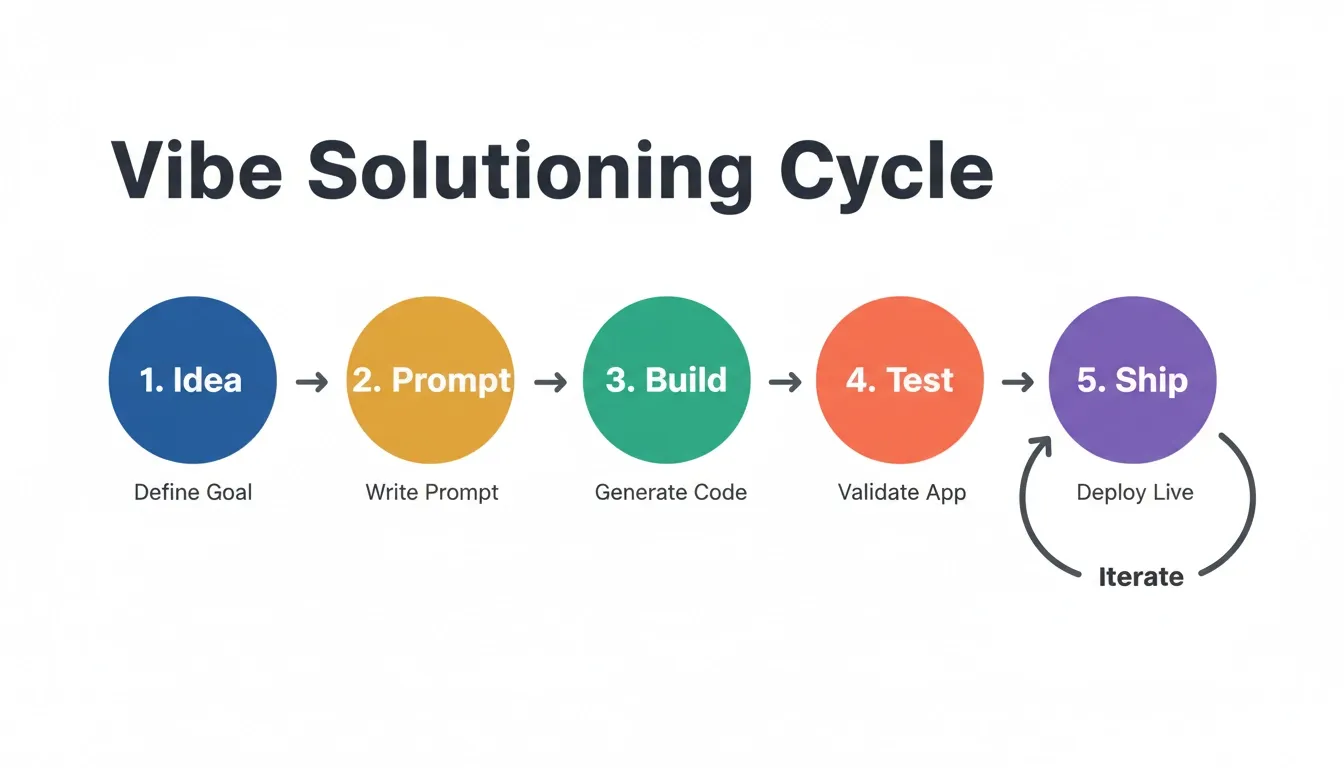
How Vibe Coding Fits Inside This Approach
Next comes the heart of the process: vibe coding. The vibe coding process uses natural language and supports rapid changes. It helps non-technical founders guide a coding agent using direct follow-up prompts. They can ask an AI-powered tool to generate code, refine backend logic, or update business logic.
Many developers still enjoy traditional programming, and many also appreciate moments when AI handles small tasks. That balance makes vibe coding appealing. It respects programming languages while accepting that AI-generated code can handle early drafts.
This method supports modifying a Python function, making small fixes to existing code, or changing a specific line of code. It also helps build simple apps or full-stack apps quickly. Teams can shape visual elements, update UI components, and ship functional prototypes with less stress.
Where Natural Language Prompts Shape Real Work
Natural language prompts help teams stay aligned. They allow users to request internal tools explicitly and remove confusion, especially for non-technical founders. These prompts also support AI-generated updates without needing long technical breakdowns.
This clarity makes everyday work smoother. Teams can adjust CSV file flows, handle backend logic, guide app development, or test ideas in short cycles. Natural language also helps teams collect user feedback in simple terms and apply those learnings faster.
According to GitHub's 2023 Copilot productivity study, developers using AI coding assistants completed tasks up to 55% faster than those working without AI support. For startups where every sprint counts, that acceleration is a direct competitive edge.
Why This Approach Reduces Development Time
Many early teams worry about time-consuming processes. Vibe coding uses modern AI models to reduce long steps. That shift helps teams reach users faster and keep pace with rapidly changing needs.
Here are a few reasons this brings real gains:
- Fast iteration since the coding agent handles early drafts
- Simpler changes because non-technical founders can request updates
- Fewer issues thanks to robust error-handling support
- Shorter cycles for the initial version
- Clearer guidance through natural language communication
A McKinsey report on AI adoption found that organizations integrating AI into development workflows reduced time-to-market by up to 40%. For early-stage startups, that gap separates teams that ship from teams that stall.
When Does This Method Help the Most?
| Situation | Value Delivered | Best For |
|---|---|---|
| Very early idea | Rapid prototyping and initial version clarity | Pre-seed founders |
| Small team | Faster code cycles with AI tools | Teams under 5 people |
| Limited budget | Lower development time and simpler workflows | Bootstrapped startups |
| Need cross-team clarity | Natural language instructions improve communication | Mixed technical teams |
| Testing new features | Easy to generate code for quick tests | Growth-stage iteration |
| Updating existing code | Follow-up prompts handle targeted fixes | Post-launch maintenance |
Community Insight
A relatable comment from LinkedIn, the experience many feel:
"AI coding tools feel like a pair programmer who works at any hour and never gets tired."
Why Tools Matter When Using This Method
Tools become the anchor of this strategy. Teams often mix AI tools, GitHub Copilot, VS Code, and a vibe coding tool. Some create internal tools for team-specific tasks. Picking the right tools keeps things smooth. The best tool encourages fast edits, easy previews, and clean error handling.
Teams may also run tests with Claude Code or other setups. They adjust tools as business logic evolves. That shift helps them make informed decisions about the technology stack. A coding agent also helps refine ideas through follow-up prompts and provides feedback.
Working With AI Models in Daily Cycles
Daily work becomes lighter. AI models guide teams through code generation and editing. They help create software that begins simple and grows into production-ready applications. They also help refine backend logic or support full-stack apps.
Teams can request a function, adjust a CSV file step, or quickly test a new feature. That flexibility helps lower stress and steady progress. AI also supports app development by handling early steps that once required heavy lifting. Non-technical founders appreciate this because it allows them to describe needs in plain language.
Why Startups Prefer This Over Traditional Programming Alone
Startup building moves fast. Traditional programming remains important. Yet some early cycles slow down when everything starts from scratch. With vibe coding, teams still write solid functional code but enjoy faster loops.
The key difference is iteration speed. A Stack Overflow Developer Survey found that over 70% of developers reported AI tools made them more productive. Startups that adopt these tools early build a compounding advantage over those that don't.
This helps teams reach production-ready applications with fewer hurdles.
Updating and Working With Existing Code
Teams often reach a point where they need to update existing code. Vibe coding helps here too. Natural language prompts make adjustments simple. Users can request changes line by line, point out a code line, or describe the fix they need.
Error handling upgrades also become easier. This supports iterative refinement with fewer delays. Teams that build startups with vibe coding consistently report shorter debugging cycles and faster feature rollouts compared to traditional approaches.
Rocket: A Helpful Partner in This Strategy
Rocket is a vibe solutioning platform that supports teams shaping ideas through this method. The platform helps teams move faster, stay aligned, and test ideas early. It works well for small-team setups that need quick cycles and greater clarity.
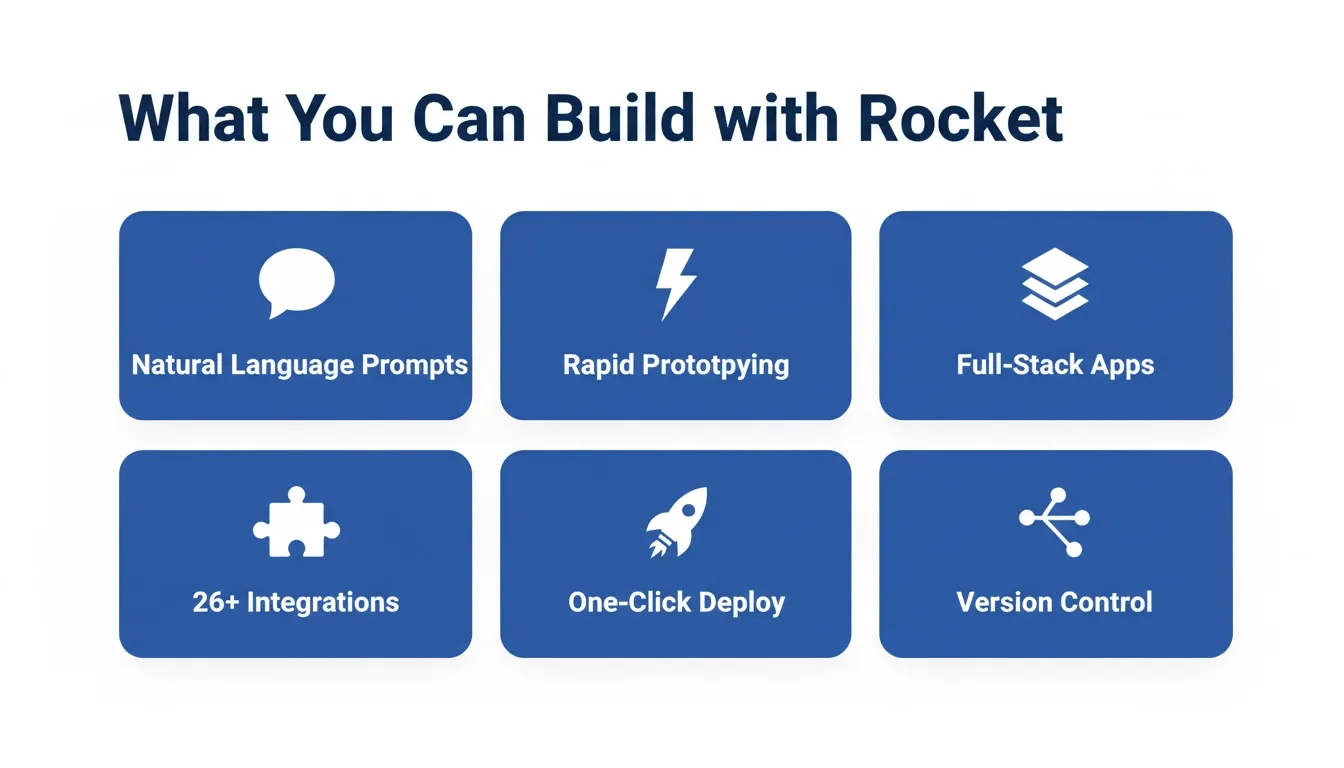
Features that help:
- Rapid prototype support for early versions
- AI-powered steps for coding tasks
- Clear natural language guidance
- Friendly support for small team workflows
- Fast previews for new features
- Easy follow-up prompts for updates
Rocket helps teams maintain steady progress and clear communication, aligning with the strengths of vibe solutioning.
How Teams Add Features and Keep Momentum
Feature growth becomes smoother. Teams often want new features without long waits. A coding agent helps add features in minutes. User feedback guides these updates and keeps teams close to real needs.
Many teams still rely on full-stack apps, so they request changes to a Python function, a CSV file, or UI components. These steps help ship updates in record time while maintaining flexibility.
A Helpful Shortcut for Founders
Non-technical founders often want a clear path without having to guess steps. They want simple apps that can grow. AI-powered tools help by turning natural language into direct actions. That support helps founders test ideas early and refine the desired outcome through follow-up prompts.
This flow helps maintain customer engagement and makes direction changes smoother.
Flexible Workflows With Many Tools
Teams often combine several tools as they scale. They match technology stack choices with coding agent support. They also choose tools that help with error handling, production-ready applications, or full-stack apps.
Teams combine GitHub Copilot, VS Code, and other AI tools. This pairing helps teams stay flexible and maintain progress in a friendly rhythm.
A Smooth Path With Vibe Solutioning
A steady mix of clarity, speed, and flexible workflows shapes strong early progress. This method helps teams refine ideas, adjust code, and ship updates without confusion. With quick cycles and simple language, the process supports growth at a natural pace. So vibe solutioning for startups offers a practical path for teams that want progress without heavy friction.
Ready to put it into practice? Start building with Rocket and go from idea to production-ready app faster than any traditional development approach.
Table of contents
- -Why Vibe Solutioning Helps Early Teams Move Faster
- -How Vibe Coding Fits Inside This Approach
- -Where Natural Language Prompts Shape Real Work
- -Why This Approach Reduces Development Time
- -When Does This Method Help the Most?
- -Community Insight
- -Why Tools Matter When Using This Method
- -Working With AI Models in Daily Cycles
- -Why Startups Prefer This Over Traditional Programming Alone
- -Updating and Working With Existing Code
- -Rocket: A Helpful Partner in This Strategy
- -Features that help:
- -How Teams Add Features and Keep Momentum
- -A Helpful Shortcut for Founders
- -Flexible Workflows With Many Tools
- -A Smooth Path With Vibe Solutioning