
Gartner projects 150,000 AI agents per Fortune 500 enterprise by 2028, up from fewer than 15 today. Apps without agent-ready architecture will need costly rebuilds. This post explains why architecture decisions made now determine whether your product scales or stalls.
AI agent sprawl is accelerating fast: Gartner projects Fortune 500 enterprises will run over 150,000 AI agents by 2028, up from fewer than 15 today. Apps built without agent-ready architecture will require costly rebuilds. This post explains what AI agent sprawl means for builders and why architecture decisions made at generation time determine whether your app scales or stalls.
What Is AI Agent Sprawl?
AI agent sprawl is the uncontrolled proliferation of AI agents deployed across an organization without centralized oversight.
It happens when individual teams independently deploy agents for their own workflows, without IT visibility, without a shared registry, and without defined ownership.
The result is dozens or hundreds of agents running simultaneously, each carrying its own data access permissions, service accounts, and API tokens, with no single team able to account for all of them.
What Happens When Agent Counts Explode Across an Organization?
The jump from 15 agents to 150,000 per enterprise is not just a scaling challenge. It triggers cascading failures in security, data access, and operational coordination that most teams have no framework to handle.
The Numbers Behind Uncontrolled Growth
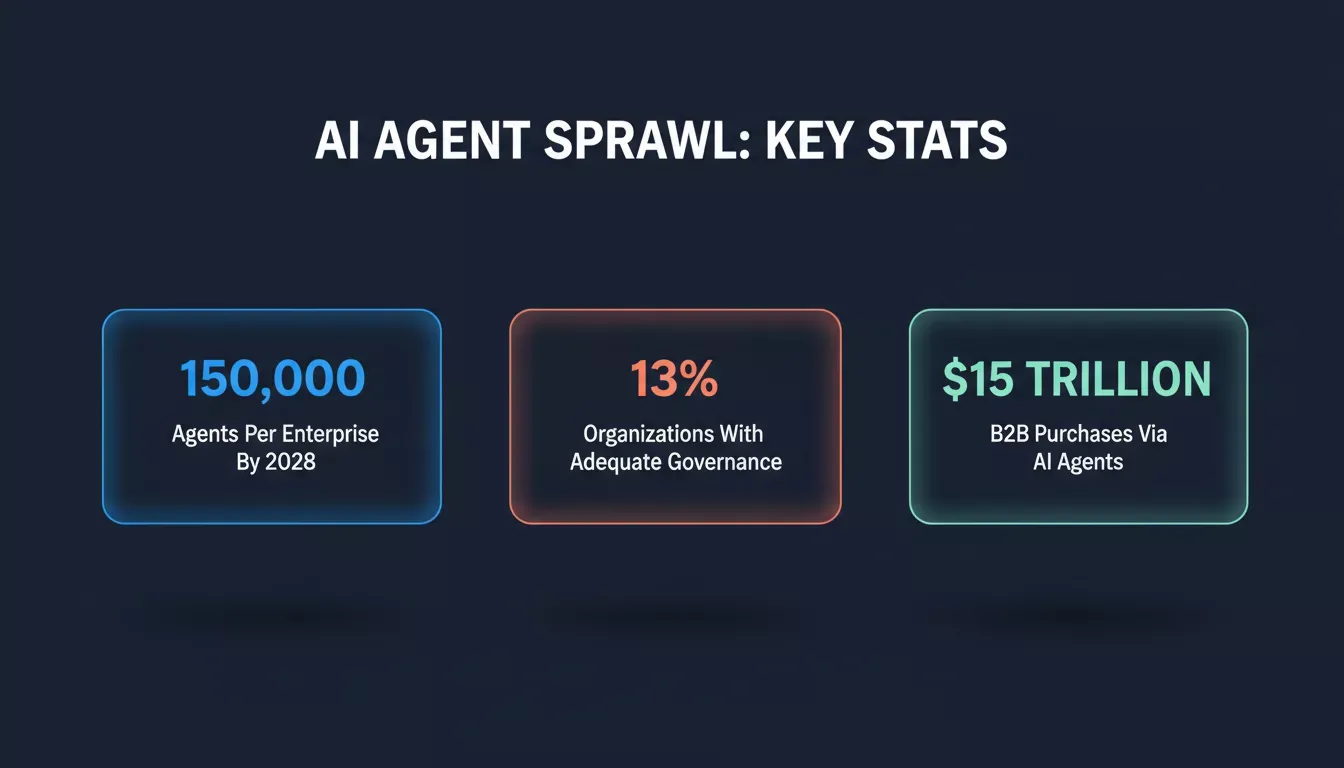
Three numbers that define the agent sprawl challenge: scale, governance gap, and economic stakes
- Gartner predicts Fortune 500 enterprises will deploy over 150,000 AI agents by 2028, up from fewer than 15 in 2025
- Only 13% of organizations believe they have the right agent governance in place to manage this scale
- Multiple teams deploy their own AI agents across departments without centralized visibility, creating dozens of redundant agents performing similar tasks
- Each ungoverned agent carries its own data access permissions, service accounts, and API tokens
| Year | Avg. Agents Per Enterprise | Governance Readiness |
|---|---|---|
| 2025 | ~15 | 13% have right policies |
| 2026 | 500 to 2,000 (projected) | Most lack centralized control |
| 2028 | 150,000+ | Agent lifecycle management required |
Shadow Agents and Security Gaps
Shadow agents emerge when employees cannot find sanctioned tools and build their own AI solutions without proper security oversight. The core risk is invisibility: no single team knows how many agents are running, what data they access, or who owns them. Security risks multiply because each agent can access sensitive data, make decisions, and interact with other systems on behalf of users.
Understanding the distinction between agentic AI vs AI agents matters here: agentic systems can spawn sub-agents, which means one ungoverned deployment can silently multiply into dozens.
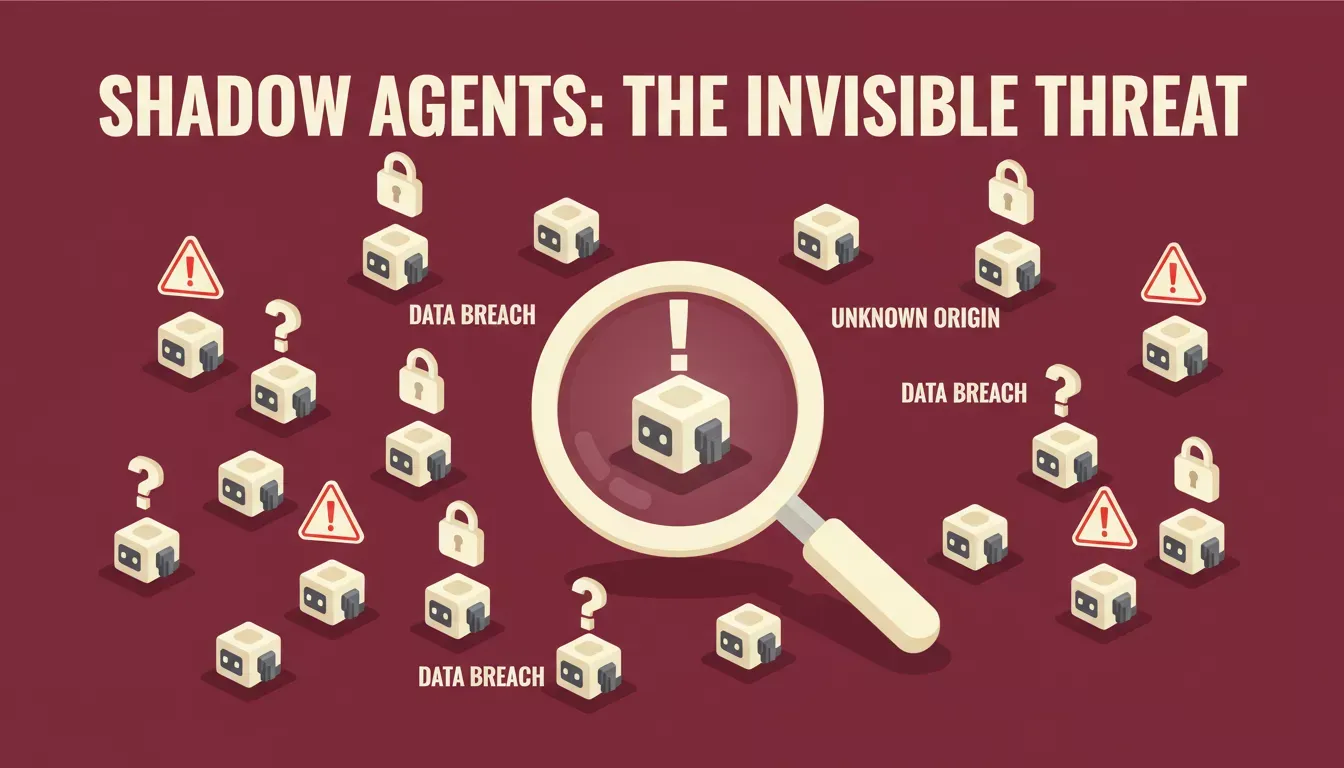
Shadow agents proliferate when employees bypass sanctioned tools, creating invisible security exposure across the organization
Why Does Redundancy Multiply Faster Than Teams Expect?
Redundancy compounds because teams in marketing, finance, and engineering independently deploy similar agents for overlapping tasks, without knowing the others exist. Without an enterprise-wide registry, duplicate agents consume resources, generate conflicting outputs, and expose the organization to compliance risks. This is the kind of chaos at scale that no governance policy can fix retroactively.
The speed of this proliferation catches most organizations off guard. By the time IT discovers the scope of the problem, hundreds of agents are already operating without oversight across the entire organization.
Why Do Most Governance Strategies Fail to Keep Pace?
Most governance strategies fail because enterprises treat agent sprawl like SaaS sprawl: a procurement and access problem.
AI agents are fundamentally different. They do not just store information. They make decisions, access systems, spawn other agents, and act autonomously on behalf of humans. A SaaS tool that goes unmanaged wastes money. An ungoverned agent can exfiltrate data, trigger downstream workflows, or create compliance exposure before anyone notices.
Most Teams Lack Centralized Visibility
Without centralized visibility into active agents, IT leaders cannot determine which agents are running, what permissions they hold, or whether agents have exceeded their intended scope. Max Goss, Sr. Director Analyst at Gartner, warned:
"If you don't have any visibility of them, then that's a huge risk for the organization."
Cross-functional visibility requires an agent registry that tracks defined ownership, access levels, and lifecycle stage for every deployed agent.
What Happens Without Agent Lifecycle Management?
Agents that outlive their purpose become orphaned, still running with active credentials and data access but no defined ownership. These orphaned agents continue to access data, run workflows, and accumulate cost implications without anyone monitoring their behavior. Retirement processes for obsolete agents barely exist in most organizations today, creating an inventory and governance problem that compounds monthly.
The Identity and Permissions Problem
Each agent needs a unique identity with clearly defined data access permissions. When agents inherit broad access from their creator's credentials, a single compromised agent can expose the entire organization's sensitive data. Understanding agentic AI security threats is essential before designing any governance layer, because the attack surface is fundamentally different from traditional API abuse.
Gartner's six-step framework addresses these gaps: establish governance policies, build a centralized agent inventory, define agent identity and permissions, develop information governance, monitor agent behavior, and foster a culture of responsible AI usage. The challenge is that securing agent-facing endpoints requires application architecture that supports these controls natively.
How Should App Builders Think About Agent-Ready Architecture?
Governance frameworks tell you how to manage AI agents. But if your application architecture was not designed to participate in a multi-agent environment from the start, governance alone will not save you from a costly rebuild. **Gartner forecasts AI agents will intermediate over $15 trillion in B2B purchasing by 2028**, making agent-ready design a competitive requirement rather than a nice-to-have.
The following patterns are general best-practice architecture recommendations for any app that will need to interact with AI agents. Think of them as the checklist your architecture should satisfy, regardless of how you build.
API-First Design Is Non-Negotiable
Apps that expose clean, well-documented API routes can communicate with other agents without custom middleware or one-off connectors. Agentic AI systems rely on structured endpoints to request data, trigger actions, and report results back to orchestration layers. Hand-rolled MVPs that hardcode business logic into frontend components become invisible to agent calls.
The ability to auto-generate API routes is one of the most practical ways to ensure your app surfaces a clean, predictable interface for agent communication from day one.
Access Control at the Agent Layer
Every endpoint your app exposes needs role-based access control that distinguishes between human users, IT-approved agents, and third-party agent requests. Token-based authentication with scoped permissions prevents agents from exceeding their intended scope or accessing systems they should not reach. Your app's access control layer becomes the first line of defense against both orphaned agents and external agent-based attacks.
Knowing how to secure your app at the endpoint level is foundational before any agent governance layer can be enforced on top.
Why Does Modular Architecture Win Long-Term?
Monolithic codebases force you to rebuild entire systems when agent requirements change. Microservice-friendly architecture, with separated API routes and clean service layers, allows you to expose new agent-facing capabilities without touching existing functionality. Choosing the right software architectural patterns at build time is the single decision that most determines your long-term agent-readiness.
Reference architecture pattern for agent-ready applications. This illustrates best-practice design principles, not a description of what any specific platform generates.
Architecture decisions made at generation time determine whether your app participates in agent ecosystems or gets left behind.
Why Rocket.new Output Supports Agent-Ready Patterns
Most AI app builders generate code that works for a single user interacting with a single interface. Rocket generates production-ready code with the structural patterns that make agent communication straightforward to add.
What Rocket Actually Generates
Rocket's web apps ship as React (JavaScript) by default for SaaS products, dashboards, and internal tools. Next.js is the default for websites and landing pages, and is also available as a framework choice for other web app types including e-commerce. Mobile apps generate as Flutter, producing a single codebase for iOS and Android.
The generated code includes separated component files, structured routing, and clean service layers. These patterns make it straightforward to expose agent-facing API endpoints without restructuring your entire codebase.
26+ Built-In Connectors for AI and Data Services
Rocket integrates with 26+ third-party services out of the box, including OpenAI, Anthropic, Gemini, Supabase, Stripe, Twilio, and more. These connectors let you build AI-powered features directly into your app: chat interfaces, content generation, database-backed workflows, and payment flows, all wired up from a single prompt.
To be precise: Rocket's connectors are for you building intelligent features into your app. Agent-to-agent communication is an architectural pattern you implement at the application layer, using the clean API structure that Rocket's generated code supports.
Rocket vs. Typical No-Code vs. Hand-Coded MVP
How do different build approaches stack up on the axes that matter for agent readiness?
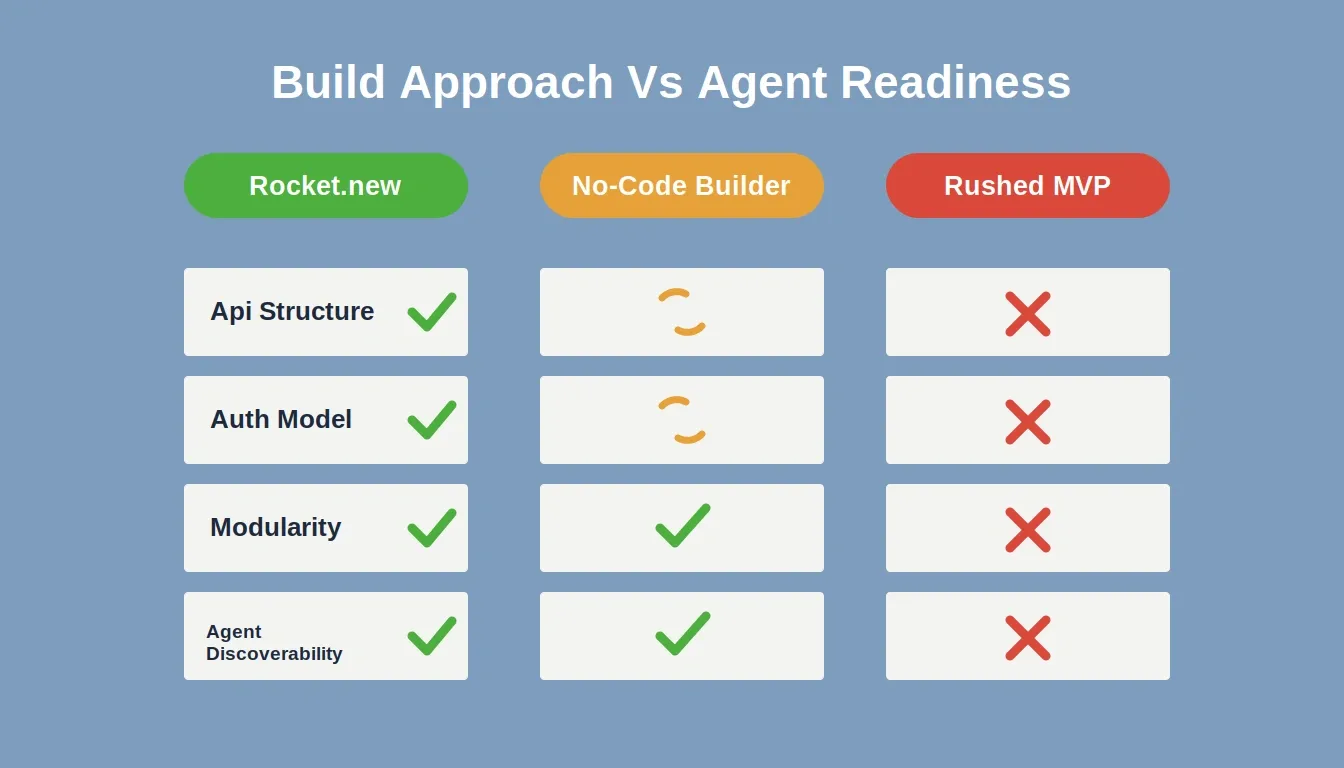
How different build approaches compare across the four dimensions that determine agent readiness
| Dimension | Rocket (React/Next.js) | Typical No-Code Builder | Hand-Coded MVP (Rushed) |
|---|---|---|---|
| Api Structure | Separated routes, REST conventions | Proprietary, often locked | Varies, often embedded in UI |
| Auth Model | Token-based, configurable scopes | Platform-managed, limited control | Custom, depends on developer |
| Modularity | Clean service layers, component separation | Monolithic visual blocks | Often monolithic under deadline |
| Agent Discoverability | Predictable URL patterns, importable via Postman/Swagger | Usually not exposed | Manual documentation required |
| Code Ownership | Full source export available | Vendor-locked | Full ownership |
| Time To Agent-Ready Endpoint | One chat prompt | Requires platform workarounds | Sprint of refactoring |
Where Hand-Rolled MVPs Break Down
Traditional MVPs built under time pressure often embed business logic in UI components, making them invisible to any programmatic caller. Vibe-coded prototypes from builders without architectural opinions produce tangled code that cannot scale past a demo. When AI agent sprawl arrives at your product's doorstep, apps without clean API boundaries need complete rebuilds, not incremental updates.
The difference between an app that is ready for 150,000 agents and one that is not comes down to architectural decisions made at generation time. Rocket makes those decisions correctly from the first prompt.
Can You Govern Agents Without Rebuilding Your Entire Stack?
Effective agent governance does not require ripping out your existing architecture if that architecture was built with the right patterns from the start. Here is how to approach agent management at enterprise scale without blocking innovation.
A Lightweight Registry Pattern
Start by maintaining an agent registry of every agent that interacts with your application, tracking its identity, owner, access level, and purpose. This does not require a massive platform investment. A simple database table tracking agent credentials, last-active timestamps, and defined scope covers most use cases at the start. Gartner recommends organizations begin here: build a centralized control plane for agent inventory before attempting to enforce complex policy compliance rules.
How Can You Define Clear Rules Without Blocking Agent Adoption?
Set guardrails on what agents can do (read vs. write, which endpoints, rate limits) rather than blocking all agent access entirely. Teams that restrict all agent usage push employees toward shadow AI solutions that carry far greater risks and zero audit trails. A tiered approach works: allow read access broadly, require approvals for write operations, and track all actions on sensitive data.
Monitoring Agent Behavior at Scale
Track what each agent does, when it acts, and whether its behavior matches its stated purpose and intended scope. Anomalous behavior, like an agent suddenly accessing data outside its permitted range, triggers review rather than automatic blocking. Audit trails for every agent action create accountability and responsible AI usage patterns without slowing legitimate workflows.
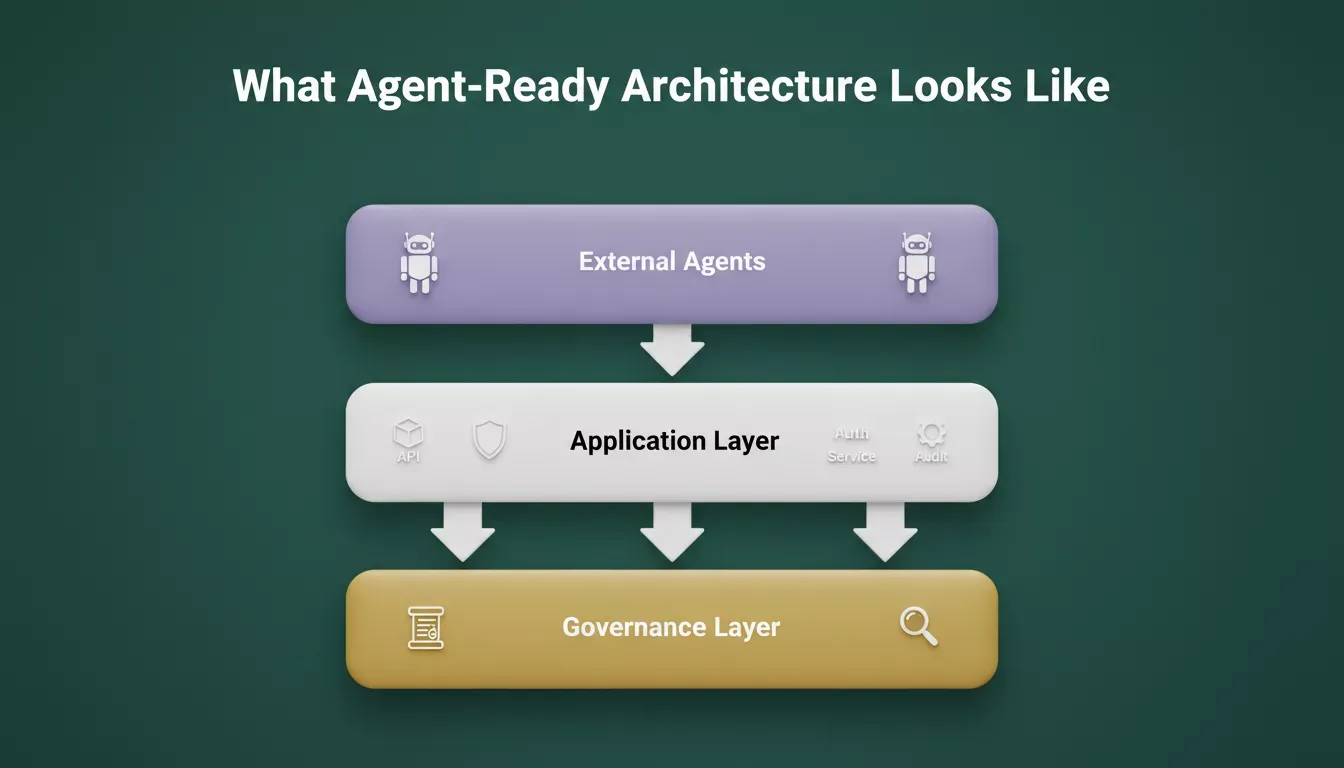
The three layers every agent-ready application needs: external agent interface, application layer, and governance controls
Agent management at enterprise scale means designing your app to be observable, controllable, and auditable from day one. When you build on frameworks that already separate concerns cleanly, adding these governance hooks takes hours, not months of development time.
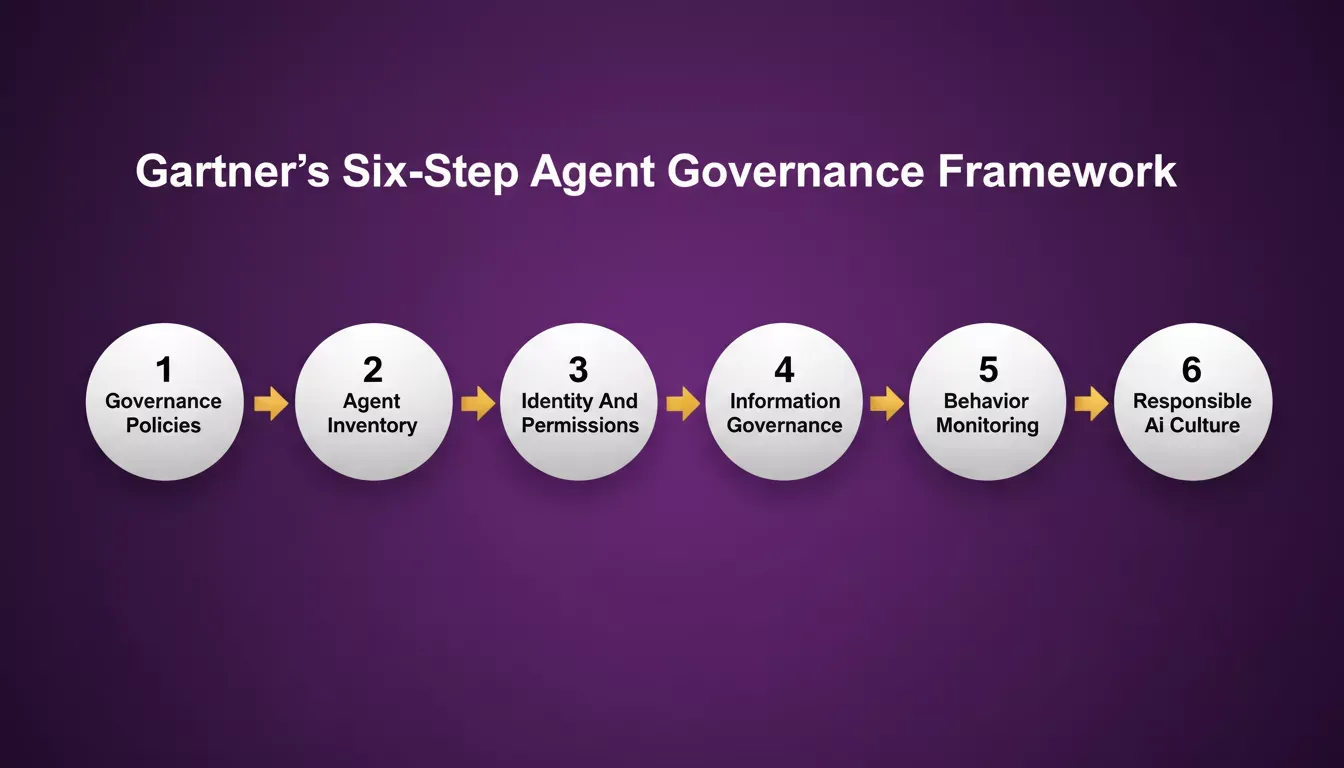
Gartner's six-step framework for enterprise agent governance: from policy establishment to responsible AI culture
Your Next App Will Talk to Dozens of Agents. Start Ready.
The shift from 15 agents to 150,000 per enterprise is not a one-day problem. It is a 2028 reality, and the architecture decisions you make today determine whether your app participates in that ecosystem or gets rebuilt from scratch. Agent-ready design, with clean API boundaries, scoped access control, and modular services, is the foundation that separates products built to last from prototypes that collapse under their first multi-agent workflow.
The builders who recognize this pattern early gain a structural advantage that compounds with every new agent their app can serve. Your app does not need to be perfect on launch day. It needs to be built on the right foundation.
Building for a world where AI agent sprawl is the default, not the exception, means your architecture must be ready before the agents arrive. Rocket gives every app that foundation automatically, from the first prompt to production deployment. Start building on Rocket.new today and ship with clean, modular code that scales into any multi-agent future.
Table of contents
- -What Is AI Agent Sprawl?
- -What Happens When Agent Counts Explode Across an Organization?
- -The Numbers Behind Uncontrolled Growth
- -Shadow Agents and Security Gaps
- -Why Does Redundancy Multiply Faster Than Teams Expect?
- -Why Do Most Governance Strategies Fail to Keep Pace?
- -Most Teams Lack Centralized Visibility
- -What Happens Without Agent Lifecycle Management?
- -The Identity and Permissions Problem
- -How Should App Builders Think About Agent-Ready Architecture?
- -API-First Design Is Non-Negotiable
- -Access Control at the Agent Layer
- -Why Does Modular Architecture Win Long-Term?
- -Why Rocket.new Output Supports Agent-Ready Patterns
- -What Rocket Actually Generates
- -26+ Built-In Connectors for AI and Data Services
- -Rocket vs. Typical No-Code vs. Hand-Coded MVP
- -Where Hand-Rolled MVPs Break Down
- -Can You Govern Agents Without Rebuilding Your Entire Stack?
- -A Lightweight Registry Pattern
- -How Can You Define Clear Rules Without Blocking Agent Adoption?
- -Monitoring Agent Behavior at Scale
- -Your Next App Will Talk to Dozens of Agents. Start Ready.