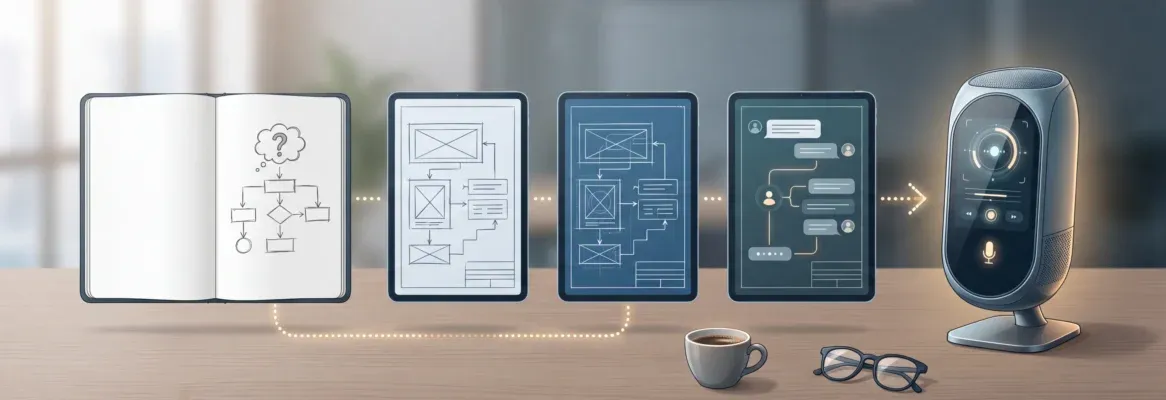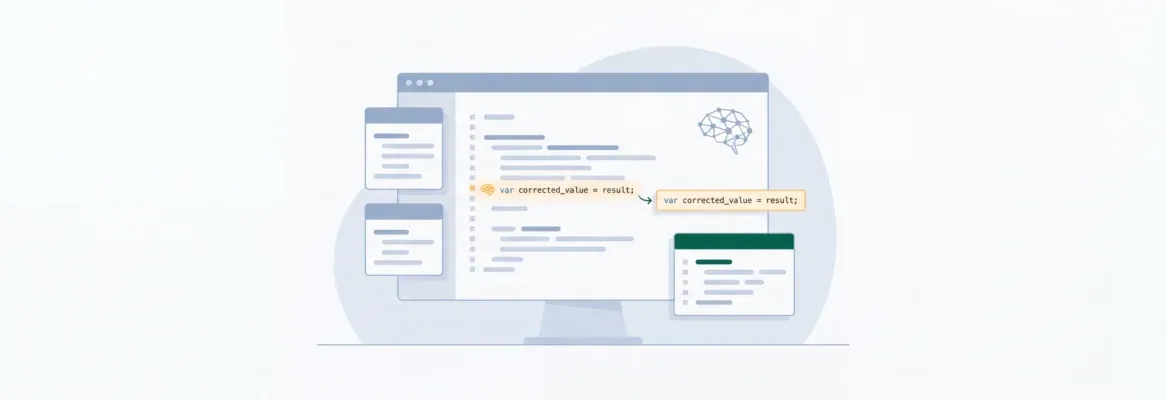
Use these 20 AI prompts to build a knowledge base that turns scattered documents into a searchable, AI-powered system so your team finds answers fast, reduces support tickets, and onboards new hires in days.
Why Does Your Team Still Waste Time Searching for Answers?
According to Zendesk, 79% of customers resolve problems independently when given a well-structured knowledge base. The same principle applies to internal teams. When documents live in scattered folders, Slack threads, and forgotten Google Drive links, your team wastes time on repeat questions instead of meaningful work.
IBM defines knowledge management as "the process of identifying, organizing, storing and disseminating information within an organization," and notes that it leads to faster decision making and better operational efficiency across departments.
So here is the practical question: how do you build an AI knowledge base fast, without hiring a dedicated documentation team? The answer starts with the right prompts.
Why Teams Struggle Without an AI Knowledge Base
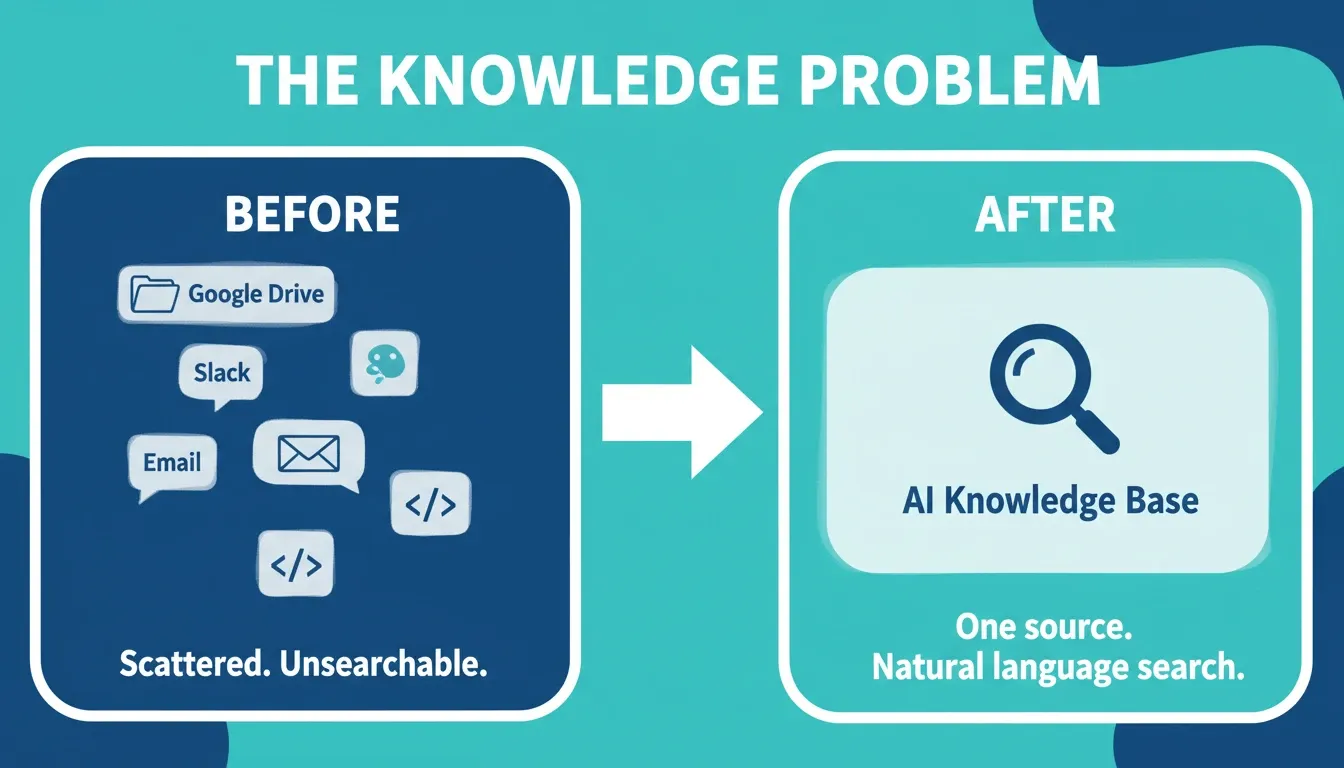
Most teams already have knowledge scattered across dozens of tools. The problem is not a lack of information. It is a lack of structure.
-
Duplicated documents across Notion, Confluence, and Google Drive create confusion about which version is current
-
Search that fails because traditional keyword search does not understand context or intent behind a question
-
Existing content sits in PDF files, email threads, and code repositories that are not connected to any search system
-
Knowledge workers ask the same questions repeatedly, and the team member who knows the answer becomes a bottleneck
-
No single source of truth means new hires spend weeks figuring out internal tools and processes instead of contributing
When organizations implement an AI knowledge base with semantic search, this pattern breaks.
What Is an AI Knowledge Base?
Before diving into the prompts, it helps to understand what separates an AI knowledge base from a traditional wiki or document folder.
A traditional knowledge base stores documents and relies on keyword matching to surface them. You search for "expense policy" and get results only if those exact words appear in the document.
An AI knowledge base uses two technologies that change this entirely. Retrieval Augmented Generation (RAG) connects a large language model to your existing documents. Instead of generating answers from training data, the system retrieves the relevant passage first, then generates a response grounded in that source. Semantic search understands the meaning and intent behind a query, not just the keywords. As a result, your team can ask questions in natural language and get accurate, cited answers.
AI Knowledge Base vs. Traditional Wiki
Not sure whether your team needs an AI-powered system or a standard wiki? Here is the practical difference across the dimensions that matter most.
| Dimension | Traditional Wiki | AI Knowledge Base |
|---|---|---|
| Search type | Keyword matching | Semantic, intent-based |
| Answer format | List of documents | Direct answer with citations |
| Setup time | Days to weeks | Hours with the right prompts |
| Maintenance burden | High, manual tagging | Lower, AI assists with gap detection |
| Onboarding value | Moderate | High, natural language Q&A |
| Support ticket deflection | Limited | Significant |
| Multi-source search | Usually single tool | Connects Slack, Drive, Notion, repos |
| Access controls | Page-level permissions | Role-based, query-level filtering |
The key insight: a traditional wiki is a document storage system. An AI knowledge base is a question-answering system built on top of your documents.
How Do AI Prompts Speed Up Knowledge Base Development?
The journey from scattered documents to a working knowledge base has traditionally taken months of manual writing, organizing, and tagging. Fortunately, AI prompts compress that timeline dramatically.
-
Retrieval Augmented Generation (RAG) connects large language models to your existing data. The system answers from your documents rather than generating hallucinations
-
Semantic search understands the meaning behind a user query, not just the keywords. It captures intent and context
-
AI prompt templates give your team a repeatable input structure. This produces consistent, accurate knowledge base content
-
Custom AI agents trained on your data can serve as support agents. They answer questions using your company's specific terminology and processes
-
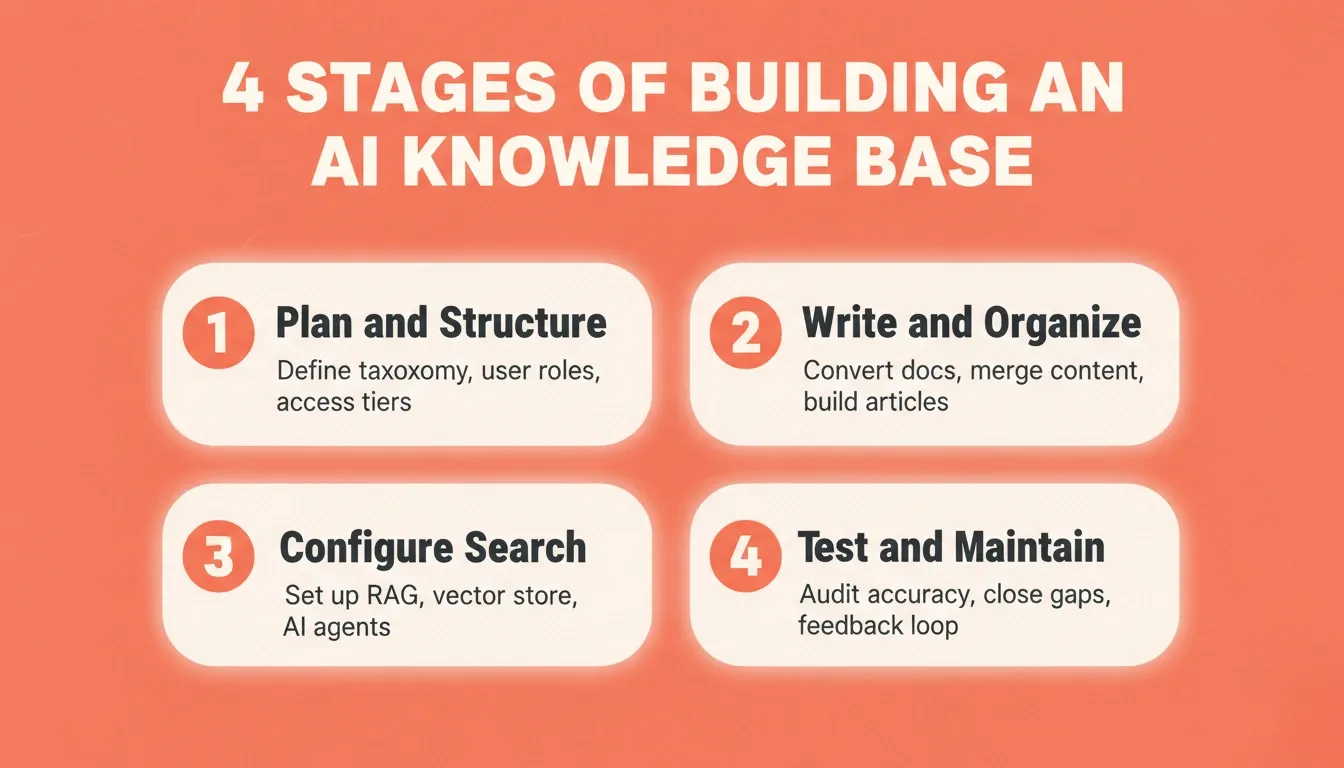
The system improves over time as you refine your prompts for accuracy
Prompts for Planning and Structuring Your Knowledge Base
Before writing a single article, you need a clear structure. These prompts help you define the architecture of your knowledge base system.
| Prompt # | Purpose | AI Prompt Template |
|---|---|---|
| 1 | Define taxonomy | "Create a knowledge base taxonomy for a [company type] with [number] departments. Include top-level categories, subcategories, and tagging guidelines for each content type." |
| 2 | Map user roles | "List all user roles who will access this knowledge base. For each role, define their permission level, the content types they need, and their most common search queries." |
| 3 | Plan content types | "Generate a template library for our knowledge base. Include structures for: troubleshooting guides, how-to articles, policy documents, and onboarding instructions." |
| 4 | Set access controls | "Design an access control structure for our AI knowledge base with three tiers: public-facing, internal-all-employees, and department-restricted. Specify which content types belong to each tier." |
| 5 | Create metadata schema | "Build a metadata schema for knowledge base articles. Include fields for: department, last-reviewed date, content owner, related articles, user roles with access, and confidence score." |
These five prompts give you the foundation. Once your taxonomy and user roles are defined, every future article fits into a clear system. Your team can then navigate it using natural language queries.
A note on Prompt 5: The metadata schema is often skipped, but it is what makes your knowledge base maintainable at scale. A confidence score field lets AI agents flag answers that may be outdated. The system degrades gracefully rather than silently serving stale information.
Skip the setup work. Describe your team's knowledge structure to Rocket and it builds the full portal architecture for you, including taxonomy, access tiers, and metadata schema, ready to deploy. Start building on Rocket**
Prompts for Writing and Organizing Knowledge Base Content
With structure in place, the next step is generating actual knowledge base content. These prompts focus on transforming existing content, engineering documentation, and company knowledge into searchable articles.
-
Prompt 6: "Convert this [paste meeting notes/email thread/Slack conversation] into a structured knowledge base article. Use headers, bullet points, and a clear summary at the top. Identify any gaps that need follow-up."
-
Prompt 7: "Write an AI-powered knowledge base article about [topic] for [audience]. Limit to 500 words. Include: problem statement, step-by-step solution, related documents, and troubleshooting tips."
-
Prompt 8: "Review these five existing documents about [topic] and merge them into a single, authoritative knowledge base article. Remove duplicated information and flag any contradictions."
-
Prompt 9: "Generate a set of troubleshooting guides for our [product/service]. Each guide should follow this template: Symptom, Possible Causes, Resolution Steps, Escalation Path."
-
Prompt 10: "Create onboarding knowledge base content for new hires in our [department] team. Structure it as a week-by-week guide covering tools, processes, key contacts, and company context."
These prompts work best when you feed them your existing content as input context. The AI does not invent facts. Instead, it restructures and organizes what your team already knows into a searchable, AI-powered knowledge base format.
What makes Prompt 8 particularly powerful: Most teams have three to five documents covering the same topic, written at different times by different people. Merging them into one authoritative source eliminates the most common reason teams stop trusting their knowledge base: contradictory answers.
Turn your existing docs into a searchable knowledge base today. Rocket connects to Google Drive, Notion, Slack, and GitHub, then builds the full system from your existing content. No manual rewriting required. Try Rocket free**
Prompts for Search, Retrieval, and Access Configuration
How Should You Configure AI Search to Understand Team Questions?
Building the content is one thing. Making it findable is another. These prompts help you configure semantic search, Retrieval Augmented Generation pipelines, and AI agents that serve answers to your team. Understanding how natural language prompts work is key to getting this right.
-
Prompt 11: "Design custom AI agent instructions for a knowledge base chatbot that serves our [department]. It should understand intent behind vague questions, search across all relevant documents, and cite sources in every response."
-
Prompt 12: "Write a system prompt for our AI knowledge base that defines: response tone, answer length limits, how to handle questions outside the knowledge base scope, and when to escalate to support agents."
-
Prompt 13: "Create a vector store configuration guide for our knowledge base. Specify: chunking strategy for documents, embedding models to use, and how to structure metadata for accurate semantic search results."
-
Prompt 14: "Define user roles and access controls for our knowledge base search system. Each role should have different visibility levels. Include: admin, department-lead, employee, and external-client tiers."
-
Prompt 15: "Write test queries to validate our AI knowledge base search accuracy. Include questions that span [easy lookups, multi-document synthesis, and edge cases]. For each, define the expected answer and relevant information sources."
A note on Prompt 13, chunking strategy: This is the most technically consequential decision in your setup. Chunks that are too large cause the retrieval model to return irrelevant context. Chunks that are too small leave answers without sufficient context. A common starting point is 512-token chunks with 50-token overlap, but the right answer depends on your document types.
The difference between a knowledge base that teams actually use and one that collects dust is answer accuracy. When the system understands intent and retrieves relevant information from the right documents, knowledge workers stop asking colleagues and start asking the system.
"By getting out of multiple other tools and bringing together all of this scattered information, people will know where to find what they need... [it] will be our single source of truth for documentation moving forward." - Matt Chester, Senior System Engineer at Reddit, on consolidating team knowledge
Ready to deploy a knowledge base your team will actually use? Rocket handles semantic search, RAG configuration, and role-based access controls out of the box. Describe what you need and the system is live in hours. Build your knowledge portal on Rocket**
What Makes These Prompts Work for Different Team Sizes?
These AI prompt templates are not limited to large enterprise organizations. In fact, they scale up and down depending on your company size and stage. For teams thinking about team collaboration app development, the same principles apply.
-
A two-person startup can use Prompts 1, 6, and 11 to create a simple knowledge base. This provides immediate value during customer onboarding
-
A mid-size company with support teams handling hundreds of tickets weekly benefits most from Prompts 9, 12, and 15. These reduce resolution time significantly
-
Enterprise organizations with multiple departments and strict access controls need the complete set. Focus especially on Prompts 4, 14, and the testing prompts
-
New hires at any company size benefit from Prompt 10. It creates a structured, self-serve learning path that reduces onboarding time
The point is flexibility. Start with the prompts that match your most pressing pain point, then expand as your knowledge base grows.
Prompts for Testing, Maintenance, and Ongoing Accuracy
A knowledge base is never "done." These prompts help you test accuracy, identify gaps, and keep content current as your product and processes evolve.
-
Prompt 16: "Run these test questions against our knowledge base and evaluate each response for: answer accuracy, source citation correctness, completeness, and whether it accurately addresses the user's intent."
-
Prompt 17: "Analyze our support tickets from the past month. Identify the top questions that our knowledge base should answer but currently cannot. For each gap, suggest the article structure and data sources needed."
-
Prompt 18: "Create a quarterly knowledge base audit template. Include checks for: outdated information, broken links, articles with low helpfulness scores, missing topics from recent support tickets, and content types that need updates."
-
Prompt 19: "Fine-tune our AI knowledge base response instructions. Based on these [paste example of poor answers], rewrite the system prompt to improve accuracy for [specific topic area]. Track the before and after accuracy scores."
-
Prompt 20: "Design a feedback loop system for our knowledge base. Define: how users report inaccurate answers, how content owners get notified, review schedule, and metrics to track data quality over time."
The testing prompts matter most. Without regular accuracy checks, your knowledge base drifts. Support agents start losing trust in the system, and the team reverts to asking people instead of searching. Schedule these prompts monthly at minimum.
Prompt 17 is the most underused of the twenty. Most teams build their knowledge base based on what they think people ask, not what they actually ask. Mining your support ticket history is the fastest way to discover the real gaps. It also produces a prioritized content roadmap in one session.
Stop guessing what your team needs to find. Rocket's built-in analytics track which questions go unanswered, so you always know where your knowledge base has gaps. Sign up for Rocket**
How Rocket Turns Prompts into a Working Knowledge Base
Having great prompts is one thing. Actually building and deploying the system is another challenge entirely. Most teams hit a wall at implementation. Connecting data sources, setting up semantic search, configuring access controls, and deploying AI agents requires engineering hours that small and mid-size teams simply do not have.
Rocket is a full-stack AI platform. Describe what you need in plain language, and Rocket builds the complete application. This includes search, user roles, access controls, and data integrations. For knowledge base use cases, Rocket generates research and knowledge portals that are password-protected and role-segmented by default.
Here is what that looks like in practice:
-
Use Rocket Build to generate a complete knowledge portal from a single description. No engineering is required
-
Use Rocket Solve to research what your team actually needs before you build. This ensures the structure reflects real usage patterns
-
Use Rocket Intelligence to monitor how your knowledge base performs and where gaps are emerging over time
-
Connect existing systems like Google Drive, Slack, code repositories, and Notion so your knowledge base pulls from sources your team already uses
-
Every build ships with SEO-ready structure, WCAG accessibility compliance, and performance optimization built in by default
Traditional tools like Confluence require manual page creation and offer only basic keyword search. Rocket builds the entire system, including semantic search and Retrieval Augmented Generation, from a single natural language description to a deployed document collaboration tool.
Your Team's Knowledge Deserves Better Than Scattered Docs
Every day your team spends searching for answers that already exist somewhere is a day of lost productivity. These 20 prompts give you the framework to plan, write, configure, and maintain an AI knowledge base that actually works for your specific team, department, and business operations.
The companies winning right now treat knowledge as infrastructure, not an afterthought. Whether you start with one prompt or all twenty, the path forward is the same: give your team a system that delivers the right answer, at the right time, to the right person.
Ready to build your team's AI knowledge base? Sign up for Rocket and describe what your team needs. Your knowledge portal can be live today, with no engineering team required.
The Future of Team Knowledge Is Searchable
AI knowledge bases are not a trend. They are the direction every team-facing information system is moving. As AI search becomes the default interface for finding answers, teams that structure their knowledge for semantic retrieval will have a measurable advantage. This advantage shows up in onboarding speed, support efficiency, and decision quality.
The 20 AI prompts in this guide give you a complete framework to build that system today. Start with the planning prompts, generate your first articles, configure your search layer, and set up a maintenance loop. The knowledge your team has built over years deserves a system that makes it findable.
Sign up for Rocket and turn your team's scattered documents into a searchable AI knowledge base, built and deployed from a single description.
Table of contents
- -Why Does Your Team Still Waste Time Searching for Answers?
- -Why Teams Struggle Without an AI Knowledge Base
- -What Is an AI Knowledge Base?
- -AI Knowledge Base vs. Traditional Wiki
- -How Do AI Prompts Speed Up Knowledge Base Development?
- -Prompts for Planning and Structuring Your Knowledge Base
- -Prompts for Writing and Organizing Knowledge Base Content
- -Prompts for Search, Retrieval, and Access Configuration
- -How Should You Configure AI Search to Understand Team Questions?
- -What Makes These Prompts Work for Different Team Sizes?
- -Prompts for Testing, Maintenance, and Ongoing Accuracy
- -How Rocket Turns Prompts into a Working Knowledge Base
- -Your Team's Knowledge Deserves Better Than Scattered Docs
- -The Future of Team Knowledge Is Searchable