
Rocket lets you ship a complete fleet management system for gig delivery riders in India, covering registration, weekly billing, GPS tracking, and maintenance alerts, without writing code or hiring developers.
Why Do Quick-Commerce Fleet Operators in India Need Custom Software?
How did a Bengaluru startup just raise $93 million by renting electric bikes to delivery drivers on weekly subscriptions?
Yulu's Series C funding proves that the fleet-as-a-service model works at scale, powering over 750,000 deliveries every single day across twelve Indian cities.
If you want to build a gig worker fleet management app with no code in India, you can replicate this operating model without custom development by using Rocket to assemble the core workflows fleet operators actually need.
Fleet Management Software For Indian Market
The software behind this model, rider onboarding, weekly billing, vehicle assignment, GPS tracking, maintenance alerts, and earnings dashboards, remains locked behind expensive custom development. Indian gig operations also run in dense urban traffic and across riders using widely varying smartphone specs.
Smaller fleet operators and business owners in Jaipur, Indore, or Coimbatore, especially those managing 200-500 vehicles, face the same rider demand but cannot afford the operational costs of building bespoke fleet management software from scratch.
So the real question becomes: can you replicate the Yulu systems without a $93 million war chest?
This guide shows where custom software becomes necessary for gig fleet operations in India, the six core modules of a working fleet management system, the mistakes small operators make when they rely on spreadsheets and WhatsApp, how Rocket supports no-code app building with Indian integrations, how it compares with other app-building options, and a practical six-module build plan smaller operators can use.
Fleet operators running 200-500 vehicles in Tier 2 cities commonly report these daily challenges:
- Manual rider onboarding through WhatsApp groups and paper forms that lose data
- No vehicle tracking beyond phone calls to drivers asking their location
- Missed maintenance scheduling that grounds vehicles and cuts fleet revenue
- Billing errors when subscription payments from riders are tracked in spreadsheets
- Zero visibility into fleet performance metrics or operational efficiency
These problems compound quickly. Fleet operators commonly report losing 15-20% of potential revenue to maintenance delays, missed payments, and idle vehicles. Operators that digitize onboarding, billing, tracking, and maintenance with a no-code fleet management app can run leaner, scale faster, and compete with larger quick-commerce fleets without taking on custom software costs.
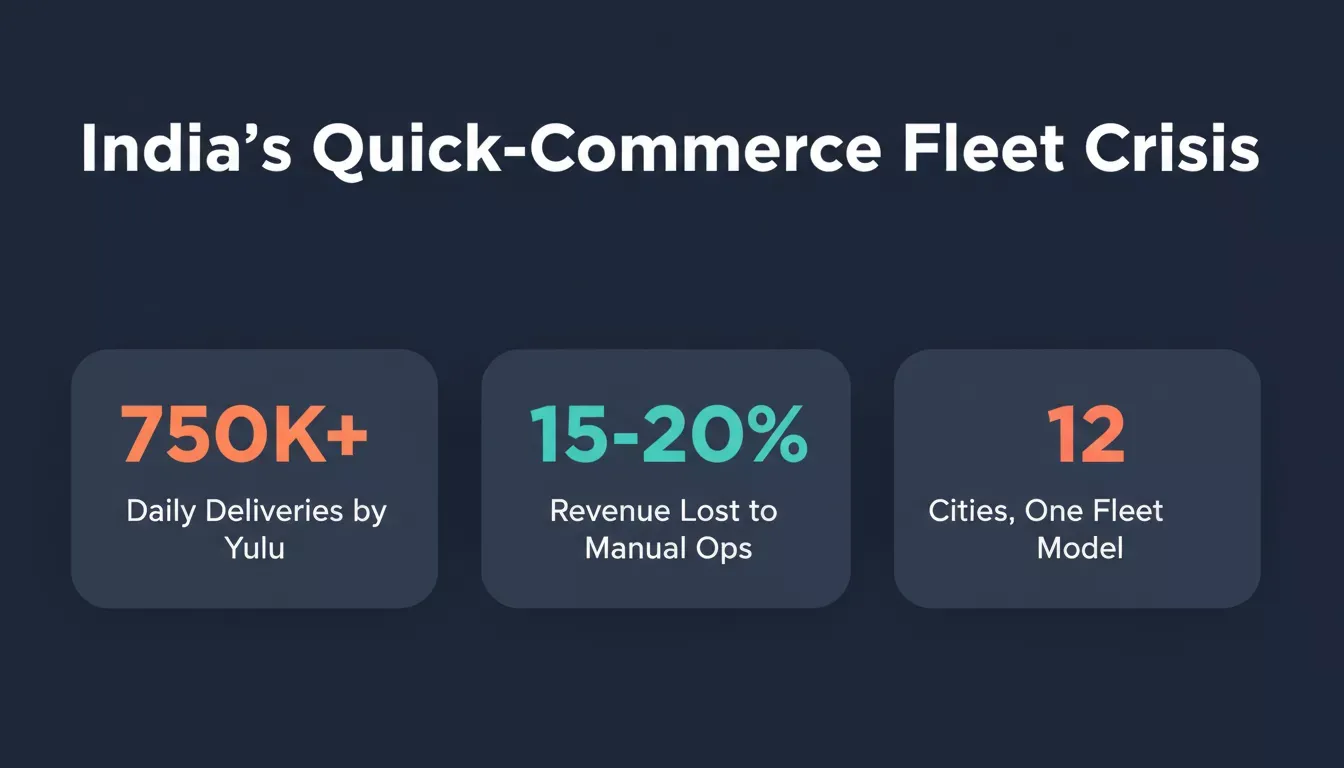
India's quick-commerce fleet sector: key statistics driving demand for purpose-built fleet management software.
What Does a Gig Worker Fleet Management System Look Like?
A fleet management system for gig delivery operations in India needs six core modules working together. Each module handles a different piece of the operational workflow, from the moment a rider signs up to the moment they check their weekly earnings on a mobile app.
Here is the feature breakdown that fleet managers need:
| Module | Core Features | Data Tracked | Integration |
|---|---|---|---|
| Rider Registration | KYC upload, document verification, Aadhaar e-sign | Driver profiles, license status, compliance documents | DigiLocker (via REST API importer) |
| Subscription Billing | Weekly auto-debit, plan upgrades, payment history | Revenue per vehicle, collection rate, outstanding dues | Razorpay Subscriptions (native connector) |
| Vehicle Assignment | Bike allocation, swap requests, return scheduling | Vehicle utilization rate, idle time, assignment history | Internal fleet data |
| GPS Fleet Tracking | Real-time vehicle tracking, geofencing, route history | Vehicle locations, distance covered, speed alerts | Mapbox (via API importer) |
| Maintenance Alerts | Preventive maintenance scheduling, service reminders | Odometer readings, repair history, part replacements | Twilio SMS (native connector) |
| Earnings Dashboard | Weekly payout summary, delivery count, incentive tracking | Performance metrics, rider rankings, fuel consumption | Razorpay Payouts (native connector) |
Integration note: Razorpay and Twilio are native first-class connectors in Rocket, available for Next.js TypeScript projects, and connect via OAuth with a single prompt. Mapbox and DigiLocker connect via Rocket's REST API importer by pasting a Postman collection, cURL command, or Swagger spec, and Rocket wires the API responses to your UI components automatically.
This fleet management app architecture supports both the fleet business owner who needs oversight and the fleet drivers who need a simple mobile experience. Real-time visibility into vehicle locations, rider performance, and maintenance status replaces the guesswork that plagues manual operations.
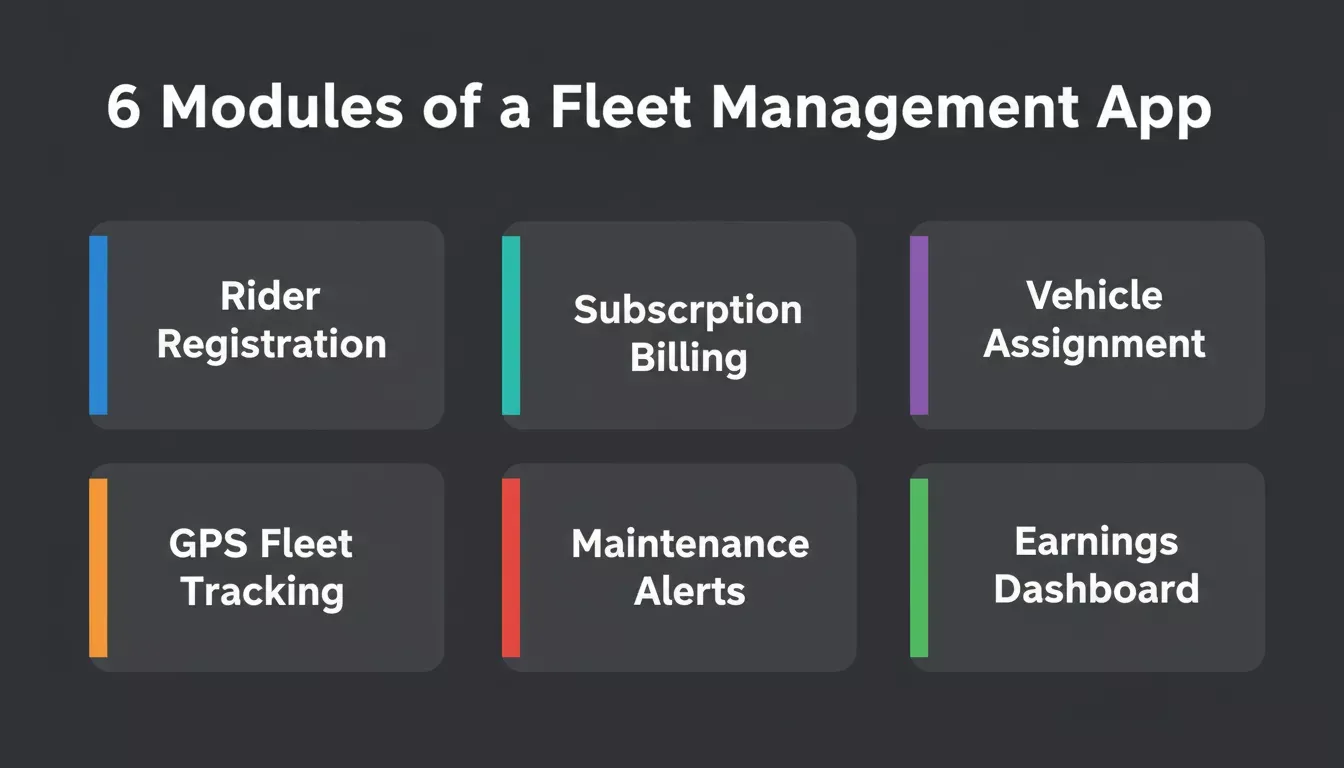
The six core modules every gig worker fleet management app needs, from rider onboarding to earnings visibility.
How Does Rider Registration and Subscription Billing Work?
The registration flow is the first touchpoint with your customers. A rider downloads the fleet management mobile app, uploads their license and Aadhaar, and the system runs automated verification. The app handles document validation and stores compliance data securely, with no coding required from the operator's side.
For compliance, your app should store rider KYC documents, maintain vehicle registration and insurance records, track driver license validity dates, and generate reports for transport authority audits. This aligns with MoRTH guidelines for commercial vehicle operators in India.
For subscription billing, the software connects to Razorpay's recurring payments API. Weekly auto-debit means fleet managers never chase payments manually. The system tracks active subscriptions, failed payment retries with automated SMS notifications, plan tier changes, and revenue dashboards showing collection rates across the fleet.
Fleet operators commonly report saving 8-10 hours per week previously spent on manual payment reconciliation after switching to automated billing. Setting up a no-code app builder with payment integration takes minutes, not months of custom development.
How Do You Track Vehicles and Schedule Maintenance Without Spreadsheets?
Real-time vehicle tracking through Mapbox gives fleet managers a live view of every vehicle in their fleet. Each device sends location pings that update the dashboard, showing which vehicles are active, idle, or outside their designated zones through geofencing.
Maintenance scheduling works on odometer-based triggers. When a vehicle hits a service threshold, the system fires alerts through Twilio to both the rider and the maintenance teams. This predictive maintenance approach prevents breakdowns before they happen, keeping vehicle utilization high and reducing unplanned downtime.
The maintenance alert workflow, step by step:
- GPS device sends a location ping every 30 seconds
- Odometer reading updates in the fleet database
- The system checks whether the vehicle has crossed a service threshold
- If yes: Twilio fires an SMS to the rider and a notification to the service hub
- Rider schedules a service visit; technicians prepare parts
- Vehicle is serviced, and status returns to Active
Maintenance automation: GPS pings trigger odometer checks, which fire Twilio SMS alerts to riders and service hubs when service thresholds are crossed.
This automated flow replaces the manual vehicle inspections that fleet operators currently handle through phone calls and WhatsApp messages. The fleet data stays organized and accessible, reducing accidents from poorly maintained vehicles and lowering insurance claims over time.
What Are the Most Common Mistakes Small Fleet Operators in Tier 2 Cities Make?
Most fleet operators in smaller cities try to manage everything through a combination of spreadsheets, WhatsApp groups, and accounting software that was never built for fleet operations. This creates data silos where fleet managers cannot see the full picture of their business.
The common mistakes include:
- Using personal spreadsheets for vehicle tracking that break when the fleet grows past 50 vehicles
- Ignoring driver behavior monitoring leads to higher accident rates and fuel costs
- Skipping compliance documentation that creates legal risk during audits
- Manual route planning that misses route optimization opportunities and burns fuel
- Running separate tools for billing, tracking, and maintenance that never talk to each other
Fleet operators who have made the transition from manual to digital operations consistently describe the same pattern: once automated SMS alerts are tied to actual odometer readings rather than calendar reminders, grounded vehicles drop significantly in the first month. This is an illustrative composite of experiences reported across India's gig fleet sector.
The companies that succeed in this space understand that fleet management application development is not just about tracking dots on a map. It requires connecting rider management, billing systems, vehicle health data, and operational analytics into one unified platform that fleet business owners can access from their mobile devices.
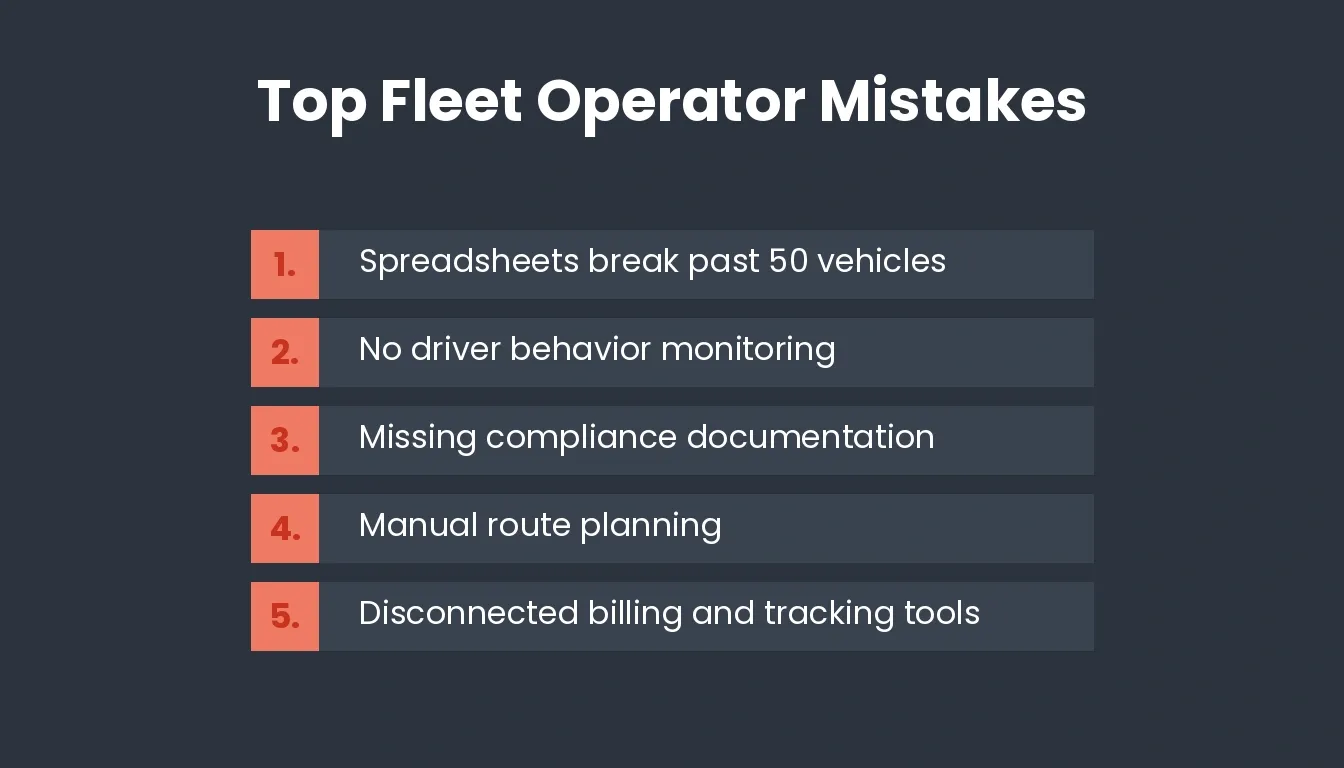
The five operational mistakes that cost Tier 2 fleet operators the most revenue and fleet availability.
How Does Rocket Help You Build a Fleet App Without Writing Code?
Rocket is a vibe solutioning platform with three pillars: Solve for market research, Build for app generation, and Intelligence for competitor monitoring. All three are useful when launching a fleet management product in India.
Before you build: Use Rocket's Solve pillar to research the quick-commerce fleet market in your target city. Ask Solve: "What are the top operational pain points for EV fleet operators in Tier 2 Indian cities?" and get a structured, evidence-backed report before writing a single prompt for your app.
While you build: Rocket's Build pillar generates production-ready mobile apps covering both Flutter for Android and iOS and Next.js for the web admin dashboard from a plain-language description of your fleet system.
The platform handles the full technology stack:
- Frontend: rider-facing mobile app built in Flutter for Android and iOS
- Backend: server logic, database, and API connections handled by AI
- Integrations: connect Razorpay and Twilio natively; wire Mapbox and DigiLocker via the API importer
- Deployment: one-click launch to production with custom domain support
After you launc: Use Rocket's Intelligence pillar to monitor competitors like Yulu, Rapido, and other fleet operators, tracking their product changes, pricing moves, and hiring signals so you can respond before they pull ahead.
Rocket produces real Next.js and Flutter code that you own, meaning you can export, customize, and scale without platform lock-in. This is a meaningful distinction from drag-and-drop tools that generate proprietary, non-portable outputs.
How Does Rocket Compare to Other App-Building Options?
| Capability | Rocket | Bubble | Glide | Agency Dev |
|---|---|---|---|---|
| Native Flutter mobile app | Yes, code you own | No native mobile | No native mobile | Yes, custom build |
| Next.js web app | Yes, code you own | Proprietary runtime | No | Yes, custom build |
| Code ownership / export | Full export, no lock-in | Proprietary, no export | Proprietary, no export | Full ownership |
| Backend generation | Yes, Supabase, APIs, auth | Yes, proprietary | Limited | Yes, custom |
| Razorpay (India payments) | Native connector | Via plugin/API | Via API | Custom integration |
| Twilio SMS | Native connector | Via plugin | Via plugin | Custom integration |
| Research before building | Yes, Solve pillar built-in | No | No | No |
| Competitor monitoring | Yes, Intelligence pillar | No | No | No |
| Typical time to prototype | 1-2 weeks | 2-4 weeks | 1-2 weeks | 3-6 months |
Capabilities based on publicly documented features as of August 2026. Verify current availability on each platform before making a decision.
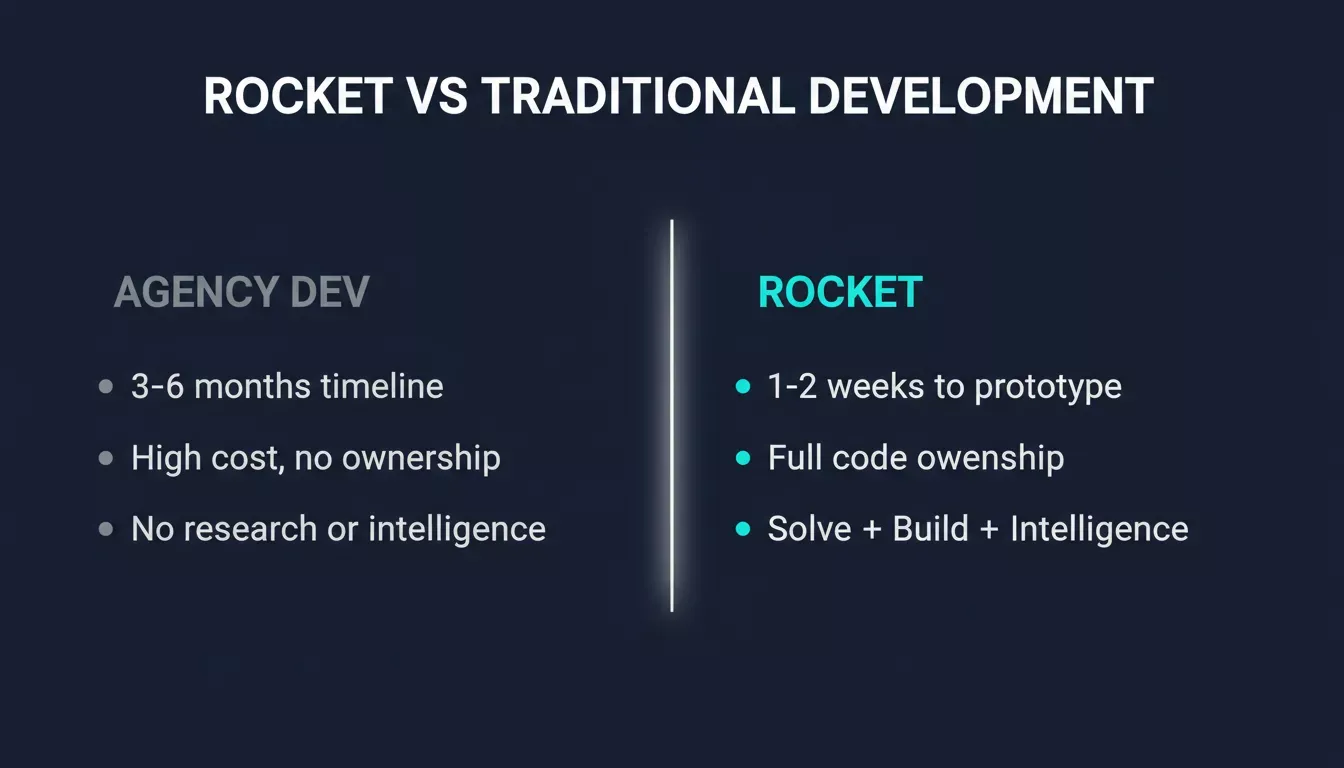
Rocket versus traditional agency development: a direct comparison of timeline, cost, and capability.
How Do You Build a Fleet App on Rocket? Your Six-Module Plan
Here is the practical build sequence for shipping your fleet management system on Rocket. Each module connects to the next, creating a complete operational platform for your fleet business.
Module 1: Rider Registration
Start with KYC upload, document verification, and rider profiles. This becomes your user management foundation that connects to every other module. In Rocket, describe: "Build a rider onboarding flow with Aadhaar upload, license photo capture, and a verification status dashboard for admins." Rocket generates the Flutter screens, Supabase storage for documents, and the admin review UI.
Module 2: Subscription Billing Engine
Connect Razorpay for weekly auto-debit subscriptions. Set up plan tiers, payment retry logic, and automated invoicing for each fleet driver. Razorpay is a native connector for Next.js TypeScript projects. Type "Connect Razorpay subscriptions with weekly billing plans and failed payment SMS retries," and Rocket wires the full payment flow.
Module 3: Vehicle Assignment Dashboard
Create the admin view where managers assign bikes to riders, process swap requests, and monitor vehicle utilization across the fleet. Describe the assignment logic in plain language and Rocket generates the data tables, assignment workflows, and utilization charts. This module is the operational core that fleet managers will use every day.
Module 4: GPS Tracking Layer
Integrate Mapbox for real-time vehicle tracking with geofencing, route optimization hints, and speed alerts for safer operations. Import the Mapbox API via Rocket's API importer by pasting the Mapbox Postman collection, then describe the map view you need. The food delivery app development pattern on Rocket follows the same GPS integration approach.
Module 5: Maintenance Alert System
Connect Twilio for automated SMS. Set service intervals based on mileage, trigger alerts to riders and technicians, and track repair history per vehicle. Twilio is a native connector; describe the trigger logic, and Rocket generates the odometer-check function and SMS dispatch. Automated maintenance alerts are the single highest-impact module for reducing fleet downtime.
Module 6: Rider Earnings Portal
Build the rider-facing dashboard showing weekly payouts, delivery counts, performance rankings, and incentive progress tied to their subscription plan. This is the module riders interact with daily; describe the mobile screens, and Rocket generates the Flutter UI connected to your Razorpay payout data. Riders who can see their earnings in real time are significantly more likely to stay engaged with the platform.
Each module can be tested independently before connecting them into the complete fleet management system. This approach lets you launch with rider registration and billing first, then layer on tracking and maintenance as your fleet scales.
The testing phase should cover edge cases: what happens when a rider's payment fails mid-week, when a vehicle crosses a geofence boundary at 2 AM, or when two riders request the same vehicle swap. Run these scenarios in Rocket's mobile app preview environment before going live with your first batch of riders.
What Does the Yulu Playbook Mean for Smaller Fleet Operators?
Yulu's CEO calls the company "the AWS of mobility," supplying infrastructure that lets gig workers operate independently. The software powering that infrastructure, rider onboarding, GPS fleet tracking, maintenance scheduling, and earnings management, is no longer a $93 million problem. Yulu's recent raise funds physical fleet expansion, not the technology itself.
India's EV fleet sector is growing rapidly, with NITI Aayog's mobility roadmap projecting continued expansion of last-mile electric delivery across Tier 2 and Tier 3 cities. The operators who move first in these markets, building their fleet management systems now while demand surges, will own the local market before larger companies arrive.
The tools, the data patterns, and the deployment speed all favor the small operator who acts today. If you want to build a gig worker fleet management app, no-code, India-style, and compete with operators who have raised millions, the window is open right now.
Describe your fleet operations in plain language on Rocket and get a working prototype with rider registration, billing, GPS tracking, and maintenance alerts, shipped before your next funding conversation even starts.
Start building your fleet management app on Rocket.new and launch before your competitors finish writing their requirements documents.
Table of contents
- -Fleet Management Software For Indian Market
- -What Does a Gig Worker Fleet Management System Look Like?
- -How Does Rider Registration and Subscription Billing Work?
- -How Do You Track Vehicles and Schedule Maintenance Without Spreadsheets?
- -What Are the Most Common Mistakes Small Fleet Operators in Tier 2 Cities Make?
- -How Does Rocket Help You Build a Fleet App Without Writing Code?
- -How Does Rocket Compare to Other App-Building Options?
- -How Do You Build a Fleet App on Rocket? Your Six-Module Plan
- -Module 1: Rider Registration
- -Module 2: Subscription Billing Engine
- -Module 3: Vehicle Assignment Dashboard
- -Module 4: GPS Tracking Layer
- -Module 5: Maintenance Alert System
- -Module 6: Rider Earnings Portal
- -What Does the Yulu Playbook Mean for Smaller Fleet Operators?