
Build MVP with AI in days, not months. This blog covers the full process: from idea validation and product brief to deployment and iteration, with verified data, real use cases, and the tools that make it work.
You can now build MVP with AI in days, not months.
What once required a development team, \$80,000, and six months of runway can be done by a solo founder with a clear product brief and the right platform.
This blog covers every step, from validating your idea to shipping a working product and measuring whether it is actually working.
Why Founders Are Choosing to Build MVP with AI?
The shift is happening fast, and the data backs it up.
According to the Stack Overflow Developer Survey 2024, 76% of developers are already using or planning to use AI tools in their workflow. The same survey found 81% cite increased productivity as the top benefit. These are measured results from 65,000+ respondents.
The reason founders are leading this shift is straightforward. Traditional MVP development required hiring a team, writing technical specs, and waiting months before a single user touched the product. Most startups burned through runway before they learned anything.
According to CB Insights research, 43% of startup failures trace back to poor product-market fit, not bad code or poor timing. The root cause is building before validating. AI changes that equation.
Traditional Development vs. AI-Powered Development
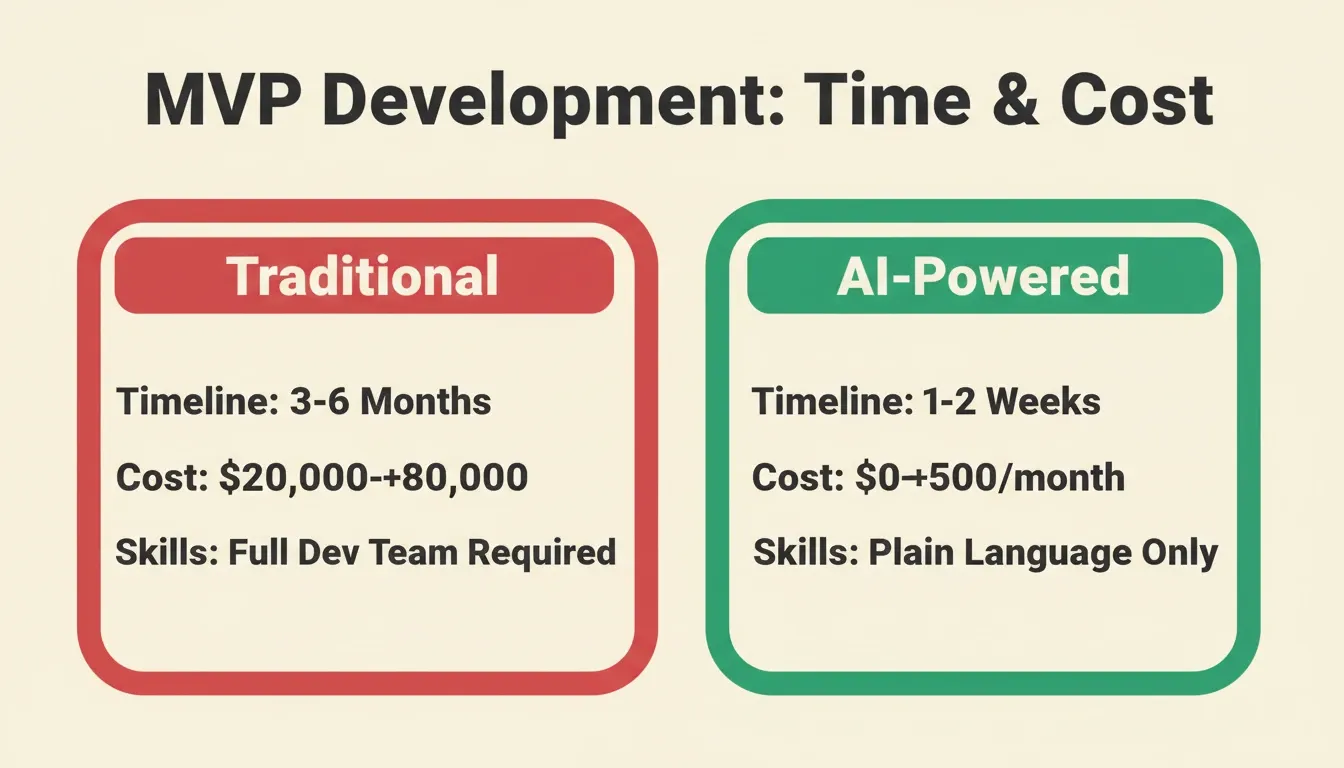
| Metric | Traditional Development | AI-Powered Development |
|---|---|---|
| Time to first prototype | 4-12 weeks | 1-3 days |
| Cost to MVP | $20,000-$80,000 | $0-$500/month |
| Tech skills required | High | Low to none |
| Iteration speed | Weeks per change | Hours per change |
| Validation method | Build first, test later | Test before you build |
The gap is practical, not theoretical. Every week spent waiting for a developer is a week not learning from real users.
What a Minimum Viable Product Built with AI Actually Looks Like
A lot of founders assume AI-generated products look rough. That assumption is outdated.
Modern AI builders generate production-grade output from the first generation. Web apps come out in Next.js. Mobile apps come out in Flutter, one codebase ready for iOS and Android. The design includes real visual hierarchy, considered typography, and responsive layouts.
Real Use Cases
SaaS dashboard: A solo founder described a client reporting dashboard in a single prompt. Within an hour, they had a working multi-page Next.js app with authentication, data tables, and a Supabase backend.
Marketplace MVP: A two-person team researched the competitive landscape, then built a working listing platform with search, user profiles, and Stripe payments in under three days. They had their first paying customer before the end of the week.
Internal tool: An operations team needed a custom dashboard connecting Airtable, Mixpanel, and a Postgres database. Built in one afternoon using natural language prompts and pre-built connectors.
Mobile app: A non-technical founder described a habit-tracking app in plain language. The output was a Flutter app with onboarding, push notifications, and streak tracking, ready to submit to the App Store.
These are not edge cases. They represent what AI-powered MVP development looks like today.
How to Build an MVP with AI: Step by Step
The process is more structured than most guides suggest. Here is the sequence that produces working products rather than abandoned prototypes.
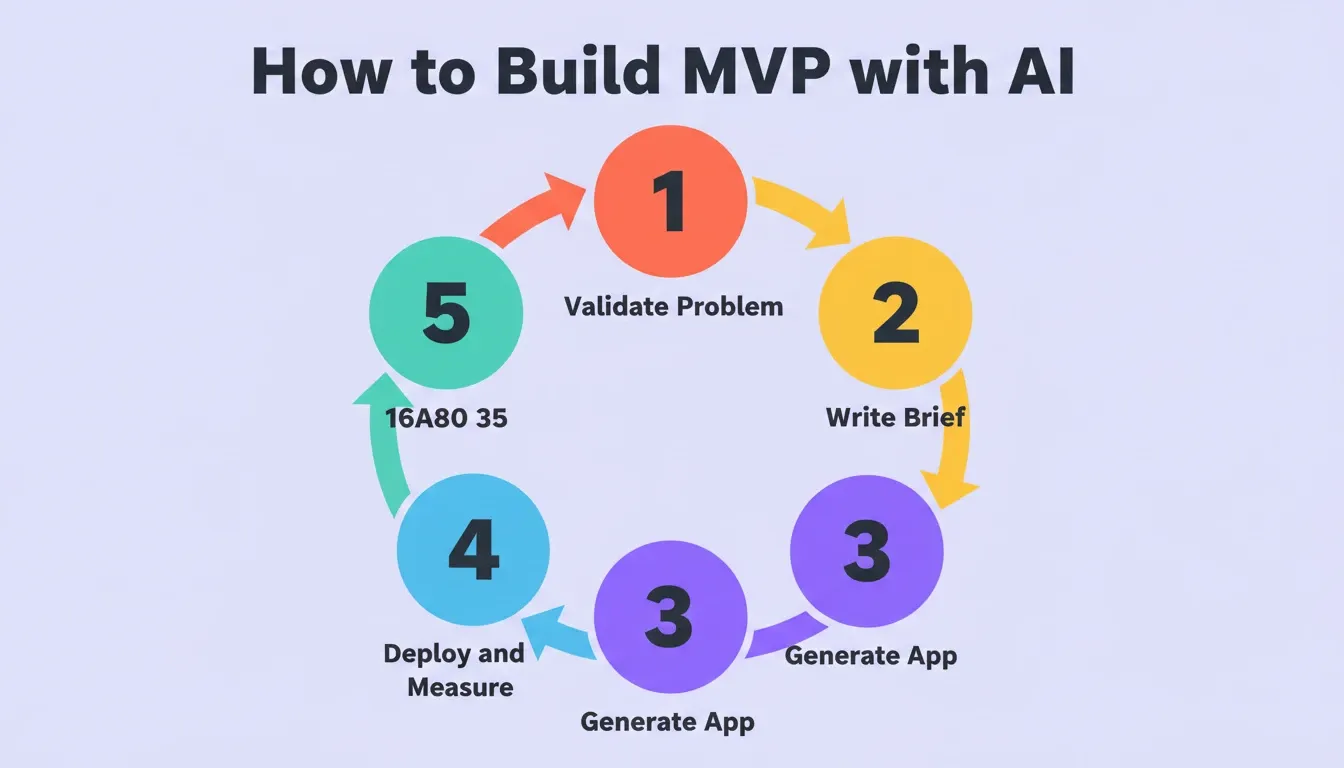
Step 1: Validate the Problem Before Writing a Prompt
Talk to 10-20 real potential users before opening any AI builder. Ask what they are doing today to solve the problem, not whether they would use your solution. Identify the single most painful moment in their current workflow. Confirm that some of them have already paid for a solution, even an imperfect one.
This step takes two to three days. It prevents six to twelve weeks of building the wrong product.
Step 2: Write a Focused One-Paragraph Brief
Vague prompts produce vague products. Before generating anything, write one paragraph that answers: Who is the primary user? What one problem does this solve? What are the three to four core features? What does success look like for the user in their first session?
If you cannot describe your MVP in one paragraph, the scope is too large.
Step 3: Research Before You Build
The best AI platforms do not start at the prompt. They start with structured research. Rocket's Solve capability takes any business question and returns a structured analysis: target user profiles, competitive gaps, risk factors, and a clear product direction.
This research carries directly into the build. The competitive context and user pain points inform the first generation, meaning the output reflects market reality, not just your brief. You can read more about this approach in the Rocket MVP playbook.
Step 4: Generate Your App with Natural Language
Describe your product in plain language. A good platform generates real navigation, authentication, a connected data layer, and responsive design across desktop and mobile. If the output is a static mockup or a single-page prototype, it is not a production-grade AI builder.
Step 5: Review, Test, and Iterate Through Conversation
Review every screen. Click every button. Test every form. Then iterate through conversation. Change layouts, add features, and adjust data models using plain language. Each iteration takes minutes, not days.
Step 6: Connect Your Backend and Integrations
Modern AI platforms handle backend generation automatically. Rocket connects Supabase for database and authentication, Stripe for payments, Mailchimp for email, Google Analytics and Mixpanel for product analytics, and Twilio for notifications. Authenticate once and each connector flows into every build.
For a full breakdown of what to check before and after launch, the MVP checklist for non-technical founders covers each phase in detail.
Step 7: Deploy and Start Collecting Validation Signals
One click. Your app is live at a public URL. From day one, track activation rate, day-7 retention, and qualitative feedback from users. These three signals tell you whether the product is working before you invest another hour of development time.
Does AI Really Compress the MVP Development Timeline?
Skepticism is fair. Here is what independent research shows.
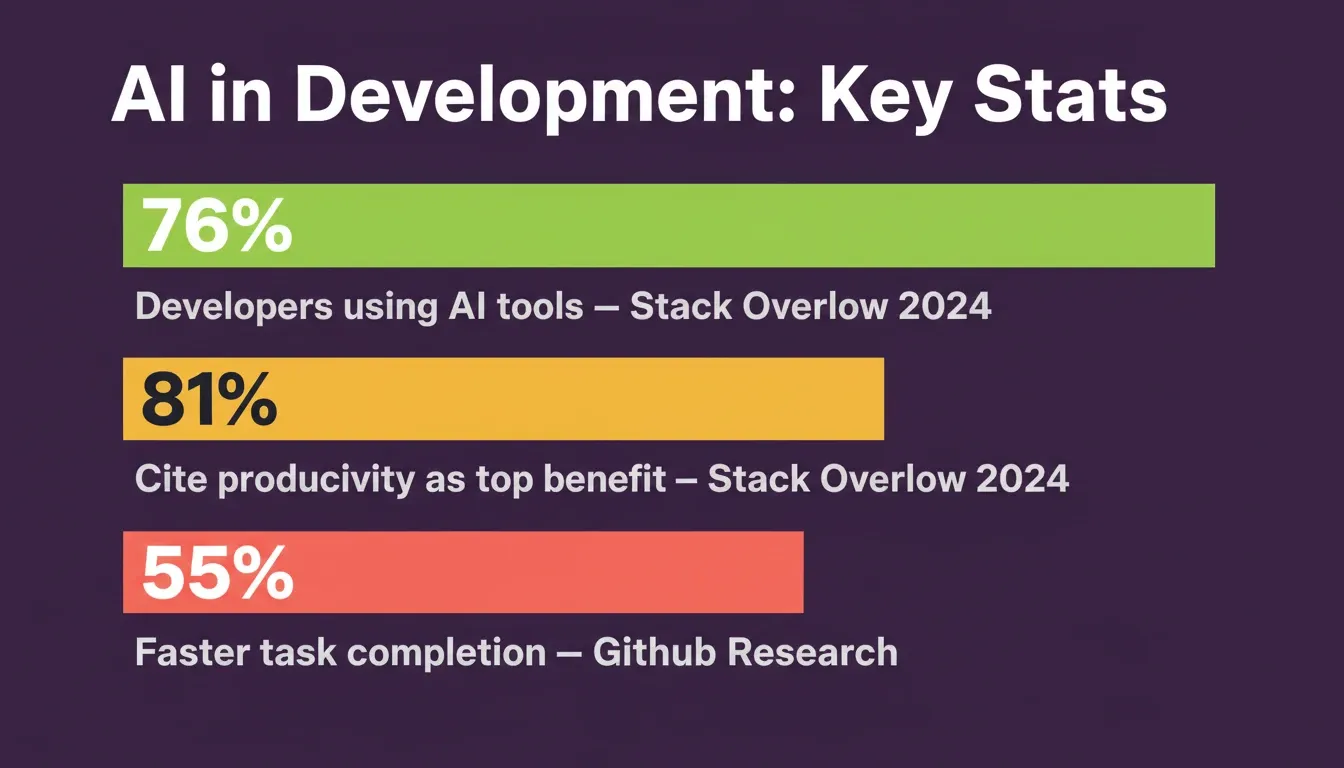
GitHub's controlled experiment found developers using AI finished tasks 55% faster than those who did not. That is a measured result from GitHub's own research, conducted with 95 professional developers in a statistically significant controlled experiment.
Traditional software development for an MVP takes 3-6 months. AI-powered platforms compress this to 1-2 weeks for a working prototype. A dev agency charges \$20,000-\$80,000 for an MVP. An AI platform costs \$0-\$500 per month, with most founders starting for free.
Speed compounds through the iteration cycle. One fast feedback loop teaches you more than one slow one. You reach product-market fit with far less capital spent.
"I gave one wild idea to Rocket and it built the entire AI app in one shot... just a fully functional, multi-page product from a single input." — LinkedIn
The timeline compression is backed by independent research, not marketing claims.
Choosing the Right AI Tool to Build Your MVP
Not all AI builders produce the same quality of output. The differences matter significantly when you are building something you intend to ship to real users.
What to Look for in an AI MVP Builder
| Feature | Why It Matters |
|---|---|
| Production-grade code output | Prototypes cannot scale; you need real Next.js or Flutter |
| Built-in backend generation | Avoid stitching together separate services manually |
| Pre-built integrations | Stripe, Supabase, analytics should connect in one click |
| Natural language iteration | Change anything through conversation |
| Code export | Own your codebase; avoid platform lock-in |
| One-click deployment | Deploy to a live URL from day one |
| Research layer | Validate what to build before you build it |
How Rocket Compares
Most tools start after the hardest decision has already been made. Rocket starts before it.
Lovable, Bolt, and v0 build what you tell them to build. Rocket figures out what is worth building, then builds it. The structural difference is not a feature comparison. It is a category difference.
Rocket's Solve capability takes any business question and returns a structured analysis with findings, evidence, and a clear recommendation. The output becomes the foundation of the build. Nothing is re-explained between research and execution.
Context that compounds. Every file, decision, and research output added to a project carries into every future task automatically. The developer opening a build task sees the market research the strategist ran last week. No handoff document needed.
Post-launch intelligence. After your MVP ships, Rocket monitors competitors continuously: pricing changes, hiring signals, ad spend shifts, and review sentiment across every public platform. 1.5 million people have tried Rocket across 180 countries, from solo founders to enterprise teams.
Human Help when AI reaches its limit. Rocket's success team steps in inside the platform when the AI reaches the boundary of what it can do automatically. You are never stuck at 90%.
For a deeper look at how Rocket approaches the full build cycle, the Rocket.new internal tools playbook shows how teams use the platform beyond the initial MVP.
Common MVP Mistakes Founders Make When Using AI
AI makes it faster to ship. It also makes it faster to ship the wrong thing if you skip the fundamentals.
Skipping user validation. Talking to 10 real users before prompting can save six weeks of building the wrong product. AI does not validate your assumptions for you.
Over-scoping the first version. One problem, three to four features, one target user. Every feature beyond that increases complexity and reduces the signal clarity of your first user feedback.
Treating AI output as a finished product. Review every screen, test every flow, and improve through conversation. The first generation is a strong starting point, not a finished product.
Ignoring feedback after launch. Log what users say, find the patterns, and iterate based on evidence. The founders who win with AI are the ones who use it to learn faster, not just to build faster.
Shipping once and waiting. The team that runs ten short feedback loops learns more than the team that ships once and waits. Each iteration cycle with an AI builder takes hours, not weeks.
How to Measure Whether Your AI-Built MVP Is Working
Shipping is not the finish line. Product-market fit is.
Activation rate is the percentage of new users who complete the core action in their first session. Aim for 40% or higher in the first two weeks.
Day-7 retention is the percentage of users who return seven days after their first session. A rate above 20% is a strong early signal that the product is delivering real value.
Qualitative exit signal is what users say when they stop or get stuck. Run five-minute user interviews every week. The patterns in what users say will tell you exactly what to build next.
For a structured approach to tracking these signals, generating MVPs with AI: practical steps for founders covers the full measurement framework.
When to Pivot vs. When to Persist
Pivot when activation stays below 20% after three iterations, or when users consistently misunderstand what the product does.
Persist when a small cohort returns repeatedly and tells others, or when users are paying or asking to pay, even for an imperfect product.
AI MVP Use Cases by Industry
AI-powered MVP development works across industries, not just SaaS.
SaaS and B2B tools: Client reporting dashboards, CRM and pipeline tools, internal admin panels, subscription billing portals, team collaboration tools.
Marketplaces: Two-sided marketplace platforms, booking and scheduling systems, freelancer and service marketplaces, content creator monetization platforms.
Consumer apps: Habit tracking and wellness apps, personal finance dashboards, social community platforms, learning and education apps.
Industry-specific MVPs: Healthcare appointment booking, real estate listing platforms, e-commerce stores with custom logic, logistics and delivery tracking tools.
The limiting factor is no longer technical. It is the clarity of the problem definition and the quality of the user validation. For mobile-specific builds, how to build a mobile app with AI walks through the Flutter output in detail.
How to Build MVP with AI: Start Shipping This Week
The gap between idea and live product has never been smaller. AI tools have removed the traditional bottlenecks: cost, technical complexity, and long iteration cycles.
What still matters is the thinking before the build. Knowing who you are building for, what problem you are solving, and what user feedback is telling you to change. Get that right, and the speed advantage of AI compounds every week.
Founders who validate first, build fast, and iterate based on real signals are reaching product-market fit in weeks. That is the real value of building MVP with AI: not just faster development, but smarter development that starts before the first prompt and continues long after the first launch.
Start building your MVP on Rocket and go from idea to live product in days.
Table of contents
- -Why Founders Are Choosing to Build MVP with AI?
- -Traditional Development vs. AI-Powered Development
- -What a Minimum Viable Product Built with AI Actually Looks Like
- -Real Use Cases
- -How to Build an MVP with AI: Step by Step
- -Step 1: Validate the Problem Before Writing a Prompt
- -Step 2: Write a Focused One-Paragraph Brief
- -Step 3: Research Before You Build
- -Step 4: Generate Your App with Natural Language
- -Step 5: Review, Test, and Iterate Through Conversation
- -Step 6: Connect Your Backend and Integrations
- -Step 7: Deploy and Start Collecting Validation Signals
- -Does AI Really Compress the MVP Development Timeline?
- -Choosing the Right AI Tool to Build Your MVP
- -What to Look for in an AI MVP Builder
- -How Rocket Compares
- -Common MVP Mistakes Founders Make When Using AI
- -How to Measure Whether Your AI-Built MVP Is Working
- -When to Pivot vs. When to Persist
- -AI MVP Use Cases by Industry
- -How to Build MVP with AI: Start Shipping This Week