
In 2026, the top AI SaaS builder tools let you go from idea to working app in days. Platforms handle backend logic, UI, and hosting automatically, so you skip writing code and focus on users and revenue.
Which AI tools actually take you from idea to paying customers in 2026?
The answer is not a single tool. It is a category of platforms that generate functional software from plain-language descriptions. They handle backend logic, UI components, and deployment automatically. The best platforms in 2026 go further by combining market research, app building, and competitive monitoring in one workflow.
According to Harvard Business Review, generative AI tools help people complete tasks up to 40% faster. This is based on research from MIT, Microsoft, and GitHub.
That speed advantage compounds when you no longer need to validate your idea through a separate research process before building.
Why AI SaaS Builders Are Dominating in 2026
AI SaaS platforms are changing how products get built from the ground up. What used to take weeks of planning and writing code can now be done in hours or days.
What is Driving This Shift?
- No heavy coding needed: You can start building without deep coding experience. Traditional development demands strong backend knowledge, but AI builders remove that barrier.
- Build using plain language: Describe your SaaS idea, and the platform turns it into working code and a functional app.
- Built-in backend logic: Most AI SaaS platforms handle backend logic automatically, with no manual setup required.
- Professional SaaS design: Clean UI components and production-quality layouts are generated without design tools.
- Lower development costs: You need fewer developers, designers, and long development cycles.
The most expensive mistake in any business is not bad execution. It is good execution of the wrong thing. Platforms that address this by combining research with building are the ones pulling ahead in 2026.
What Makes a Top AI SaaS Builder Tool?
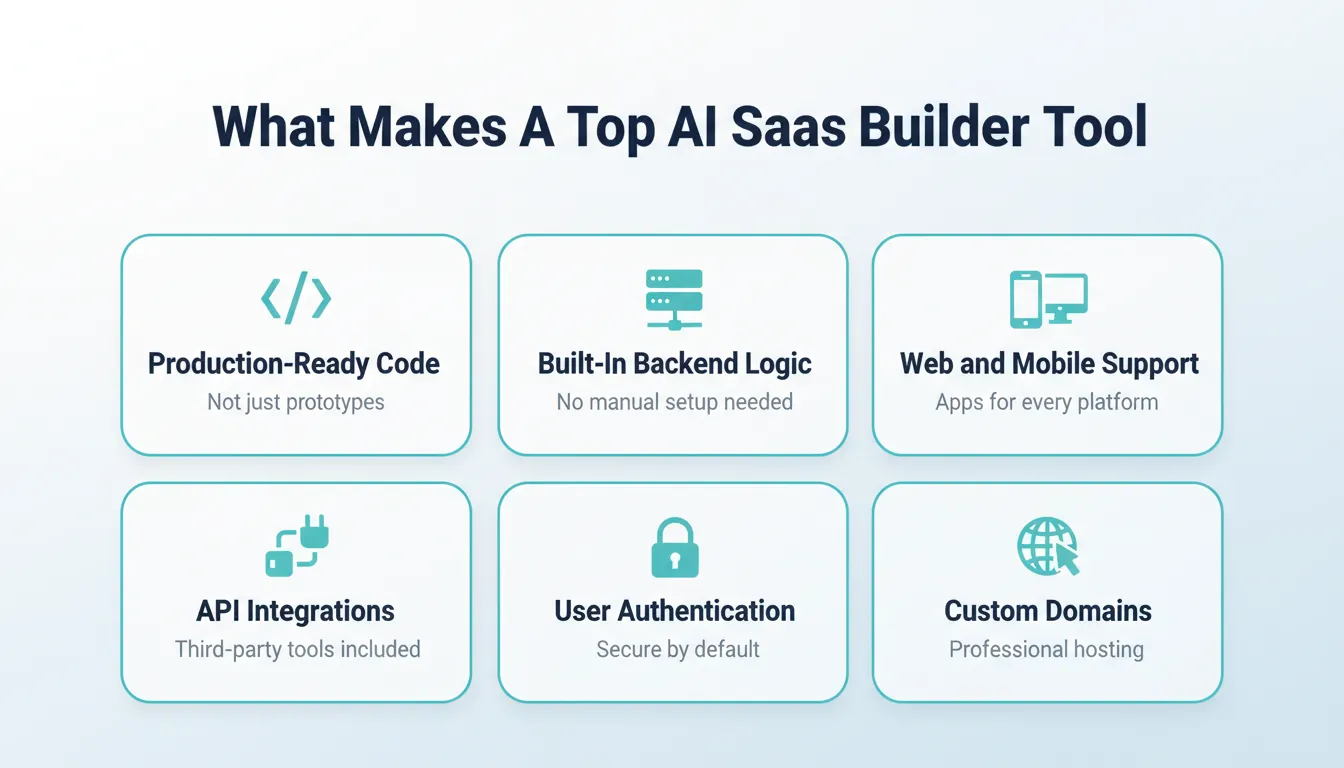
Not all AI tools are equal. Some handle simple apps, while others manage complex apps, backend logic, and internal tools. Here is what the best AI SaaS website builder platforms offer:
- Production-ready code output, not just prototypes
- Support for web apps and mobile optimization
- Built-in backend logic and data tables
- User authentication for secure apps
- Custom domains and managed hosting
- API integrations and third-party tools support
- Admin panels to manage real user data
- Team collaboration with shared context across tasks
The sweet spot is a platform that balances speed, control, and the thinking that happens before the build begins.
Side-by-Side Comparison of Top AI SaaS Builder Tools in 2026
Here is a glance at the major players:
| Platform | Web Apps | Mobile Apps | Production Code | Backend Logic | Best For |
|---|---|---|---|---|---|
| Rocket | Yes (Next.js) | Yes (Flutter) | Yes | Strong | Full-stack SaaS, MVPs, internal tools |
| Bubble | Yes | Limited | No export by default | Strong | Complex logic-heavy web apps |
| Glide | Yes | Yes | No | Basic | Simple internal tools, quick prototypes |
| Adalo | Limited | Yes | No | Medium | Mobile-first membership apps |
| FlutterFlow | Yes | Yes | Yes (Flutter) | Strong | Cross-platform mobile and web |
| Retool | Yes | No | No | Strong | Internal dashboards, admin panels |
Match your SaaS idea to the right platform before you write a single prompt
Rocket: Research, Build, and Monitor in One Platform
Rocket is the world's first Vibe Solutioning platform. It is a single workspace where you research what to build, build it, and monitor what matters. 1.5 million people have tried Rocket across 180 countries, from solopreneurs validating ideas to enterprise teams running strategy and execution on the same platform.
Rocket is backed by Salesforce Ventures and Accel. It serves three types of people: Builders (founders, developers, and agencies shipping products), Operators (product managers, sales teams, and marketers using research and intelligence without building), and Platform Consolidators (enterprise teams replacing tool sprawl with one shared-context system).
Solve: Validate Before You Build
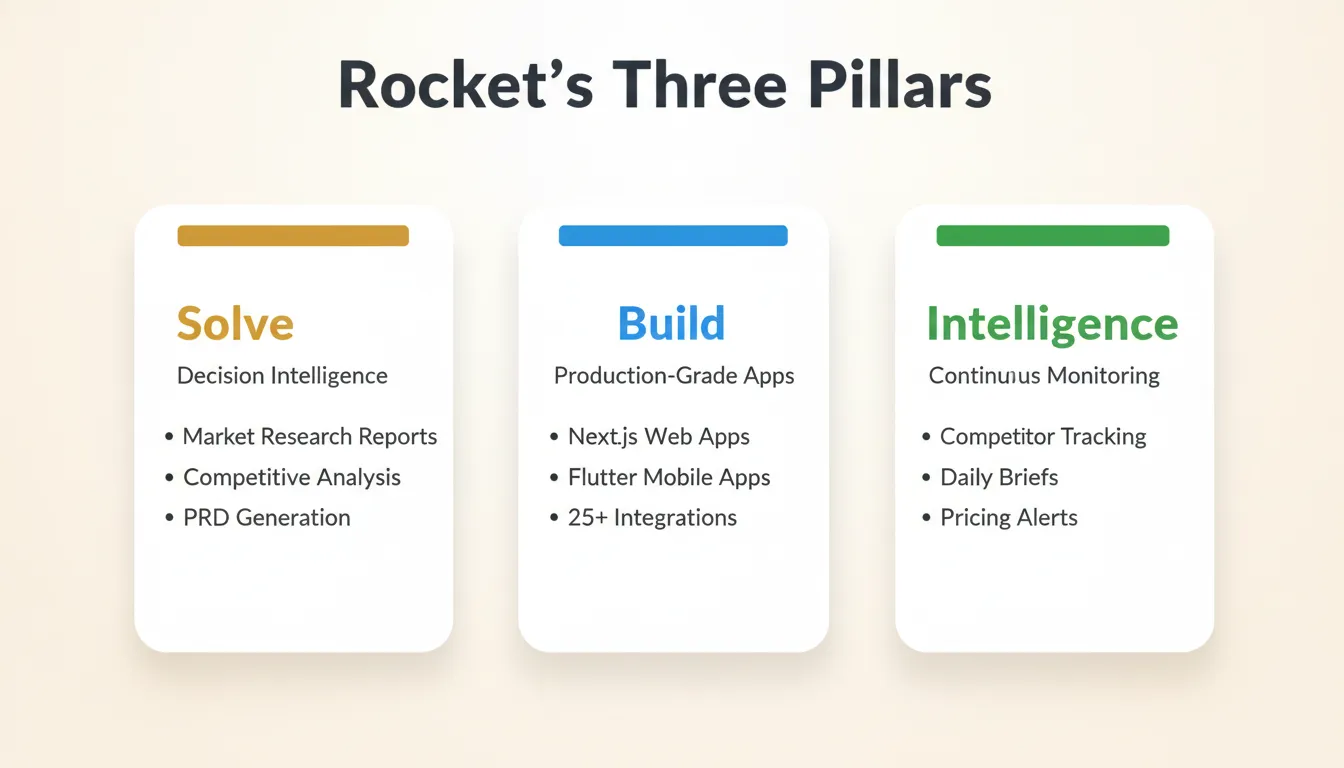
Solve turns any business question into a structured, evidence-backed research report. Type a question in plain language about market sizing, competitive landscape, pricing strategy, or product direction. Rocket then decomposes it into parallel research streams. It runs queries across 150+ sources simultaneously and returns a structured report with an executive summary, data analysis, and actionable recommendations.
The output does not disappear after export. It becomes the foundation of everything that follows. The PRD is present when the developer opens the build task, and the competitive brief is present when the landing page is written. Nothing gets re-explained, and everything compounds.
Build: Generate Production-Ready Apps
Build generates production-grade web apps in Next.js and Flutter from plain-language descriptions. This is not a prototype generator. What comes back is deployable, production-quality code with real design systems, dark/light theming, fluid navigation, and domain-specific data density.
Every Rocket build ships with these defaults:
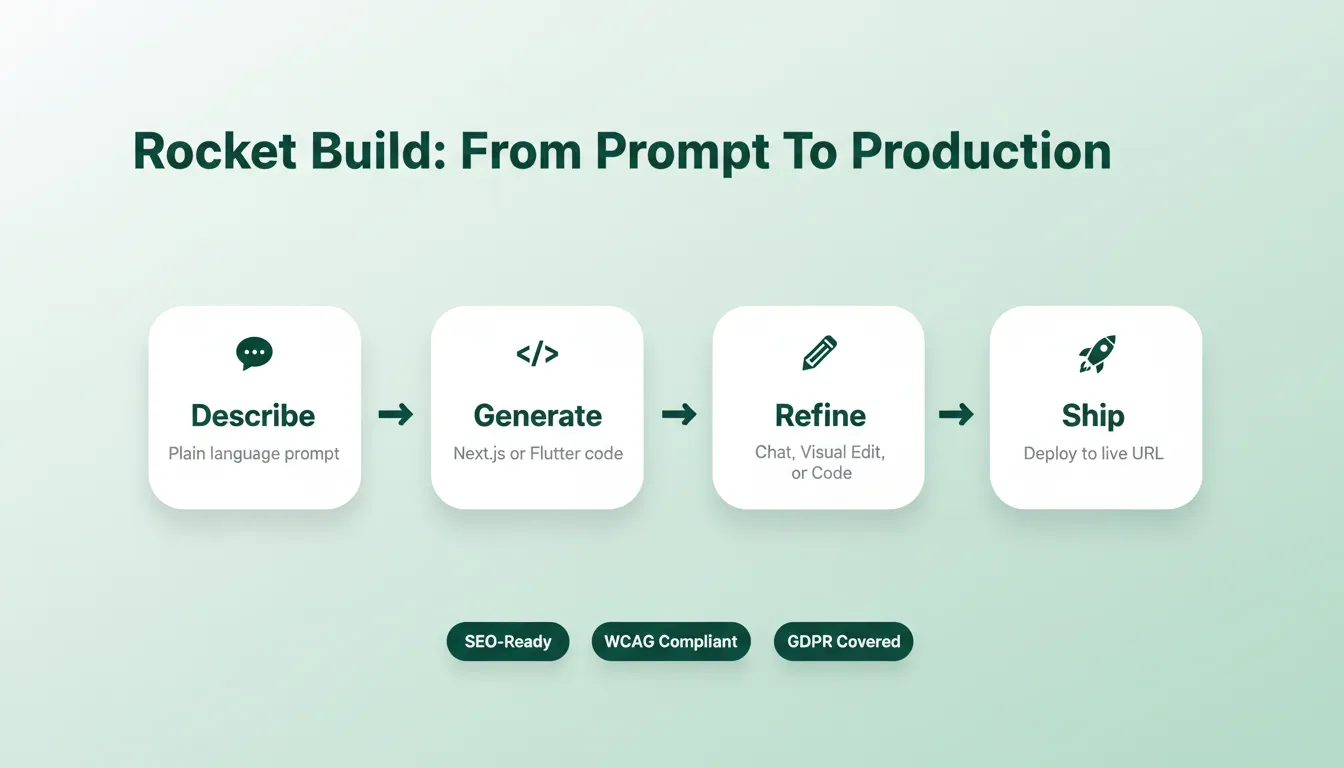
- SEO-ready HTML structure
- WCAG 2.1 AA accessibility compliance
- GDPR coverage
- Performance optimization
You can start from a plain-language description, a Figma file, a GitHub repository (Next.js + TypeScript), an uploaded screenshot, or a template. After generation, iterate through Chat, Visual Edit, or Code with no change limit.
Intelligence: Monitor Competitors Continuously
Intelligence monitors every public platform a competitor operates on. This includes websites, pricing pages, social media, review platforms, job postings, and news. It delivers daily, weekly, or monthly briefs automatically. It surfaces not just what changed, but what it means for your business. No other AI app builder offers built-in competitive intelligence alongside research and app building.
Key Features (Docs-Verified)
- 25,000+ templates: Browse by category or let Rocket suggest a match based on your prompt. Templates are free to use.
- 25+ integrations: Stripe, Supabase, Google Analytics, Notion, Linear, Airtable, Mailchimp, Mixpanel, Twilio, SendGrid, Cal.com, PayPal, OpenAI, Anthropic, Gemini. Authenticate once and they flow into every build.
- Redesign (8 slash commands): Reimagine any existing website without starting from scratch.
- Codebase Pickup: Import any existing Next.js TypeScript project and continue it.
- Projects and Context: Add files, research, and decisions once. Every task inherits them automatically.
- Team Collaboration: Three-level role-based access (Admin, Creator, Viewer), inline comments, and per-user credit allocation.
- Staging and Production: Separate environments, full version history, and one-click rollback.
- Built-in Analytics: Visitors, conversions, accessibility scores, and Core Web Vitals. No additional tools needed.
- Security: SOC 2, ISO 27001, GDPR, CCPA, SSO/SAML, role-based access, and audit logs are all on by default.
Rocket Pricing
| Plan Type | What Is Included | Intelligence Add-on |
|---|---|---|
| Credit-based system | One balance covers Solve, Build, and Intelligence | $100/month per competitor tracked (500 credits/month) |
| Subscription credits | Roll over month-to-month on paid plans | Available on paid plans |
| Credit add-ons | One-time packs that do not expire while subscription is active | Purchased separately |
Use Cases
- Startup MVPs: Validate with Solve, build with Build, and monitor competitors with Intelligence.
- Internal Tools: OKR trackers, customer health monitors, compliance dashboards, and investor data rooms.
- Client Projects: Build professional SaaS websites and hand off via Remix link.
- Mobile and Web Apps: One platform for both, with production-ready Flutter and Next.js output.
Bubble: Power for Complex SaaS Websites
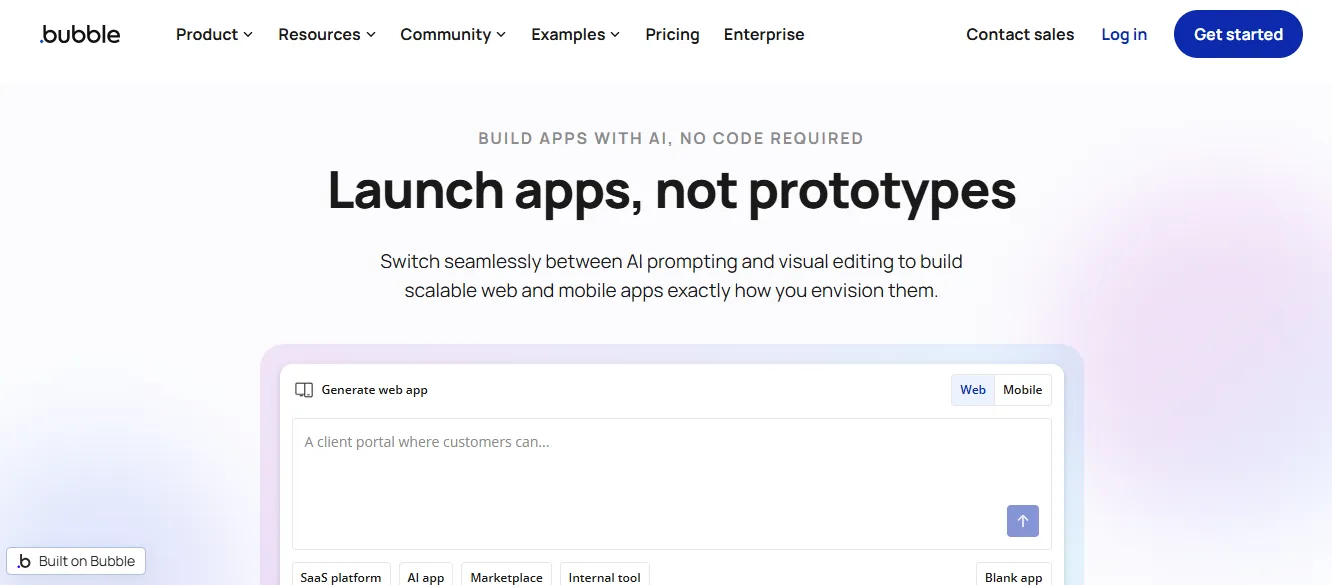 Bubble gives you deep control over backend logic and workflows. It is well-suited for building complex apps and advanced SaaS websites. It feels closer to traditional development but without heavy writing code.
It works well for dashboards, client portals, and data-heavy SaaS products. Note that Bubble does not export production-ready code by default. Your app runs on Bubble's infrastructure.
Key Features
- Advanced backend logic and custom workflow builder
- Built-in database management
- API integrations and external data sources
- Plugin marketplace for extended functionality
Best For
- SaaS apps with complex conditional logic
- Client portals and membership platforms
- Data-heavy web applications
Bubble Pricing
| Plan | Starting Price | Key Highlights |
|---|---|---|
| Free | $0/month | Bubble branding, limited capacity |
| Starter | $32/month | Custom domain, basic capacity |
| Growth | $134/month | Higher capacity, more workflows |
| Team | $349/month | Collaboration, priority support |
Glide: Quick, Simple SaaS Apps
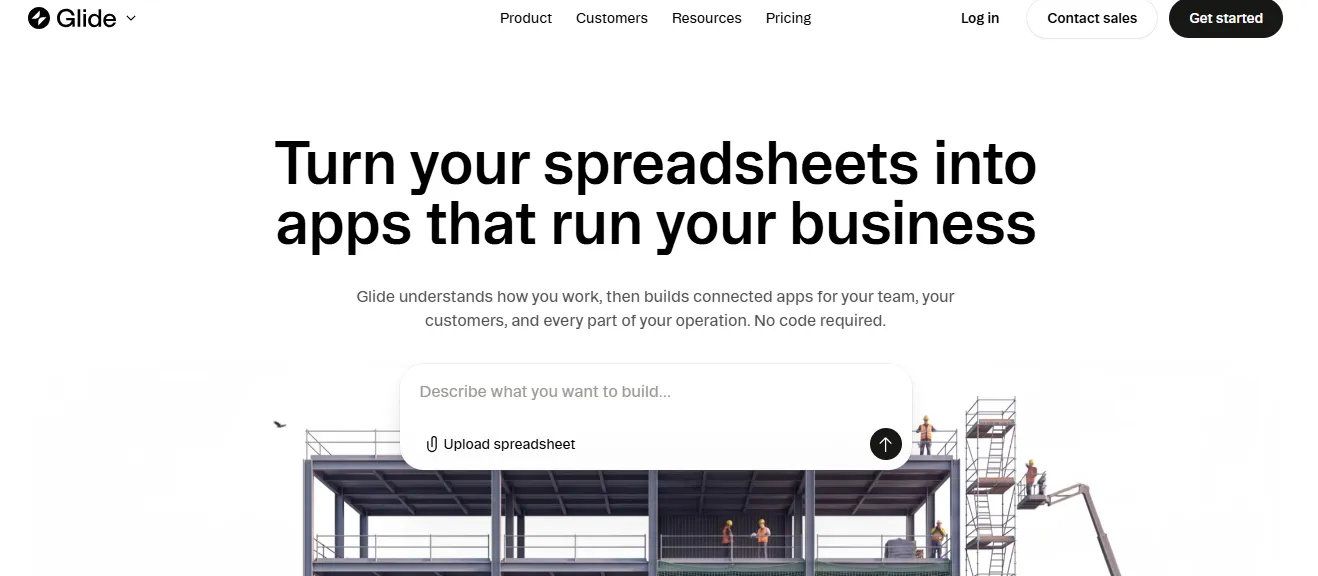 Glide turns spreadsheet data into working apps quickly. It is especially useful when your data source is Google Sheets or Airtable. It keeps app creation fast without needing coding or design skills.
It is best for simple apps, internal tools, and quick MVPs. Glide does not handle complex apps or generate exportable production code. However, it is fast for testing ideas and building lightweight SaaS websites.
Key Features
- Spreadsheet-based data source (Google Sheets, Airtable)
- Drag-and-drop interface
- Simple workflow automation and basic user authentication
Best For
- Internal dashboards and team tools
- Quick prototypes and idea validation
- Simple web apps and mobile apps
Adalo: Focused on Mobile SaaS Apps
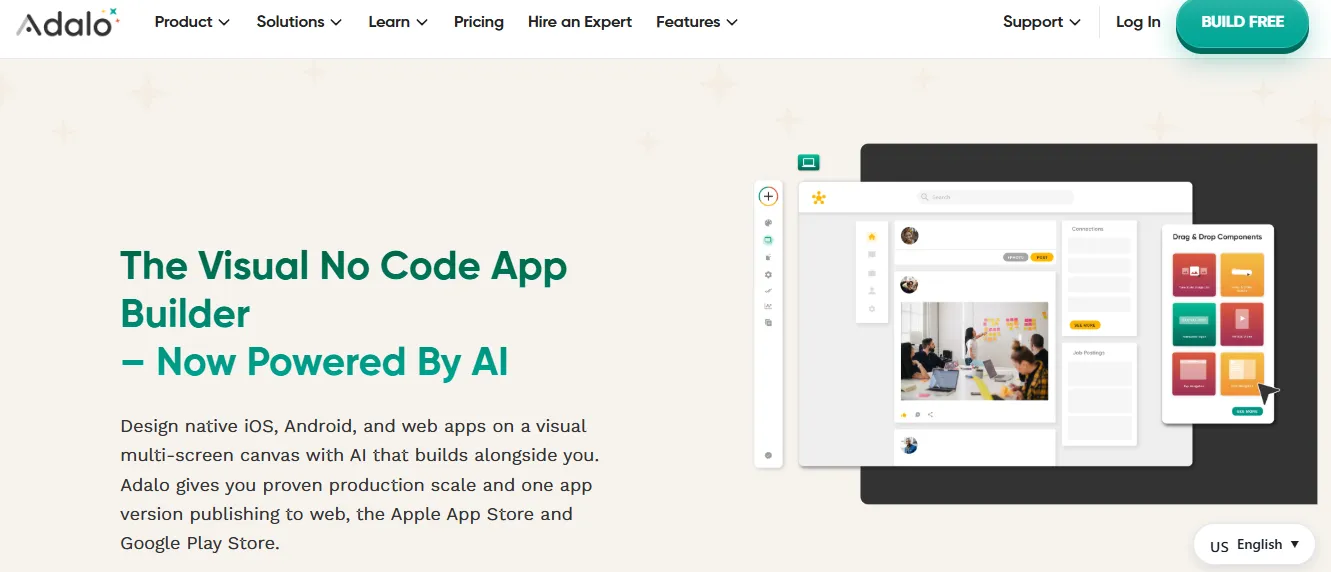 Adalo focuses on mobile app development and lets you build apps that feel close to native experiences. It supports user authentication and push notifications, making it useful for membership apps and mobile-focused SaaS products.
It has limited web app capabilities compared to other platforms. However, it is a solid pick for launching mobile apps quickly with app store publishing support.
Key Features
- Native mobile app support (iOS and Android)
- User authentication and push notifications
- App store publishing support
Best For
- Mobile startups and membership apps
- Client-facing mobile apps
- Founders who need app store deployment fast
FlutterFlow: Cross-Platform SaaS Apps
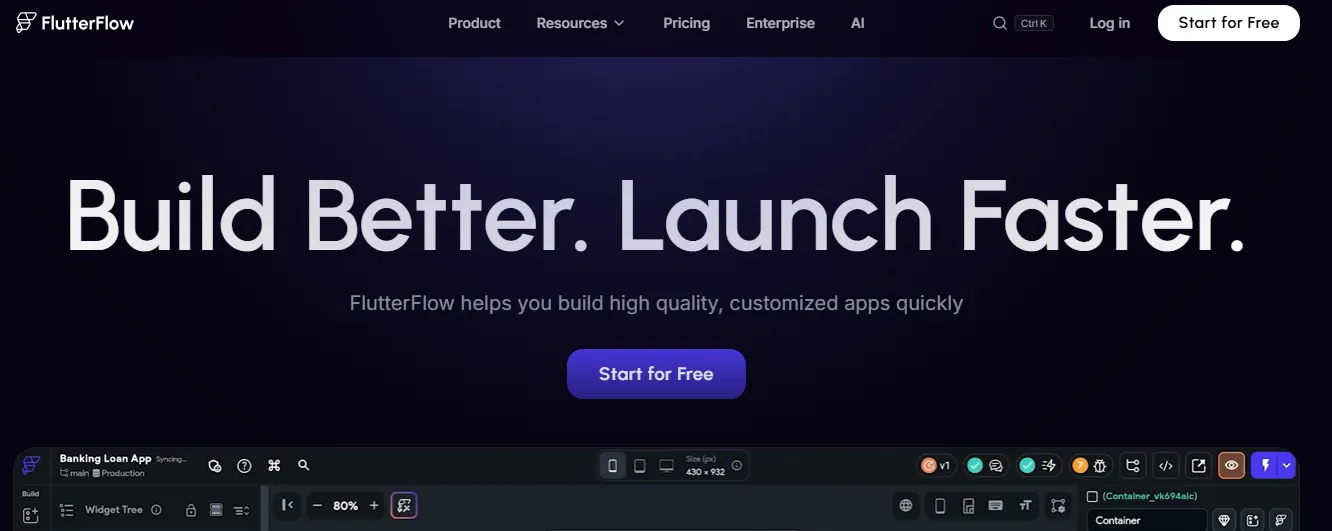 FlutterFlow combines no-code and low-code, giving you flexibility to build apps and scale them later. It supports both web apps and mobile apps with strong backend logic. It also generates actual Flutter code you can export.
It is useful for more advanced projects where you may need custom logic or code export later. This makes it a good choice for teams that want to transition from no-code to custom development over time.
Key Features
- Visual builder with exportable Flutter code
- Firebase and Supabase backend integration
- API connections and push notifications
Best For
- Android and iOS apps with a single codebase
- Advanced mobile app projects needing code export
Retool: Internal Tools Made Simple
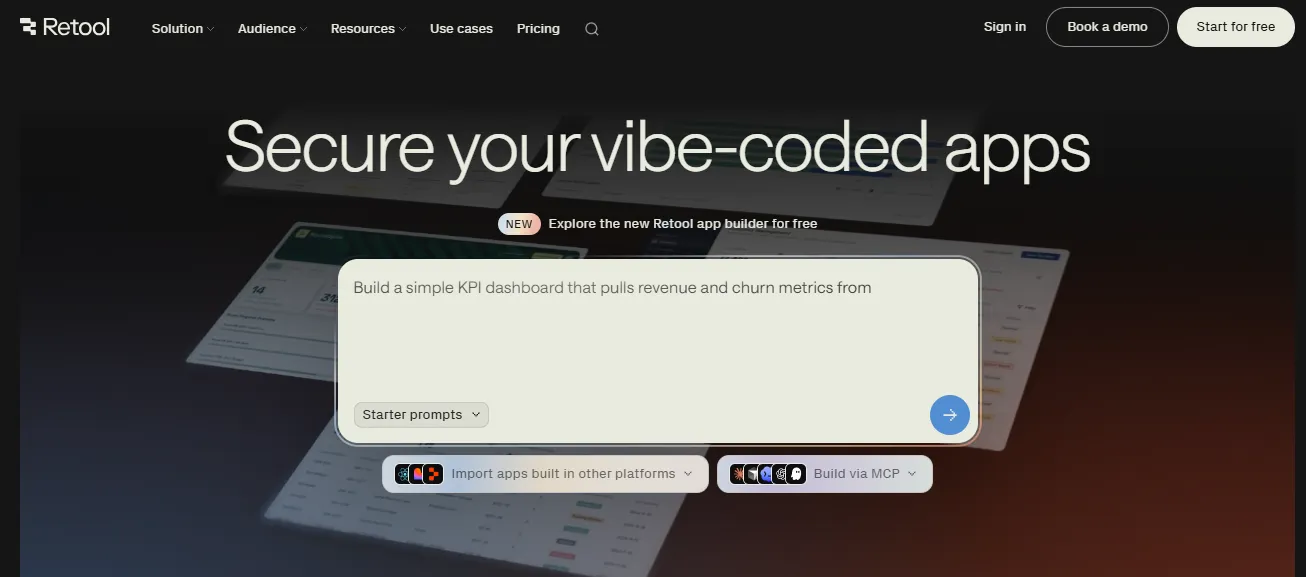 Retool is built for internal tools and admin panels. It helps teams create dashboards and workflows quickly. It connects easily with external data sources and databases. It is not designed for public-facing SaaS websites.
If your focus is efficiency and managing backend data for internal operations, Retool is a strong option.
Key Features
- Pre-built components for internal dashboards
- Workflow automation and query builder
- SQL support and 100+ data source connectors
- Role-based access control
Best For
- Admin panels and internal dashboards
- Operations and data teams
- Companies with existing databases needing a fast UI layer
What Real Users Are Saying
Here is a real perspective from LinkedIn:
"This new AI agent lets you build fully functional web and mobile apps using nothing but natural language prompts."
People are actively using AI app builder tools to create real apps, handle backend logic, and ship faster without writing code. The category is not a trend. It is the new default for how SaaS products get built.
How to Choose the Right AI SaaS Builder Tool
Picking the right AI SaaS platform depends on what you want to build and how far you plan to take it. Match your goals with the strengths of each tool instead of going with what is popular.
What Works Best for Different Needs
- Full-stack SaaS with research, build, and monitoring: Rocket is the only platform that covers all three in one place, with production-grade Next.js and Flutter output.
- Complex web apps with custom logic: Bubble and FlutterFlow give more control over backend code and scaling.
- Mobile app development: Adalo and FlutterFlow provide solid mobile optimization and native-like experiences with app store publishing.
- Internal tools and admin panels: Retool connects easily with existing databases and helps manage real user data efficiently.
- Fast prototypes and internal tools: Glide is the quickest path from a spreadsheet to a working app.
- Existing site redesign: Rocket's Redesign feature (eight slash commands) reads and selectively improves any existing website without starting from scratch.
Once you ship, scaling SaaS built with AI tools becomes the natural next challenge. The platform you chose at the start determines how hard that gets.
The Work Is Only as Good as the Thinking Before It
The top AI SaaS builder tools in 2026 have made execution faster. The platforms that also address what to build and why are the ones that produce products worth shipping. That shift is defining this category right now, and it will only sharpen as AI capabilities grow.
You have a product idea. Type it into Rocket, let it research the market, build the product, and monitor what your competitors do next. Start building on Rocket today and see what knowing before building actually feels like.
Table of contents
- -Why AI SaaS Builders Are Dominating in 2026
- -What is Driving This Shift?
- -What Makes a Top AI SaaS Builder Tool?
- -Side-by-Side Comparison of Top AI SaaS Builder Tools in 2026
- -Rocket: Research, Build, and Monitor in One Platform
- -Solve: Validate Before You Build
- -Build: Generate Production-Ready Apps
- -Intelligence: Monitor Competitors Continuously
- -Key Features (Docs-Verified)
- -Rocket Pricing
- -Use Cases
- -Bubble: Power for Complex SaaS Websites
- -Key Features
- -Best For
- -Bubble Pricing
- -Glide: Quick, Simple SaaS Apps
- -Key Features
- -Best For
- -Adalo: Focused on Mobile SaaS Apps
- -Key Features
- -Best For
- -FlutterFlow: Cross-Platform SaaS Apps
- -Key Features
- -Best For
- -Retool: Internal Tools Made Simple
- -Key Features
- -Best For
- -What Real Users Are Saying
- -How to Choose the Right AI SaaS Builder Tool
- -What Works Best for Different Needs
- -The Work Is Only as Good as the Thinking Before It