AI performance management software replaces slow annual reviews with real time data, continuous feedback, and personalized coaching. Rocket is the fastest way to ship a working platform from idea to production-ready app.
Why do most performance reviews still feel like a yearly paperwork ritual?
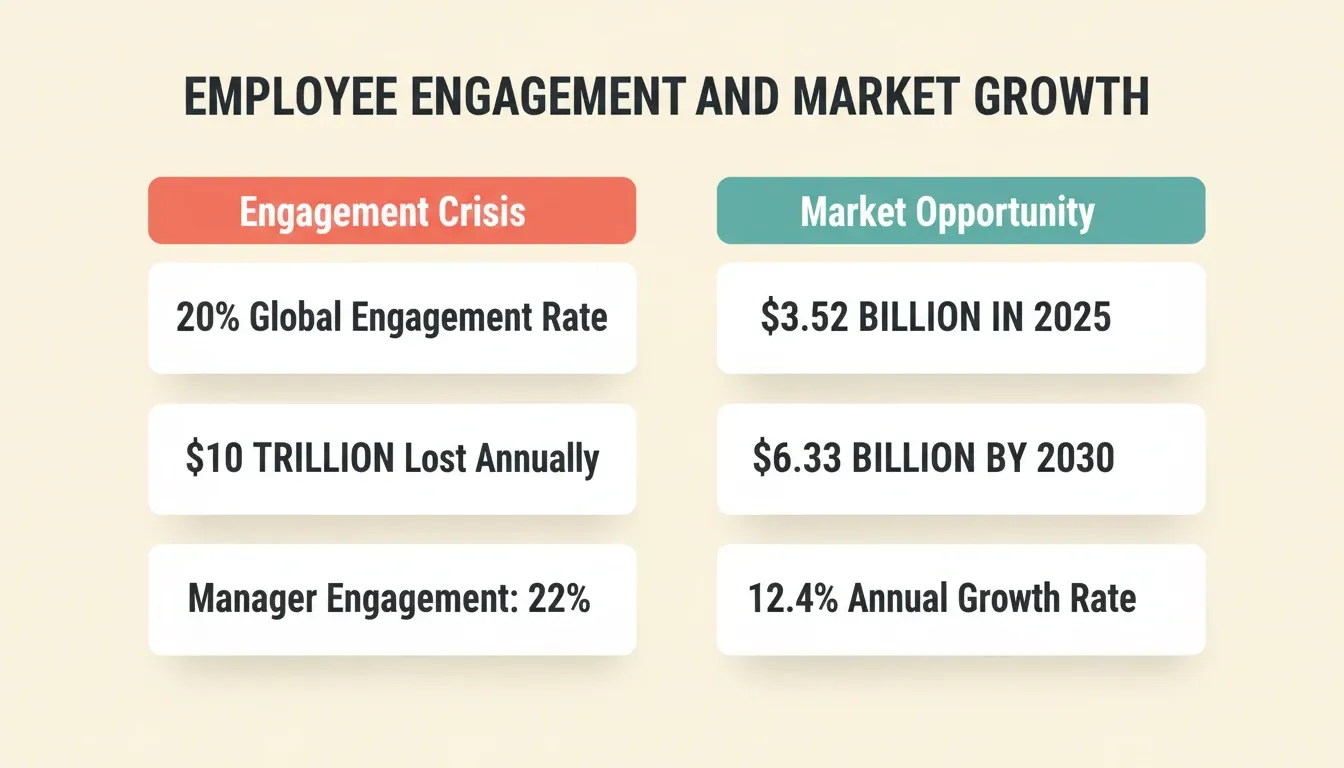
The employee performance management software market hit $3.52 billion in 2025 and is on track for $6.33 billion by 2030 at a 12.4% CAGR. That growth tells a clear story: organizations are ready to move past outdated systems.
The shift toward AI performance management is accelerating because HR teams need data driven tools that help managers coach employees in real time. 1.5 million people have tried Rocket across 180 countries, and a growing share are HR leaders and product teams building exactly this kind of internal tool.
Why are Traditional Performance Reviews Failing Teams?
Annual reviews have a well-documented problem. They rely on recency bias, meaning managers remember the last few weeks of work and forget months of contributions. Most of the manual work involved, filling out forms, gathering notes, and writing long-form evaluations, adds hours of effort without producing meaningful growth for anyone.
The review cycle itself creates a broken feedback loop. Employees wait an entire year to learn how they performed. By then, the context has shifted, goals have changed, and the performance data managers relied on is already stale.
The Hidden Cost of Low Engagement
Gallup's 2026 State of the Global Workplace report found that global employee engagement dropped to just 20% in 2025, its lowest level since 2020. That disengagement costs the world economy roughly $10 trillion in lost productivity each year. Manager engagement fell from 31% in 2022 to 22% in 2025, a nine-point collapse that eliminated the engagement premium leaders previously held over individual contributors.
-
Only 20% of employees worldwide feel engaged at work
-
The productivity loss amounts to approximately 9% of global GDP
-
Manager engagement dropped faster than any other role category
-
Organizations with best-practice cultures still achieve 79% manager engagement
These numbers show that the performance process itself often contributes to disengagement. When reviews feel like an obligation, employees base their motivation on factors outside the organization's control.
What Does AI Performance Management Software Actually Do?
AI performance management software uses artificial intelligence to automate the time consuming parts of reviews, analyze performance patterns from multiple sources, and deliver real time insights that help managers make better decisions. Instead of waiting for annual reviews, these tools provide continuous feedback loops that keep employees and managers aligned throughout the year.
-
Collects performance data automatically from communication tools, project management platforms, and goal tracking systems
-
Reduces bias by analyzing employee performance across the full review cycle, not just recent weeks
-
Generates AI written summaries of accomplishments and development opportunities based on tangible data
-
Provides personalized development plans that connect individual goals to company objectives
-
Flags trends early so HR teams can address concerns before they become retention problems
The right tools transform how HR teams approach the entire organization's performance strategy. AI performance management tools handle the analysis and summarizing. As a result, managers can focus on meaningful conversations with their teams.
How AI Handles the Review Process
AI performance management software follows a structured workflow that removes manual work from every stage.
AI-Powered Review Cycle: From Data Collection to Employee Delivery
The review process starts with data collection from multiple sources. AI pulls performance feedback from Slack conversations, completed tasks, peer reviews, and goal updates. Then it uses predictive analytics to identify strengths, flag areas for continuous improvement, and generate actionable feedback drafts. Managers review and customize these drafts, adding human judgment and context that AI written content alone cannot provide.
This approach reduces the time managers spend on paperwork from hours to minutes. HR leaders report that AI performance management tools cut review cycle preparation time significantly while producing more accurate, data driven performance evaluations.
How Can AI Tools Transform Check Ins and Development Plans?
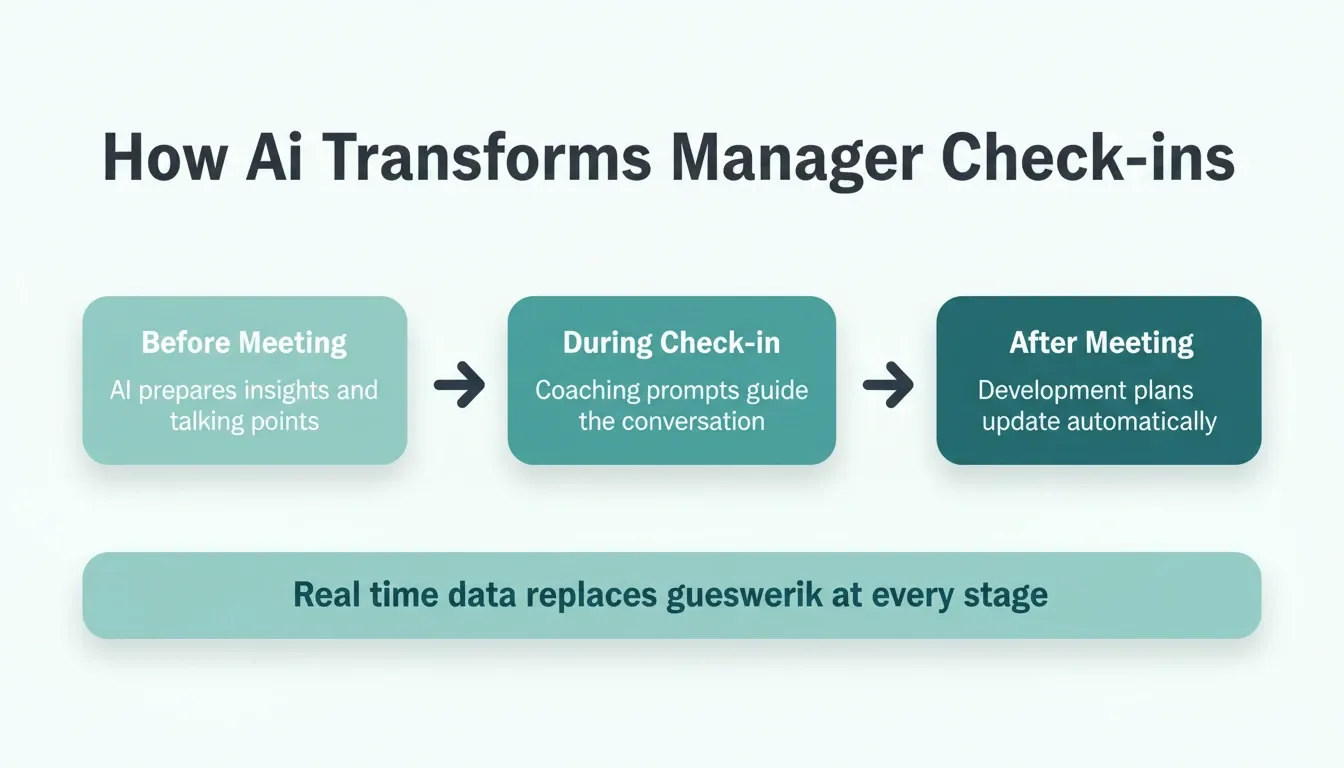
Continuous feedback replaces the outdated model of saving all performance conversations for one annual meeting. AI tools make check ins practical by preparing managers with real time insights, suggested talking points, and progress updates before each conversation. Instead of starting from scratch, managers walk into one-on-ones with actionable data already organized.
-
Ongoing feedback becomes standard because AI tools prompt managers when employees hit milestones or face challenges
-
Development plans update automatically as employees complete goals and new skill gaps appear
-
Goal setting connects to company objectives so employees understand exactly how their work contributes to broader outcomes
-
Measurable goals replace vague expectations with clear outcomes that both parties can track progress against
-
Personalized development plans adapt as the employee experience changes over time
AI performance management removes the guesswork from coaching. When managers can see real time feedback data alongside employee development trends, they spend less time on administrative tasks. In turn, they have more time for conversations that build stronger relationships within their teams.
AI Generated Coaching and Instant Feedback
AI generated coaching suggestions help managers deliver instant feedback that feels constructive and actionable rather than generic. The technology enables managers to craft performance feedback that addresses specific behaviors and outcomes, not just overall ratings.
"The best performance management tools I've used are the ones that tell me what to say to my team, not just that I should say something. AI-generated coaching prompts changed how I run my one-on-ones entirely." Engineering Manager, r/ExperiencedDevs
Real time insights help managers catch performance issues early and turn them into development opportunities. This shift matters because meaningful conversations based on actionable data drive engagement more than formal evaluations ever did.
Should You Build or Buy Performance Management Software?
This is the question most HR leaders and product teams face before committing to a direction. The answer depends on what your organization actually needs.
Build your own when: your review process is unique, you need deep integration with internal systems, you want full data ownership, or the per-seat cost of commercial tools grows faster than your headcount.
Buy a pre-built platform when: your performance process is standard, you need to deploy quickly, and you are comfortable adapting your workflows to the tool's structure.
The table below covers the most common trade-offs:
| Decision Factor | Pre-Built Platforms | Custom Built on Rocket |
|---|---|---|
| Customization | Limited to pre-set templates | Full control over every feature |
| Time to launch | Weeks of configuration and training | Days from idea to deployment |
| Data ownership | Stored on vendor servers with limited export | Full ownership, your infrastructure |
| AI capabilities | Vendor-controlled updates | Build exactly what your teams need |
| Integration depth | Pre-defined connectors only | Connect any system via 25+ integrations |
For teams that need a platform shaped around their culture and workflows, building a custom performance management tool is now a realistic option that takes days, not months.
What Features Should an AI Performance Management Platform Include?
Building the right feature set determines whether your software drives real results or becomes another tool employees ignore. The most effective platforms combine data collection, analysis, and delivery into a connected system that supports the entire performance management lifecycle.
-
Performance evaluations with AI written summaries that reduce writing time for managers from hours to seconds
-
Employee performance data dashboards showing trends, accomplishments, and areas of focus across departments
-
Predictive analytics for retention risk so HR teams can intervene before high performance employees leave
-
360-degree feedback collection from peers, direct reports, and cross-functional collaborators
-
Continuous check ins with AI coaching prompts that prepare managers for every conversation
Goal Setting and Predictive Analytics
The most impactful AI performance management platforms connect goal setting directly to measurable business outcomes. AI tracks progress against individual and team objectives, providing real time data on whether goals are on pace or at risk.
| Capability | What AI Does | Business Outcome |
|---|---|---|
| Goal alignment | Maps individual objectives to company objectives | Clearer accountability across the entire organization |
| Predictive analytics | Identifies performance trends before annual reviews | Earlier interventions, higher retention |
| Skills tracking | Monitors employee development and training progress | Informed promotion and staffing decisions |
| Sentiment analysis | Reads feedback tone across check ins and reviews | Spots disengagement signals early |
| Reporting automation | Generates reports and performance summaries on demand | Saves HR teams hours of manual work per review cycle |
When these features work together, managers and HR leaders gain a transparent view of performance across every level of the organization. The data driven approach replaces gut feeling with evidence, and employees feel that their contributions are measured fairly rather than filtered through one person's memory of the past quarter.
How to Build Performance Management Software with Rocket
You understand the value of AI performance management software. The question becomes: how do you actually build one? Traditional development takes months of planning, hiring, and iterating. Most HR teams that attempt to create custom tools run into the same wall: engineering bandwidth.
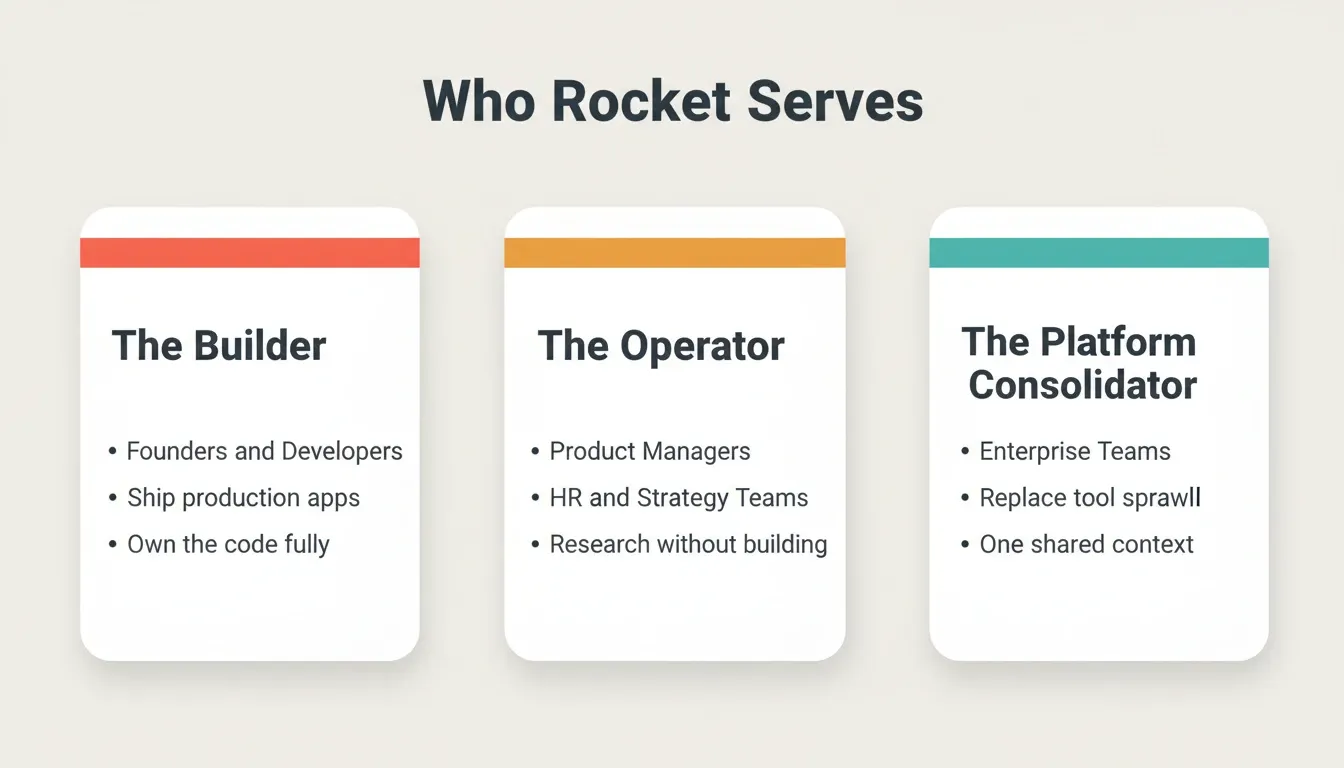
Rocket is a vibe solutioning platform that combines strategic research, app building, and competitive intelligence in one workspace. You describe what you want to build in plain language, and Rocket generates production-ready code for both web and mobile. Most apps generate in 1 to 3 minutes.
Here is how the build process works in practice:
Step 1: Describe your platform. Type your requirements in plain language. For example: "Build an HR performance management dashboard with employee profiles, quarterly review cycles, goal tracking, manager feedback forms, and a team analytics view." Rocket plans the architecture and generates the full application.
Step 2: Review the live preview. Rocket shows a working preview the moment generation finishes. Interact with it like a real user. Navigate between screens, test the feedback forms, and check the dashboard layout.
Step 3: Iterate through chat. Change anything by describing it. "Add a 360-degree feedback section to the employee profile." "Connect the goal tracking module to the team analytics view." There is no change limit.
Step 4: Connect your data sources. Rocket includes 25+ integrations that connect directly into every build. Connect Supabase for your database and authentication, Notion or Airtable for existing HR data, Mixpanel for usage analytics, and Slack for notifications. Authenticate once and they flow into every build automatically.
Step 5: Deploy to staging, then production. Click Launch. Rocket deploys to a staging URL first so you can share with stakeholders for feedback. When ready, push to production with a custom domain. Full version history and one-click rollback mean nothing built is ever lost.
Every build ships with SEO-ready structure, WCAG accessibility compliance, and GDPR coverage by default. These are the baseline, not optional extras.
What Rocket Builds for HR Teams
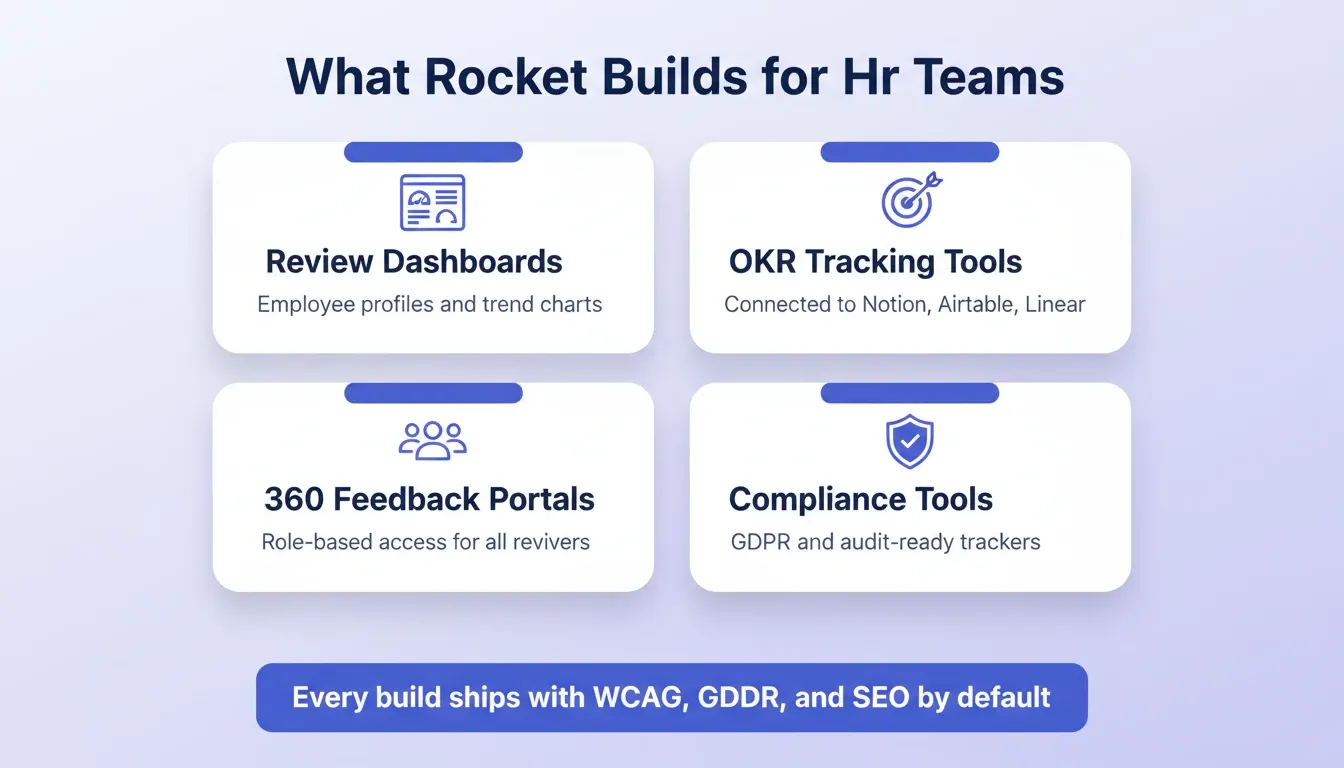
Rocket generates production-grade products from natural language descriptions. For HR and performance management specifically, the platform builds:
-
Performance review dashboards with employee profiles, review history, and trend charts
-
OKR tracking tools connected to Mixpanel, Airtable, Linear, or Notion
-
360-degree feedback portals with role-based access for managers, peers, and direct reports
-
Compliance and audit tools for GDPR data subject access requests and HR record management
-
Employee onboarding systems with progress tracking and automated check in prompts
-
Team analytics views showing engagement signals, goal completion rates, and review cycle status
Web apps are built in Next.js. The output is clean, editable code you fully own. You can download the source, connect it to GitHub for version control, or continue iterating inside Rocket.
Team Collaboration Built In
Performance management software is rarely used by one person. Rocket's Collaborate feature gives your team three-level role-based access: Admin, Creator, and Viewer. Admins control workspace settings and member access. Creators build and iterate. Viewers, such as HR stakeholders or compliance reviewers, can see everything within their access boundaries without editing.
Every team member works from the same accumulated project context. The requirements you defined in session one are present when a new team member opens the project in session ten. Nothing is re-explained. Nothing is lost between handoffs.
For a deeper look at how to write effective prompts for HR systems, this guide covers the complete workflow.
The Future of Performance Management Is Built, Not Bought
The primary keyword here is clear: build performance management software with AI means owning the process, the data, and the outcomes. As AI capabilities continue to advance, teams that build custom platforms today will iterate faster, adapt to new requirements, and avoid the constraints of vendor-controlled tools.
The organizations that lead on employee performance in the next five years will not be using off-the-shelf software. They will be running platforms built around their specific culture, goals, and workflows.
Start building your performance management platform on Rocket. Describe what your team needs, and ship a production-ready app in days.
Table of contents
- -Why are Traditional Performance Reviews Failing Teams?
- -The Hidden Cost of Low Engagement
- -What Does AI Performance Management Software Actually Do?
- -How AI Handles the Review Process
- -How Can AI Tools Transform Check Ins and Development Plans?
- -AI Generated Coaching and Instant Feedback
- -Should You Build or Buy Performance Management Software?
- -What Features Should an AI Performance Management Platform Include?
- -Goal Setting and Predictive Analytics
- -How to Build Performance Management Software with Rocket
- -What Rocket Builds for HR Teams
- -Team Collaboration Built In
- -The Future of Performance Management Is Built, Not Bought