
SCIP's CIPS, Coursera's CI program, and Google's BI certificate are the top competitive intelligence certification options. Each fits a different experience level and career goal. After getting certified, Rocket automates the ongoing monitoring work.
Which CI course is actually worth your time?
CI programs give analysts, product managers, and strategy teams a structured way to track competitor products, read market signals, and turn raw data into decisions.
More than 90% of Fortune 500 companies rely on competitive intelligence to guide strategy, per G2's guide to competitive intelligence. The right course cuts that learning curve.
This blog covers the programs worth your time, from formal certification tracks to accessible online options, plus a breakdown of free vs. paid paths. You'll find what each course covers, who it's for, and how to apply your skills on the job. Pick the path that fits your goals and commit.
Why Get Certified in CI?
What Does CI Knowledge Actually Change at Work?
Getting a CI credential does more than add a line to your resume. It gives you a structured framework for reading competition, tracking market dynamics, and connecting analysis to organizational decisions.
-
87% increase in sales effectiveness in competitive deals for organizations that gave sales teams AI-assisted CI tools, per Crayon's 2025 State of CI report
-
Strategic early warning capability: trained analysts spot competitor moves before public announcements, giving leadership time to respond rather than react
-
Organizational credibility: formal training is the fastest path to stakeholder buy-in when building an intelligence program from scratch
-
Compounding competitive advantage: each cycle of gather, analyze, brief, act builds on the last
That combination of personal skills and organizational value is why CI knowledge has become a priority for companies that compete seriously.
Who Should Pursue CI Certification?
CI training fits a wider range of roles than most people expect.
-
Product managers tracking competitor products, roadmaps, and market dynamics
-
Sales managers building competitive analysis into deal preparation
-
Marketing managers who need to know what competitors are planning before campaigns launch
-
Strategy consultants advising executives on positioning and business growth
-
Market researchers adding competitive and market intelligence frameworks to their work
-
Business analysts moving into roles that require ongoing competitor monitoring
Developing these skills makes you noticeably sharper, regardless of which function you work in. If you're thinking about formalizing your role, the competitive intelligence careers, roles, and skills guide is a useful companion read.
What Do Most CI Programs Cover?
A typical CI training curriculum spans three core domains: gathering information, analyzing competitive data, and communicating insights to decision-makers.
-
Value chain analysis and chain analysis methods for mapping competitor cost structures and strategic positioning
-
Elicitation and primary research techniques for gathering field intelligence from real sources
-
Porter's Five Forces and SWOT analysis for structured market dynamics assessment
-
Intelligence brief writing and stakeholder communication for delivering insights that decision-makers can act on
-
Case studies and live workshops (in most paid programs) for applying frameworks to real market scenarios
-
Structured module-by-module pacing so students can learn at their own pace without losing continuity
The best courses connect each concept to real scenarios, so you finish with applicable techniques rather than theory alone.
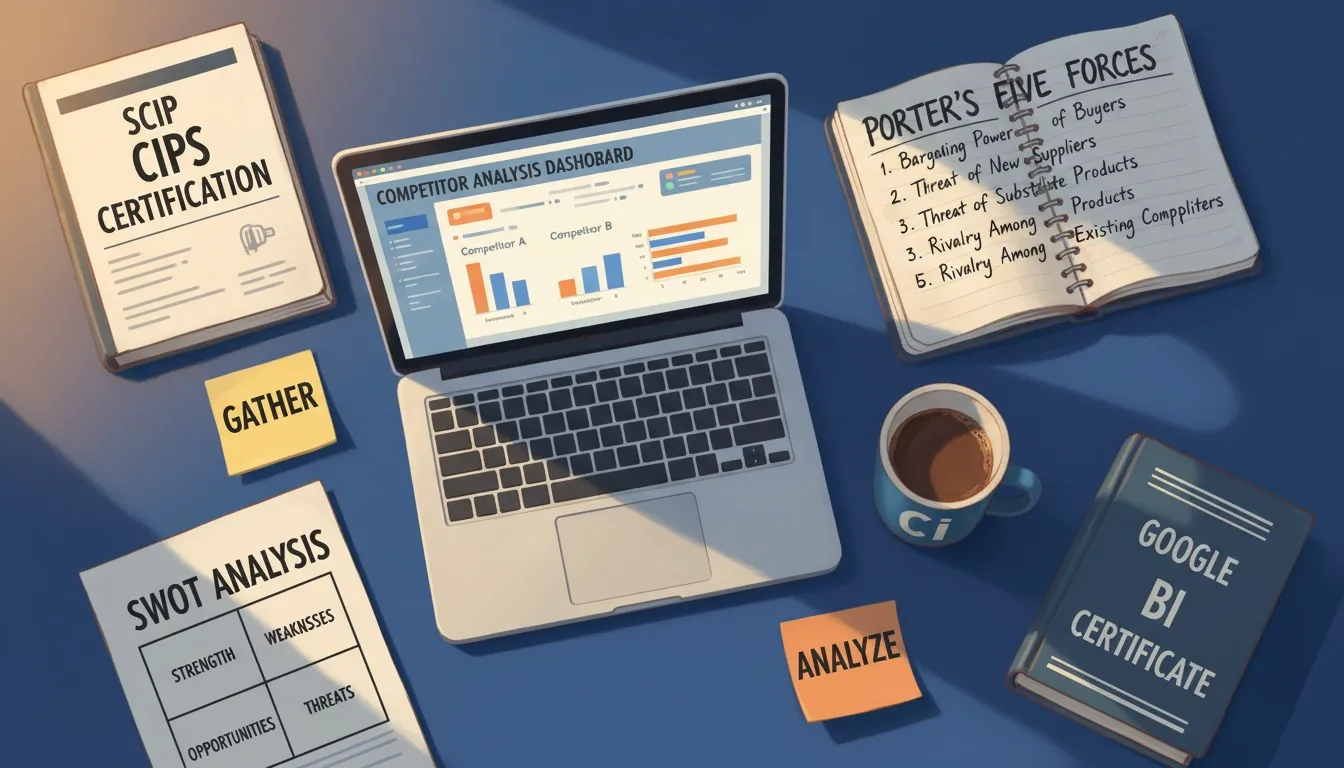 The tools and frameworks a certified competitive intelligence analyst works with daily, from SCIP CIPS to Porter's Five Forces and SWOT Analysis
Notable Certifications and Courses
SCIP and the CIPS Program
SCIP, the Strategic and Competitive Intelligence Professionals organization, is the leading international association for CI practitioners worldwide.
-
CIPS (Certified Intelligence Professional) is the closest the industry has to a standard professional certification, with roots tracing to Jan Herring, who built the corporate CI discipline at Motorola
-
Exam-based assessment: candidates complete comprehensive coursework covering CI theory, ethical information gathering, and applied strategy, followed by a written exam
-
SCIP membership includes continuing education, study material, resources, and professional community access as an accredited provider organization
-
Recognized pathway for practitioners who want to formalize competitive intelligence skills for leadership roles and career advancement
CIPS is the benchmark credential for practitioners serious about CI as a career-defining discipline.
Coursera: Competitive Intel, Trends and Data Sourcing
For students at the start of their CI journey, the Competitive Intel, Trends and Data Sourcing course on Coursera is a strong starting point.
-
Level: Beginner, no prior background required to start
-
Duration: 1-3 months at your own pace, approximately 10 hours per week
-
Five modules: competitive analysis and strategy, market intelligence analysis, trend forecasting, source credibility, and competitive market assessment
-
Hands-on projects using Porter's Five Forces and risk-scoring matrices to master source auditing and data validation techniques
-
On completion: students earn a shareable certificate for their LinkedIn profile
Practical for anyone building CI skills for product, strategy, or sales work, and one of the most accessible programs on the market.
Google Business Intelligence Professional Certificate
Google's Business Intelligence Professional Certificate sits at the crossroads of business intelligence and competitive analysis.
-
Rated 4.8 out of 5 stars with over 8,500 reviews among the most popular certificate programs on Coursera
-
Duration: 3-6 months with exam-style assessments throughout each module
-
Covers: data modeling, business analytics, competitive and market intelligence, and stakeholder communication
-
Best for CI practitioners who want to grow into data-heavy analysis roles requiring real analytics capability
A natural next step for anyone who wants to combine market intelligence work with hands-on data analysis skills.
Udemy and LinkedIn Learning for CI Basics
For students who prefer flexible, lower-cost CI training, Udemy and LinkedIn Learning both offer competitive intelligence courses covering the basics.
-
Udemy courses on competitive analysis include case studies with real company examples and products; one-time purchase access with regularly updated course material
-
LinkedIn Learning offers shorter modular formats designed for picking up individual skills; sample content before committing to a course
-
Neither platform offers live workshops for CI specifically, but both let you learn at your own pace
Good for orientation and skill-building before investing in a full certification program.
Free vs. Paid: Which Path Fits Your Goals?
What Paid Programs Include That Free Options Skip
Paid CI programs offer things free material simply cannot replicate.
-
A structured curriculum with a clear endpoint and module-by-module progression
-
A recognized certificate or credential from an accredited provider organization
-
Exam access and formal assessment that validates your knowledge to employers
-
SCIP and professional community access for continuing education and peer networking
-
Instructor-led study material: one practitioner on LinkedIn noted that the real perspective shift, especially around ethics and organizational context, "tends to come from completing a full program led by experienced instructors, not from free material alone"
That structured investment in depth is hard to replicate through self-directed resources alone.
How to Structure a Free Study Path
If paid programs are not in your budget yet, a free path can still develop solid CI foundations.
-
Start with SCIP's free public material on ethical CI practices and organizational frameworks
-
Audit a beginner Coursera course to develop a foundation in competitive analysis and market dynamics
-
Read G2 and industry research to see how CI applies in your specific sector
-
Apply Porter's Five Forces to a real competitor's products and market position
-
Write a short intelligence brief to test what you have actually learned
Many professionals say this phase helped them get significantly more from a structured program once they enrolled.
Free vs. Paid CI Learning at a Glance
| Factor | Free Path | Paid Program |
|---|---|---|
| Cost | $0 | $50-$2,000+ |
| Certificate | No | Yes |
| Structured curriculum | Partial | Full |
| Exam or assessment | No | Often yes |
| Community access | Limited | SCIP and cohorts |
| Best for | Orientation | Credentialing |
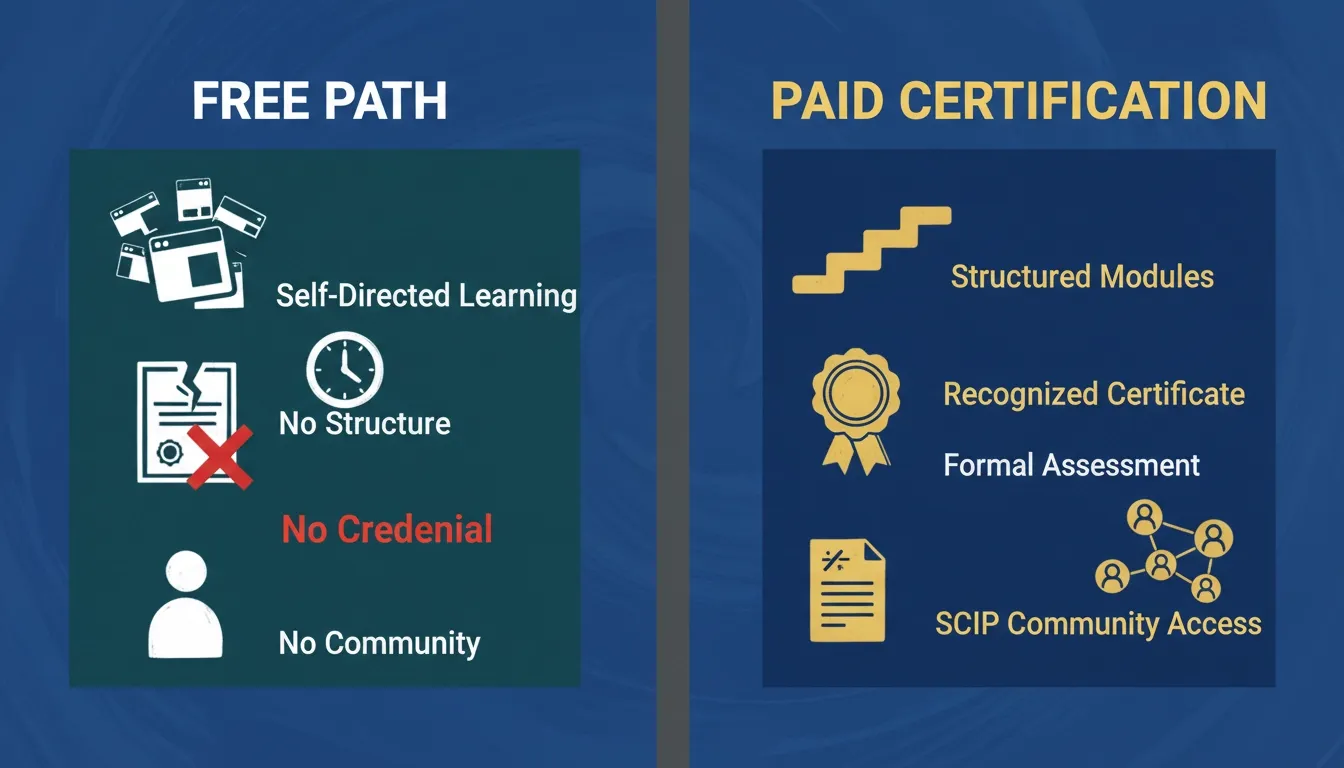 Free paths build awareness; paid programs deliver credentials, structured depth, and professional community access
How Do You Actually Apply CI Skills After Getting Certified?
Connecting Frameworks to Real Market Analysis
Certification gives you the vocabulary and analytical structure. Applying it means picking the right framework for each question your organization faces.
-
Porter's Five Forces for market entry analysis and assessing pressure from new competitors
-
SWOT plus signal tracking for quarterly competitor reviews against your own market position
-
Feature gap analysis when assessing how your products compare to key market players
-
Intelligence strategy cycle: gather, analyze, brief, act. Treat competitive analysis as a repeating process, not a one-time project
For connecting frameworks to live strategy decisions, the G2 guide on competitive intelligence and market trends is a strong companion read alongside your coursework.
Once you have frameworks in place, pairing them with a competitive intelligence roadmap planning process turns one-off analysis into a repeating strategic function.
The Gap Between Theory and Ongoing CI Work
The honest challenge most CI programs do not address: the gap between learning frameworks and running ongoing intelligence work.
-
Market trends shift daily. Competitors update products, pricing pages, job openings, and ad campaigns without notice
-
Manual monitoring across websites, social channels, and review platforms takes hours each week
-
Strategic intelligence only lands when it reaches stakeholders in time to act
-
AI tools are closing this gap, but the information gathering and analysis workflow still requires structure that certification alone cannot provide
Certification gives you the frameworks. It does not give you the monitoring infrastructure. For context on where the field is heading, Crayon's report on how AI is changing CI workflows is worth reading before you choose a program.
Putting Cert Knowledge to Work with Rocket
Learning CI frameworks is step one. Running a continuous, live intelligence function is step two, and that is where most manual setups fall short.
What Rocket Monitors Continuously
Rocket.new's Intelligence feature monitors every public platform your competitors operate on. Set it up once and your first brief arrives within hours.
-
Website changes: pricing pages, feature updates, and messaging shifts across competitor sites
-
Social media activity: posts and engagement patterns across LinkedIn, X, Reddit, and more
-
News and PR coverage: press releases, partnerships, and media mentions
-
Customer reviews: G2, Glassdoor, and Trustpilot sentiment shifts
-
Hiring and people signals: headcount changes and new job postings by department
-
Performance marketing: ad copy changes and campaign pivots
Rocket reads signal clusters, not individual changes. A pricing update alongside new enterprise hires and shifted ad messaging becomes one strategic signal, not three separate alerts.
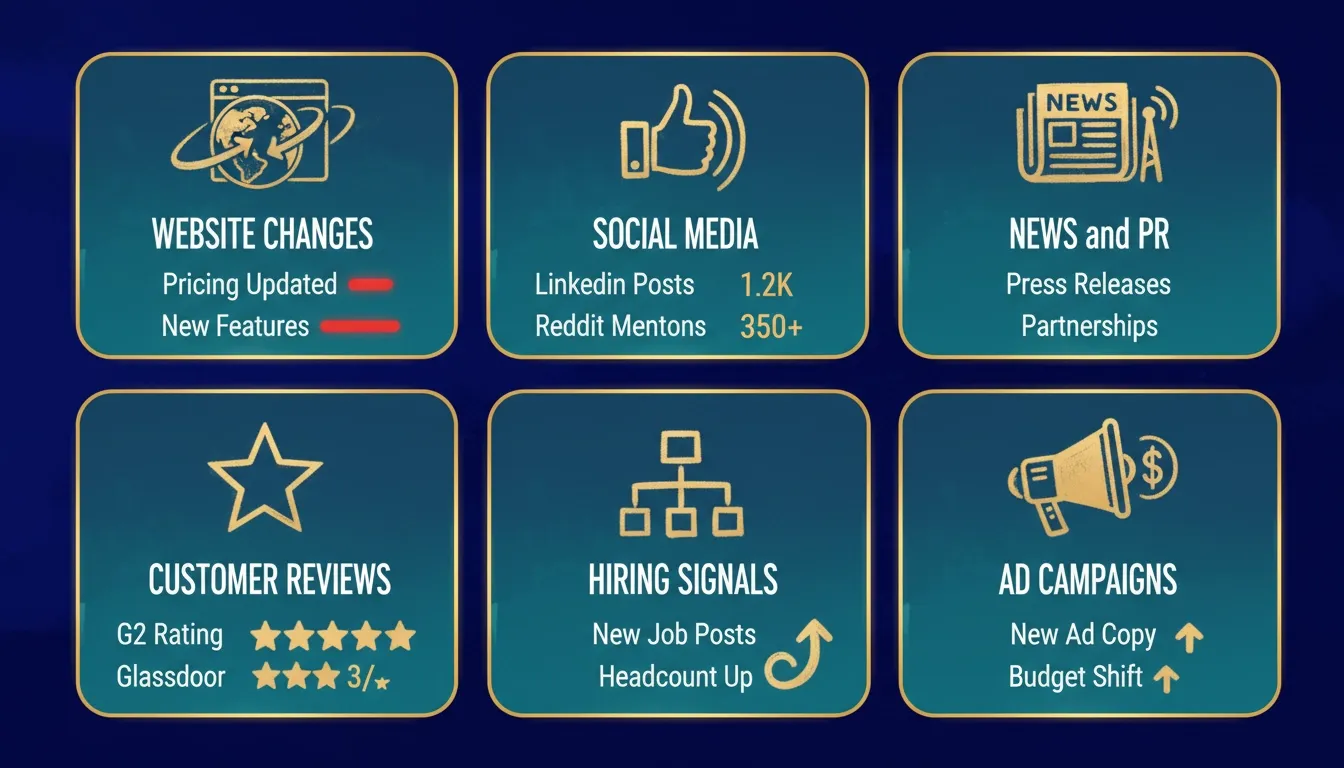 Rocket Intelligence monitors six signal categories continuously, including website, social, news, reviews, hiring, and ad campaigns, so your team never misses a competitor move
Where Manual Tracking Falls Short
Legacy CI tools build their workflows around human-managed programs. Someone maintains battlecards, routes findings, and schedules reviews.
-
Signals get missed because no one checked the competitor's pricing page that week
-
Insights reach sales teams too late for the deal already in progress
-
The intelligence function shrinks into a quarterly document that most people do not read
-
Rocket's Intelligence replaces that fragmented setup with one workspace, continuous monitoring across all six signal categories, and AI-powered interpretation built in
For a full breakdown of what the weekly digest contains, see the guide on what Rocket's weekly competitive intelligence digest includes.
If you are building a CI function from scratch after getting certified, the guide to building a competitive intelligence program walks through each stage.
Which CI Program Should You Start With?
New to the field? Beginner CI training courses on Coursera offer comprehensive course material at low cost, with no prior experience required. SCIP's CIPS program or Google's Business Intelligence certificate give you recognized certification and structured study material. Pick the level that matches your experience and commit.
Certification is a starting line. CI skills compound when applied in a regular intelligence strategy: gather, analyze, brief, act. The market does not pause between study sessions.
Table of contents
- -Why Get Certified in CI?
- -What Does CI Knowledge Actually Change at Work?
- -Who Should Pursue CI Certification?
- -What Do Most CI Programs Cover?
- -Notable Certifications and Courses
- -SCIP and the CIPS Program
- -Coursera: Competitive Intel, Trends and Data Sourcing
- -Google Business Intelligence Professional Certificate
- -Udemy and LinkedIn Learning for CI Basics
- -Free vs. Paid: Which Path Fits Your Goals?
- -What Paid Programs Include That Free Options Skip
- -How to Structure a Free Study Path
- -Free vs. Paid CI Learning at a Glance
- -How Do You Actually Apply CI Skills After Getting Certified?
- -Connecting Frameworks to Real Market Analysis
- -The Gap Between Theory and Ongoing CI Work
- -Putting Cert Knowledge to Work with Rocket
- -What Rocket Monitors Continuously
- -Where Manual Tracking Falls Short
- -Which CI Program Should You Start With?