
Competitive intelligence jobs sit at the intersection of data, strategy, and business impact. The average US salary is $100,058/year, senior roles reach $137,000+, and 16,000+ positions are active on LinkedIn. You need data skills, market research experience, and clear communication to break in.
Competitive intelligence professionals get paid to answer that question every day. The average CI analyst in the United States earns $100,058 a year, with top earners reaching $137,000 or more. More than 16,000 intelligence jobs are currently active on LinkedIn across industries and company sizes, and demand keeps climbing.
CI sits at the cross-section of data, marketing, analytics, and strategic research. It is one of the few fields where business strategy, data science, and communication all matter equally. These roles attract professionals who enjoy forming evidence-based views and building analysis that shapes real decisions.
This blog covers the top CI roles and titles, the skills and tools employers want, salary ranges by level and location, and how to break in.
Common CI Roles and Titles
CI work appears under many different titles across strategy, marketing, product, and sales teams. Knowing the full range of available roles helps you target the right position and set a clear direction for your career.
| Job Title | Primary Team | Core Focus |
|---|---|---|
| Competitive Intelligence Analyst | Strategy / Marketing | Research, analysis, competitive reporting |
| Market Intelligence Manager | Marketing / Business Development | Market trends, strategic research |
| Product Marketing Manager (CI focus) | Product Marketing | Sales enablement, positioning, battlecards |
| CI Director / Head of Compete | Leadership | Program ownership, training, consulting |
| Business Intelligence Analyst | Operations / Analytics | Internal data, analytics, dashboards |
| Sales Intelligence Specialist | Sales / Business Development | Win/loss analysis, deal-level intel |
-
Pharma teams track competitor pipelines and patient outcome data to stay ahead of regulatory and market shifts
-
In the crypto and payments sectors, intelligence jobs center on product launches, pricing changes, and competitor hiring signals
-
Businesses of all sizes are adding CI roles, from consulting firms and startups to major enterprises
-
The job often involves gathering feedback from sales and product teams to prioritize which competitive information drives the most value
Whether your background is in marketing, strategy, or data, there is a CI role that fits where you are today. The breadth of available positions means multiple entry points for professionals from diverse fields.
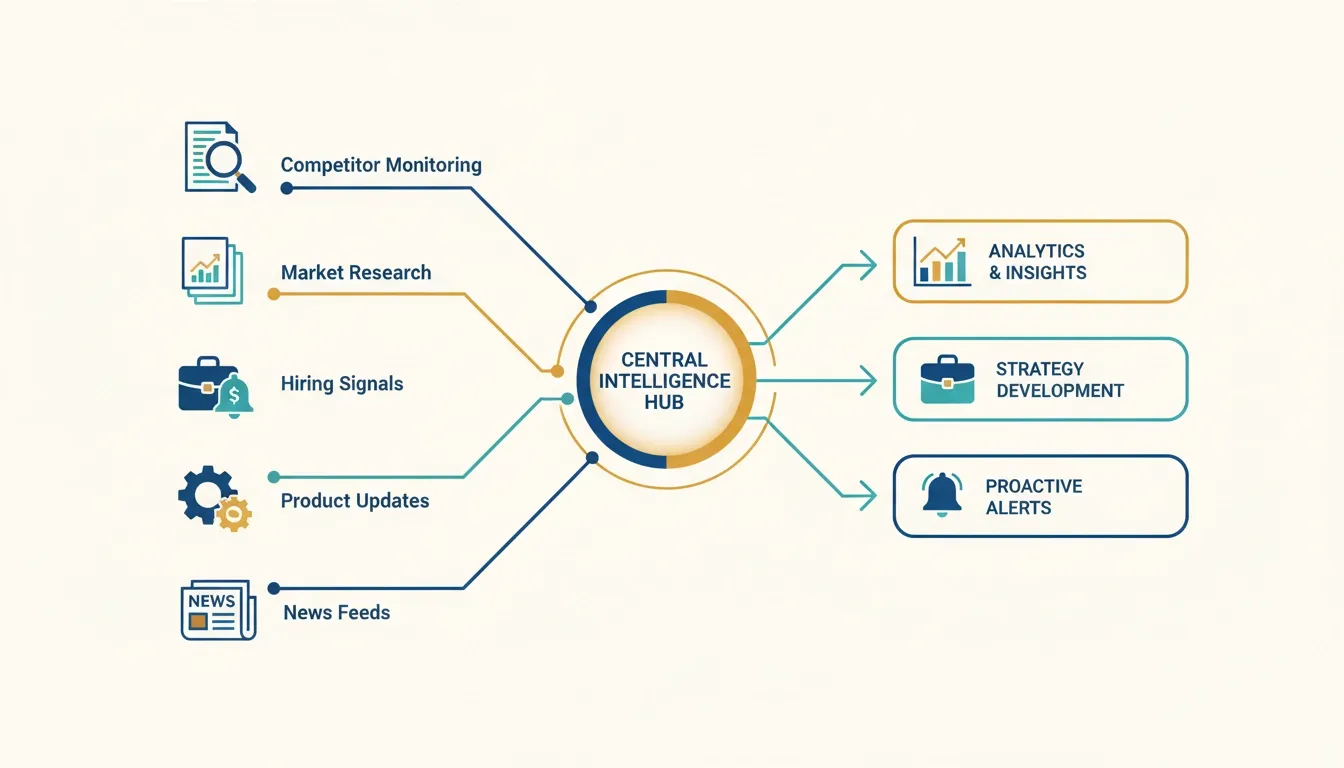 How modern CI teams connect competitor signals, market research, and strategic analysis into one continuous workflow.
What Skills Do CI Employers Actually Want?
Strong CI work combines analytical depth with confident communication. Employers consistently list a specific mix of hard skills and interpersonal abilities in job postings, regardless of company size or industry.
Analytical and Research Skills
Building quantitative capability is the foundation of most CI roles. These are the skills that get you through the door for analyst and senior analyst positions.
-
Data analysis and competitive market research: Hands-on experience with both primary and secondary research methods
-
Analytics platforms: Proficiency in Tableau, Power BI, or Google Looker Studio for reporting and visualization
-
Data science fundamentals: Familiarity with SQL is a strong plus for senior analyst jobs
-
Structured research reporting: The ability to create clear, well-organized competitive intelligence reports
-
Knowledge of competitive intelligence resources: G2, TrustRadius, Gartner, and industry-specific publications
Technical qualifications open the door, but depth in analytics and research reporting is what drives promotion.
Soft Skills That Set You Apart
Communication and collaboration skills separate analysts who produce reports from analysts who drive decisions. These are the abilities employers look for when filling CI manager and director roles.
-
Clear briefing and reporting skills: Presenting findings to leadership and cross-functional groups with confidence
-
Synthesis across multiple data sources: Turning fragmented signals into sharp, actionable insights for sales and product teams
-
Critical thinking: Framing competitive questions that are worth asking, not just questions that are easy to answer
-
Cross-team collaboration: Getting intelligence to marketing, product, and sales teams quickly and in useful formats
The professionals who advance fastest combine analytical precision with the ability to communicate what the data means for the business. Understanding competitive intelligence roadmap planning early in your career helps you align your skill-building with the strategic priorities that matter most to hiring managers.
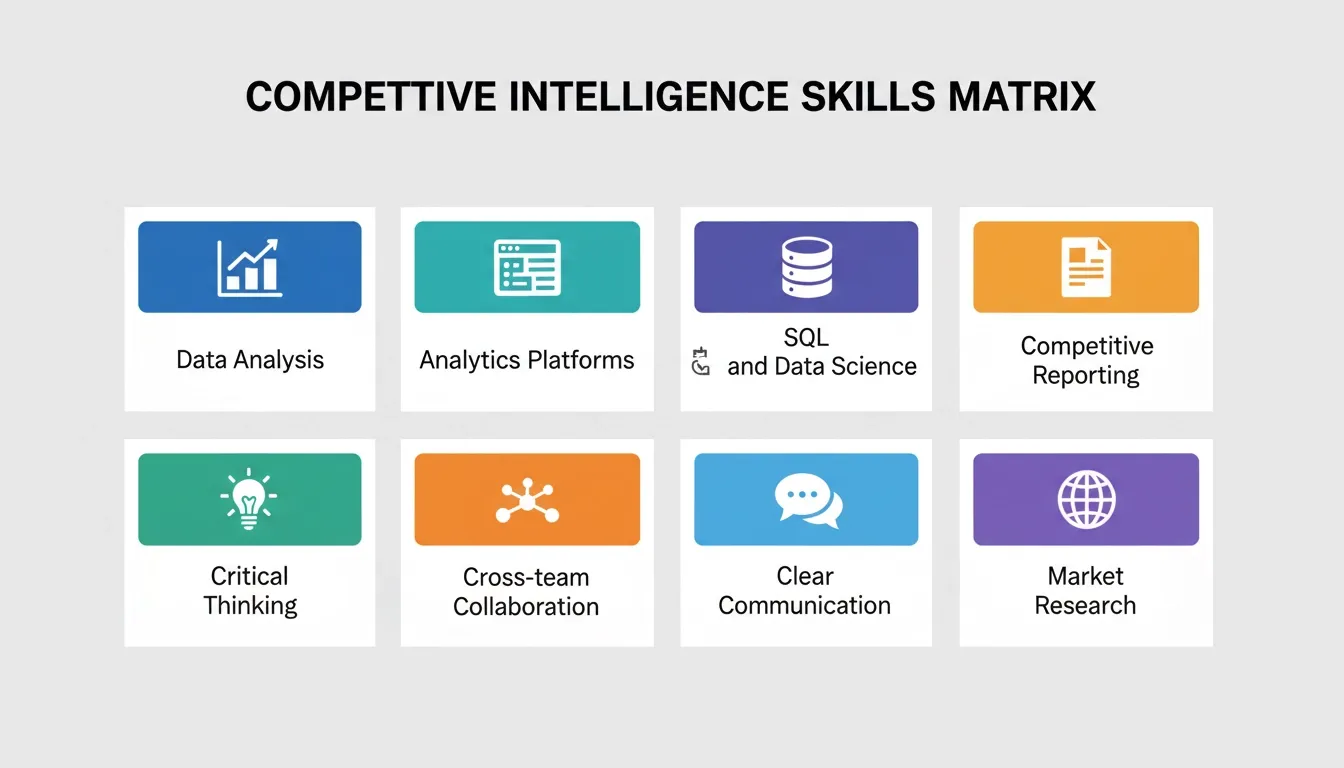 The eight core competencies that define standout CI professionals across analyst, manager, and director levels.
What Career Path and Salary Can You Expect?
The CI career ladder starts at the analyst level and moves through manager and director roles toward VP-level strategy positions. Setting clear career goals early shapes how fast you grow and which skills to prioritize.
-
Most CI professionals reach senior analyst or manager level within 3 to 5 years
-
Director-level jobs typically require 7 to 10 years of hands-on experience and a track record of commercial strategy wins
-
Ten years of experience at senior levels opens VP and Head of Strategy roles with significant leadership scope
-
Companies that invest in professional development and support career goals tend to retain their strongest intelligence staff
Each step up the CI ladder brings a meaningful salary increase and a broader role in shaping business strategy. The path is well-defined for those who build the right skills early.
How Does Salary Vary by Level and Location?
Location has a strong impact on pay for intelligence jobs. San Francisco and the Bay Area consistently rank as the top-paying markets for CI work in the United States.
| City | Average Annual Salary |
|---|---|
| South San Francisco, CA | $120,238 |
| Mountain View, CA | $118,037 |
| San Francisco, CA | $117,886 |
| National Average | $100,058 |
-
San Francisco and surrounding Bay Area cities push salaries well above the national average due to intense competition for senior talent
-
Most companies offer hybrid and remote arrangements, alongside benefits including parental leave, health coverage, and retirement plans
-
Salaries vary based on industry, company size, and the full scope of the role's responsibilities
-
When searching, use salary filters and saved searches to view new jobs as they are posted across your target cities and experience levels
The national average of $100,058 is a solid baseline, but top tech markets and senior positions push that number significantly higher.
Which Tools Do CI Professionals Actually Use?
A strong competitive intelligence toolkit covers monitoring, research, analytics, and sales support. Here is what shows up most in job postings and what practitioners rely on day to day.
| Category | Common Tools |
|---|---|
| Competitor monitoring | Crayon, Klue, Kompyte |
| Signal discovery | Google Alerts, SpyFu, SEMrush |
| Data and analytics | Tableau, Power BI, Excel |
| Social and news tracking | LinkedIn, Telegram channels, industry networks |
| Sales enablement | Salesforce, Gong |
| Research and reviews | G2, TrustRadius, Gartner |
-
Most tools solve one problem well but do not connect to each other. A CI analyst can spend hours stitching data from separate platforms to create a single competitive brief
-
Many professionals save time by setting up custom filters and automated alerts, but even the best manual setups leave real-time coverage gaps
-
Getting boots-on-the-ground intelligence and market insights to the right teams at the right moment remains a core challenge for most businesses
-
Many teams save competitive intelligence resources in shared knowledge bases, but curation is usually still a manual and time-consuming process
"Compete teams are building assets and gathering insights, but sales reps don't know what to use, when, or why." - Sheila Lahar, VP of Content Marketing at Crayon, 2025 State of Competitive Intelligence Report
The fragmentation problem is the biggest gap in most CI programs. Intelligence that never reaches the people who need it costs businesses millions in lost deals. Teams that invest in sales intelligence talking points backed by structured competitive data consistently outperform those relying on ad-hoc research.
How Rocket Fits a Modern CI Workflow
Rocket is built for CI teams that need continuous, connected intelligence without the manual work of stitching tools together. It covers monitoring, research, and decision support in one connected system, replacing the fragmented stack most CI professionals rely on today.
-
Follow any company on Rocket Intelligence and get live monitoring across nine signal types: pricing changes, hiring moves, product updates, website changes, social media activity, news, and more
-
Each signal is framed through your role and goals. A CI analyst sees not just what changed, but what it means for their specific commercial strategy and current set of priorities
-
Rocket Solve adds structured market research on demand. Describe a competitive question and get evidence-backed findings ready to present to leadership or act on directly
-
No fragmented dashboards, no manual curation. Rocket's shared context carries across monitoring, research, and decision-making in one place
-
CI professionals spend less time switching between separate tools and more time creating analysis that gives their teams the support they need to compete
Understanding what Rocket Intelligence is and how it works is a strong starting point for any CI team evaluating modern alternatives to fragmented tooling.
For teams focused on competitive intelligence in enterprise sales, Rocket's role-based signal delivery makes it especially powerful at the deal level.
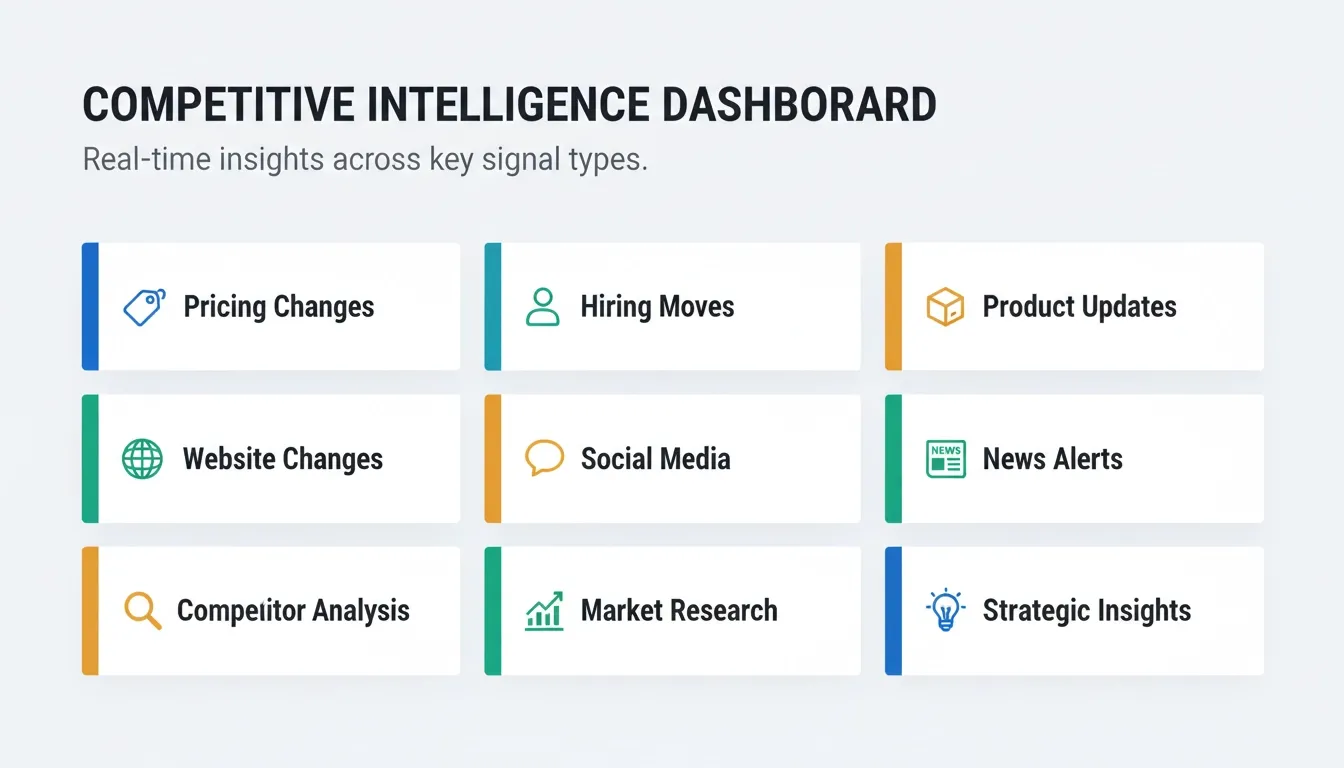 Rocket Intelligence delivers live competitor signals across nine categories, framed for each team's specific role and strategic priorities.
Building a Successful Competitive Intelligence Career
Competitive intelligence careers bring together research, strategy, and real business impact. These are ambitious roles for professionals with a drive to stay informed and help businesses compete in fast-paced markets. Whether you are seeking your first analyst role or building toward a leadership position, the demand for skilled, committed professionals keeps growing at companies around the world.
The field rewards people who stay curious, build strong networks, and keep up with new tools. The combination of analytical skill, business acumen, and communication ability is what defines a standout CI career.
Start free at Rocket.new. No credit card required. CI teams use Rocket to stay ahead of competitor moves, surface market shifts faster, and deliver intelligence that actually reaches the people who need it.
Table of contents
- -Common CI Roles and Titles
- -What Skills Do CI Employers Actually Want?
- -Analytical and Research Skills
- -Soft Skills That Set You Apart
- -What Career Path and Salary Can You Expect?
- -How Does Salary Vary by Level and Location?
- -Which Tools Do CI Professionals Actually Use?
- -How Rocket Fits a Modern CI Workflow
- -Building a Successful Competitive Intelligence Career