Build a hiring workspace for executive recruiters that replaces weekly email updates with live candidate tracking, structured client portals, and stage-level visibility, without a development team.
Retained search clients pay upfront and then wait. They do not know how many candidates have been sourced, who is being assessed, or where the search stands. The recruiter is not being negligent. The process simply has no structure that makes progress visible as it happens.
This blog covers what real-time means in a search context, which updates clients need, and how to build a shared portal that keeps everyone aligned.
Why Do Retainer Clients Stop Trusting the Process?
Trust erodes gradually in executive search. It rarely starts with a bad hire. It starts with silence.
-
A client pays a $50,000 retainer and receives the first status update five to seven days later. By that point, they have already started wondering if the recruiter is focused on their search.
-
Email updates take an hour to compile because data lives in multiple places. One ATS holds candidate records. Interview notes sit in email threads. Feedback lives in Slack or text messages.
-
Recruiters managing five or more active searches cannot write detailed reports for every client every week. Something gets deprioritized, and the client notices.
-
The real problem is not poor communication. It is the absence of a system that makes progress visible without requiring someone to manually assemble and send it. Teams that move to a live hiring dashboard for executive search teams give clients a self-service view that answers the "where are we?" question before it gets asked.
When clients stop trusting the process, they start micromanaging it. That costs the recruiter more time than any dashboard ever would.
What Does Real-Time Visibility Actually Mean in a Search?
Real-time does not mean instant. In executive search, it means the client can check the current state of their search at any point and find accurate information without asking for it.
-
A traditional update model works on a push schedule. The recruiter decides when to send a report, what to include, and how much detail to provide. The client waits.
-
A real-time model works on a pull basis. The client opens a portal and sees exactly which candidates are in the pipeline, what stage each one is at, and what happened most recently.
-
According to Zippia's 2026 recruitment data, the average position takes 42 days to fill. During that window, 75% of recruiters report candidates changing their minds before a decision is made. A client who cannot see the pipeline does not know which candidates are at risk until it is too late.
-
The difference is structural, not cosmetic. Push updates summarize the past. Pull-based visibility reflects the present.
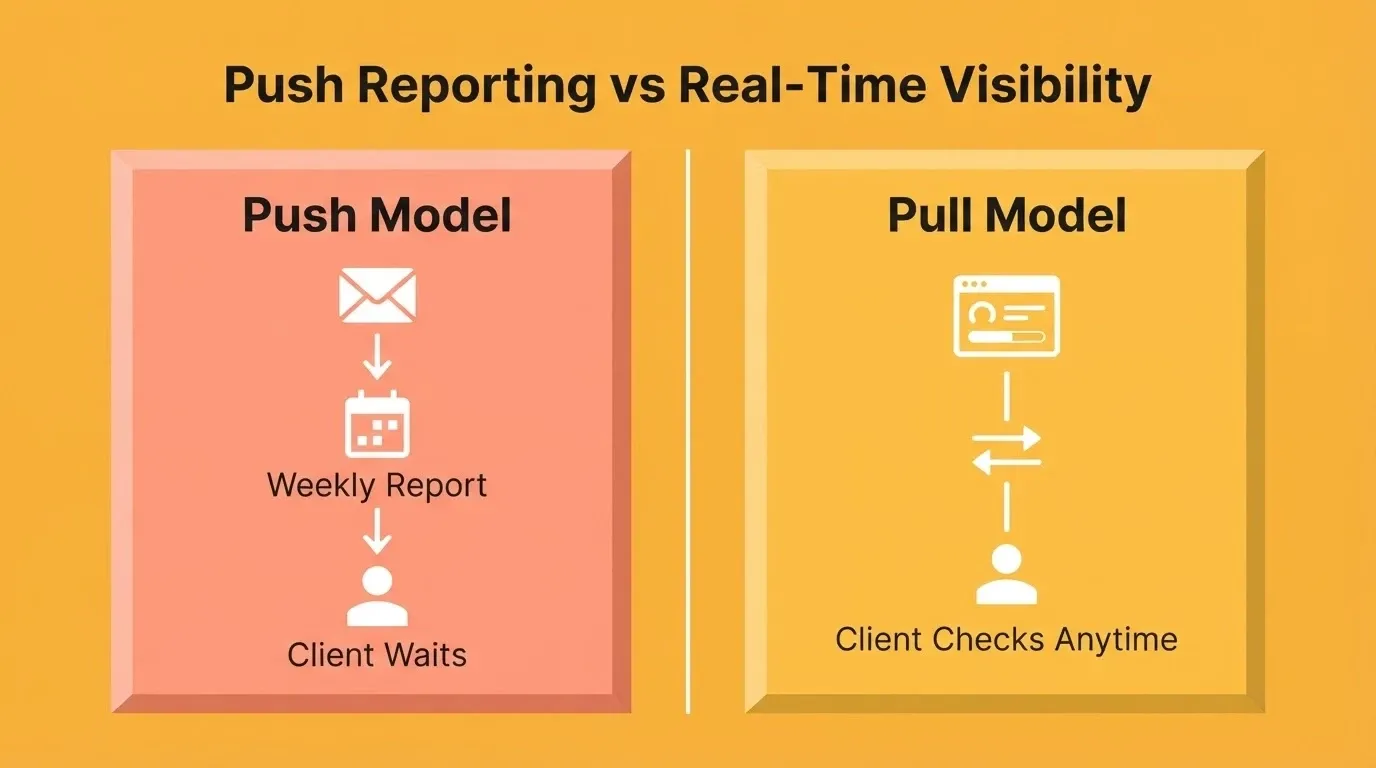
A client who can check search status independently asks fewer questions, makes faster decisions, and stays confident in the engagement.
Which Search Updates Do Clients Want to See and When?
Not every data point matters to every client. The right updates at the right time keep clients informed without overwhelming them.
| Search Stage | What Clients Want to See | When They Want It |
|---|---|---|
| Sourcing | Number of candidates identified, target companies contacted | Weekly or on-demand |
| Screening | Shortlist progress, preliminary assessments | As candidates are qualified |
| Client Presentation | Candidate profiles, recruiter notes, fit scoring | When shortlist is ready |
| Interview | Interview schedule, feedback summaries | After each round |
| Offer | Compensation discussions, competing offer awareness | In real time |
| Placement | Acceptance confirmation, onboarding next steps | Same day |
-
The most common client complaint is not "too little information." It is "information that arrives too late to act on." A candidate who received a competing offer three days ago is a different conversation than one who received it this morning.
-
Firms replacing scattered spreadsheets with a centralized candidate review system see faster client response times and fewer status-check emails.
-
Different stakeholders need different views. The hiring manager wants candidate details. The CHRO wants timeline progress. The board sponsor wants a one-line status. Role-based access handles all three without separate reports.
When clients can see what they need on their own schedule, the recruiter's phone stops ringing for updates and starts ringing for decisions.
How Do Live Status Updates Replace Weekly Calls?
The weekly status call is a ritual, not a requirement. It exists because there was no better way to share information. That has changed.
-
A 30-minute weekly call with each client consumes 2.5 hours per week for a recruiter managing five searches. That is 10 hours a month spent describing work instead of doing it.
-
According to noon.ai's 2026 benchmarking data, median time-to-fill for executive roles sits at 45 days, and the average hiring process now runs 13 interviews per hire. With that volume of activity, a weekly snapshot is outdated by the time it reaches the client.
-
Live status updates shift the model from scheduled reporting to continuous transparency. The client sees candidate movement through stages as it happens. The recruiter updates the system once, and every stakeholder who needs that information already has it.
-
The call does not disappear entirely. It shifts from "here is what happened this week" to "here is what we should decide next." That is a better use of everyone's time.
As Kathleen Duffy, President and CEO of Duffy Group, noted in Hunt Scanlon's 2026 rankings report:
"Traditional executive search was built for a more stable business environment. It does many things well, particularly identifying leaders with strong credentials. But where it increasingly struggles is in predicting whether those past successes will translate into leadership success in a very different context."
The same logic applies to reporting. Traditional status updates were built for a slower search cycle. Today's pace demands a different approach.
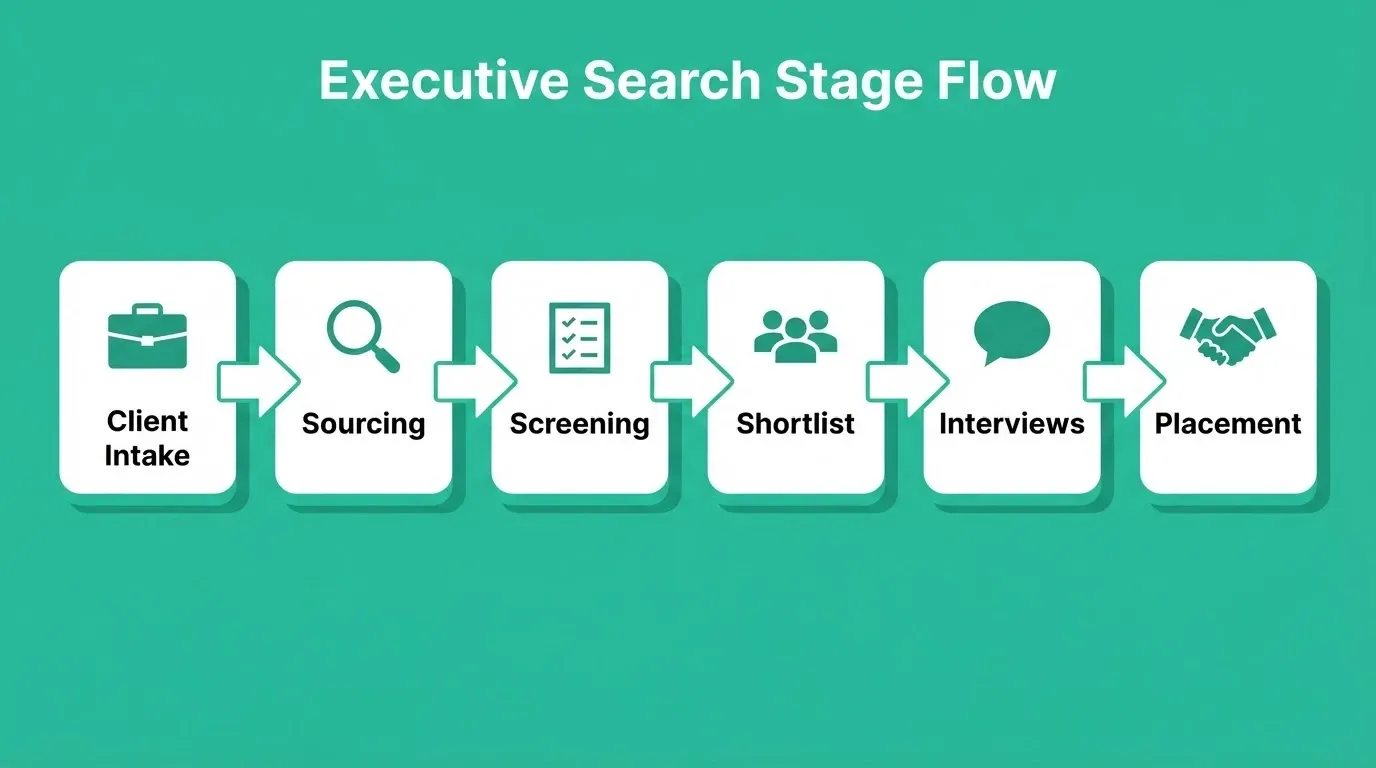
The recruiter who replaces weekly calls with live visibility does not lose control. They gain credibility.
Building the Right Workflow Into a Recruitment Dashboard
A recruitment dashboard is only as good as the workflow it reflects. For executive search, that workflow runs from client intake through final placement.
-
Each stage needs both an internal view and a client view. The recruiter sees sourcing metrics and evaluator notes. The client sees candidate profiles and stage progress.
-
Most ATS platforms are built for the recruiter's workflow, not the client's. Adding a client-facing portal on top is either expensive or not possible.
-
The firms that own their workflow, rather than renting a generic one, move faster and adapt to each client's process.
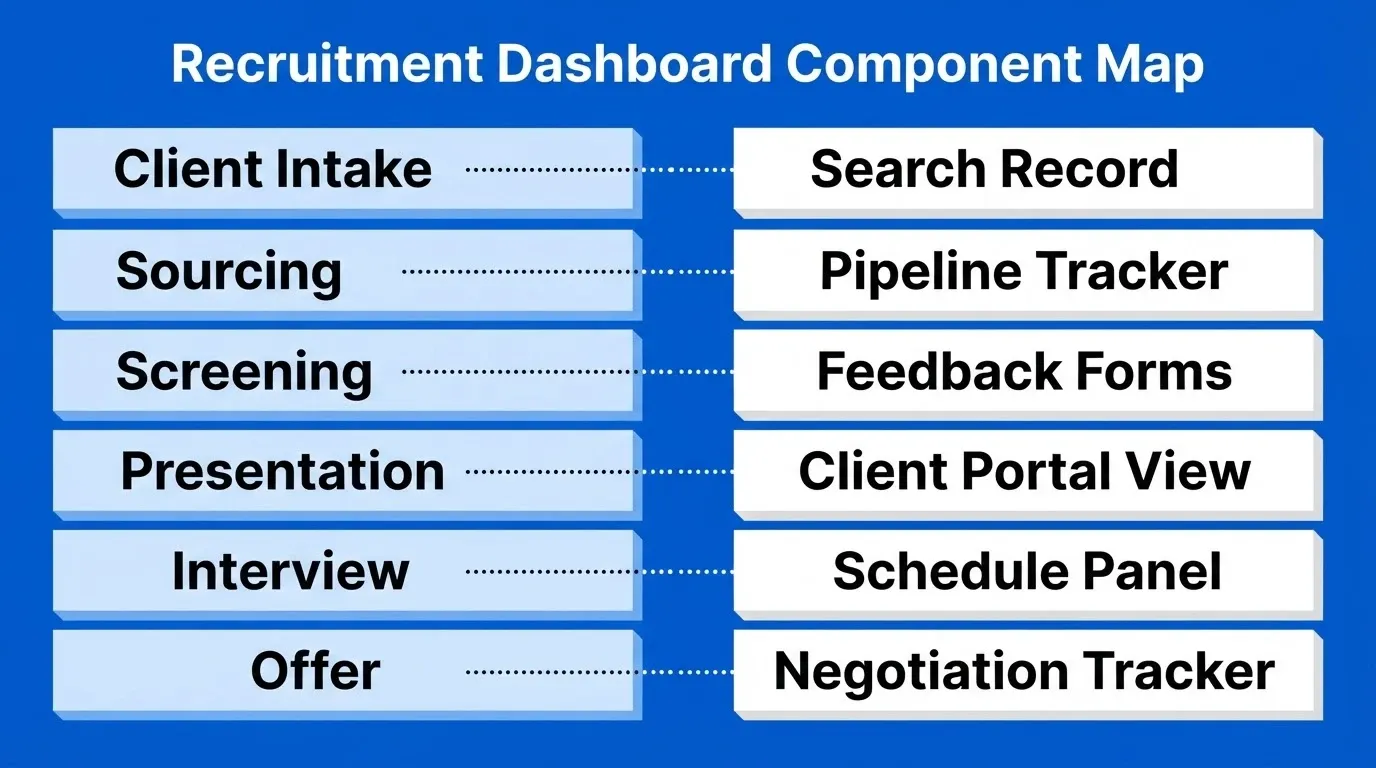
| Stage | Dashboard Component | What It Captures |
|---|---|---|
| Client Intake | Search Record | Role profile, success criteria, compensation, timeline |
| Sourcing | Pipeline Tracker | Candidates contacted, in conversation, qualified |
| Screening | Feedback Forms | Evaluator scores, notes against defined criteria |
| Presentation | Client Portal View | Shortlisted profiles with decision-capture buttons |
| Interview | Schedule Panel | Round tracking, interviewer notes, client reactions |
| Offer | Negotiation Tracker | Offer status, competing offers, expected close date |
The right recruitment dashboard does not just display data. It enforces the workflow that produces good search outcomes.
Common Mistakes Search Firms Make When Building Client Portals
Most first attempts at a client-facing search portal fail for the same reasons. Knowing them in advance saves months of iteration.
Mistake 1: Building the recruiter's view, not the client's view. The most common error is designing the portal around internal workflow and then granting clients read access to it. Clients need a clean view of candidates, stages, and decisions, not sourcing notes or internal evaluations. Build two separate views from the start.
Mistake 2: Requiring clients to log in to an unfamiliar tool. A portal that requires a new account on an unbranded platform creates friction before the client sees a single candidate. Use a custom domain that reflects your firm's identity. The client should feel they are accessing your system.
Mistake 3: Treating the portal as a reporting tool instead of a decision tool. A portal that only shows information is a better email. One that captures decisions such as advance, decline, and hold creates a feedback loop that accelerates the search. Build decision capture into every candidate view from day one.
Mistake 4: Not defining role-based access before building. The CHRO, the hiring manager, and the board sponsor all need different information. Defining who sees what after the portal is built requires rebuilding significant parts of it. Map stakeholder access before the first prompt.
Mistake 5: Launching without a mobile-accessible version. Executive clients review candidates from airports, hotel lobbies, and board rooms. A portal that only works well on desktop will be ignored. Ensure the portal is fully responsive or generate a companion mobile app alongside the web version.
How to Build a Hiring Workspace for Executive Recruiters
Describe your executive search workflow in plain language, including the stages, the stakeholder views, and the feedback forms. Rocket's Build then generates a production-ready web application in Next.js. The output is a working, deployable portal, not a wireframe.
You can build a client portal with AI that includes candidate pipeline views, interview feedback panels, decision capture, and role-based access, all in a single session. Every build ships with WCAG 2.1 AA accessibility compliance, GDPR coverage, and SEO-ready structure as defaults, not add-ons.
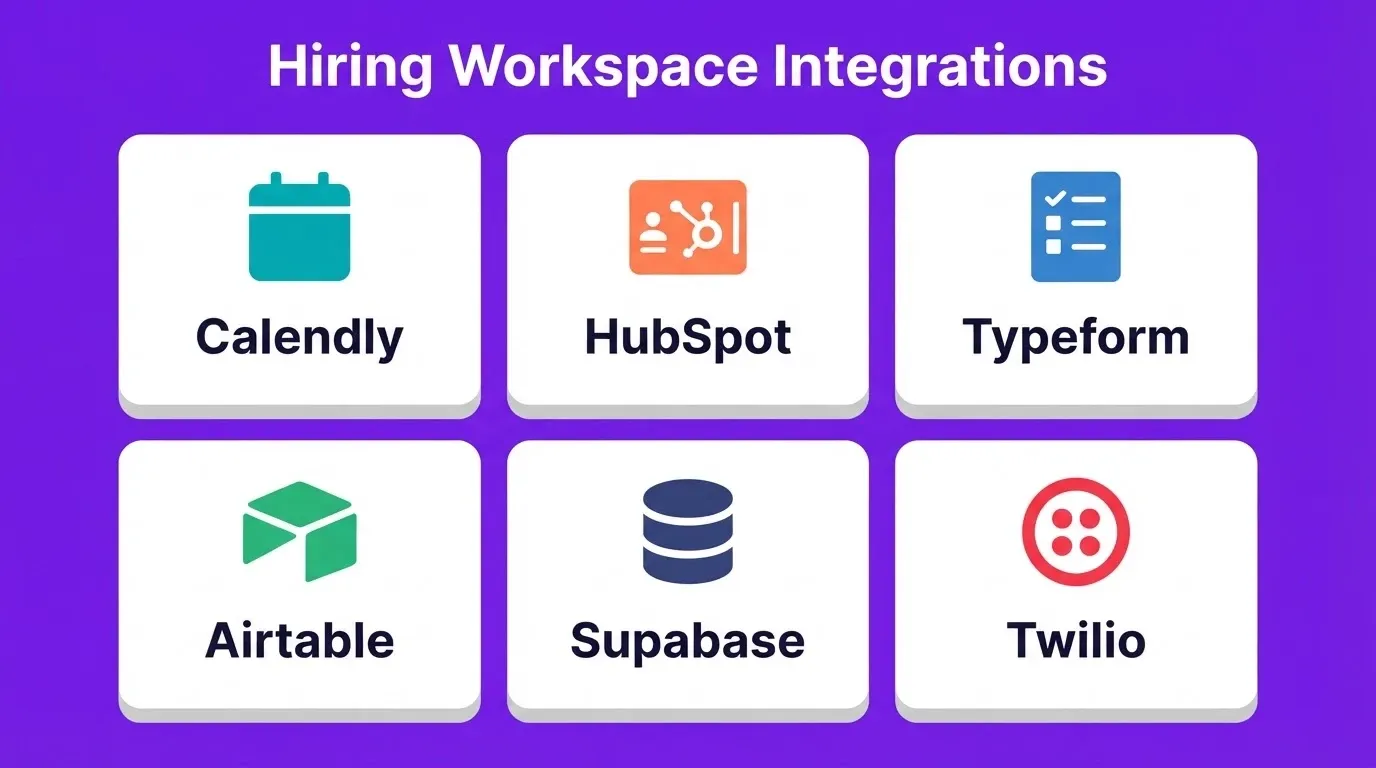
Integrations that connect directly into the build:
-
Calendly: Embed interview scheduling so clients book directly from the portal.
-
HubSpot: Sync client relationship data and track engagement history.
-
Typeform or Tally: Add structured feedback forms for interviewers and clients.
-
Airtable: Connect your existing candidate database as the data layer.
-
Supabase: Get a full backend with Postgres database, authentication, and row-level security.
-
Twilio: Send SMS alerts when a candidate advances or a decision is needed.
Authenticate each integration once. It flows into every build and every future iteration.
If your firm already tracks candidates in Airtable or Notion, use Rocket's Launchpad feature to start the build directly from that data source. Rocket reads the existing schema and generates a portal that reflects your actual workflow, not a blank-slate template.
After you ship:
-
Deploy to a live URL with one action. Staging and production environments are included.
-
Access full version history and one-click rollback at any time.
-
Track visitors, conversions, and Core Web Vitals with built-in analytics.
-
Connect your custom domain in one step, with automatic HTTPS.
The competitive advantage in executive search comes from relationships and judgment. Rocket removes the operational friction that gets in the way of both.
What Metrics Should Your Search Dashboard Track?
A dashboard without the right numbers is just a screen. These are the metrics that connect daily search activity to client outcomes.
-
The metrics you track should match your firm's model. Retained search firms prioritize fill rate and time-to-fill. Contingency firms focus on pipeline depth and response rates.
-
Tracking days-in-stage is the single most actionable metric for preventing candidate disengagement. A candidate sitting in one stage for more than seven days is a risk that should trigger an alert, not a report.
-
Connecting these numbers to client-facing views is where the dashboard earns its value. Clients who see pipeline velocity and fill-rate trends develop confidence in the process without needing a verbal explanation.
| Metric | What It Measures | Target Benchmark |
|---|---|---|
| Time-to-Fill | Days from search kickoff to accepted offer | Under 45 days for executive roles |
| Pipeline Depth | Qualified candidates per active search | 8 to 12 at shortlist stage |
| Client Response Time | Days between candidate presentation and feedback | Under 3 business days |
| Interview-to-Offer Ratio | Interviews needed to reach an offer | 4:1 or better |
| Fill Rate | Percentage of searches resulting in placement | Above 70% for retained searches |
| Candidate Drop-Off Rate | Percentage exiting the process | Below 20% at interview stage |
| Days-in-Stage | Time candidates sit at each stage | Flag anything over 7 days |
| Portal Engagement Rate | Percentage of clients actively using the portal | Track as adoption baseline |
Good metrics do not just measure activity. They predict outcomes early enough to change them.
The Firms That Win Retain Clients, Not Just Candidates
The executive search market grew 11% last year, and 94% of firms expect continued growth in 2026. That growth creates a paradox. More searches running at once means less time per client, and less time per client means more risk that the relationship erodes.
Firms that give clients a live view of their search protect that relationship at scale. The technology to build a secure client workspace exists today. It no longer takes months of development or a six-figure budget. The firms that act on this now will turn operational visibility into a retention advantage that compounds over time.
Build the Hiring Workspace Your Clients Expect
A hiring workspace for executive recruiters is no longer a differentiator. It is becoming the baseline. Clients who have experienced real-time search visibility will not accept weekly email updates from the next firm they hire. Describe your search workflow, generate a client-facing portal, and deploy the same day. Start building on Rocket.new and give your retained clients the transparency that turns a single engagement into a long-term relationship.
Table of contents
- -Why Do Retainer Clients Stop Trusting the Process?
- -What Does Real-Time Visibility Actually Mean in a Search?
- -Which Search Updates Do Clients Want to See and When?
- -How Do Live Status Updates Replace Weekly Calls?
- -Building the Right Workflow Into a Recruitment Dashboard
- -Common Mistakes Search Firms Make When Building Client Portals
- -How to Build a Hiring Workspace for Executive Recruiters
- -What Metrics Should Your Search Dashboard Track?
- -The Firms That Win Retain Clients, Not Just Candidates
- -Build the Hiring Workspace Your Clients Expect