
Scattered client feedback costs agencies thousands every month. A centralized Feedback Center for Agency Clients with structured fields, version-linked comments, and approval tracking turns revision chaos into a controlled, billable process.
How much does scattered client feedback cost your agency every month?
According to PMI's 2024 data, 52% of all projects experience scope creep with an average 27% cost overrun. The root cause is not bad clients or poor project management. It is feedback that lives in five different places at once.
One client annotates a PDF. Another drops comments in a thread while someone's assistant emails a list of changes. By the time your creative team has a consolidated brief, a revision has been missed, two conflicting approvals have landed, and the project timeline has quietly expanded by a week.
This blog walks through what a centralized feedback system looks like in practice. It also covers why structured input fields and approval workflows matter for web design projects, and how to build a branded portal your agency controls from day one.
Why Does Fragmented Feedback Drain Agency Margins?
The problem is not that clients give bad feedback. Instead, feedback arrives through too many channels with too little structure. Nobody ends up with a single source of truth.
The Real Cost of Scattered Input and Vague Emails
Every agency knows the pattern. A client sends vague emails with screenshots attached to a PDF. Your designer interprets the request one way while the developer reads it differently. Then the account lead spends two hours on a call just to clarify what the client actually wanted.
-
57% of agencies lose between $1,000 and $5,000 per month to unbilled scope creep, and feedback chaos is the starting point
-
Only 1% of agencies successfully bill for all out-of-scope work, meaning 99% absorb the cost
-
The average web development project runs 27% over budget once scope starts shifting
-
Teams spend hours each week chasing down scattered notes, voice messages, and email threads instead of doing creative work
This is not just a frustration. It is a margin killer that compounds with every project and every client on your roster. In fact, building an approval and billing portal for agencies that connects feedback directly to invoicing is one of the most practical first steps a growing agency can take.
How Conflicting Opinions Stall Web Design Projects
Things get worse when multiple stakeholders provide feedback at the same time. Without a shared view of what has already been said, the marketing director approves a layout while the CEO asks for a complete redesign in a separate email. Your team has conflicting opinions to reconcile and no record of who said what.
-
Without a centralized comment thread, team members repeat work that was already approved
-
Revision rounds multiply when there is no clear record of which version received which feedback
-
Each round of back-and-forth delays development timelines and pushes launch dates further out
-
Trust erodes on both sides when clients feel unheard, and agencies feel stuck in loops
The mess starts with the feedback process itself. Fix how clients provide feedback, and you fix the revision cycle.
What Makes a Client Feedback Tool Worth Using?
Not every feedback tool is worth the setup. The right client feedback tool makes the difference between organized collaboration and another software license gathering dust.
Key Features That Separate the Right Tool from Overkill
The tools that actually work for web development agencies share a few common traits. Here is what to look for before you commit to any feedback tool for your projects.
| Feature | Why It Matters | What to Avoid |
|---|---|---|
| Feedback stays tied to the exact design or build version it references | Tools where comments float without context | |
| Clear sign-off per section, per stakeholder | Systems that rely on informal thumbs-up in chat | |
| Clients access everything from a single link | Scattered logins across multiple tools | |
| Dropdown menus for priority, type, and category | Open-ended text boxes with no categorization | |
| Each stakeholder sees only what they need | Full access for everyone, creating confusion | |
| Browser info, screen size, and OS captured behind the scenes | Tools that require clients to manually report technical details |
The trick is finding client feedback tools that are helpful without being complex. If non-technical clients cannot figure out how to leave feedback in under a minute, the tool is overkill.
How Non-Technical Clients Should Be Able to Leave Comments
A feedback tool lives or dies by whether the people using it actually use it. For most agency clients, that means the interface needs to be intuitive and require no training at all.
-
Clients should click a link, see the latest version of their project, and leave comments directly on the element they want changed
-
The tool should collect feedback without asking clients to create an account or learn new software
-
Visual feedback tools let users click on a specific part of a webpage and drop a note right there, giving designers pinpoint context
-
A user-friendly experience for non-technical clients means fewer follow-up questions and faster turnaround for your team
When clients can provide structured feedback without being tech savvy, the entire review process speeds up. Building a client portal with AI is one way agencies are solving this problem today.
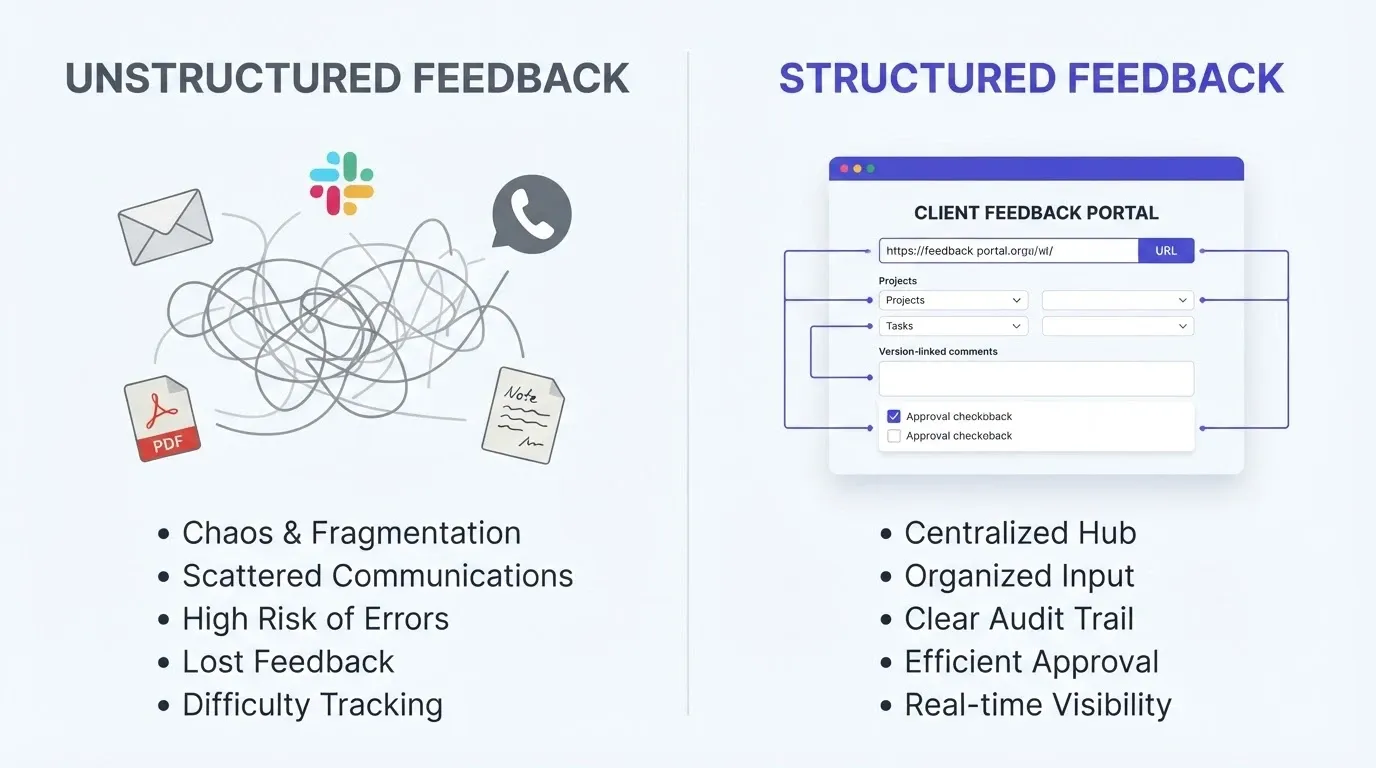
Which Feedback Process Cuts Revision Rounds the Fastest?
Revision rounds are where agency profits go to die. The agencies that have figured this out share one thing in common: they formalize the feedback loop instead of leaving it to email and hope.
Visual Feedback Tools vs. Written Requests
Written feedback is almost always ambiguous. "Move the logo up a bit" means something different to every person in the conversation. Visual feedback tools solve this by letting users click directly on the live webpage and leave comments tied to specific coordinates.
-
Visual feedback tools give designers screenshots with markup and annotation, cutting interpretation time significantly
-
Clients can draw on a screen, highlight elements, and add notes without writing a long paragraph
-
Bug tracking becomes simpler because every reported issue includes the URL, browser, screen size, and element in question
-
Written requests still have their place for broader strategy feedback, but for web design and development changes, visual tools win every time
According to Function Point's 2025 Industry Trends Report, 79% of creative agencies routinely work past their agreed scope for free. Design work was the most over-serviced offering at 24%, followed by web development at 17%. A tighter feedback process with visual tools would prevent a significant share of those unpaid hours.
Why Approval Checkboxes and Version-Linked Comments Matter
The other half of the equation is tracking what has been approved and what has not. Without a clear approval system, agencies end up redoing work that was already signed off.
-
Version-linked comments make it clear which design iteration a comment refers to, so feedback from round one does not bleed into round three
-
Approval checkboxes create a record of who signed off on what, protecting both the agency and the client
-
This is especially helpful for website projects with multiple stakeholders, where one person's approval can contradict another's notes
-
A clear feedback loop with documented approvals reduces the average number of revision rounds from five to two
As one agency owner noted on Reddit's r/webdev community: "We cut our revision rounds in half just by adding a simple approve/reject button to each section. Clients stopped giving feedback on things they had already signed off on."
How Do Top Agencies Structure Their Feedback Loop?
The agencies that run the smoothest feedback workflows do not rely on a single tool. Instead, they build a system that connects feedback collection, task management, and delivery into one continuous loop.
A Practical Feedback Collection Workflow for Web Development Agencies
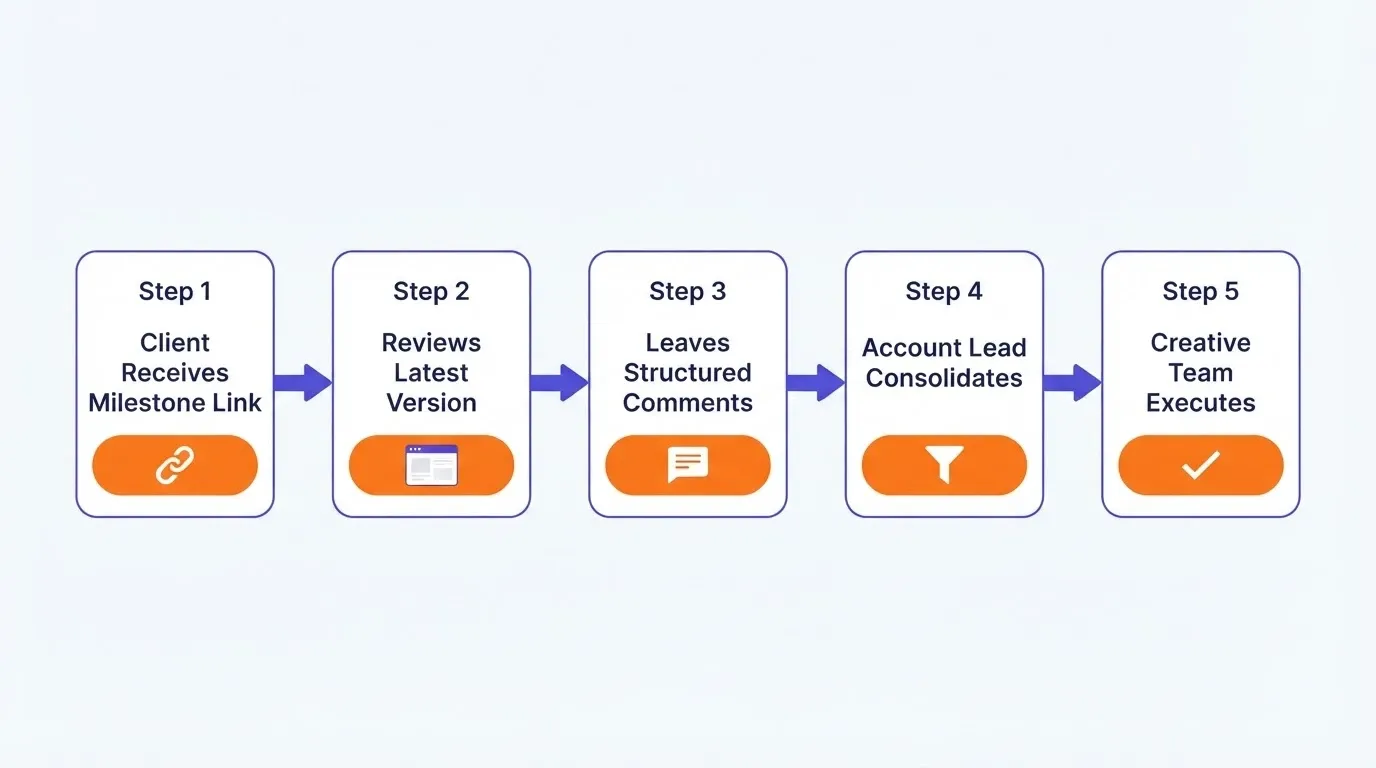
Here is what a well-structured feedback loop looks like from start to finish. The flow below shows how client input moves from initial collection to final approval without getting lost in translation.
Agency feedback workflow: from client review through structured comments to final approval.
The key to this workflow is that feedback never leaves the portal. Clients are not sending follow-up emails or dropping notes in separate threads. Everything lives in one place with a clear audit trail.
-
Each project milestone triggers an automatic notification asking the client to review and leave feedback
-
The account lead acts as a gatekeeper, filtering conflicting opinions before work begins
-
A Kanban board tracks each feedback item from submitted to in-progress to completed
-
Clients can track the status of their requests in real time, reducing check-in calls
-
The agency retains a complete record of every comment, approval, and revision for the life of the project
Teams that build a collaboration platform for modern workflows find that this kind of structured feedback system fits naturally into their existing project setup.
What Should You Look for When Choosing Client Feedback Tools?
With dozens of client feedback tools on the market, choosing the right one requires honest evaluation against your agency's actual needs, not a feature checklist from a vendor's marketing page.
Bug Tracking and Annotation Features Worth Considering
Bug tracking is where feedback tools earn their keep in web development. The best client feedback tools capture automatic technical metadata, like browser type, screen resolution, and operating system, without asking the client to do anything.
-
Good bug tracking tools let clients click on a live webpage, leave a comment, and automatically attach a screenshot with the element highlighted
-
Annotation features save hours of back-and-forth by showing exactly what needs to change
-
Sentiment analysis on collected feedback helps agency leads spot patterns, such as which areas consistently frustrate clients
-
CES surveys (Customer Effort Score) embedded after feedback rounds can measure how easy or hard clients find the feedback process itself
-
Advanced features like video recording and session replay give developers a complete picture of what the client experienced
Connector Features That Save Time for Small Teams
For small teams and freelancers, a feedback tool that does not connect with existing workflows is a real headache. Look for tools with connector features that sync with Jira, Asana, GitHub, or your project management software.
-
Tools that push feedback directly into your task management system eliminate the need to manually copy notes between platforms
-
The right tool should fit your team's existing stack, not force you to rebuild your workflow around it
-
Consider whether the tool supports continuous improvement by offering reporting and trend data on feedback patterns over time
-
The overall partnership between your agency and your clients improves when the tool is easy for everyone to use
The goal is not to find a perfect tool. It is to find one that removes friction and keeps feedback organized without creating another to-do item for your team. Agencies already using AI prompts for building client work are shipping custom feedback tools tailored to their exact workflows.
Build a Branded Feedback Portal Your Agency Controls
Most off-the-shelf feedback tools give you their brand, their interface, and their limitations. Your agency could instead build its own client-facing feedback portal, branded to your business, with exactly the fields and workflows you need.
That is where Rocket makes a real difference.
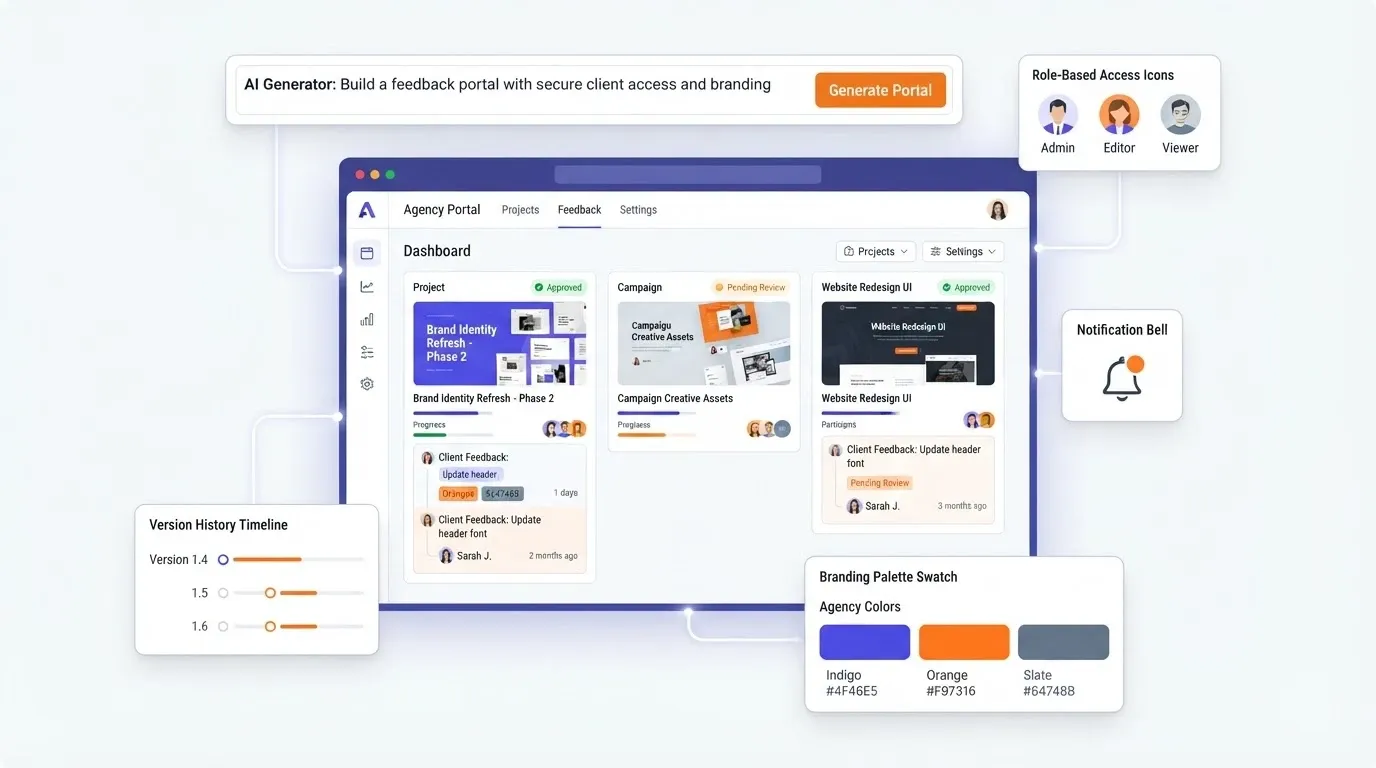
You describe what you want in plain language. Rocket then generates a working web application, complete with client login, project dashboards, inline commenting, approval workflows, and version history. No code required, no developer bottleneck, and no monthly subscription to a tool that only does half of what you need.
Here is what Rocket brings to the table for agencies:
-
App generation from a text prompt, so you can go from an idea to a working feedback portal in hours
-
Three-level role-based access with Admin, Creator, and Viewer roles, letting you decide which clients see which projects and which team members can edit versus review
-
Built-in collaboration features with inline comments that live next to the work itself, not in a separate thread
-
Version history and one-click rollback so you never lose a previous design state when feedback changes direction
-
Custom branding, notification settings, and workflow automation, all managed from one workspace
-
Website and app deployment with built-in analytics to track how clients interact with the portal after launch
-
25+ connectors, including Notion, Airtable, Stripe, and Linear, so the portal fits into your existing service delivery stack
None of the off-the-shelf options let you build a complete, branded feedback portal where clients log in, review work, leave structured comments, approve deliverables, and track timelines in one place. With Rocket, agencies ship tools like these in a weekend.
The Feedback Center for Agency Clients Is a Competitive Advantage
A structured Feedback Center for Agency Clients is not a nice-to-have. As client expectations rise and project complexity grows, agencies that control their feedback process will consistently outperform those that do not.
The shift from fragmented to structured feedback changes three things: revision rounds drop, margins hold, and client trust compounds over time. The agencies building this infrastructure now are the ones that will scale without proportionally scaling their headaches.
As AI-assisted workflows become standard across the industry, the agencies that own their client-facing tools will have a structural advantage that is difficult to replicate. Build the portal your clients deserve, and your team can actually manage. Rocket lets you describe it, generate it, and ship it, without writing a line of code. Start building today.
Table of contents
- -Why Does Fragmented Feedback Drain Agency Margins?
- -The Real Cost of Scattered Input and Vague Emails
- -How Conflicting Opinions Stall Web Design Projects
- -What Makes a Client Feedback Tool Worth Using?
- -Key Features That Separate the Right Tool from Overkill
- -How Non-Technical Clients Should Be Able to Leave Comments
- -Which Feedback Process Cuts Revision Rounds the Fastest?
- -Visual Feedback Tools vs. Written Requests
- -Why Approval Checkboxes and Version-Linked Comments Matter
- -How Do Top Agencies Structure Their Feedback Loop?
- -A Practical Feedback Collection Workflow for Web Development Agencies
- -What Should You Look for When Choosing Client Feedback Tools?
- -Bug Tracking and Annotation Features Worth Considering
- -Connector Features That Save Time for Small Teams
- -Build a Branded Feedback Portal Your Agency Controls
- -The Feedback Center for Agency Clients Is a Competitive Advantage