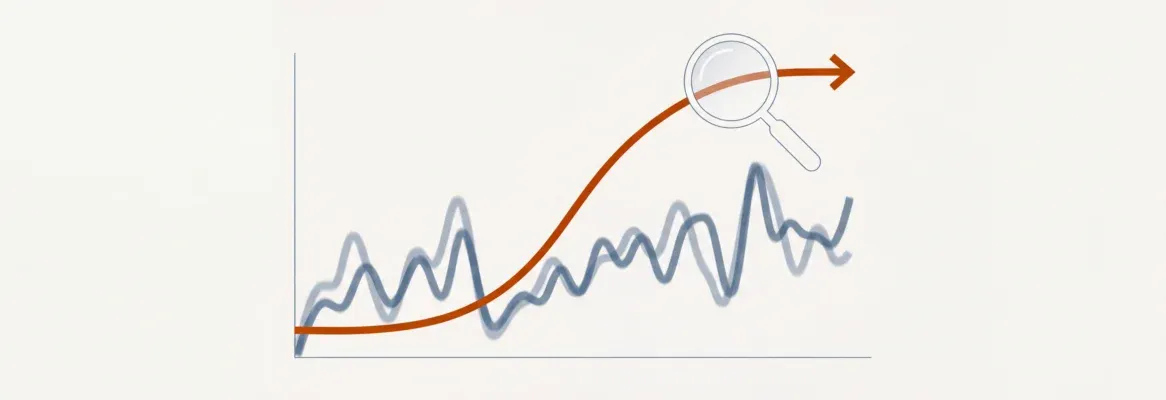
Rocket.new Intelligence separates competitor noise from real moves by monitoring signals across pricing, hiring, reviews, and social media, then connecting patterns that reveal intent. Teams using AI competitive intelligence tools stay ahead of rivals before moves land.
When Competitors Make Noise vs. When Competitors Make a Move
How does Rocket.new distinguish between a competitor making noise and a competitor making a real strategic move?
By monitoring competitor signals across pricing, hiring, reviews, and social media, and then connecting data points over time. Crayon's 2025 State of CI report found a 76% year-over-year increase in AI adoption for tracking competitors, with 60% of teams now using AI daily to sort real signals from clutter.
Why Most Teams Lose Focus on Competitor Activity
Most teams track ten or more competitors. That looks like 40 to 50 social updates every week, with only two or three worth acting on. Most teams spend hours filtering competitor activity through spreadsheets, delaying smarter decision-making. Most teams lose focus because every competitor looks equally active when monitoring runs unfiltered.
-
Competitor activity floods in from press releases, social content, pricing page changes, job postings, review sites like G2, Glassdoor, and Capterra, and landing page updates
-
Competitors make frequent feature announcements and post across LinkedIn and X, but the obvious background noise outweighs real signals
-
Tools like traditional CI platforms lack memory and present the same minor updates repeatedly, creating decorative background clutter
The difference between competitors making noise and competitors making a real move comes down to pattern. Competitors making noise look busy. Competitors making a move leave a trail: website shifts, hiring signals, pricing changes, and messaging shifts happening together.
Competitor Signals That Help Teams Stay Ahead
Not all signals carry equal weight. Here is what the difference looks like in practice across competitor analysis categories.
| Signal Category | What It Tracks | When It Matters |
|---|---|---|
| Pricing pages and pricing update | Tier restructuring, new enterprise tier sales plans | When changes persist over weeks |
| Hiring and job postings | Hiring velocity in new directions | When competitors make clustered hires |
| Reviews on review sites | Customer sentiment drops, complaint patterns | When reviews trend negatively consistently |
| Social posts on LinkedIn | Executive activity, press coverage | When competitors make coordinated posts |
| Website monitoring | Positioning shifts, competitor websites | When a competitor starts operating differently |
| Press coverage | Funding rounds, partnership announcements | When companies announce coordinated narratives |
Teams stay ahead when they focus on signal categories that show persistent change. Low-scored signals arise from routine sources. High-scored signals show competitors make real investments in new market share direction. A competitor operates quietly for months, then changes hiring and messaging in the same week. That cluster is what matters.
How Companies Respond to Competition Smarter
Companies respond to competition by monitoring competitors and making calls based on intelligence, not instinct. The smarter practice: track competitor activity in real time, compare competitor signals against your competitive strategy, and act when patterns confirm a shift.
-
Smarter companies review competitor activity daily, giving access to background for the call and a brief for every competitor
-
Smarter teams stay focused by using a daily brief rather than raw alerts, so they spot the competitors that are actually moving
-
Companies that focus on intelligence gain an advantage because they catch what competitors make of the market before moves are made
This approach to competitor analysis is a game-changer for organizations that previously relied on manual research and scattered data. Understanding the difference between noise and a real strategic shift is what separates businesses that respond well from those that react too late.
What People Are Saying
"There's a lot of new info flowing every day. But a lot of it is noise. First, make sure you understand what's important to the company." - Andy McCotter-Bicknell, Head of Competitive Intel at Apollo.io, on Sharebird
That matches what most teams discover in practice: without scoring, every signal looks urgent. The competitors that generate the most updates are rarely the competitors that make significant moves.
How Rocket.new Filters: Real Competitor Moves from Clutter
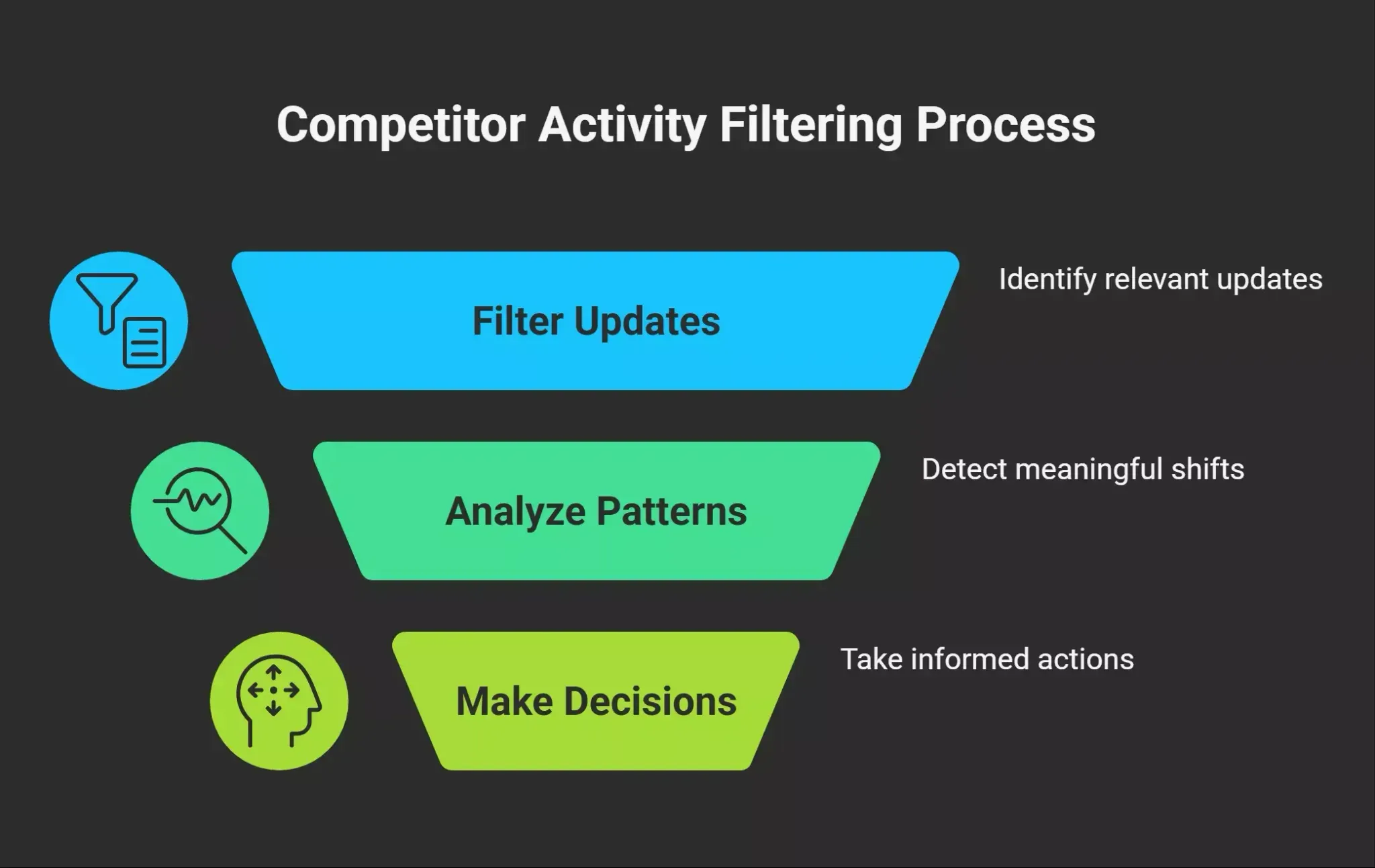
Rocket.new helps teams stay ahead by running continuous monitoring across multiple sources in real time. Rocket.new connects multiple data points into a single signal that reveals long-term intent. The platform produces a structured daily brief scoring every signal by impact, urgency, and differentiation gap, so smarter calls about where to focus follow naturally.
When competitors make changes, shift hiring patterns, and update messaging in a short window, Rocket.new Intelligence flags that as a coordinated shift. Rocket helps teams tell the difference between competitor activity that fades and competitor activity that compounds.
As an AI competitive intelligence tool, Rocket.new brings together competitive analysis across pricing, hiring, reviews, and social media into one clear view. Most companies that rely on manual research miss the connection between scattered signals. Rocket surfaces those connections automatically, giving teams confidence in their competitive analysis before making strategic calls.
What Rocket.new Intelligence Covers
-
Smarter competitor monitoring: Teams stay ahead with scored signals so they focus on competitors making real moves
-
Pricing intelligence: Rocket watches competitors' pricing pages changes, flagging obvious strategic decisions around enterprise tier shifts
-
Hiring and reviews: Monitor job postings, hiring data, and customer sentiment from review sites to catch early signals from competitors
-
Daily brief delivery: Teams stay smarter with a daily brief that includes a call to action section, replacing manual competitor monitoring
-
AI-powered pattern detection: Rocket's AI-powered engine connects dots across competitor websites, social posts, and press coverage simultaneously
If your team wants to understand how Rocket.new uses competitor job postings to predict product launches, that same signal-stacking logic applies here. Hiring velocity is one of the clearest early indicators of where a competitor is headed.
Teams that also want to track competitor ad spend across LinkedIn, Meta, and Google can see how Rocket.new monitors ad activity across platforms to connect budget signals to strategy changes automatically.
For product teams that want to use competitive intelligence before locking a roadmap, Rocket.new's Intelligence pillar fits directly into the planning process, giving teams real signals rather than recycled opinions.
Marketing teams can also see how Rocket.new's Intelligence helps validate campaign budgets before committing spend, using the same real-time market signals that power competitor tracking.
How the Signal Scoring Workflow Works
Real Signals Compound
The competitive intelligence tools market grew past $700 million in 2025 because companies know that competitors move fast and most competitor activity fades. Smarter teams make better calls by focusing on signals, not volume. Rocket.new Intelligence gives them a way to monitor competitors continuously, score every signal, and act on data that reveals where competitors are headed.
Most companies competing in fast-moving markets cannot afford to treat every update as equally important. The organizations that build a clear view of competitor intent, rather than reacting to noise, are the ones that protect market share and find growth opportunities before rivals do.
Stop guessing which competitor moves matter. Start using Rocket.new to monitor competitors, score every signal, and act on intelligence that reveals where rivals are headed before they announce it.
Table of contents
- -When Competitors Make Noise vs. When Competitors Make a Move
- -Why Most Teams Lose Focus on Competitor Activity
- -Competitor Signals That Help Teams Stay Ahead
- -How Companies Respond to Competition Smarter
- -What People Are Saying
- -How Rocket.new Filters: Real Competitor Moves from Clutter
- -What Rocket.new Intelligence Covers
- -How the Signal Scoring Workflow Works
- -Real Signals Compound