
Founders use Rocket Solve to define problems, test assumptions, and align stakeholders, producing clear, actionable briefs that teams trust, reducing rework and accelerating the transition from idea to confident build phase.
Why Most Early Builds Fail Before They Begin?
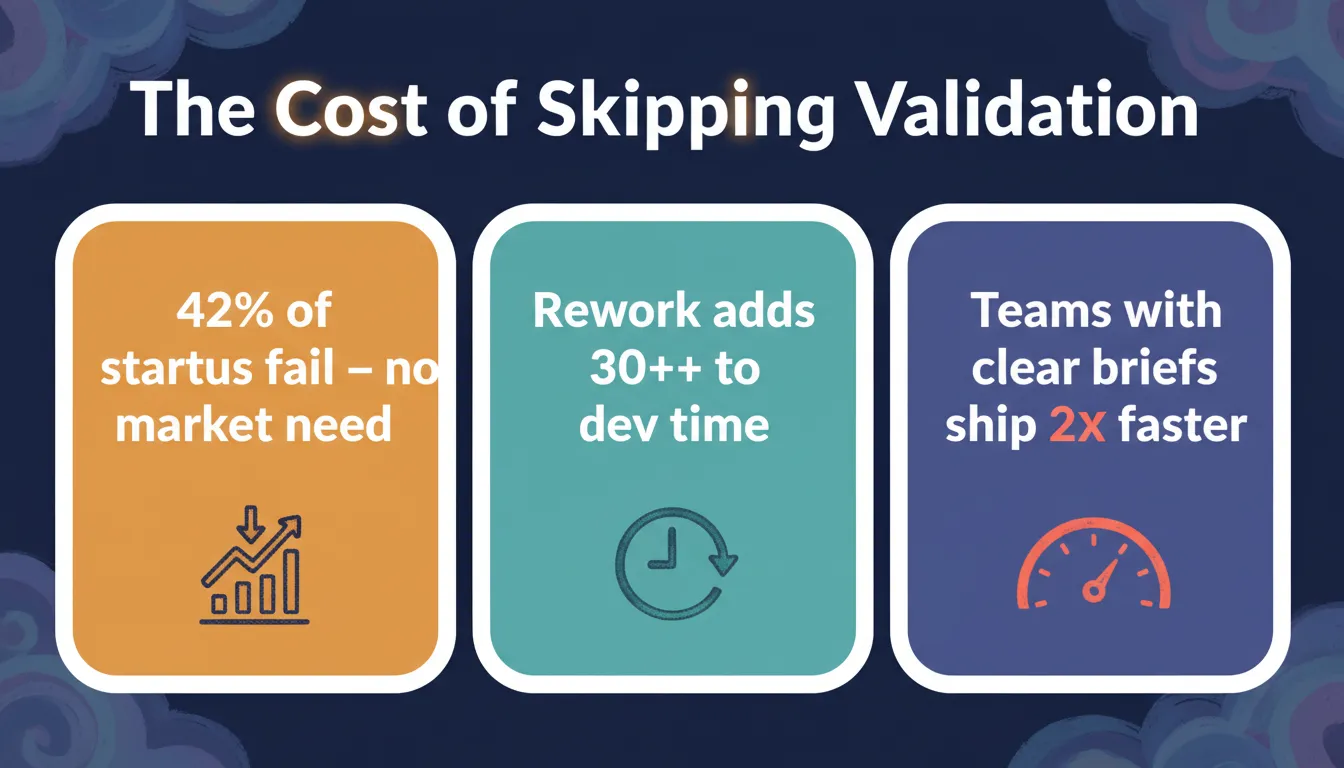
A CB Insights report shows 42% of startups fail because there is no market need. Most founders don't fail at code. They fail before that, at the idea and validation stage.
This blog shows how founders move from a rough idea to something teams can build with confidence, clarity, and direction.
The Real Problem: Why Teams Don't Trust Early Builds
Most early-stage projects feel messy at the start. You begin with an idea, open a blank prompt, and try a few AI tools. They give you output, some code, maybe even a working UI.
It feels fast and exciting. But something important is missing underneath all that speed.
Where things start to break:
- No clear context behind the idea
- No proper structure for the project
- No real understanding of users or market
- Features based on guesses, not data
This is where vibe coding starts to show cracks. Most tools only generate code. They don't help you think through the problem deeply.
What teams experience next:
- Developers don't trust the brief
- Teams go back and forth repeatedly
- The project slows down despite early speed
- Confusion grows during development
The real gap is not in writing code. It's between the idea and real production. Without clarity and context, even fast progress leads to delays later.
What Founders Actually Do Differently
Founders using Rocket don't rush into code. They take a step back first. They slow down, think things through, and then move faster later.
Instead of jumping straight into building apps, they use Solve to turn a rough idea into something real. This step is called vibe solutioning, where the focus is on clarity before development begins.
How their approach works:
- Clear problem definition: Start by clearly defining the problem instead of guessing
- Focused research: Study users and the market to understand real needs
- Validation with real users: Test assumptions early instead of waiting until later
- Data-driven features: Shape features based on real data, not assumptions
- Structured project brief: Create a clear and detailed brief before development
When teams move forward, they don't guess. They build with strong context and direction.
From Vibe Coding to Vibe Solutioning
Vibe coding feels good. You type a prompt, get output, and see code instantly. For quick experiments, it works.
Where it falls short for real products:
- No clear context behind the problem
- Decisions not backed by solid information
- No real user insights informing the build
- Features added based on guesswork
- No clear development roadmap for teams
This is where vibe solutioning changes the approach. Instead of jumping into code, founders use Solve to figure things out first. They build with purpose and clarity, not just speed.
Vibe Coding vs. Vibe Solutioning
| Dimension | Vibe Coding | Vibe Solutioning (Solve) |
|---|---|---|
| Starting point | Blank prompt | Defined problem statement |
| User understanding | Assumed | Validated with real users |
| Feature decisions | Guesswork | Data-driven |
| Brief quality | Weak or absent | Structured and trusted |
| Developer confidence | Low | High |
| Rework frequency | High | Low |
What Solve Actually Does
Solve is part of the Rocket platform and comes before the build layer. It helps founders move from a simple idea to structured thinking, inside one environment.
Instead of guessing or jumping between tools, you work through a guided, organized system. That strong context makes everything easier when teams move forward into development.
You can read more about how Rocket connects research to building in the validate idea and deploy faster guide.
How the Solve Process Flows
Founders using Rocket follow a clear flow inside Solve that turns an idea into something structured, validated, and ready for development.
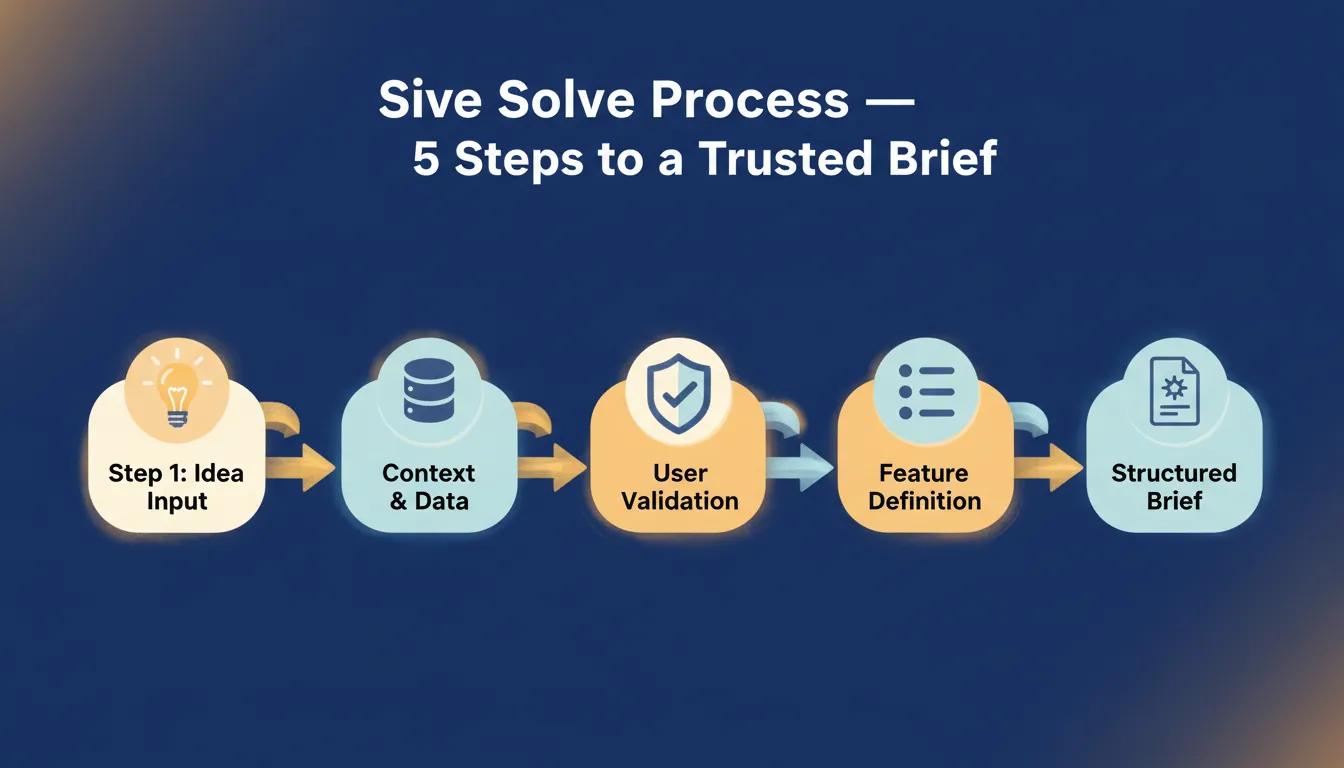
Step 1: Start With the Idea
Every project begins with an idea, for mobile apps, web apps, or something bigger. You bring that idea into Solve and give it a starting point.
Step 2: Add Context and Data
Next, you build context around the idea. Who are your users? What problem are you solving? What does the market look like? Solve helps gather data and insights so the idea becomes something more meaningful.
Step 3: Research and Validation
This is where founders connect with real users, test assumptions, and collect feedback. This step is often skipped in traditional app development. Here, it plays a central role.
Step 4: Define Features
Features are shaped using real data, not guesswork. This keeps the project focused and avoids unnecessary complexity.
Step 5: Build the Brief
Everything comes together. Solve creates a structured brief that includes:
- Problem definition
- User insights
- Features
- System design
- Development plan
Teams move forward with confidence, backed by context, research, and a clear plan.
Traditional Approach vs. Rocket Approach
| Traditional Approach | Rocket Approach |
|---|---|
| Jump into code early | Start with Solve |
| Use multiple disconnected tools | One platform |
| Guess user needs | Validate with users |
| Weak context | Strong context |
| Frequent rework | Clear direction |
| Scattered project brief | Structured, trusted brief |
When teams focus on context and validation first, they avoid confusion later. That's what helps them move forward without getting stuck or going back to fix things repeatedly.
Why Engineering Teams Rely on Clear Direction
Engineering teams don't just want code. They want clarity before they start building. When things are unclear, developers slow down, ask questions, and go back to fix things later.
What teams really want to understand:
- Why this app exists
- Who the users are
- What features actually matter
- What edge cases might come up
When teams get a strong and structured brief, they don't question the direction. They focus on building apps with confidence. That's what creates smoother development and better results.
According to McKinsey, teams that invest in upfront clarity consistently ship faster and with fewer costly revisions. The brief is not a formality. It is the foundation.
How the Rocket Platform Brings Everything Together
The Rocket platform is built to support the full journey of building apps. It connects every stage, from the first idea to deployment, inside one platform.
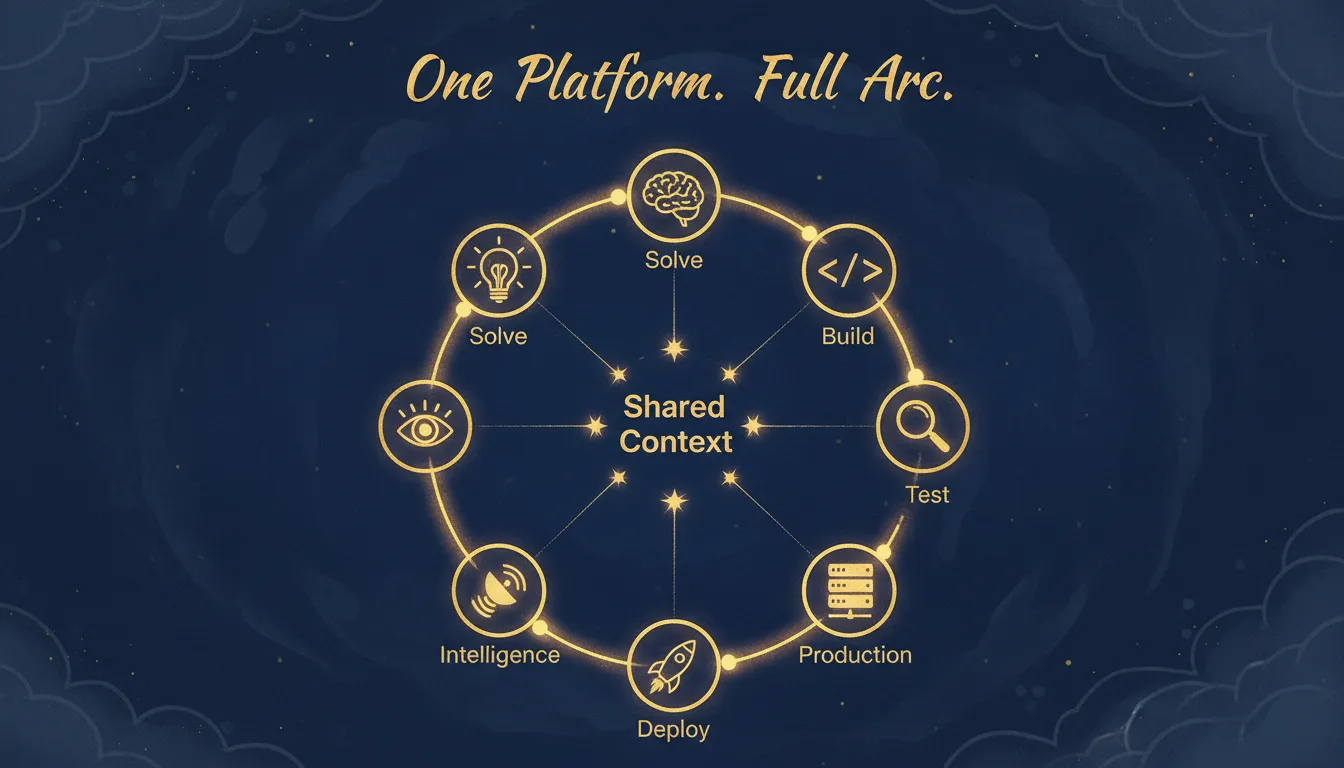
How the flow connects:
- Start with Solve to shape the idea
- Move into the build layer for development
- Continue with testing to refine features
- Prepare for production with stability in mind
- Finish with deployment and launch
Everything stays inside a single environment. The system keeps data, context, and progress connected across the project. Each stage builds on the previous one, so nothing feels scattered or unclear.
For a deeper look at how this connected flow works in practice, see how Rocket builds production-grade apps.
How Solve Works Inside the Platform
Inside Solve, founders don't just type a prompt and wait for output. They work through a guided system designed to bring structure to early-stage thinking.
How the process works:
- Enter your idea into the platform
- The system asks structured questions to build context
- AI agents support research, insights, and direction
- Refine features and overall strategy
- Create a clear and structured project brief
This is not random AI output. It is structured thinking that builds step by step. By the end, the idea becomes a well-defined plan that teams can trust and act on.
Key Features of Solve
- Works inside a single environment
- Uses AI for research and insights
- Connects data across the entire project
- Supports teams during early development stages
- Prepares projects for production and deployment
To see how Solve connects intelligence directly into the build, read how intelligence from Solve carries into the build.
Why Structure Matters in App Development
App development is not just about writing code. It is about solving a real problem for real users. When founders skip early thinking, problems show up later.
Common issues without structure:
- Delays during development
- Frequent rework in later stages
- Confusion across teams
- Poor adoption by users
Solve helps avoid these issues by bringing clarity early. When teams understand the problem and the users, building apps becomes more focused and effective.
The Role of Testing and Production
Once teams move into development, the earlier clarity starts to pay off. Things feel smoother and more predictable.
What improves in later stages:
- Testing becomes easier because features are clearly defined
- Production becomes more stable with fewer surprises
- Edge cases are already considered early
- Deployment becomes faster and more controlled
Teams spend less time fixing and more time moving forward.
Human and AI Balance
This process is not only about AI. There is still a strong role for human thinking and judgment.
How the balance works:
- AI helps with data, research, and early insights
- A human expert reviews and shapes decisions
- Strategy and judgment come from human input
AI supports the work. Humans guide the direction. That balance is what keeps the process grounded.
The Shift That Changes Everything
Instead of:
- Jumping into code too early
- Getting stuck during development
- Rewriting large parts of the project
Teams now:
- Think through the idea first
- Validate with real users
- Then build with clear direction
That shift from guessing to structured thinking is what makes the process feel smoother and more reliable for teams. For founders who want to see what this looks like in practice, the Solve strategy session guide breaks it down step by step.
The Problem, The Solution, The Takeaway
Founders often start building apps too early. They rely on vibe coding and most AI tools that generate code, but lack context. This creates confusion, rework, and weak production results.
Using Solve on Rocket.new helps founders move from idea to structured thinking. It connects research, users, data, and features into one platform, giving teams a clear brief before development starts.
How founders on Rocket use Solve to arrive at the build phase is simple. They don't rush. They create clarity first, then build with confidence. When teams begin with the right context, they move forward smoothly without getting stuck or waiting.
Stop guessing and start building with confidence. Rocket gives founders a structured path from idea to trusted brief, so your engineering team always knows exactly what to build and why. Sign up for Rocket and turn structured thinking into confident execution.
Table of contents
- -The Real Problem: Why Teams Don't Trust Early Builds
- -What Founders Actually Do Differently
- -From Vibe Coding to Vibe Solutioning
- -Vibe Coding vs. Vibe Solutioning
- -What Solve Actually Does
- -How the Solve Process Flows
- -Step 1: Start With the Idea
- -Step 2: Add Context and Data
- -Step 3: Research and Validation
- -Step 4: Define Features
- -Step 5: Build the Brief
- -Traditional Approach vs. Rocket Approach
- -Why Engineering Teams Rely on Clear Direction
- -How the Rocket Platform Brings Everything Together
- -How Solve Works Inside the Platform
- -Key Features of Solve
- -Why Structure Matters in App Development
- -The Role of Testing and Production
- -Human and AI Balance
- -The Shift That Changes Everything
- -The Problem, The Solution, The Takeaway