
Boutique M&A advisors lose deal time to manual operations, email chains, spreadsheet tracking, and generic VDRs that don't reflect their process. Building a branded buyer portal changes that entirely.
How much advisory bandwidth goes toward deal operations instead of advisory work?
The global virtual data room market reached $3.2 billion in 2025. It is growing at a 10.79% CAGR toward $8.0 billion by 2034, according to IMARC Group. That growth signals one thing clearly: firms are spending heavily on structured document environments for transactions.
For boutique M&A practices running five to fifteen active processes at a time, the standard VDR model is often too large, too rigid, and too expensive. There is a better path. Treat the buyer management process as a buildable product you own, brand, and reuse across every deal.
Why Buyer Management Breaks Down in Structured Deals
Managing a buyer group across a structured M&A process involves multiple parallel tracks. Each track has its own timing, access rules, and sensitivity levels. Most boutique advisors start with tools they already have, and that is where the problems begin.
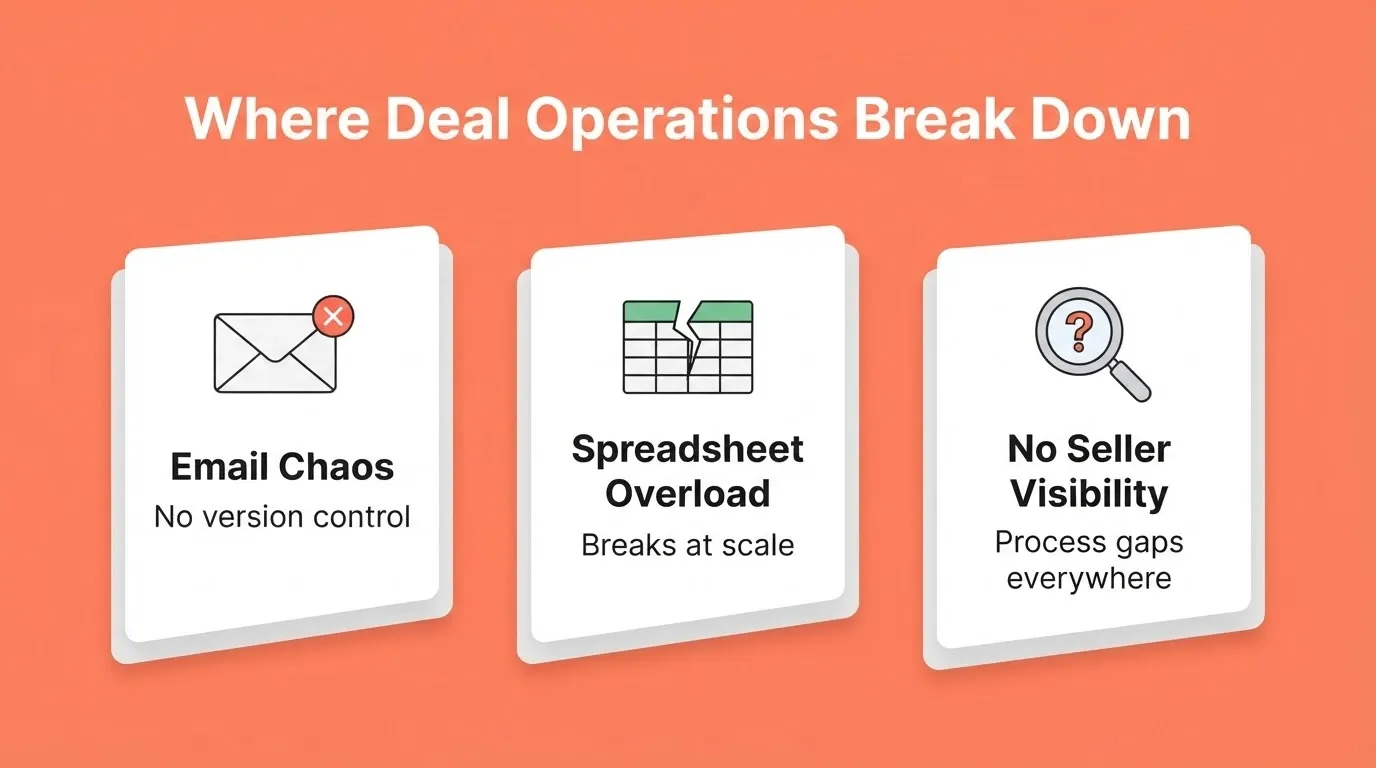
Email-based document distribution creates version chaos. Confidential memorandums, financial models, and management presentations go out through email. No one has a clear view of who received what and when. Attachments get forwarded, outdated versions circulate, and the advisor loses control of the information perimeter.
Spreadsheets for buyer tracking stop scaling after the third round. Tracking NDA status, document access levels, and Q&A responses in a spreadsheet works for a two-party negotiation. Once six or eight buyers enter a structured process, the spreadsheet becomes a liability.
Beyond that, sellers need process visibility without operational noise. They want to know which buyers are moving forward, which have gone quiet, and whether the timeline is holding. Most tools cannot provide that without significant manual effort.
This is where advisory operations become a bottleneck. The firm's deal judgment is strong, but its private deal management platforms have not kept pace with the complexity of the process.
What a Buyer Review Center Actually Includes
A buyer review center is the digital environment a buyer enters when they gain access to a deal. It is not just a folder of documents. It is the advisory firm's working surface for that specific transaction.
A structured landing with deal-specific branding signals that the advisory firm runs a disciplined process. Each buyer sees a professional, firm-branded interface when they log in. They do not see a generic file manager shared across thousands of other deals.
Tiered document libraries with release controls keep Phase 1 teaser materials separate from Phase 2 financials. Phase 3 management meeting documents stay gated until the right milestone. Access gates align with process milestones such as NDA signing or initial indication submission, with no manual distribution needed.
Q&A management with buyer isolation lets buyers submit questions through the portal. The advisory team answers without revealing other buyers' questions or the size of the buyer group. Each buyer sees only their own thread.
Status dashboards for the seller provide a clean summary view: which buyers are active, which documents each buyer has accessed, and where the process stands. In turn, the seller gets visibility without the operational noise.
Controlled Document Access and Release Sequencing
Document control is the operational backbone of any buyer review center. In a structured process, what a buyer sees and when they see it directly affects deal positioning.
Timed release gates eliminate manual distribution. Watermarking and download restrictions protect the seller, since each document can carry buyer-specific watermarks. You can restrict or grant permissions per buyer and per document class. Access revocation is immediate and auditable. If a buyer exits the process, their access closes in one step. A complete record of every document viewed, every download, and every timestamp remains.
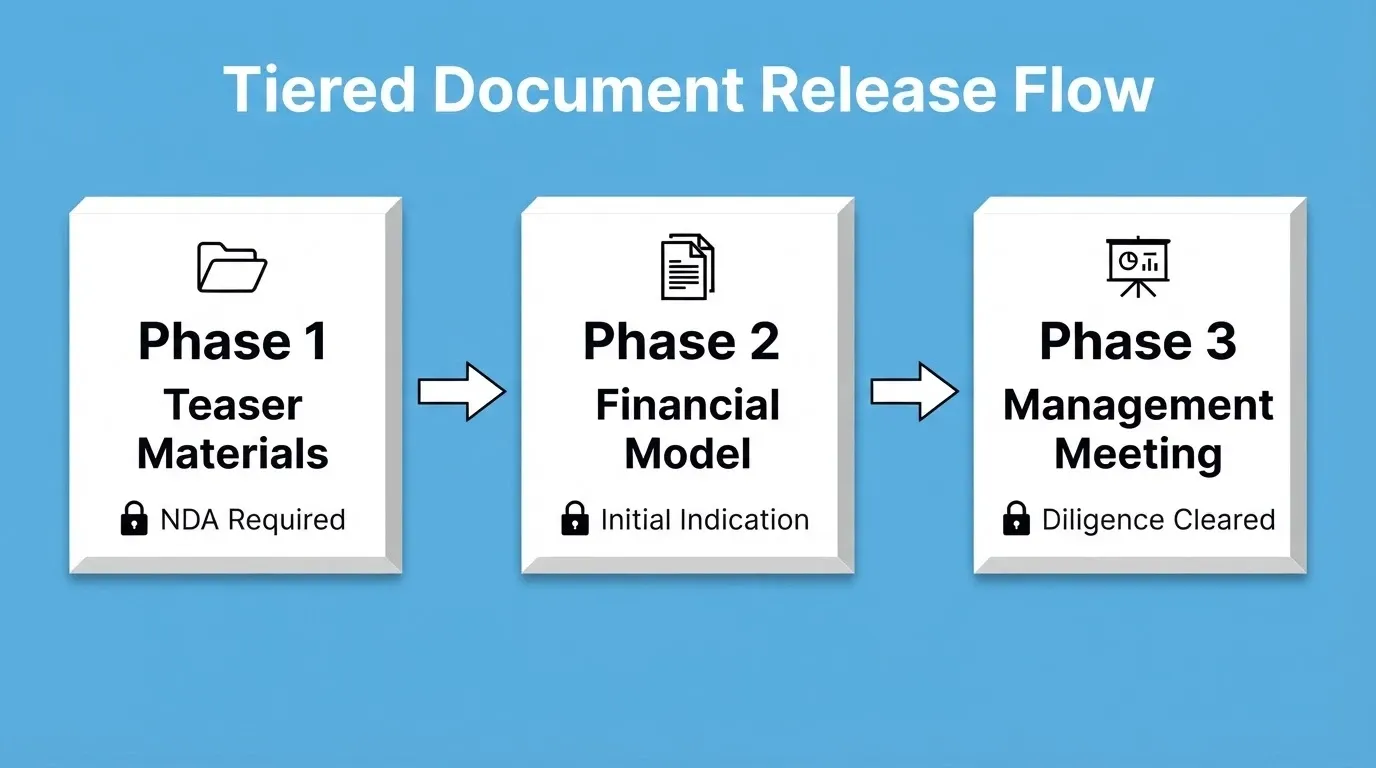
This is where a custom-built portal outperforms a generic shared folder. The controls are specific to the deal, not borrowed from a one-size-fits-all template.
Buyer Engagement Tracking and Interest Scoring
Tracking buyer behavior inside the portal gives the advisory team a real-time signal layer. It replaces guesswork about which buyers are serious with actual data.
Document access patterns reveal intent. Consider a buyer who opens the management presentation three times. If they also spend forty minutes in the financial model, they signal very different intent from someone who logged in once and left. The virtual data room market is projected to reach $5.6 billion by 2029, according to MarketsandMarkets. That growth runs at a CAGR of 18.1%, driven partly by rising demand for engagement intelligence.
Q&A velocity also indicates diligence momentum. Buyers who ask detailed, structured questions early are typically further along in their internal approval process. As a result, combining access frequency, document dwell time, and Q&A activity into an engagement score gives the advisor a ranked view of buyer seriousness. This picture arrives weeks before formal bids.
Built-in analytics track visits, unique visitors, pageviews, and visit duration. They activate with zero setup, as soon as the portal goes live.
How Advisory Firms Are Building Deal-Specific Portals
The shift from generic VDRs to custom deal portals is accelerating. Boutique firms want their buyer experience to reflect the quality of their advisory work. This is what turning professional services workflows into digital products looks like in practice.
Describe the deal structure, and the portal takes shape. Advisory firms describe their process in plain language: the buyer groups, the document phases, the access tiers, and the Q&A rules. The platform then generates a working, production-ready portal from that description. It is not a wireframe. It is a deployable product from the first generation.
Each deal gets its own branded environment. Instead of reusing the same VDR instance across deals, firms create a fresh, firm-branded portal for each transaction. The buyer experience stays consistent with the firm's standards throughout.
If the process changes mid-deal, the advisor adjusts the portal through conversation, not code. New buyer tiers, additional document categories, and modified access rules ship in minutes. The portal goes live with a shareable URL the same day. Buyers access it through a browser with no software to install.
You can test changes in a staging environment before they reach buyers. Full version history and one-click rollback mean nothing built is ever gone.
From Deal Description to Live Buyer Portal: The Full Workflow
Custom Deal Portals vs Generic Virtual Data Rooms
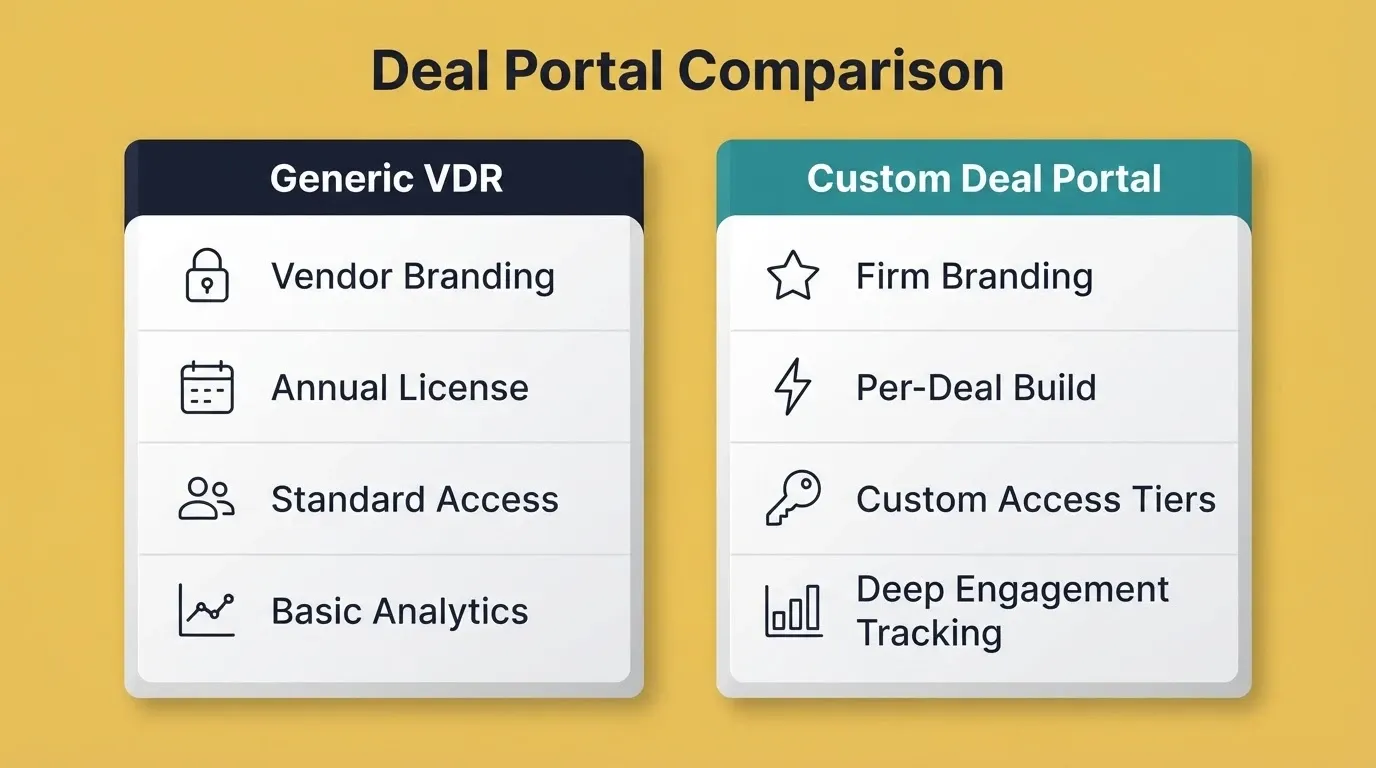
The comparison between building a custom buyer portal and subscribing to an enterprise VDR comes down to three factors: cost, control, and client experience.
| Feature | Generic VDR | Custom Deal Portal |
|---|---|---|
| Branding | Vendor branding or minimal customization | Full advisory firm branding on every screen |
| Pricing | Annual subscription with per-page or per-user fees | Built per deal, no recurring license |
| Document controls | Standardized access levels | Custom tiers mapped to deal phases |
| Buyer experience | Same interface across thousands of customers | Purpose-built for the specific transaction |
| Engagement tracking | Basic analytics, often behind paywall | Deep tracking built into the portal |
| Q&A management | Template-based multi-deal view | Isolated per buyer, deal-specific |
| Setup time | Days to weeks with vendor onboarding | Hours with an AI-powered builder |
| Portability | Locked to vendor platform | Full code ownership, deploy anywhere |
| Team access | Flat or basic role structure | Editor and Viewer roles per team member |
| Version control | Vendor-managed | Full history, one-click rollback |
As Ansarada notes in their guide to virtual data rooms, "more than 70% of deal time is spent on Q&A." This makes basic file-sharing tools a "false economy." They drive up transaction costs and pull management attention away from running the business during a deal.
Generic VDR platforms charge annual licenses starting at $15,000 or more for enterprise tiers. Custom portals built on platforms like Rocket let a boutique advisory firm build a deal-specific environment for a single transaction. There is no long-term commitment required.
How Rocket Helps Advisory Firms Build Branded Buyer Portals
Rocket is a Vibe Solutioning platform. It combines research, building, and operating from one shared context. For advisory firms, the two most relevant capabilities are Build and Solve.
Build generates production-ready web applications in Next.js from plain-language descriptions. You describe the deal structure, buyer groups, access tiers, and Q&A rules. Rocket then generates the portal. Most apps generate in one to three minutes. The output ships with clean semantic HTML, mobile-responsive layouts, and basic meta descriptions as a baseline. You can add compliance features such as GDPR consent banners, accessibility improvements, and cookie policies by asking Rocket through conversation before launch.
Solve is Rocket's research engine. Type a business question and get back a structured, evidence-backed report built from live data. For advisory firms, this means validating the optimal portal structure or running a competitive analysis of how other advisory practices manage buyer processes. Solve has two modes: Light Solve for fast, conversational answers, and Full Solve for deeper multi-section reports. Full Solve typically takes about 45 minutes. The output exports as a PDF or presentation deck and feeds directly into the Build task.
Context and Projects connect research to building. Upload deal structure documents, NDA templates, buyer group profiles, and document phase plans once. Every task that follows inherits that context automatically. Nothing gets re-explained, and everything compounds over time.
1.5 million people have tried Rocket across 180 countries, from solopreneurs to enterprise teams. Rocket is seed-funded. The Professional Services template category provides a starting point, and templates consume zero credits. Credits apply only when you start customizing through conversation.
Firms already converting consultant playbooks into paid digital services are finding that building it yourself is faster than the enterprise procurement path.
From Process Management to Repeatable Advisory Product
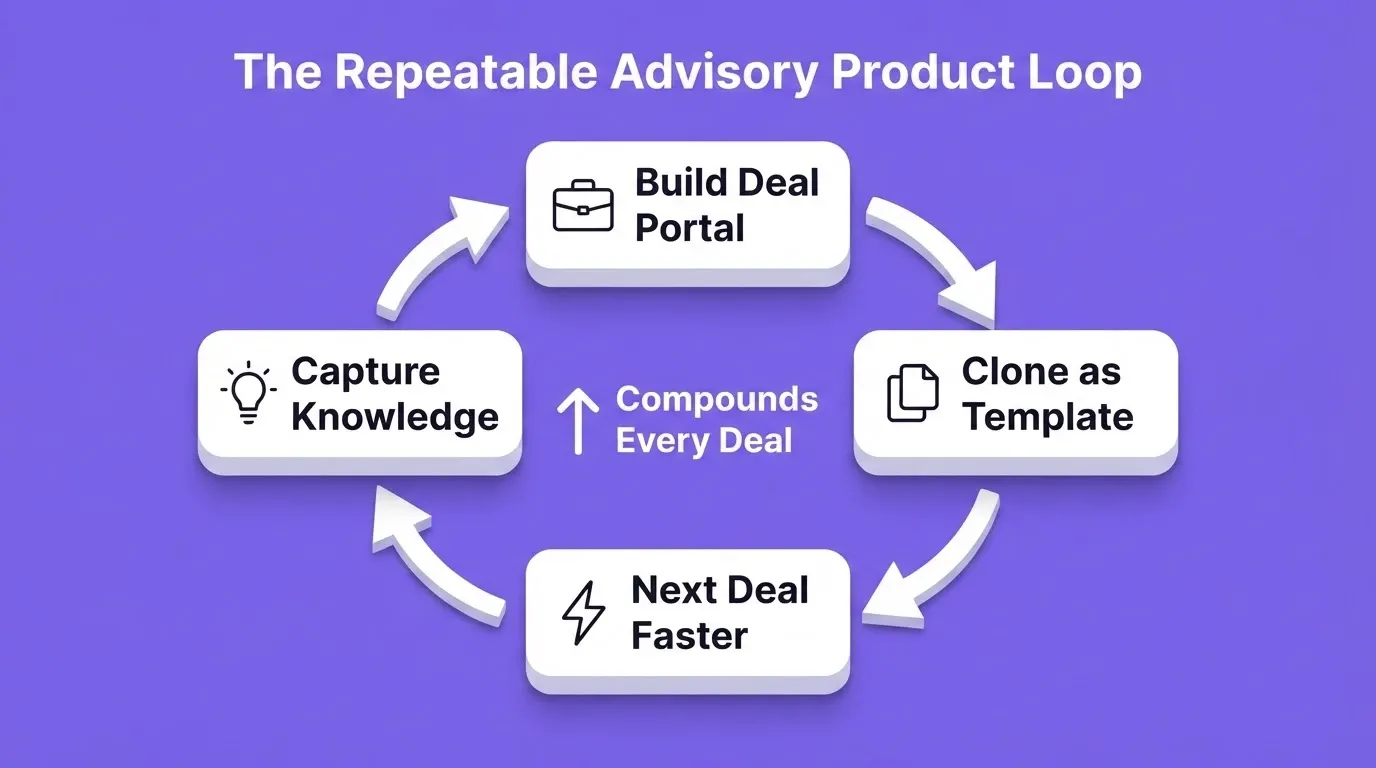
The larger opportunity for advisory firms is not just building one portal per deal. It is turning the buyer management process itself into a repeatable product.
Each deal portal becomes a template for the next one. Once the first portal is built and refined, the firm clones and adjusts it for the next transaction. Setup time drops from hours to minutes. Document sequencing rules, buyer communication templates, and engagement scoring logic all carry forward through Rocket's Projects architecture automatically.
Process quality also becomes a differentiator in competitive mandates. Sellers evaluating multiple advisory firms increasingly look at operational capability alongside deal judgment. A firm that can demonstrate a branded, tracked, and secure buyer process stands out in a pitch. A generic VDR login simply cannot do that.
Moreover, the firm's operational expertise stops living only in the lead partner's head. It gets encoded into the portal's architecture and becomes a reusable asset that grows stronger with every deal.
Rocket also generates M&A assessments to complement the deal-level engagement data your portal collects. Together, they give advisory teams a complete picture of both buyer behavior and market context.
Build the Advisory Process Your Deals Deserve
Professional services workflows into digital products is not a future state. It is what boutique advisory firms are building today. The VDR market will keep growing, but the firms that win mandates will be the ones whose operational layer matches the quality of their advisory judgment.
A branded buyer portal built on your process, carrying your firm's identity, and tracking engagement at the level you need is a different kind of competitive advantage. It ships in hours, not weeks, and grows stronger with every deal you run through it.
Describe your deal structure and start building on Rocket today.
Table of contents
- -Why Buyer Management Breaks Down in Structured Deals
- -What a Buyer Review Center Actually Includes
- -Controlled Document Access and Release Sequencing
- -Buyer Engagement Tracking and Interest Scoring
- -How Advisory Firms Are Building Deal-Specific Portals
- -Custom Deal Portals vs Generic Virtual Data Rooms
- -How Rocket Helps Advisory Firms Build Branded Buyer Portals
- -From Process Management to Repeatable Advisory Product
- -Build the Advisory Process Your Deals Deserve