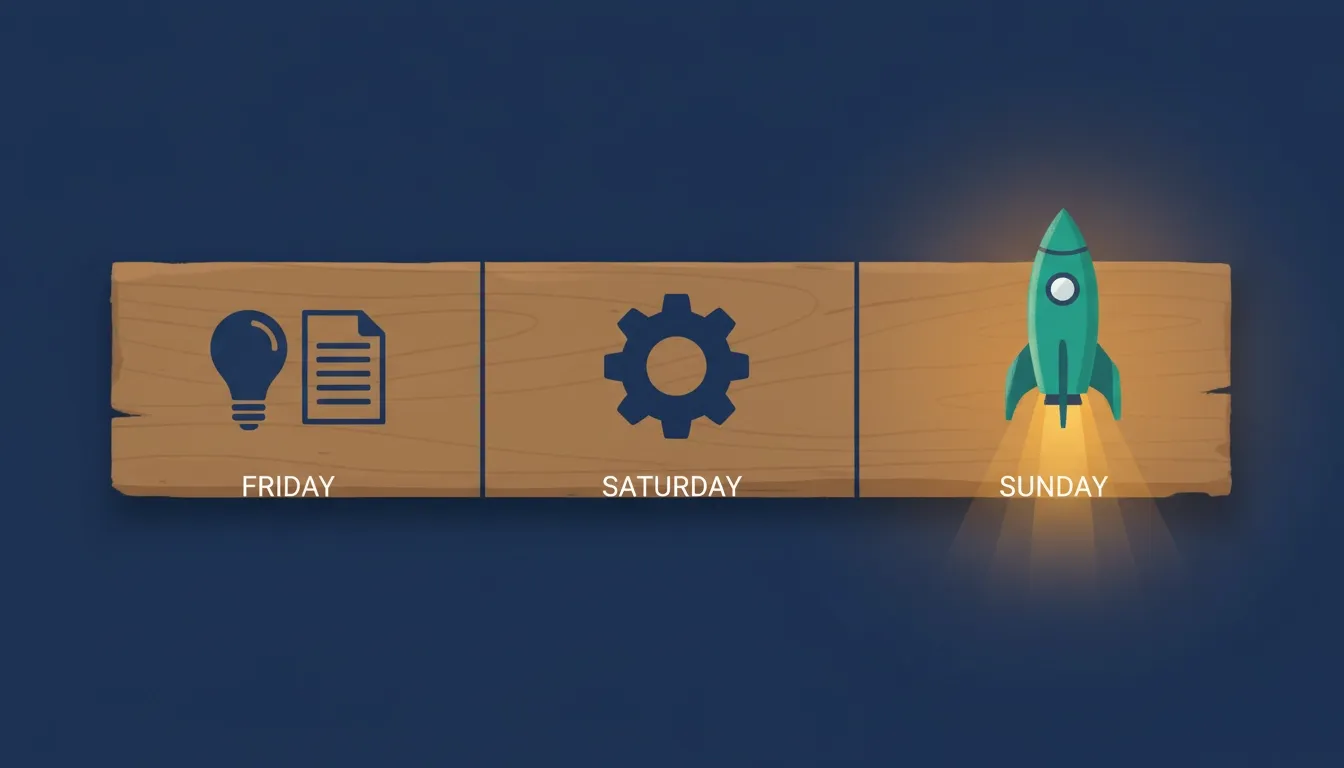
Building an MVP in a weekend is possible with the right spec and AI tools. Rocket.new collapses the entire MVP development journey, from research and build to deployment, into one platform. No coding background needed.
Can you really go from a rough idea on Friday night to a live, working product by Sunday?
The short answer is yes, if you have the right tools and a clear spec. Most founders get stuck not because their idea is weak, but because the path from concept to shipped is full of friction.
Traditional MVP development takes 8 to 16 weeks on average and can cost anywhere from $10,000 to over $150,000. That is a long wait for something that might need a full pivot in week one.
This blog walks through what it actually takes to build an MVP over a weekend, where most builds stall, and how Rocket.new collapses the entire journey from spec to live product into one focused session.
What "Build an MVP in a Weekend" Really Means
MVP stands for Minimum Viable Product. It is the first version of your product that puts a real idea in front of real users. The goal of a weekend build is simple: skip months of planning and get something testable fast.
-
An MVP is not a finished product. It is the smallest version that proves your idea is worth continuing.
-
The weekend goal is not to build everything. It is to build the one thing users actually need to try.
-
Most founders fail the weekend build by adding too many features before the core loop even works.
-
A focused spec, not a long roadmap, is what separates a shipped MVP from an abandoned side project.
-
Speed matters here. The faster you get something in front of actual users, the faster you get real signal.
The weekend build mindset is about momentum, not completeness. Ship something real, then iterate from there. If you want to understand what building an MVP with no-code AI tools looks like in practice, the pattern is consistent: spec tight, build fast, ship early.
Why Most Weekend Builds Stall Before Launch
Most founders who try to build over a weekend hit the same walls. The pattern shows up across indie hacker communities, product forums, and AI builder reviews.
-
The AI tool generates a clean UI, but the backend is not properly configured.
-
Tokens run out fixing errors before the core feature is even working.
-
Saturday disappears to debugging, and Sunday goes to searching Stack Overflow.
-
Separate tools are needed for auth, database, and deployment. Each one adds a new point of failure.
-
The app looks good in the builder but breaks the moment a real user tries to sign up.
A vibe coder named Rathod spent months testing every major AI builder (Lovable, Cursor, Bolt.new, and others) before writing about what he found on Medium:
"I felt exhausted and irritated by these tools, as I couldn't build a working application in the end. Not because I lacked interest, but because the phases I went through left me stuck. I wasn't focused on building the application - I was stuck fixing errors." Rathod, AI tool reviewer, Medium
This is the core gap with most AI tools today. They help you start. They rarely help you finish.
Understanding how token waste in AI builders hurts costs and model quality explains exactly why Saturday disappears before a single feature ships.
Writing a Weekend Spec That Actually Works
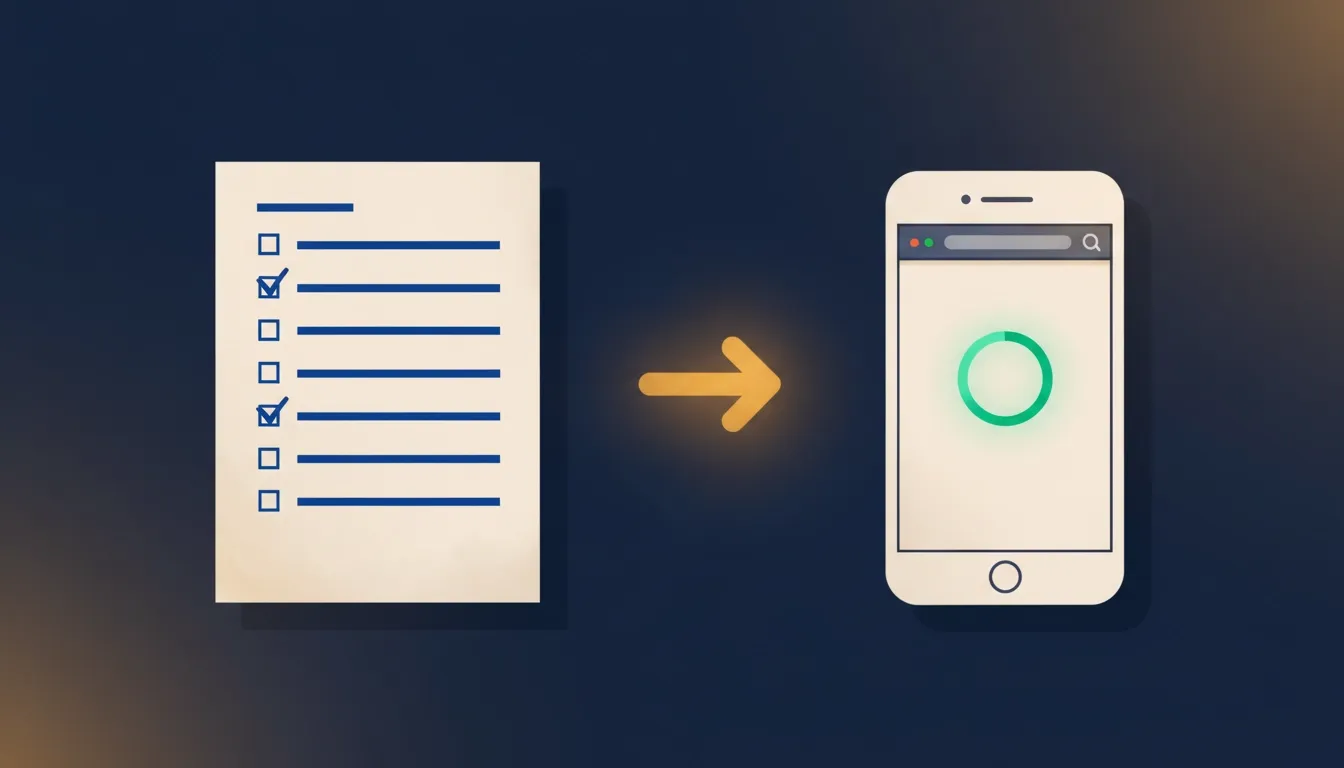
Before you touch any builder, spend 30 to 60 minutes writing a focused spec. Not a product requirements document. Write a short, direct brief that tells your AI builder exactly what to generate.
-
The core problem: One sentence on what users cannot do today
-
The target user: Who this is for, written as specifically as possible
-
The key feature: The single action that makes the product worth using
-
Pages needed: Every screen the user will see, listed by name
-
Backend requirements: Auth, database structure, any third-party APIs needed
-
Scope limit: Explicitly state what is NOT in version one
| Spec Element | Weak Version | Strong Version |
|---|---|---|
| Core problem | "Users need a better tool" | "Users cannot track daily habit completion in one view" |
| Key feature | "A dashboard" | "A daily check-in view with streak tracking" |
| Pages needed | "Home, login" | "Home, login, dashboard, profile, history" |
| Backend | "Some database" | "User auth + Supabase DB with habits and logs tables" |
| Scope limit | None | "No social features in version one" |
The more specific your spec, the better the output. Vague prompts produce vague apps, and vague apps do not survive the weekend.
A tight spec is also what lets you validate your business idea before coding rather than discovering the problem after you have already built the wrong thing.
The Weekend Build Flow, Mapped Out
When a weekend MVP goes well, it follows a clear, repeatable sequence. Most builds break somewhere between submitting the prompt and getting to a live link.
The breakdown almost always happens between submitting the prompt and reaching a live, shareable link. The right builder turns that gap into a straight line.
Launch Faster: From Single Prompt to Live Product on Rocket.new
Most AI tools help you write code faster. Rocket.new works differently. It is the world's first Vibe Solutioning platform. It does not just build. It researches, builds, deploys, and monitors, all in one platform with one shared context across every step.
-
You submit a single prompt describing your app, and Rocket.new generates the full-stack output: frontend, backend, and database all together.
-
No separate tool is needed for the API. No manual database setup. No deployment headache after the build.
-
The platform handles web apps, mobile apps, and internal tools from the same place, without switching contexts.
-
Built-in market research runs before any code is generated, so your MVP is shaped by real data from day one.
-
Rocket.new includes a built-in intelligence layer that continuously monitors companies you follow across nine signal pillars, from website changes and pricing shifts to hiring velocity and competitor ad creative.
-
Intelligence is personalized to your role and why you are watching each company, so a founder and a sales lead watching the same competitor get completely different briefs.
Rathod described what happened when he finally tried Rocket.new after months of frustration with other tools:
"To my surprise, I was shocked. I had never seen a low-code tool build such a complex application with just a single prompt. Tools like Lovable, Cursor, and Bolt.new require separate prompts for each section and feature, but Rocket.new handled everything in one go. It took less than 15 minutes." Rathod, Medium
Over 1.5 million people across 180 countries have tried Rocket.new, and the reason is straightforward: it closes the gap between spec and live product faster than anything else currently available.
Research Before You Build an MVP
Rocket.new starts with market research before a single line of code is written.
-
It helps you understand what to build and whether your idea has a real shot before the build begins.
-
Research is baked into the same platform. No switching to a separate tool before writing your prompt.
-
Your MVP comes out shaped by actual market context, not just your best guess on a Friday night.
This means you are not just building fast. You are building with the right direction from the start. The Solve feature handles this research phase so your core assumptions are validated before a single line of code is written.
Founders who do market research and validate before shipping consistently ship products that survive first contact with real users.
One Platform for Web Apps, Mobile Apps, and Internal Tools
Rocket.new covers every type of product a founder might need to ship over a weekend.
-
Web apps: consumer-facing SaaS products, landing pages with working back-ends, and full product flows
-
Mobile apps: iOS and Android apps generated and deployed from the same prompt, no separate mobile setup
-
Internal tools: admin dashboards, ops trackers, and team-facing views built without a developer
One platform means no context-switching and no choosing between tools for different product types.
If you are deciding between approaches, the comparison of vibe coding vs. low-code platforms shows exactly where full-stack generation pulls ahead.
Single Prompt, Full-Stack Output
Rocket.new builds the entire app from one prompt, not just the front end.
-
The frontend, backend, database schema, and pages are all generated together.
-
No coding background is needed to get a working, deployable app out the other side.
-
Unlike Cursor or Bolt.new, there is no need to write separate prompts for each section or manually wire the UI to the API.
-
Features and pages are confirmed during setup, so the output matches what you actually asked for.
The result is a production-ready app that works end to end, not a UI shell that still needs a developer to finish it. This is what rapid development looks like when the technology stack is handled for you. For a deeper look at how Rocket.new builds production-grade apps, the architecture behind the output is what separates it from prompt-based builders.
Built-in Deployment and Personalized Market Intelligence
Shipping and staying sharp after launch are both handled inside Rocket.new.
-
Your app deploys with one click and gives you a live, shareable link the same day.
-
No separate deployment tool, no Netlify configuration, no manual server setup.
-
After launch, Rocket.new's intelligence layer monitors the companies you care about across nine signal pillars: website changes, pricing moves, hiring surges, ad creative, executive activity, and more.
-
Every intelligence brief is shaped by who you are and why you are watching each company. The brief your founder sees and the brief your sales lead sees are never the same brief.
Rocket.new is not just a build tool. It is the full loop from idea to live to informed. And because intelligence is shaped by who you are watching and why, every signal you receive means something specific to your role, not just your market.
How Rocket.new Compares to Other AI Tools
| Feature | Rocket.new | Cursor | Bolt.new | Lovable |
|---|---|---|---|---|
| Full-stack output from single prompt | Yes | No | Partial | Partial |
| Built-in deployment | Yes | No | Yes | Yes |
| Market research included | Yes | No | No | No |
| Mobile apps supported | Yes | No | No | No |
| Internal tools | Yes | Limited | Limited | Limited |
| No coding background needed | Yes | No | Partial | Partial |
| Personalized market intelligence | Yes | No | No | No |
| Free plan available | Yes | Limited | Yes | Yes |
Cursor and Bolt.new are strong for developers who already know how to code and want to move faster. They are not designed for founders without a technical background who need the entire technology stack handled from one prompt. That is the gap Rocket.new fills.
See the full Rocket.new vs. Bolt.new platform comparison for a detailed breakdown of where each tool wins.
What You Can Actually Build Over a Weekend
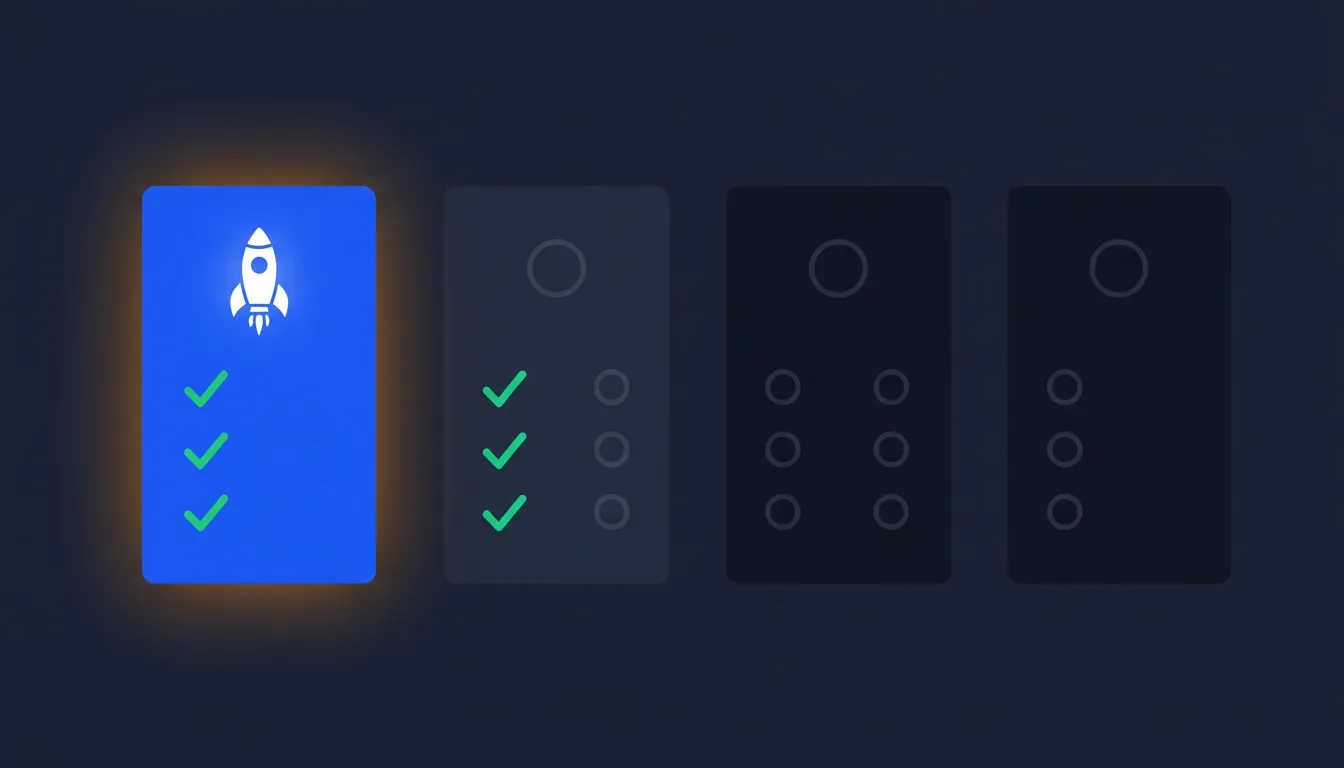
A single weekend with Rocket.new is genuinely enough time to ship a working, live product, not just a prototype.
-
SaaS MVPs: subscription-based web apps with user auth, dashboards, and core product flows ready to test with actual users
-
Mobile apps: consumer-facing iOS and Android apps, generated and deployed together from one prompt
-
Internal tools: admin panels, ops dashboards, and tracking views built for small teams with no developer needed
-
AI-powered products: apps with AI features wired into the core flow, not bolted on after the fact
According to Gartner, 75% of all new applications will be built using low-code or no-code technologies by 2026, a jump from under 25% in 2020. The no-code AI platform market is projected to reach nearly $38 billion by 2033. The shift is already happening. The question is whether your MVP ships as part of it, or sits in a notes app for another six months.
Getting Your First Real Users This Weekend
Shipping is only half the work. The real value of a weekend MVP is what you learn from it.
-
Share the live link in communities where your target users already spend time: Reddit, Discord, niche forums, X.
-
Watch how people actually use the app, not how you expected them to.
-
Ask one focused question after they try it: what was confusing, and what was missing.
-
Fix the one thing that is clearly broken and ship the update the same week.
-
Track who comes back. Return visits are the first real signal that the core loop is working.
Each iteration brings you closer to product-market fit. The faster you start, the faster you get real feedback, and the faster you find out whether your idea is worth the next sprint. This is the validated learning cycle that separates MVPs that grow from ones that stall.
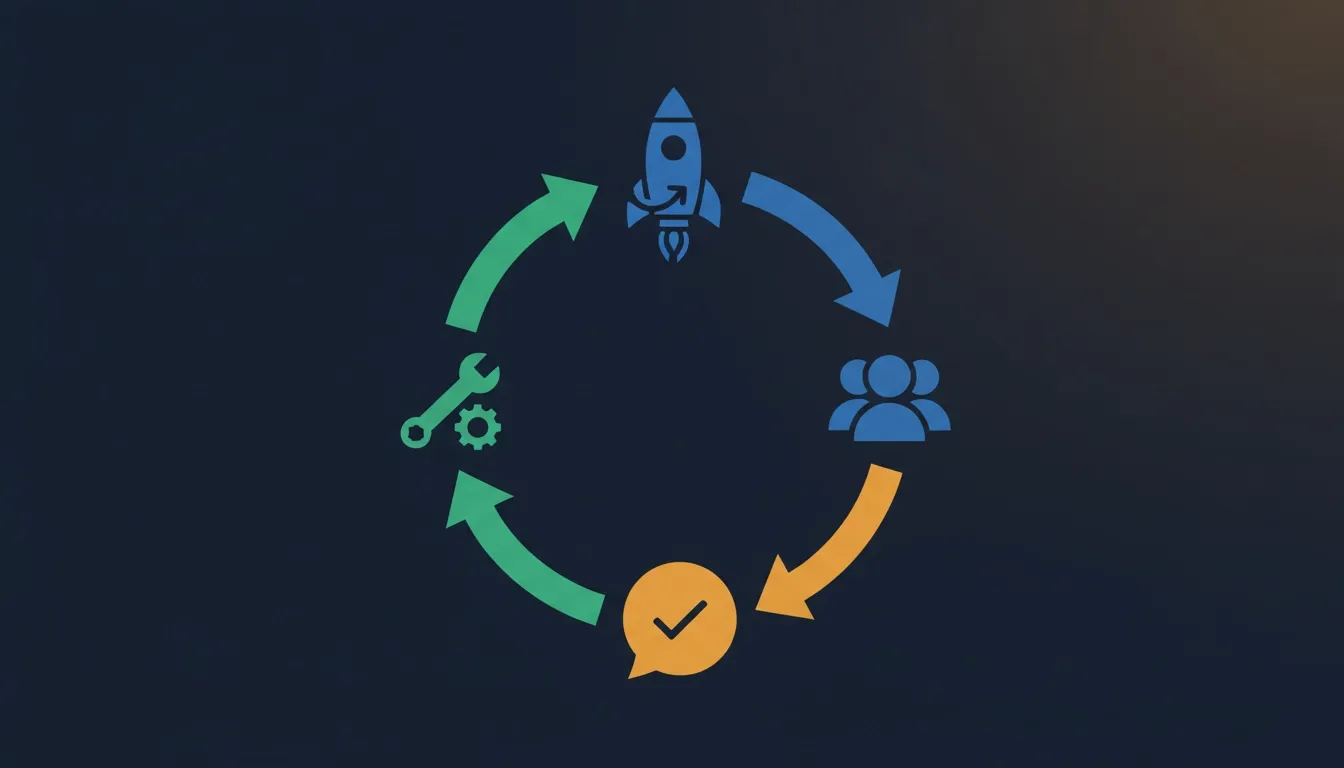
Building an MVP: The Feedback Loop That Drives Growth
The MVP process does not end at launch. It is a continuous feedback loop that sharpens your product over time.
Each loop tightens your understanding of user needs and user behavior. The MVP timeline compresses when you have a platform that handles deployment and intelligence in the same place. Traditional development forces you to manage separate tools at every stage. Rocket.new keeps all of that context in one place, so each iteration starts from where the last one ended.
Founders who want to iterate on their MVP with AI tools fast find that the speed of each loop is what determines whether a product reaches product-market fit or gets abandoned.
From Build an MVP in a Weekend Spec to Live Product on Rocket.new
The traditional path to a live product is long, expensive, and full of waiting. The average MVP used to take months and tens of thousands of dollars before a single user ever saw it.
That model has changed. With a clear spec and the right AI tools, any founder, with or without a coding background, can go from idea to live product in a single weekend. From build an MVP in a weekend spec to live product on Rocket.new is exactly what the platform is built for. You write the spec, submit the prompt, and ship. No context-switching, no backend mystery, no running out of tokens before you reach the finish line. If you have an idea sitting in a notes app, your weekend build starts now.
Table of contents
- -What "Build an MVP in a Weekend" Really Means
- -Why Most Weekend Builds Stall Before Launch
- -Writing a Weekend Spec That Actually Works
- -The Weekend Build Flow, Mapped Out
- -Launch Faster: From Single Prompt to Live Product on Rocket.new
- -Research Before You Build an MVP
- -One Platform for Web Apps, Mobile Apps, and Internal Tools
- -Single Prompt, Full-Stack Output
- -Built-in Deployment and Personalized Market Intelligence
- -How Rocket.new Compares to Other AI Tools
- -What You Can Actually Build Over a Weekend
- -Getting Your First Real Users This Weekend
- -Building an MVP: The Feedback Loop That Drives Growth
- -From Build an MVP in a Weekend Spec to Live Product on Rocket.new