
When competitors stop posting job listings or social updates, most tools go blind. Rocket.new Intelligence monitors pricing pages, review patterns, and regulatory filings continuously, reading absence as a signal the same way it reads a product launch.
When a competitor stops publishing job listings or social updates, most tracking tools go blind. Rocket Intelligence monitors pricing pages, website changes, review comment patterns, and regulatory filings continuously, reading absence as a signal the same way it reads a product launch. This post explains how to stay ahead even when rivals go dark.
When a Competitor Goes Dark, the Data Does Not
A competitor going quiet is not a gap in your intelligence. It is a signal. When companies stop publishing job listings, pause social posts, or cut back on product updates, the market keeps moving. The teams that respond fastest shift from monitoring noise to reading absence.
AI adoption in competitive intelligence grew 76% year over year, with 60% of teams now using AI tools daily to track competitor signals. Yet most market research still treats silence as a non-event. That is a costly miss for any business watching the market.
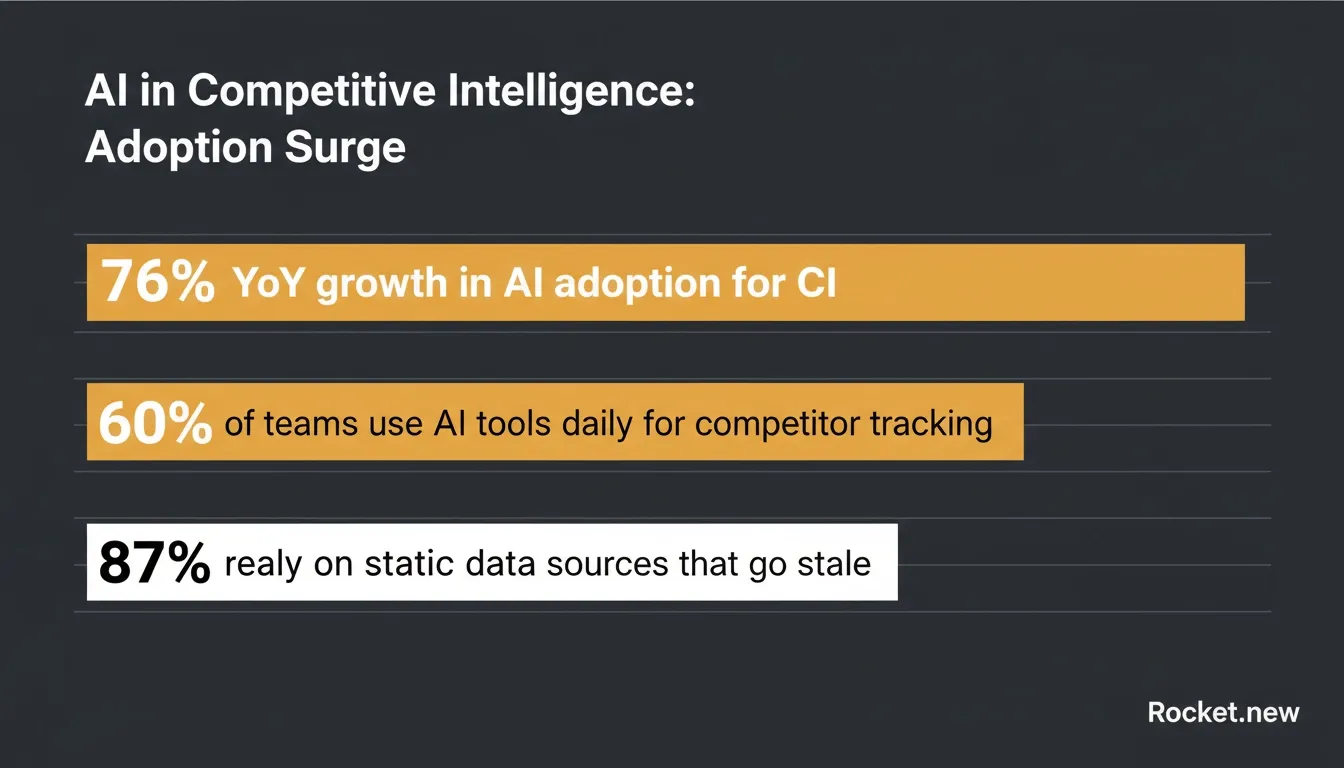 Key adoption numbers driving the shift from periodic to continuous competitive intelligence
Why Do Competitors Go Quiet?
The Strategic Silence Play
Most companies do not go quiet by accident. A sudden drop in job postings, a flat social presence, and paused product updates often signal something deliberate. Startups entering a private fundraising process pull back to avoid tipping off rivals. Teams rebuilding a brand go internal.
A company preparing for a product launch restricts public comment activity to control the narrative, keeping launch features under wraps until the right market moment. This is not inactivity. It is a calculated move.
Signs a Competitor Is Regrouping
The shift from active to silent follows a recognizable pattern: social post volume drops first, then job listings stop appearing, then pricing pages stop changing. This sequence points to a business under strategic pressure, whether due to budget constraints, a leadership change, or preparation for a significant market move.
Startups rarely broadcast these transitions in advance. Understanding the pattern is what separates teams that react in time from those that are caught off guard.
How Most Companies Miss the Warning
Most competitor tracking tools flag this scenario as "no new data" rather than a signal. Teams treat absence as confirmation that nothing is happening. That miss costs revenue.
When competitors re-emerge with revised pricing, repositioned messaging, and a product launch, the businesses watching through a silent-reading system have already adjusted. Startups waiting for the announcement are playing catch-up.
What Does a Quiet Competitor Actually Signal?
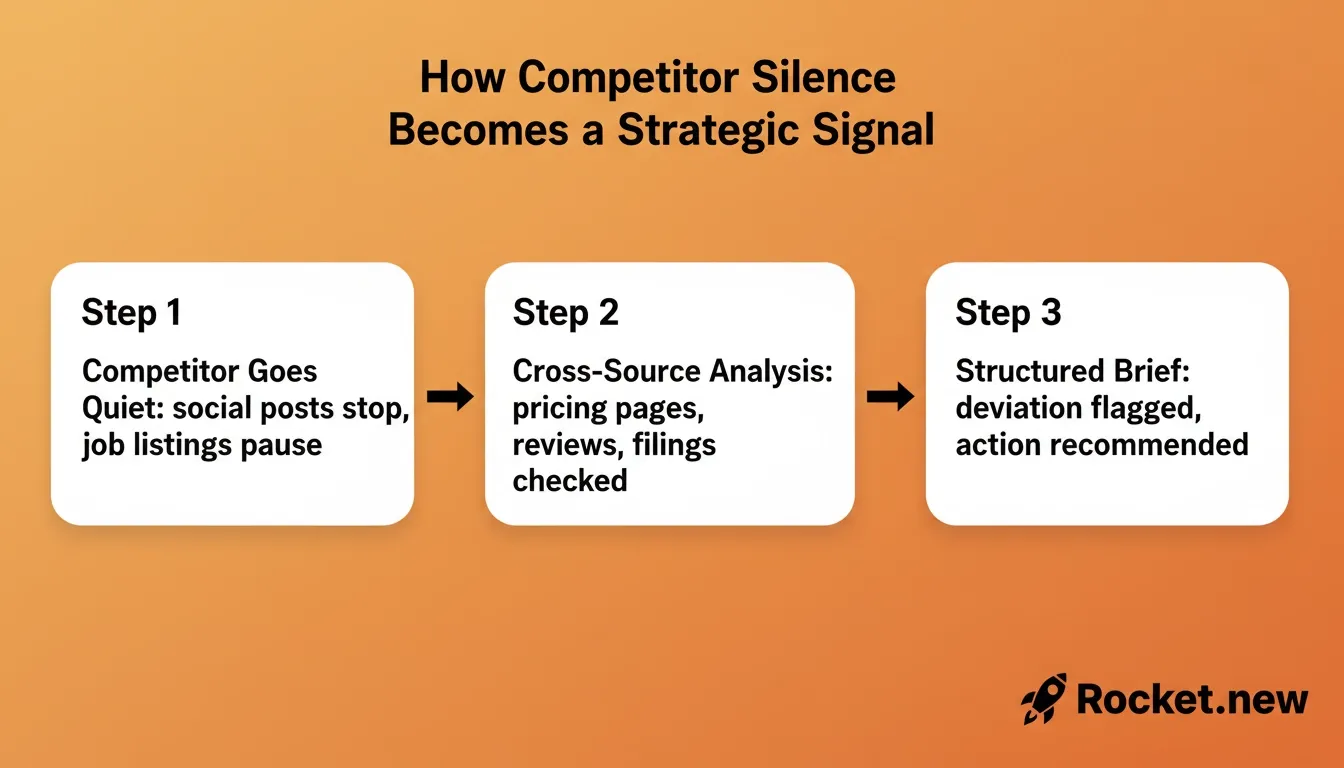 From competitor silence to actionable intelligence: the three-step signal interpretation process
Reading Inactivity as a Competitive Move
Silence in competitive intelligence is rarely neutral. When a competitor stops generating signals across multiple data sources simultaneously, it typically means one of three things: consolidating after a setback, preparing for a significant market shift, or running low on resources.
Each interpretation points to a different strategic response. The competitive moves that matter most happen in quiet periods. Patterns of inactivity across competitor websites give teams the awareness to act before any announcement hits.
The Hidden Patterns Behind Paused Job Listings
Job postings are among the clearest signals about where competitors are investing. A startup that was hiring aggressively in engineering and then abruptly pauses usually signals a budget constraint or reorganization.
Tracking job listing cadence as part of market research tells a story that press releases never will. Startups that read this silence correctly gain weeks of preparation time that rivals never see coming. This is precisely where early detection of repositioning becomes a competitive advantage.
What Traditional Competitor Tracking Misses
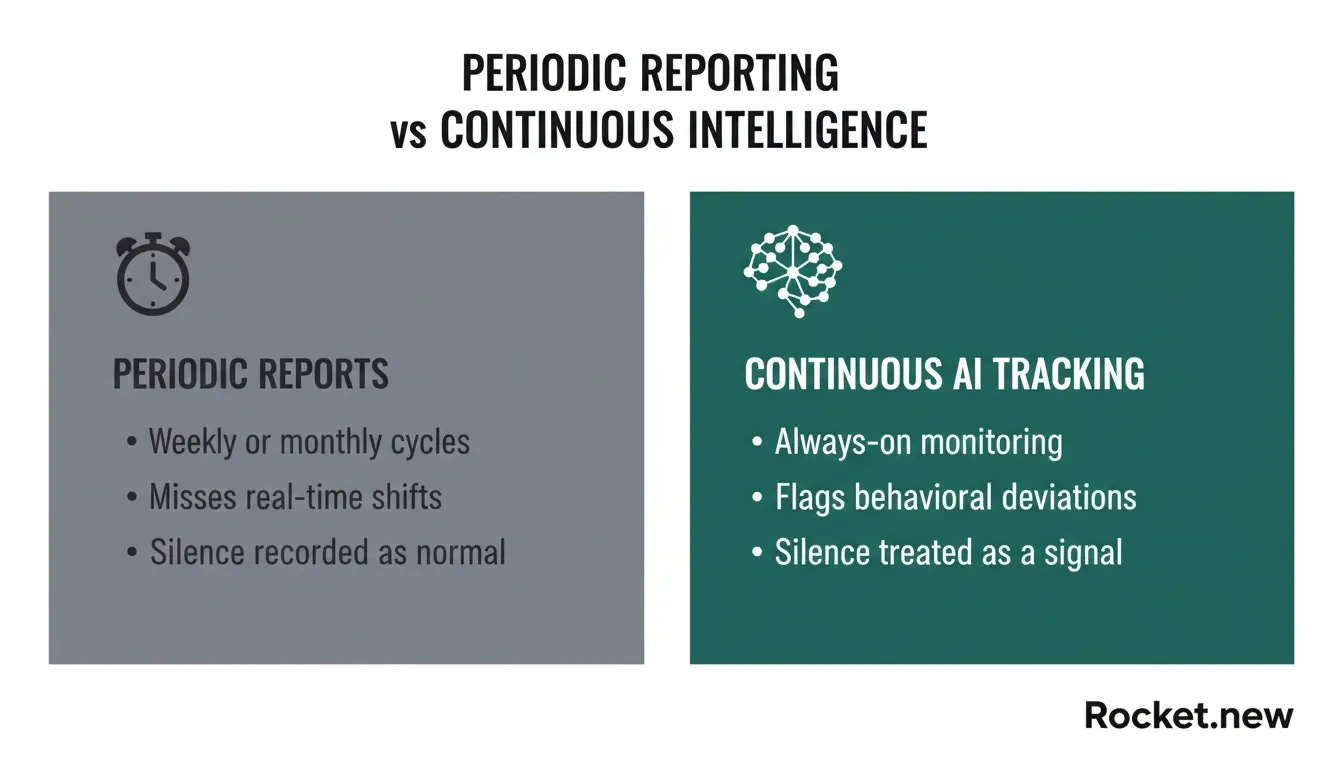 Periodic reporting vs continuous intelligence: where the gap between signal and awareness lives
The Problem With Periodic Reports
Most startups and organizations run competitive analysis on a scheduled basis: weekly summaries, monthly reports, quarterly reviews. Competitor behavior does not follow your reporting schedule. Pricing changes, website messaging shifts, and review comment patterns all happen in real time.
By the time a periodic report captures a competitive move, the response window has closed. Continuous competitive monitoring is what closes that gap. According to Crayon, most businesses are still running reactive intelligence cycles that leave them exposed.
Single-Source Tracking and Its Gaps
Most platforms monitoring competitors pull from a limited set of sources. They do not cross-reference comment trends on G2 with pricing page changes and regulatory filings simultaneously. This single-source approach creates a gap that grows every time a competitor reduces activity on monitored channels.
Miss enough gaps, and you lose the clear picture of what rivals are actually planning. Pattern analysis across platforms is what distinguishes intelligence from alerting.
When Analysts Cannot Connect the Dots
A person reviewing weekly reports cannot hold 90 days of comment history, pricing page snapshots, and review sentiment data in an active context. That is not a process failure. That is where money gets left on the table. AI-powered tracking was built to close this gap.
"We have scenarios where AI will overweight recent news or mentions on social or news sources at the detriment of the harder trends." Klue AI in Competitive Intelligence Report, 2026
What Signals Replace Job Postings and Social Updates?
Pricing Page and Website Changes
Competitor websites carry more strategic data than most teams extract. Pricing pages are especially informative. A competitor shifting from transparent pricing to "contact us" is moving upmarket. Adding new tiers is preparing for a product launch or responding to customer feedback.
These pricing signals keep moving even when social posts go dark, and job listings stop appearing. Understanding how pricing shifts into strategic signals is one of the highest-leverage skills in competitive intelligence.
Regulatory Filings and Industry Sources
Regulatory filings, trademark applications, patent submissions, and SEC disclosures tell a story that social silence cannot erase. Companies often file for trademarks on new product names months before any announcement. Tracking regulatory filings as part of competitive awareness gives teams early sight into strategic decisions.
These market trends surface in industry filings before appearing anywhere else. This is where the signal-to-decision window is longest and most valuable.
Customer Reviews and Comment Patterns
Review platforms are among the most underused sources in competitor analysis. Customer comment patterns on G2, Capterra, and Trustpilot shift even when official channels go quiet. A surge in negative comment activity on a competitor's product often signals an internal issue.
A shift in how customers describe a competitor's key feature often foreshadows a messaging change, visible in comment data weeks before any official post.
| Signal Type | Source | What It Reveals |
|---|---|---|
| Pricing page shifts | Competitor pricing pages | Repositioning, market targeting |
| Job listing cadence | LinkedIn, job boards | Investment priorities, roadmap |
| Customer comment sentiment | G2, Capterra, App Store | Product friction, team issues |
| Regulatory filings | Trademark, SEC databases | Upcoming launches, M&A signals |
| Website copy changes | Competitor websites | Messaging and positioning shifts |
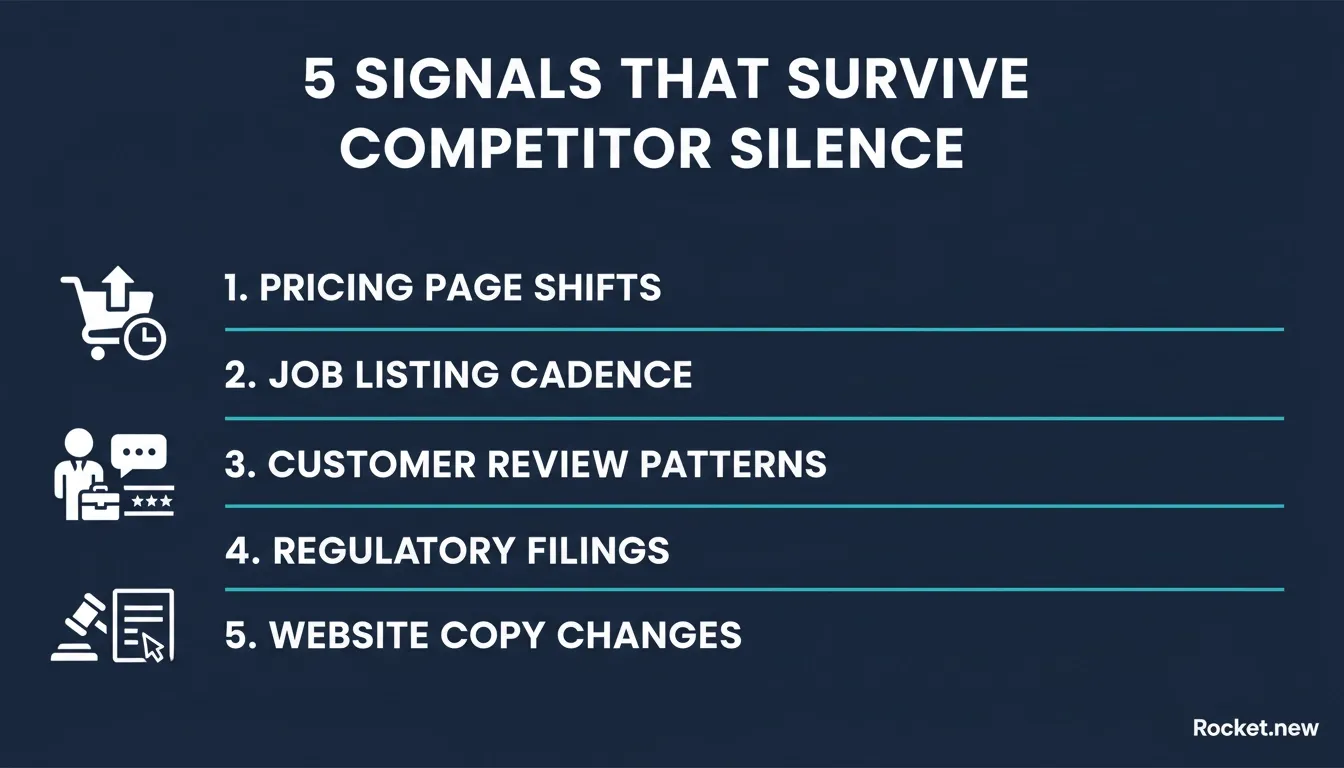 The five signal types that persist and carry strategic meaning even when competitors stop publishing
Weak Signals That Form a Clear Picture
No single signal tells the full story. But a competitor that has stopped posting, paused job listings, shifted pricing pages, and seen a comment surge is probably not fine. Each signal in isolation is weak. Together they form a clear picture and a market opportunity for the teams that notice.
Startups that act on combined signals move faster than businesses waiting for announcements. Rocket's cross-platform monitoring tracks exactly these patterns continuously.
How Do You Build a Baseline for a Competitor's Normal Behavior?
Establishing the Publishing Cadence
Effective competitor tracking starts with historical data. Before you can recognize that a competitor has gone quiet, you need to know what active looks like for them. When a competitor's cadence breaks, the break is the signal.
Recognizing behavioral patterns is the foundation of any real market research process. A startup that posts twice a week and publishes product updates consistently makes that cadence visible.
Cross-Referencing Multiple Data Sources
Baselines built from a single channel are brittle. A competitor might go quiet on X while staying active on LinkedIn. They might pause product update announcements while increasing comment volume on industry forums.
Reliable baselines require tracking across multiple data sources to build a market research picture that holds up when one channel goes silent. This multi-source approach is what makes competitive intelligence actionable rather than anecdotal.
Flagging Behavioral Deviations Over Time
Intelligence value comes from deviation detection. A system tracking historical patterns and comparing them against current behavior will surface anomalies that a person reviewing a weekly summary cannot catch.
The coverage needed to spot a meaningful pattern shift typically spans 60 to 90 days of continuous market data in context. This is where AI-powered tracking earns its place. These insights feed directly into roadmap planning decisions that would otherwise be made without competitive context.
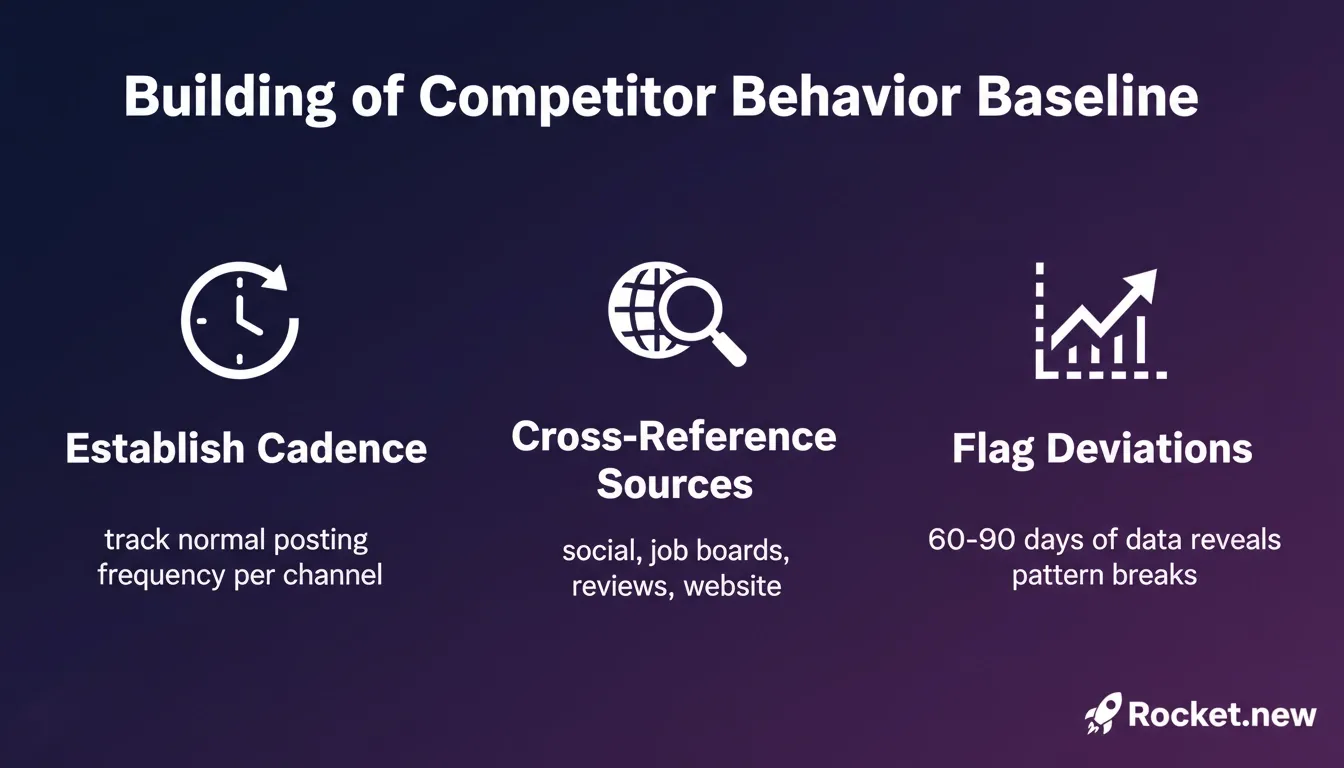 Three steps to building a competitor behavior baseline that makes silence detectable
How Does AI-Powered Intelligence Connect Disparate Signals?
Signal Triangulation Across Platforms
The competitive intelligence tools market is forecast to reach USD 1.46 billion by 2030, growing at a 19.96% CAGR, driven by the need for faster signal processing than human analysts can provide. The volume of signals competitors generate across websites, platforms, review sites, and industry sources in real time far exceeds what any team can process manually.
When a competitor goes quiet on social and their job postings stop, an effective platform does not treat this as an absence. It cross-references competitor websites, pricing pages, and customer review comment patterns to determine whether the quiet is a strategic pause or stagnation.
From Raw Data to Structured Briefs
Turning raw signals into a structured insight requires context: a baseline of what normal looks like per competitor, so deviations register as meaningful. Persistent project memory tracks historical competitor behavior, flags shifts, and connects each signal to a brief with strength indicators and recommended actions.
These intelligence tasks run automatically, removing the need for manual initiation or human synthesis under time pressure. Market trends emerge from signal clusters, not from single posts.
Real-Time Awareness Without Manual Research
AI agents running continuous monitoring remove the lag that makes periodic competitor tracking ineffective. When a competitor's pricing pages change or a burst of negative comment activity appears on a review platform, the intelligence reaches your teams before the business day starts.
Startups and businesses that adopt this approach close the gap between signal and response. This is what Rocket Intelligence is built to deliver: not alerting, but interpretation.
Rocket.new Intelligence: Built to See Through the Quiet
When competitors go dark, most intelligence platforms go dark with them. Rocket.new Intelligence was built on the opposite principle: absence of activity is a signal, and it deserves the same analytical attention as a product launch or a pricing update.
Rocket monitors competitors across six signal categories continuously: Website, Social Media, News and Web Presence, Reviews and Reputation, People and Hiring, and Performance Marketing. Every signal feeds into a daily brief: what changed, why it matters, and what your business should do next.
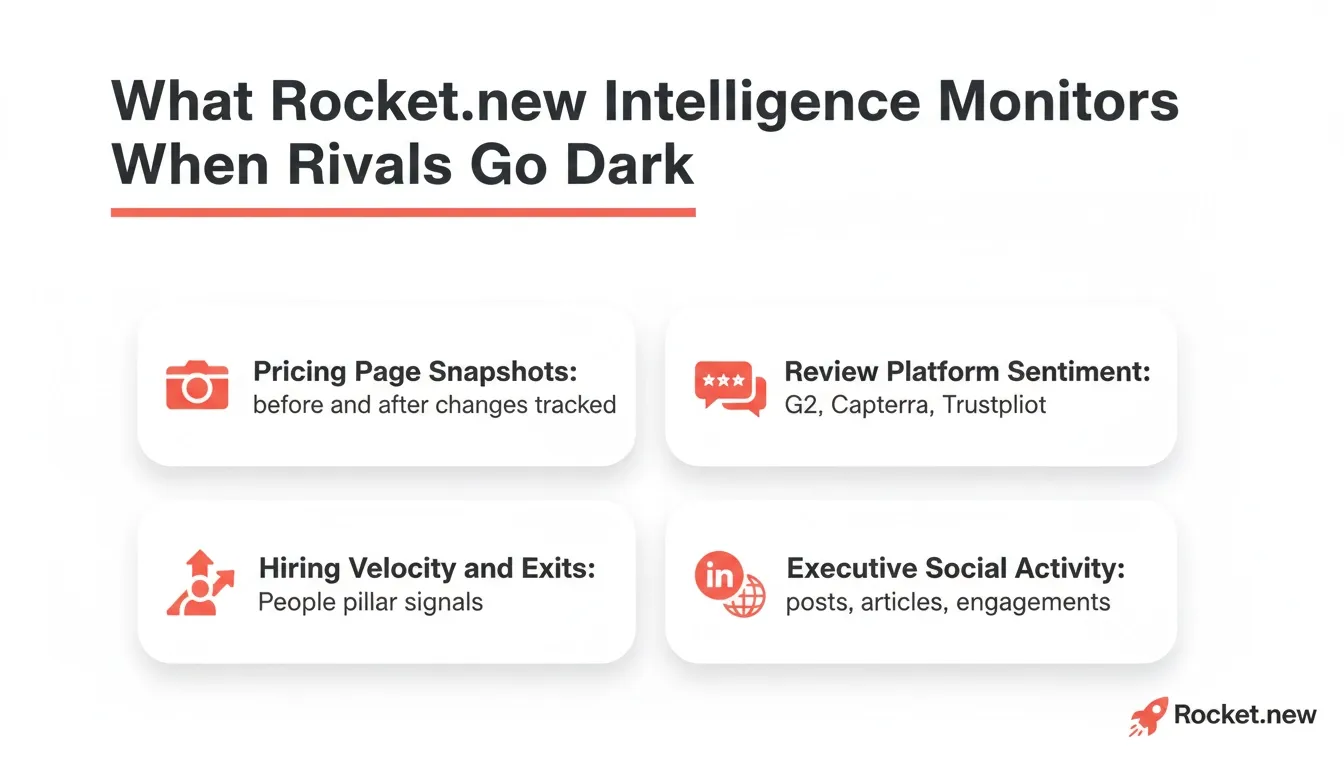 Four dimensions Rocket.new Intelligence tracks continuously when competitors reduce public activity
-
Flags the activity drop as a behavioral deviation from the established baseline, with no manual setup required
-
Cross-references pricing page snapshots, website copy changes, and customer review comment patterns at the same time
-
Surfaces regulatory filings and executive social activity that persists through the silence
-
Connects all signals into a structured brief with strength ratings and strategic recommendations so teams can act
Platform solutions like Crayon and Klue catch what competitors post and launch. Their ability to synthesize meaning from inactivity is limited because they are reactive platforms built to process signals that exist. Rocket Intelligence reads the absence of expected signals as a pattern in its own right, factoring competitor silence into daily analysis the same way it factors a product announcement or a pricing shift.
Startups and growing businesses whose competitive strategy depends on knowing what rivals are planning before those plans become public benefit most from this approach. The platform brings intelligence tasks, market research, and business context into one shared workspace, so last week's analysis informs the strategic decisions your teams are making today.
Staying Sharp When Competitors Go Dark
Competitors go quiet for reasons. The shift from active to silent is almost always intentional. Companies that treat that silence as confirmation of inactivity are the ones surprised when rivals re-enter the market with revised pricing, repositioned messaging, and a strategy built during the months nobody was watching.
Building competitive awareness means tracking the signals that survive silence: pricing pages, website changes, customer comments, regulatory filings, and behavioral patterns from continuous market data. Teams and startups that invest in this kind of intelligence, and the platforms that automate it, stay ahead of the competitive moves that most businesses never see coming.
Rocket is the only platform that treats competitor silence as a signal, not a gap. Its Intelligence engine monitors competitors across six signal categories continuously, connects pricing shifts, review surges, and hiring pauses into a single daily brief, and tells your team exactly what to do next.
Start tracking competitors with Rocket before your next rival goes quiet.
Table of contents
- -When a Competitor Goes Dark, the Data Does Not
- -Why Do Competitors Go Quiet?
- -The Strategic Silence Play
- -Signs a Competitor Is Regrouping
- -How Most Companies Miss the Warning
- -What Does a Quiet Competitor Actually Signal?
- -Reading Inactivity as a Competitive Move
- -The Hidden Patterns Behind Paused Job Listings
- -What Traditional Competitor Tracking Misses
- -The Problem With Periodic Reports
- -Single-Source Tracking and Its Gaps
- -When Analysts Cannot Connect the Dots
- -What Signals Replace Job Postings and Social Updates?
- -Pricing Page and Website Changes
- -Regulatory Filings and Industry Sources
- -Customer Reviews and Comment Patterns
- -Weak Signals That Form a Clear Picture
- -How Do You Build a Baseline for a Competitor's Normal Behavior?
- -Establishing the Publishing Cadence
- -Cross-Referencing Multiple Data Sources
- -Flagging Behavioral Deviations Over Time
- -How Does AI-Powered Intelligence Connect Disparate Signals?
- -Signal Triangulation Across Platforms
- -From Raw Data to Structured Briefs
- -Real-Time Awareness Without Manual Research
- -Rocket.new Intelligence: Built to See Through the Quiet
- -Staying Sharp When Competitors Go Dark