
Enterprise context engineering is the discipline that makes AI agents reliable at scale — designing, curating, and delivering the right information to AI systems at the right time. This blog covers architecture, retrieval pipelines, governance, and production best practices.
Why do AI agents with access to the same model produce wildly different results?
The answer sits in the context layer. According to Forrester's 2025 research, the AI-driven software development lifecycle is no longer about raw model power. It is about enterprise context engineering. This discipline determines whether your AI systems deliver accurate, governed outputs or drift into hallucinations that cost real money.
What is Context Engineering for AI Systems?
Context engineering is the discipline of designing, curating, and delivering the right information to AI systems at the right time. It treats context as an engineered data product that flows through structured pipelines into every AI interaction. It is not an afterthought written into a single prompt.
-
The core idea: Rather than relying on manual prompts written by individual users, enterprise context engineering creates persistent, structured knowledge that AI agents draw from automatically
-
What it covers: Enterprise data, business rules, customer records, company policies, institutional knowledge, and operational workflows
-
The goal: Give AI models enough relevant context to perform complex tasks accurately, without flooding their limited context window with noise
-
The shift: From treating context as an afterthought to treating it as a managed enterprise asset
When engineered context reaches an AI system, the model's ability to reason improves dramatically. Context engineering systems provide structure, governance, and access control that individual prompts never can.
Key Differences Between Context Engineering and Prompt Engineering
These two disciplines operate at different levels of the AI stack. Here is how they compare.
| Dimension | Prompt Engineering | Context Engineering |
|---|---|---|
| Scope | Single interaction | Entire context across sessions |
| Persistence | Lost after conversation | Stored and reusable across teams |
| Data sources | User memory only | CRM, knowledge bases, databases, documents |
| Governance | None | Role-based access control, policy enforcement |
| Scale | One user, one task | Enterprise scale across multiple systems |
| Maintenance | Manual prompts rewritten each time | Retrieval pipelines updated automatically |
| Hallucination risk | High: model fills gaps with inference | Low: model grounds responses in retrieved evidence |
Context engineering vs. prompt engineering is a distinction that matters at enterprise scale. One is a practice. The other is a discipline.
Why AI Leaders Are Treating Context as a Product
Most organizations started with prompt engineering because it felt easy. Write better system prompts and get better AI outputs. However, as context length increases and teams deploy AI agents across multiple systems, that approach breaks down fast.
-
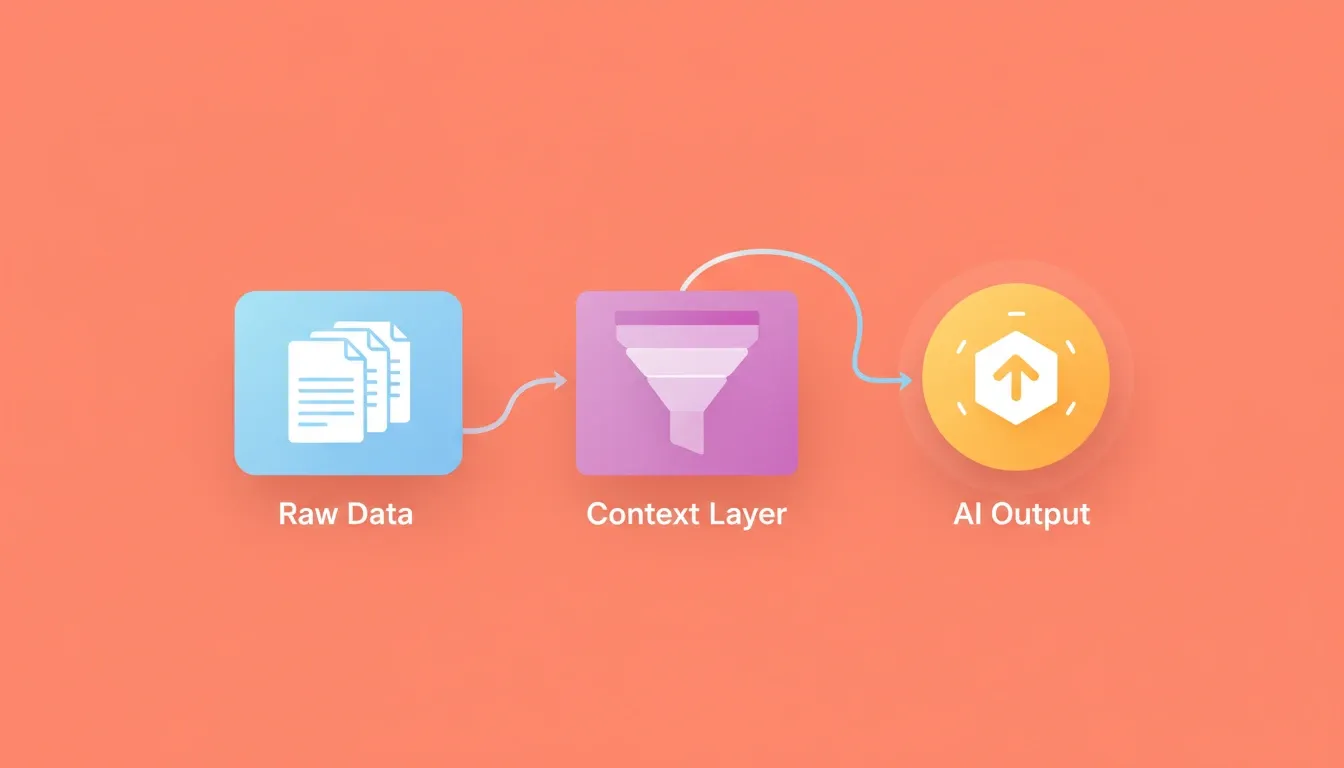
Data products mindset: AI leaders now manage context data the same way they manage data products, with versioning, quality checks, freshness guarantees, and clear ownership
-
Enterprise data governance: Treating context as a product means applying data quality standards, access permissions, and compliance rules to every piece of information that reaches an AI model
-
Cost savings at scale: When engineered context is curated precisely, teams reduce token costs by feeding only relevant data instead of flooding the entire context window
This shift is accelerating. LangChain's State of AI Agents report surveyed over 1,300 professionals. It found that performance quality stands out as the top concern, more than twice as significant as cost or safety, for teams trying to get agents into production.
Why Does Enterprise AI Fail Without Proper Context?
Here is the uncomfortable truth: 32% of organizations cite quality as their primary barrier to putting AI agents into production, according to LangChain's 2026 survey of 1,300+ professionals. Quality problems almost always trace back to bad context.
Enterprise AI systems fail when they lack the situational awareness needed to produce reliable outputs. The model itself performs well on benchmarks. However, in production environments, without relevant context from enterprise data, AI agents generate responses that ignore business logic, violate company policies, or reference outdated information.
Fragmented Data Sources and Disconnected Systems
Enterprise environments create a natural tension for context engineering. Customer data lives in the CRM. Business rules are stored in dozens of documents across several systems. Operational knowledge sits in multiple systems that rarely connect to each other.
-
The fragmentation problem: Enterprise data is distributed across disconnected source databases, making it hard to assemble the entire context an AI agent needs for a specific task
-
Multiple context types: AI agents handling complex tasks need structured data, unstructured documents, real-time signals, and external data, all at query time
-
Data distributions matter: Different data types require different retrieval strategies. What works for structured CRM data fails for unstructured knowledge bases
-
Enterprise systems sprawl: Most organizations run dozens of operational systems, and no single platform connects them all into a unified context layer
The Limited Context Window Problem at Scale
Every large language model operates within a limited context window. Even as context windows expand to millions of tokens, attention scarcity means models cannot focus equally on all information provided.
-
Attention scarcity: As context size grows, the model's ability to focus on the most relevant information decreases. Bigger windows alone cannot solve this problem
-
Token costs compound: At enterprise scale, feeding raw data into every request creates massive token costs that make production deployment impractical
-
Context length does not fix relevance: Simply passing more context data into a limited context window creates noise that degrades AI outputs rather than improving them
-
Low latency requirements: Production environments demand responses in milliseconds, creating architectural constraints around how much context can be retrieved at query time
Attention Scarcity and Information Overload
There is a natural tension between providing enough contextual information for accuracy and flooding the model with so much context that attention focus degrades. Fortunately, enterprise context engineering solves this by filtering, ranking, and pruning information before it reaches the model.
-
Signal vs. noise: The discipline separates relevant information from irrelevant data through precision-focused retrieval pipelines
-
Attention focus design: Well-engineered context puts the most important information in positions where the model pays the most attention
-
Dynamic filtering: Different tasks require different context, so static approaches fail in production
Core Architecture of Context Engineering Systems
A context engineering system connects enterprise data to AI models through structured layers. Each layer handles a different function: ingestion, retrieval, governance, and delivery.
This architecture ensures that AI systems receive governed, relevant data rather than raw information dumps. The context layer acts as the intelligence between your enterprise data and the AI model.
The Context Layer: Structure, Retrieval, and Delivery
The context layer is where context engineering becomes a real engineering discipline. It transforms raw data from knowledge bases and enterprise systems into structured context that AI models can consume reliably.
-
Ingestion processes: Raw data from source databases is chunked, embedded, and indexed for fast retrieval at query time
-
Retrieval pipelines: Vector search combined with knowledge graphs and metadata filtering ensures the most relevant context reaches the model for each specific task
-
Context assembly: Multiple context types, including enterprise data, business rules, conversation history, and user permissions, are assembled into a coherent context package
-
Delivery at low latency: Production AI applications require context delivery in milliseconds, demanding pre-computed embeddings and cached retrieval results
Knowledge Bases, Knowledge Graphs, and Vector Search
Different data types demand different retrieval approaches. A mature context engineering system combines multiple technologies.
-
Knowledge bases store curated enterprise documents, FAQs, and policies in formats optimized for RAG (Retrieval-Augmented Generation) pipelines
-
Knowledge graphs capture pairwise relationships between entities such as products, customers, and processes, enabling the model to reason about connections that vector search alone misses
-
Vector search finds semantically similar content regardless of exact keyword matches, making retrieval more accurate for unstructured data types
-
Source databases provide structured data like customer records, transaction histories, and product metadata through direct queries
For a deeper look at how real teams apply these patterns, see context engineering examples for better AI app development.
Chunking Strategy: The Foundation of Effective RAG
How you split documents before indexing directly determines retrieval quality. Poor chunking is one of the most common reasons RAG pipelines underperform in production.
| Chunking Strategy | Best For | Trade-off |
|---|---|---|
| Fixed-size chunking | Simple documents, uniform content | May split mid-sentence, losing semantic coherence |
| Sentence-based chunking | Conversational data, FAQs | Chunks can be too short for complex reasoning |
| Semantic chunking | Technical documentation, policies | Higher compute cost, better retrieval precision |
| Hierarchical chunking | Long-form reports, legal documents | Preserves document structure; complex to implement |
| Sliding window | Dense technical content | Overlap increases index size but improves boundary coverage |
For enterprise context engineering, semantic chunking with hierarchical fallback produces the best retrieval precision for complex, multi-part queries.
Governance, Policy Enforcement, and Access Control
Without governance, context engineering at enterprise scale becomes a liability. When AI outputs reach customers or drive business decisions, the context feeding those outputs must be trusted, verified, and auditable.
-
Role-based access control: Not every user should see every piece of context data. Permissions govern what information flows into each AI interaction based on the user role
-
Policy enforcement: Company policies and business rules are encoded as constraints that filter context before it reaches the model
-
Data quality gates: Bad data creates bad AI outputs. Governance layers validate context data for freshness, completeness, and accuracy before delivery
-
Compliance and audit trails: Regulated industries require the ability to trace every AI output back to the context that produced it
How Does Context Engineering Reduce AI Hallucinations?
AI hallucinations happen when models generate confident responses without grounding in factual data. According to Cleanlab's research, 70% of regulated enterprises rebuild their AI agent stack every three months or faster, partly because hallucinations and inconsistent outputs remain the weakest link in production.
Engineered context directly reduces hallucinations by providing verified, relevant information that anchors the model's reasoning. When an AI agent has access to accurate enterprise data, it generates responses grounded in fact rather than filling gaps with fabricated information.
-
Grounding through retrieval: Context engineering ensures that every AI response is backed by retrieved evidence from trusted source databases
-
Reducing ambiguity: When AI models lack context, they guess. Engineered context removes ambiguity by providing the specific information needed for each task
-
Consistency across sessions: Persistent context means AI agents produce consistent outputs regardless of which team member initiates the request
Context Poisoning and Data Quality Risks
Context poisoning occurs when bad data, outdated information, or misinformation enters the context layer and corrupts AI outputs. This is a real and growing risk for enterprise AI.
-
Stale data: Enterprise data changes constantly. Without freshness checks, context engineering systems feed outdated information that leads AI models to generate inaccurate responses
-
Data quality failures: When raw data enters retrieval pipelines without validation, errors propagate through every AI interaction that touches the corrupted context
-
Adversarial injection: Context poisoning can happen deliberately through bad data introduced into knowledge bases, making governance and access control non-negotiable
-
Defense strategies: Implement freshness TTLs on indexed documents, validate source data before ingestion, and use confidence scoring to flag low-quality retrievals before they reach the model
Model Context Protocol (MCP) is an emerging open standard that defines how AI models connect to external data sources and tools through a unified interface. For enterprise context engineering, MCP reduces the custom integration overhead that has historically made connecting AI agents to enterprise systems expensive. Learn more about MCP for AI agents and smarter workflows.
How Rocket Powers Context-Aware AI Development
Building context-aware AI applications traditionally requires stitching together dozens of tools: vector databases, retrieval frameworks, governance layers, and orchestration systems. Most teams spend months on infrastructure before writing a single line of application logic.
Rocket approaches this differently. Its shared context architecture means every task in a project inherits institutional knowledge, previous research, and team decisions automatically. You type the problem. Rocket handles the context layer.
What makes this different from traditional approaches:
-
Persistent shared memory via Projects: Files, research outputs, and decisions added once carry into every subsequent task. No re-explaining context across sessions. Rocket understands files structurally, including spreadsheet formulas, multi-sheet workbooks, cross-references, and embedded data, read the way they were built
-
RAG-based context from your existing tools: Rocket's Confluence connector uses RAG to retrieve the most relevant content from your team's specs and docs at generation time. The same applies to Notion, Google Workspace, Linear, and Jira. Your existing knowledge becomes live context without re-uploading
-
Cross-task intelligence: Reference any previous task in a new one. The context layer compounds with each interaction, making every build smarter than the last. A Solve research output becomes the foundation for a Build task automatically
-
Built-in governance: Team workspaces with role-based access (Admin, Creator, Viewer) mean context flows to the right people with the right permissions
-
25+ pre-built context connectors: Supabase, Airtable, Strapi, Directus, and all major CRM and productivity tools connect directly into the generation pipeline
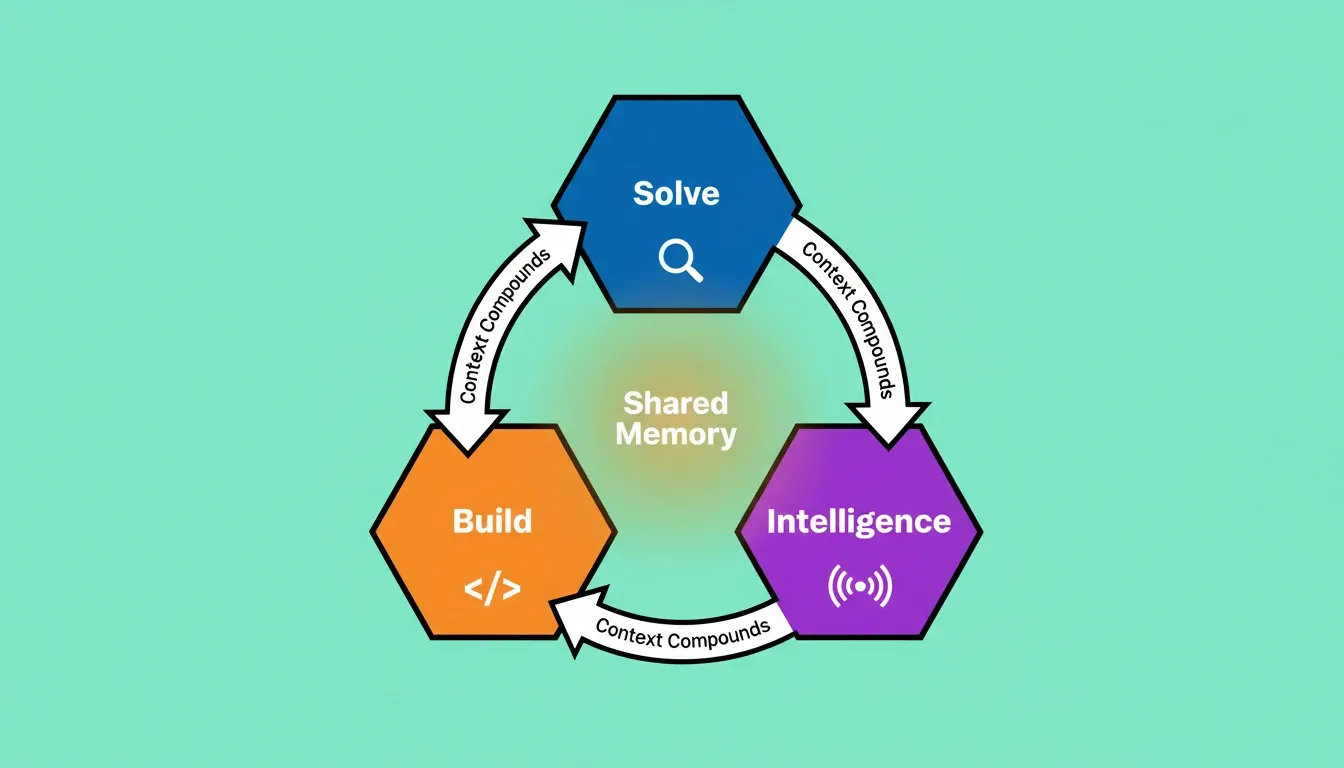
Traditional AI builders start every session from a blank prompt. There is no memory, no accumulated context, no persistent understanding of your project. That gap is exactly where context engineering fails in production.
The research you did last Tuesday is available when your team starts building today. The competitive brief from last week informs this week's product decision. Everything compounds across every task, every team member, and every capability.
Building a Context Engineering System Step by Step
For developers implementing enterprise context engineering at their organizations, the process follows three phases. Each phase builds on the previous one. Skipping steps leads to the fragmented systems that cause most AI agent failures.
Phase 1: Audit Enterprise Data and Map Source Databases
Before building any retrieval infrastructure, you need a complete map of where enterprise data lives. Most teams discover data in places they did not expect.
-
Inventory all source databases: CRM, operational systems, document stores, knowledge bases, analytics platforms, and communication logs
-
Classify data types: Structured (database records), semi-structured (JSON, logs), and unstructured (documents, images, conversations)
-
Identify multiple context types required by your AI agents: customer data, business rules, product information, and compliance policies
-
Map data freshness requirements: Some context data changes every hour. Other information stays static for years. Your context engineering best practices should account for both
Phase 2: Design Retrieval Pipelines and Context Delivery
Once you know where your data lives, the next step is building retrieval pipelines. These pipelines deliver the right context layer to AI models for each specific task.
-
Choose retrieval strategies: Vector search for semantic similarity, keyword search for exact matches, knowledge graphs for relationship queries, and SQL for structured data
-
Select your chunking strategy: Match the chunking approach to document type. Semantic chunking with 512 to 1,024 token chunks works well for most enterprise documentation
-
Build a context assembly layer: Combine results from multiple retrieval pipelines into a single context package, ranked by relevance
-
Implement caching for low latency: Pre-compute embeddings and cache frequently accessed context to meet production latency requirements
-
Test with real queries: Run your AI agents against production-like queries and measure whether retrieved context produces accurate, complete outputs
For a detailed checklist of what breaks in production RAG systems, see production RAG checklist: failures tutorial authors never cover.
Phase 3: Implement Governance and Quality Controls
-
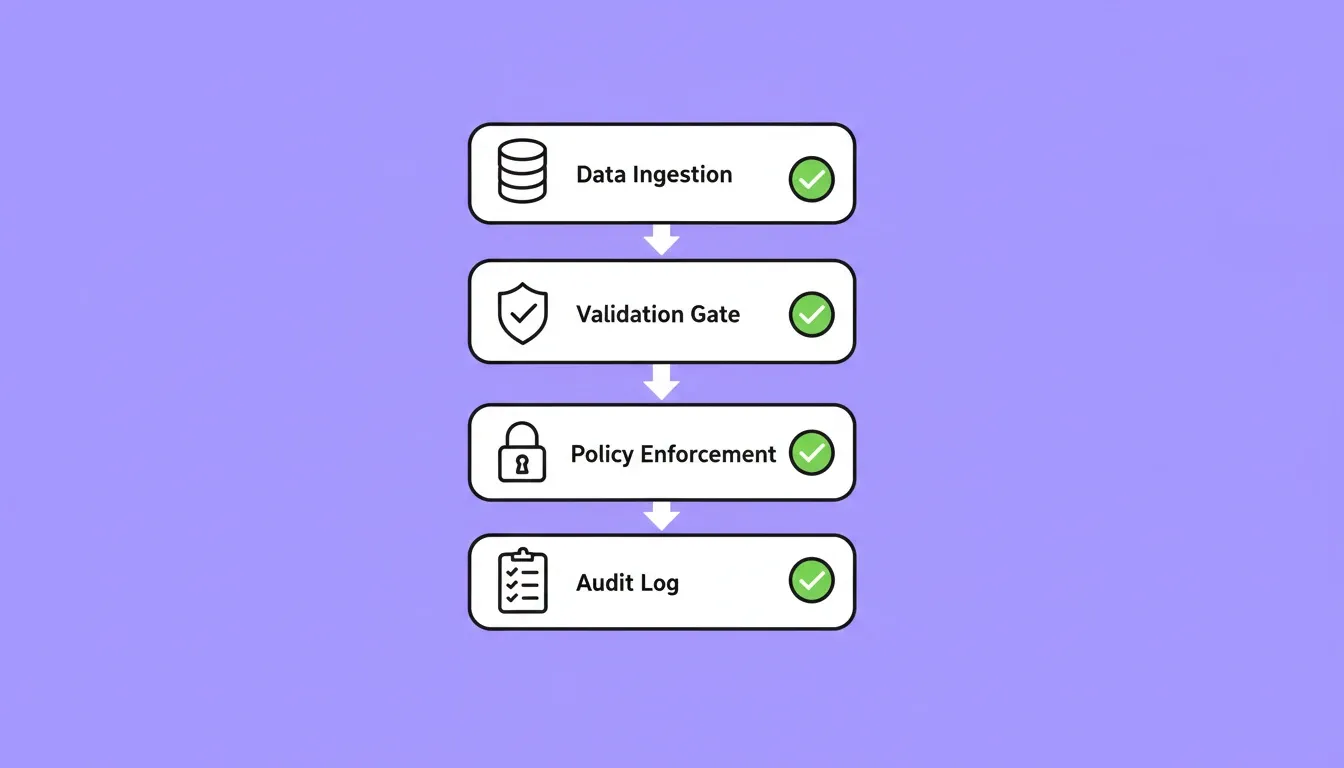
Set freshness TTLs: Define how long each data source remains valid before re-indexing is required
-
Build validation gates: Validate context data for completeness and accuracy before it enters retrieval pipelines
-
Implement audit logging: Every AI output should be traceable to the specific context chunks that informed it
-
Monitor retrieval quality: Track metrics like mean reciprocal rank (MRR) and normalized discounted cumulative gain (nDCG) to catch retrieval degradation before it affects users
Real-World Use Cases Across Business Operations
Enterprise context engineering is not just a theoretical concept. Teams deploy these systems today across core business operations. The result is cost savings and accuracy improvements that compound over time.
-
Customer support agents: AI agents pull customer history, product documentation, and previous tickets into a unified context, enabling accurate responses without human lookup
-
Sales intelligence: AI applications surface relevant deal context, competitor information, and buyer signals from across several systems at the moment a rep needs them
-
Compliance monitoring: Governed context ensures AI outputs respect company policies and regulatory requirements, with full audit trails for every decision
-
Developer tooling: Coding AI agents perform better when they have access to the entire codebase architecture, style guides, and project plans as persistent context. This is exactly what Forrester's research on the Conductor methodology demonstrates
-
Internal knowledge search: Employees query institutional knowledge stored across disconnected enterprise systems and receive accurate, contextual answers grounded in real data
-
Enterprise product development: At 200+ person organizations, context engineering eliminates the handoff tax. Strategy research, PRDs, and build tasks share the same context so nothing gets lost between teams
The Discipline That Makes AI Systems Trustworthy
The model is no longer the bottleneck. The context surrounding it determines whether AI agents deliver trustworthy results or generate confident nonsense. For teams ready to move past experimental AI pilots into governed, production-grade systems, the path forward runs through treating context as the foundational layer it actually is.
The organizations that master enterprise context engineering will build AI that their teams and customers can depend on. The ones that do not will keep rebuilding their agent stack every quarter.
Context Engineering and the Future of AI Development
Enterprise context engineering is still early. Most organizations are at Phase 1, auditing data and building basic RAG pipelines. The teams pulling ahead are the ones treating context as a first-class engineering concern, not a prompt-writing exercise.
As AI agents become more autonomous and operate across longer time horizons, the quality of the context layer will determine the quality of every output. The discipline is not going away. It is becoming the foundational skill of production AI development.
Start building AI applications where context compounds with every task on Rocket.new. Get persistent memory, shared intelligence, and governed outputs from day one.
Table of contents
- -What is Context Engineering for AI Systems?
- -Key Differences Between Context Engineering and Prompt Engineering
- -Why AI Leaders Are Treating Context as a Product
- -Why Does Enterprise AI Fail Without Proper Context?
- -Fragmented Data Sources and Disconnected Systems
- -The Limited Context Window Problem at Scale
- -Attention Scarcity and Information Overload
- -Core Architecture of Context Engineering Systems
- -The Context Layer: Structure, Retrieval, and Delivery
- -Knowledge Bases, Knowledge Graphs, and Vector Search
- -Chunking Strategy: The Foundation of Effective RAG
- -Governance, Policy Enforcement, and Access Control
- -How Does Context Engineering Reduce AI Hallucinations?
- -Context Poisoning and Data Quality Risks
- -How Rocket Powers Context-Aware AI Development
- -Building a Context Engineering System Step by Step
- -Phase 1: Audit Enterprise Data and Map Source Databases
- -Phase 2: Design Retrieval Pipelines and Context Delivery
- -Phase 3: Implement Governance and Quality Controls
- -Real-World Use Cases Across Business Operations
- -The Discipline That Makes AI Systems Trustworthy
- -Context Engineering and the Future of AI Development